
Ayurvedic Respiratory Health: Herbs and Therapies for Asthma and Allergies
Respiratory disorders are among the most common long-term health concerns worldwide. Asthma affected an estimated 363 million people in 2023, and allergic rhinitis affects hundreds of millions of people globally. Ayurveda approaches breathing disorders through the condition of the airways, mucus burden, digestion, seasonal exposure, strength of tissues, and the balance of Vata, Kapha, and Pitta. This makes Ayurvedic respiratory care most appropriate as a supportive, individualized system alongside necessary modern diagnosis and treatment.
A notable bridge between classical respiratory herbs and modern pharmacology is Vasa, also known as Adhatoda vasica or Justicia adhatoda. Its alkaloid vasicine is historically important because bromhexine and ambroxol are semi-synthetic derivatives of vasicine. Ayurveda’s traditional use of Vasa for Kasa and Shwasa therefore remains especially relevant in discussions of cough, mucus, and airway support.
Ayurvedic Classification of Respiratory Diseases
Ayurveda does not classify respiratory illness only by the name of a modern disease. It examines the dominant dosha, the quality of sputum, the strength of the patient, the pattern of attacks, the season, digestive capacity, and the involvement of the respiratory channels known as Pranavaha Srotas.
Tamaka Shwasa
Tamaka Shwasa is the Ayurvedic respiratory disorder most often compared with bronchial asthma because it includes episodes of difficult breathing, cough, noisy breathing or ghurghuraka, nasal symptoms, worsening when lying down, and relief in a sitting posture. Classical discussions also describe aggravation with dust, smoke, cold exposure, wind, and climatic change. In Ayurvedic pathogenesis, Kapha obstructs the normal movement of Vata in the respiratory channels, producing breathlessness and paroxysmal symptoms.
Pratishyaya
Pratishyaya is the Ayurvedic framework most often used for rhinitis-like conditions. It includes nasal discharge, obstruction, sneezing, irritation, heaviness, and recurrent upper airway symptoms. Allergic rhinitis is commonly interpreted through a Vata-Kapha lens: Kapha contributes mucus, congestion, heaviness, and turbinate swelling, while Vata contributes sneezing, dryness, variable symptoms, and sudden attacks.
Kasa
Kasa means cough and is classically categorized into five types: Vata-dominant, Pitta-dominant, Kapha-dominant, cough arising from injury or Kshata, and cough associated with tissue depletion or Kshaya. Vataja Kasa tends toward dryness and spasmodic irritation, Pittaja Kasa toward heat and yellowish expectoration, Kaphaja Kasa toward heaviness and thick sputum, while the depletion-related forms require more nourishing and restorative care.
The Doshic Pattern in Respiratory Disease
Ayurvedic treatment depends on identifying which dosha is most active in the respiratory presentation. Vata governs movement, constriction, dryness, and irregularity; Kapha governs mucus, heaviness, coldness, and obstruction; Pitta governs heat, sharpness, irritation, and inflammatory tendency. Most chronic respiratory conditions contain more than one dosha, so treatment is usually layered rather than one-dimensional.
- Vata-dominant signs: dry cough, episodic breathlessness, tightness, variable triggers, anxiety-linked breathing difficulty, and symptoms worse at night or with cold wind.
- Kapha-dominant signs: thick sputum, heaviness in the chest, nasal congestion, sluggish digestion, lethargy, and symptoms worse in damp, cold, or spring-like conditions.
- Pitta-dominant signs: burning in the throat or chest, yellow or greenish sputum, heat, irritability, sour reflux, and inflammatory or infection-prone presentations.
A careful constitutional and clinical dosha assessment helps determine whether the patient needs warming expectorants, soothing demulcents, anti-allergic herbs, digestive correction, cleansing procedures, or strengthening Rasayana support.
Primary Herbs for Respiratory Health
Ayurvedic respiratory herbs are selected according to the quality of cough, sputum, airway tightness, digestive strength, age, season, and coexisting medication use. The herbs below are among the most commonly discussed in classical and integrative respiratory care.
Vasa / Adhatoda (Adhatoda vasica / Justicia adhatoda)
Vasa is a central Ayurvedic herb for Kasa, Shwasa, bronchial congestion, and productive cough. Its leaves contain quinazoline alkaloids such as vasicine and vasicinone. Traditional preparations include fresh juice, decoction, Vasa Avaleha, Vasa Ghrita, and fermented preparations. It is especially suited to cough with sputum, chest congestion, and Pitta-Kapha involvement.
Kantakari (Solanum surattense / Solanum xanthocarpum)
Kantakari is one of the herbs of Laghu Panchamoola and is included in the broader Dashamoola group. It is traditionally used for cough, asthma-like breathlessness, hoarseness, hiccup, and Kapha-Vata respiratory obstruction. Its prickly whole plant, root, and fruits are used in decoctions, powders, Avaleha preparations, and compound formulas such as Kanakasava.
Haridra (Curcuma longa / Turmeric)
Haridra is used in Ayurveda for Kapha-Pitta disorders, skin and mucosal conditions, and inflammatory tendencies. In respiratory care, it is commonly used when allergy, itching, mucus, or heat is present. Curcumin has been evaluated in allergic rhinitis and asthma as an adjunctive compound, and the traditional pairing of turmeric with black pepper is pharmacologically meaningful because piperine can increase curcumin bioavailability in humans under specific studied conditions.
Tulsi (Ocimum tenuiflorum / Ocimum sanctum)
Tulsi is traditionally used for cough, cold, bronchitis, asthma-like breathing difficulty, feverish respiratory states, and stress-linked vulnerability. It is aromatic, light, and Kapha-reducing, making it suitable in teas, decoctions, and compound formulations for recurrent upper respiratory symptoms. Human evaluation has also used Tulsi capsules in mild to moderate asthma, but Tulsi is not a replacement for prescribed inhalers or emergency bronchodilators.
Pippali (Piper longum / Long Pepper)
Pippali is both a respiratory herb and a Rasayana. It is used for chronic cough, Kapha-Vata respiratory obstruction, weak digestion, low appetite, and depleted respiratory strength. The classical graduated approach called Vardhamana Pippali Rasayana increases and then decreases Pippali under physician supervision. Because Pippali is heating and penetrating, it is not suitable for unsupervised long-term or high-dose use, especially in high Pitta states.
Yashtimadhu (Glycyrrhiza glabra / Licorice)
Yashtimadhu is sweet, soothing, demulcent, and traditionally used for dry cough, throat irritation, hoarseness, and Pitta-Vata irritation of the respiratory tract. It is best suited when the airway feels dry, scraped, inflamed, or irritated. It requires caution in people with hypertension, kidney disease, fluid retention, low potassium, pregnancy, or concurrent corticosteroid or diuretic use.
Shirish (Albizia lebbeck)
Shirish is valued in Ayurveda as an anti-allergic and Vishaghna herb. It is used in allergic respiratory patterns, recurrent rhinitis, cough, and asthma-like conditions where hypersensitivity is prominent. Bark, heartwood, and compound preparations such as Shirishavaleha and Shirishadi formulations are used according to the practitioner’s assessment.
Classical Formulations
Classical formulas combine herbs so that expectorant, digestive, demulcent, warming, anti-allergic, and Rasayana actions are balanced. These should be selected according to the patient’s constitution, age, strength, diagnosis, and medications.
Sitopaladi Churna
Sitopaladi Churna is a widely used powder for cough, cold, throat irritation, mild respiratory congestion, and post-infective weakness. A classical composition includes sugar candy, Vamshalochana, Pippali, Ela, and Tvak. It is often taken with honey or ghee under guidance. Because it contains sugar, people with diabetes or blood sugar concerns should use it only with professional advice.
Talisadi Churna
Talisadi Churna is used when cough, Kapha congestion, poor appetite, and heaviness are more pronounced. Common ingredients include Talisapatra, Trikatu components such as Pippali, Maricha, and Shunthi, along with Vamshalochana, Ela, Tvak, and sugar. It is warmer and more Kapha-clearing than Sitopaladi, so it should be used carefully in high Pitta presentations.
Kanakasava
Kanakasava is a fermented Ayurvedic preparation used in Hikka-Shwasa contexts such as hiccup, cough, and asthma-like breathlessness. It contains Datura species along with Vasa, Yashtimadhu, Pippali, Kantakari, Bharangi, Shunthi, Talisapatra, Dhataki, Draksha, and other ingredients depending on the classical reference and manufacturer. Because Datura contains potent tropane alkaloids with anticholinergic activity and toxicity risk, Kanakasava must be used only under qualified supervision.
Vasavaleha
Vasavaleha is a semi-solid herbal jam centered on Vasa, traditionally prepared with Vasa juice, sugar, Pippali, ghee, and honey. It is used for cough, asthma-like breathlessness, bronchitis, and sputum-related respiratory disorders. Its sweet base improves palatability but also makes blood sugar caution important.
Respiratory Herbs: Traditional Profile and Modern Notes
The following table summarizes the practical respiratory profile of important Ayurvedic herbs without replacing individualized clinical assessment.
| Herb | Common Constituents | Ayurvedic Respiratory Role | Best Suited For | Key Caution |
|---|---|---|---|---|
| Vasa | Vasicine, vasicinone | Kapha-Pitta respiratory support, expectoration, cough management | Productive cough, bronchitis-like congestion, Shwasa | Avoid self-medication in pregnancy and complex illness |
| Kantakari | Steroidal alkaloids and saponins | Kapha-Vata clearing, cough and breathlessness support | Congestive cough, hoarseness, asthma-like patterns | Use correct botanical identity and dose |
| Haridra | Curcuminoids | Kapha-Pitta balancing, allergy and mucosal support | Allergic rhinitis tendency, mucus with irritation | Supplement doses may interact with medicines |
| Tulsi | Eugenol, rosmarinic acid, essential oils | Kapha reduction, aromatic respiratory support, resilience | Cold, cough, recurrent upper respiratory symptoms | Do not replace asthma medication |
| Pippali | Piperine, piperlongumine | Deepana, Kapha-Vata clearing, Rasayana use | Chronic cough with weak digestion and Kapha | Heating; avoid unsupervised high-dose use |
| Yashtimadhu | Glycyrrhizin, flavonoids | Demulcent, soothing, Vata-Pitta pacifying | Dry cough, throat irritation, hoarseness | May raise blood pressure and lower potassium |
| Shirish | Saponins, flavonoids | Anti-allergic, Vishaghna, Kapha-Pitta support | Allergic rhinitis, hypersensitivity-type cough | Use under guidance in chronic asthma |
Nasya Therapy for Allergic Rhinitis
Nasya is the Ayurvedic practice of administering medicated oils, juices, powders, or other preparations through the nasal route. The classical principle Nasa hi shiraso dwaram, “the nose is the gateway to the head,” is the basis for using Nasya in disorders of the head, nose, throat, and upper airway.
Pratimarsha Nasya
Pratimarsha Nasya is the gentle daily form, commonly using a very small quantity of suitable oil such as Anu Taila or plain sesame oil under guidance. It is used to maintain nasal lubrication, reduce dryness, and support nasal comfort in people prone to recurrent irritation.
Marsha Nasya
Marsha Nasya is a stronger therapeutic dose performed after preparatory measures such as local massage and mild fomentation. It is selected for chronic rhinitis, sinus congestion, recurrent nasal obstruction, and persistent Kapha-Vata disorders of the upper airway. It should be done under professional supervision, especially in children, elderly patients, pregnancy, acute infection, or active asthma flare.
Avapeedana and Other Nasya Forms
Avapeedana Nasya uses expressed herbal juices and is more condition-specific. It is not a casual home remedy and should be chosen by a practitioner because inappropriate nasal administration can aggravate burning, sneezing, irritation, or congestion.
Pranayama for Respiratory Strengthening
Pranayama supports respiratory awareness, nasal breathing, chest mobility, diaphragmatic control, and autonomic balance. For asthma and allergies, breathing practices should be gentle, consistent, and never forced during acute breathlessness.
- Nadi Shodhana: Alternate nostril breathing is gentle and commonly used to settle breathing rhythm and nervous system reactivity.
- Bhramari: Humming exhalation can increase nasal nitric oxide output and may support nasal airflow awareness and sinus ventilation.
- Slow diaphragmatic breathing: A steady, relaxed pattern helps reduce overbreathing and improves control during mild respiratory discomfort.
- Bhastrika and Kapalabhati: These forceful practices may be useful for selected Kapha-dominant individuals when stable, but they are not appropriate during acute asthma, wheezing, dizziness, uncontrolled hypertension, pregnancy, or active respiratory infection.
For people with asthma, pranayama should be treated as supportive training rather than emergency treatment. Rescue medication and prescribed controller therapy must remain available and should not be stopped because breathing exercises are being practiced.
Dietary Modifications for Respiratory Health
Ayurveda considers digestion and mucus formation closely linked. The general respiratory diet emphasizes warm, digestible meals, Kapha-reducing spices, avoidance of cold-heavy foods, and individualized attention to known allergens or intolerances.
Foods and habits to emphasize:
- Warm, cooked, freshly prepared meals that are easy to digest
- Ginger, black pepper, turmeric, long pepper, cumin, and ajwain in suitable amounts
- Light grains such as barley, millet, and aged rice when compatible
- Warm soups, thin dals, and vegetable broths with ginger or garlic when tolerated
- Honey in small amounts for Kapha-type cough, never heated or cooked
- Drumstick or Moringa preparations when suitable for digestion and constitution
Foods and habits to reduce:
- Cold drinks, ice cream, refrigerated foods, and cold milk
- Heavy, oily, deep-fried, and excessively sweet foods
- Excess curd, cheese, and cold dairy in Kapha-dominant congestion
- Banana, heavy sweets, and refined sugar during mucus-heavy phases
- Late-night meals and overeating, which weaken Agni and increase Kapha
- Known individual allergens and foods that repeatedly trigger symptoms
Environmental Considerations
Respiratory care must include the air the patient breathes. Ayurveda’s avoidance of aggravating exposures aligns well with modern trigger control for asthma and allergic rhinitis.
- Smoke and fumes: Avoid tobacco smoke, incense smoke, industrial fumes, strong fragrances, and harsh cleaning vapors when they provoke symptoms.
- Dust and bedding: Keep bedding clean, reduce dust accumulation, and consider allergen-reducing covers if dust mites trigger symptoms.
- Humidity: Keep indoor humidity balanced. Excess moisture encourages mold and dust mites, while very dry air can aggravate Vata and irritate nasal passages.
- Seasonal transitions: Increase attention to diet, sleep, nasal care, and prescribed medicines during cold, damp, pollen-heavy, or pollution-heavy periods.
- Sleep position: If nighttime congestion or breathlessness occurs, medical evaluation is important; some people also benefit from head elevation and a clean sleeping environment.
Integrating Ayurvedic and Conventional Respiratory Care
Ayurvedic respiratory therapies should complement, not replace, essential conventional care. People with asthma should continue to carry prescribed rescue inhalers, and controller medications such as inhaled corticosteroids should not be stopped without physician guidance. Acute wheezing, blue lips, severe breathlessness, inability to speak, chest pain, or poor response to rescue medication requires urgent medical care.
- Licorice and medications: Yashtimadhu can affect potassium balance and blood pressure and needs caution with corticosteroids, diuretics, heart medicines, kidney disease, and hypertension.
- Datura-containing formulas: Kanakasava and other Datura-containing preparations require professional supervision because excessive anticholinergic exposure can cause dry mouth, constipation, urinary retention, confusion, fast heart rate, hallucinations, and serious toxicity.
- Turmeric and concentrated extracts: Culinary turmeric is generally different from high-dose curcumin supplements, which may interact with medicines and should be used cautiously in people on anticoagulants, antiplatelet drugs, or multiple prescriptions.
- Overlapping sedative effects: Some herbal and conventional allergy medicines may overlap in drying or sedating effects, especially in sensitive individuals.
Building Long-Term Respiratory Resilience
Ayurveda’s long-term respiratory strategy is not limited to suppressing cough or clearing mucus. It aims to improve Agni, reduce Kapha accumulation, regulate Vata movement, calm Pitta irritation, maintain nasal passages, and build Vyadhikshamatva, the body’s capacity to resist disease and recover from disturbance.
For many people, the most sustainable plan combines daily nasal care when appropriate, gentle pranayama, seasonal diet adjustment, trigger reduction, adequate sleep, and carefully selected herbs or formulas. Rasayana support such as Chyawanprash or herbs such as Guduchi may be considered when digestion, constitution, blood sugar status, and medications allow. When integrated thoughtfully with modern respiratory medicine, Ayurveda offers a structured way to support easier breathing, fewer triggers, better resilience, and safer long-term self-care.
Vikram Desai is a certified Ayurvedic lifestyle consultant and performance health writer. This article reflects general Ayurvedic education, not medical advice. Consult a qualified Ayurvedic practitioner and a healthcare provider before starting any new herb, formulation, Nasya procedure, pranayama routine, or respiratory health protocol, especially if you have asthma, COPD, severe allergies, pregnancy, high blood pressure, kidney disease, heart disease, or take prescription medication.
References
- World Health Organization
- Allergic Rhinitis: A Clinical and Pathophysiological Overview (2022), PubMed Central
- Activity of bromhexine and ambroxol, semi-synthetic derivatives of vasicine from the Indian shrub Adhatoda vasica, against Mycobacterium tuberculosis in vitro (1996), PubMed
- A clinical review of different formulations of Vasa (Adhatoda vasica) on Tamaka Shwasa (asthma) (2010), PubMed Central
- Charaka Samhita — Hikka Shwasa Chikitsa
- Jaims (jaims.in)
- Granthaalayahpublication (granthaalayahpublication.org)
- Unisciencepub (unisciencepub.com)
- Charaka Samhita — Kasa Chikitsa
- Ayurvedic Pharmacopoeia of India
- A critical review on two types of Laghupanchamula (2012), PubMed Central
- Sdach (sdach.ac.in)
- Effect of curcumin on nasal symptoms and airflow in patients with perennial allergic rhinitis (2016), PubMed
- Evaluation of Efficacy of Curcumin as an Add-on therapy in Patients of Bronchial Asthma (2014), PubMed Central
- Influence of piperine on the pharmacokinetics of curcumin in animals and human volunteers (1998), PubMed
- Tulsi – Ocimum sanctum: A herb for all reasons (2014), PubMed Central
- Ijbcp (ijbcp.com)
- Clinical evaluation of Vardhamana Pippali Rasayana in the management of Amavata (Rheumatoid Arthritis) (2011), PubMed Central
- Clinical Risk Factors of Licorice-Induced Pseudoaldosteronism Based on Glycyrrhizin-Metabolite Concentrations: A Narrative Review (2021), PubMed Central
- Medsafe (medsafe.govt.nz)
- Anti-allergic activity of standardized extract of Albizia lebbeck with reference to catechin as a phytomarker (2010), PubMed
- Albizia lebbeck suppresses histamine signaling by the inhibition of histamine H1 receptor and histidine decarboxylase gene transcriptions (2011), PubMed
- Pdfs (pdfs.semanticscholar.org)
- Scholarsresearchlibrary (scholarsresearchlibrary.com)
- Pharmeasy (pharmeasy.in)
- Jaims (jaims.in)
- Phytochemistry, Pharmacology, and Toxicology of Datura Species-A Review (2021), PubMed Central
- Acute poisoning due to ingestion of Datura stramonium – a case report (2017), PubMed Central
- Academicjournal (academicjournal.ijraw.com)
- Ijam (ijam.co.in)
- Ayurveda Management of Allergic Rhinitis: Protocol for a Randomized Controlled Trial (2024), PubMed Central
- Ayushdhara (ayushdhara.in)
- Humming greatly increases nasal nitric oxide (2002), PubMed
- Cochrane (cochrane.org)
- Effects of alternate nostril breathing exercise on cardiorespiratory functions in healthy young adults (2021), PubMed Central
- CDC
- 19january2021snapshot (19january2021snapshot.epa.gov)
- Aafa (aafa.org)
- Ginasthma (ginasthma.org)
- Nature (nature.com)
- Granthaalayahpublication (granthaalayahpublication.org)
- Chyawanprash: A Traditional Indian Bioactive Health Supplement (2019), PubMed Central
- Tinospora cordifolia (Willd.) Hook. f. and Thoms. (Guduchi) – validation of the Ayurvedic pharmacology through experimental and clinical studies (2010), PubMed Central
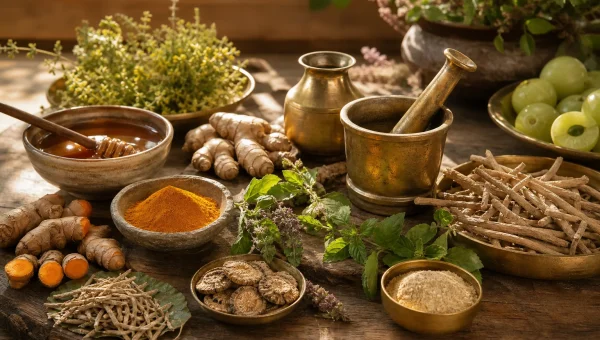
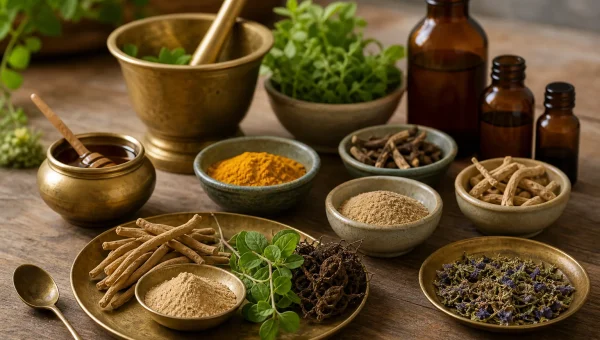
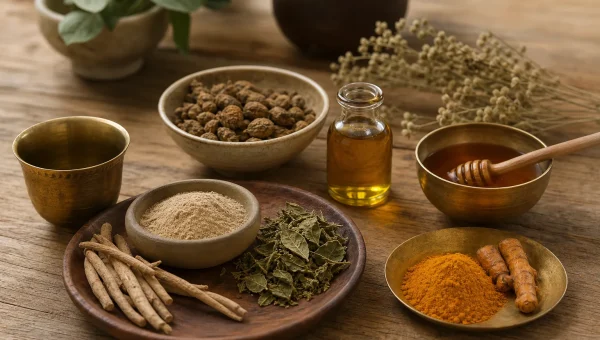
The Respiratory Health angle is useful here. The main idea is clear even if someone is new to Ayurveda.
The mental wellness components often get left out of physical health articles. The integration here, treating mind and body as inseparable, is the Ayurvedic strength.
After three months of adding tulsi and ginger tea to my morning routine as the article describes, my seasonal allergy symptoms have been noticeably milder. I was skeptical at first since I have been on antihistamines for years, but the frequency at which I need them has genuinely dropped. Has anyone had similar results with Sitopaladi for the dry cough that lingers after the congestion clears?
As a pulmonologist I find the Ayurvedic classification of respiratory conditions by doshic predominance genuinely interesting from a clinical perspective. The Kapha-Vata distinction maps roughly onto phenotypes we recognize in modern practice, even if the terminology differs. I would like to see more rigorous trials on Vasaka specifically, since the bronchodilatory mechanism has some preliminary support but the evidence base is still thin.
The guidance on working with seasonal changes rather than fighting them is profound. I’ve always felt worse in winter and now I understand why and what to do about it.
Seasonal shifts have always hit my sinuses hard and I never understood why the same remedy would work in autumn but not spring. The explanation linking Kapha accumulation in late winter and Vata disturbance in dry seasons actually maps onto my own pattern perfectly. Going to try adjusting the protocol seasonally and see if it holds up over a full year.
I had the exact same confusion about this. Glad the article cleared it up for both of us
The advice around Respiratory Health is specific enough to be useful. The examples make the advice less abstract.
It’s wonderful to see both believers and skeptics engaging respectfully in the comments. That’s how we all learn.
I’m a naturopathic doctor and I often describe Ayurvedic lifestyle principles to patients using exactly this kind of framing. Clear, logical, and non-dogmatic.
The breath practices described here have become my anchor for stressful workdays. Five minutes at my desk and my whole mental state shifts. Simple and powerful
I travel for work frequently and my respiratory allergies always get worse in unfamiliar environments. The suggestion about nasya and steam inhalation as portable daily practices is something I have actually started doing in hotel rooms. It takes ten minutes and has made layovers in dry recycled-air airports significantly more manageable.
I printed out the herb guide from this article and keep it next to my inhalers as a reminder to use the supportive Ayurvedic measures alongside my conventional medication. The point about Vasaka being specifically useful for Kapha-predominant bronchial conditions matches exactly what my practitioner suggested last year.
The Respiratory Health angle is useful here. A few more examples would still help.
Wonderful to see someone from a medical background engaging with this content thoughtfully.
The Respiratory Health angle is useful here. The safety notes could be expanded a little.
I appreciate that this includes a reminder that perfection isn’t the goal. A consistent imperfect practice beats a perfect one that never actually happens.
My concern with articles like this is that people might delay proper medical treatment. A stronger disclaimer would be responsible.
This is constructive feedback we take seriously. We’ve added a note about consulting with your healthcare provider, especially if you’re on existing medications.
I have tried nasya with Anu Taila twice now based on a recommendation from an Ayurvedic practitioner and it made a noticeable difference during peak allergy season. Reading this makes me understand the reasoning behind it much better. Is the herbal ghee approach for Vata-type respiratory conditions something that can be self-administered or does it need supervision?
The point about identifying whether your respiratory issues are primarily Vata or Kapha in origin before choosing herbs made me reconsider my entire approach. I had been using heavy, warming formulas that probably made my dry Vata-type symptoms worse. This framework for differentiating is more practical than anything I got from a generic allergy consultation.
Thank you so much for sharing your experience! It’s really encouraging to hear from others on this journey.
the connection between daily rhythm and long-term health makes so much intuitive sense. We evolved within consistent cycles and modern life pulls us away from them constantly.
the connection you made between those two things is really insightful. I hadn’t thought of it that way before
My partner has asthma and I deal with chronic sinus allergies, and we discovered our triggers are completely different even though they seem like the same category of respiratory problem. Reading the doshic breakdown here explains why the same dietary adjustments helped one of us and did nothing for the other. Would be interested in a follow-up piece on household environment changes that address both Vata and Kapha respiratory patterns at the same time.
I have moderate asthma and the Pippali rasayana protocol my Ayurvedic doctor added to my inhaler regimen has reduced my rescue inhaler use from 3-4 times per week to once or twice. Still managing with conventional treatment but meaningfully better.
The section on Pranava Shosha and the Vata-driven component of asthma was new to me. I always assumed my breathlessness was purely a Kapha congestion issue. Starting to wonder if the dryness and irregularity in my pattern actually points more to Vata involvement, which might explain why steam inhalation alone never gave me lasting relief.
The professional background you bring to this comment is really valuable. Thank you for reading and contributing.
I have had allergic rhinitis since childhood and every spring is brutal. What I found most useful here was the doshic classification because my symptoms lean more Kapha in spring but shift toward Vata in dry winter air. Treating them the same way year-round never worked, so having a framework that distinguishes between them is genuinely useful.
I work in healthcare too and I appreciate you engaging with this from a clinical standpoint
The five types of Prana Vata as the basis for respiratory classification is not something I’ve seen explained elsewhere. The anatomical specificity is impressive for a pre-modern system.
I think the article could be improved by addressing the quality control issues with Ayurvedic herbs. Heavy metal contamination is a real concern with unregulated products.
Does the Ayurvedic protocol interact with common asthma medications? My pulmonologist is open to complementary approaches but wants to understand any interaction risk before I add herbs.
I think there’s a middle ground being missed here. You don’t have to choose between Ayurveda and conventional medicine, both have value.
I’d rate this a 6/10. Good foundational info but lacks the specificity needed to actually implement. More like an introduction than a protocol.
That’s a very fair point. We always recommend working with a qualified practitioner alongside any self-guided protocol. We’ll add a more prominent disclaimer.
The Vasa (Adhatoda vasica) bronchodilator mechanism is actually in the pharmacological literature. The vasicine alkaloid has measurable bronchodilating and mucolytic activity. The traditional use has a modern mechanism.
My allergist says nothing natural works for IgE-mediated allergy. The article suggests otherwise.
The classical Sanskrit terms with explanations are helpful for beginners. Combining with dietary changes.
The safety profile section is the most important part and it’s well done. Took 3 weeks before I noticed anything.
The diet changes listed here are harder to follow than the herbs but more impactful. My sleep improved first, then energy.
Started this last October and will report back after 3 months. Still a work in progress.
The part about Respiratory Health feels realistic. The practical details matter more than people think.
The recovery experience described in the comments here matches mine closely. Will update in a few months.
Started this last March and will report back after 3 months. Digestive improvement came before other benefits.
I’ve tried multiple approaches before landing on what the article recommends. Took 3 weeks before I noticed anything.
Late to this post but it answered a question I’ve had for months. More research needed but encouraging.
Started this last May and will report back after 3 months. Started with half the dose initially.
The seasonal variation advice is the part most Ayurveda articles skip. Took 3 weeks before I noticed anything.
I was on Montelukast for 3 years. Tapering down with Ayurvedic support over 6 months now.
The Ama factor in chronic respiratory disease clearing Ama first before treating the channel is often skipped.
Is this safe with antacids? Took 3 weeks before I noticed anything.
Would appreciate a follow-up article specifically on the dosage for elderly patients. Finding a good source was the challenge.
The wheezing at night pattern this Kapha-aggravation explanation is the first one that made physiological sense.
The herb quality issue is real I’ve noticed significant variation across brands. Digestive improvement came before other benefits.
The integration with modern physiology is what makes this article stand out. Took 3 weeks before I noticed anything.
The contraindication list should be read first before starting anything here. Results are slow but steady.
The diet changes listed here are harder to follow than the herbs but more impactful. Finding a good source was the challenge.
The integration with modern physiology is what makes this article stand out. More research needed but encouraging.
I appreciate that the article mentions when to see a doctor rather than only promoting herbs. Finding a good source was the challenge.
I started Kanakasava syrup 3 months ago for exercise-induced bronchospasm. Results are mixed so far.
Anyone else tried combining this with Brahmi? The diet changes helped too.
That’s fascinating that Vasa led to bromhexine.
I’ve tried multiple approaches before landing on what the article recommends. The diet changes helped too.
This makes sense for Respiratory Health. The article avoids making it sound like a quick fix.
Started this last December and will report back after 3 months. Combining with dietary changes.
Finding a quality herb source is harder than following the protocol itself. Will update in a few months.
Just found this searching for Montelukast alternatives. The Haridra Khand section is exactly what I needed.
Would love to see a version of this article aimed at practitioners. The quality of the herb matters a lot.
Is this safe with antacids? Digestive improvement came before other benefits.
I’ve tried multiple approaches before landing on what the article recommends. The timing of doses matters more than I expected.
My integrative doctor agrees with this approach, which surprised me. Combined with yoga practice for better results.
Been using this for 3 months and noticed reduced pain. The timing of doses matters more than I expected.
Would love to see a version of this article aimed at practitioners. Finding a good source was the challenge.
The seasonal variation advice is the part most Ayurveda articles skip. Will update in a few months.
Three months in and the improvement is steady if slow. Started with half the dose initially.
I appreciate that the article mentions when to see a doctor rather than only promoting herbs. The diet changes helped too.
My vaidya prescribed something nearly identical. Good to see the classical basis. My practitioner is monitoring.
The mechanism explanation is clearer than the PubMed abstract I read. Will update in a few months.
My vaidya prescribed something nearly identical. Good to see the classical basis. Started with half the dose initially.
Licorice root raises BP. My husband is hypertensive should he avoid it entirely?
Does anyone know if this applies for a Vata-Pitta dual prakriti? My sleep improved first, then energy.
I use a neti pot daily. Would adding Triphala water enhance it?
Does the diet apply year-round or only during high pollen season?
Bookmarking this. Need to discuss it with my doctor first. Took 3 weeks before I noticed anything.
I appreciate that the article mentions when to see a doctor rather than only promoting herbs. Results are slow but steady.
The avoidance of cold foods during treatment is something my body confirmed independently. My practitioner is monitoring.
Does anyone know if this applies for a Vata-Pitta dual prakriti? The diet changes helped too.
Is this safe with antacids? The diet changes helped too.
The dosage section here is more specific than most sources I’ve seen. Finding a good source was the challenge.
Does anyone know if this applies for a Vata-Pitta dual prakriti? Digestive improvement came before other benefits.
Is this safe with antacids? Combining with dietary changes.
Started this for 6 months and noticed significant change. My sleep improved first, then energy.
Started this last April and will report back after 3 months. The timing of doses matters more than I expected.
Useful post on Respiratory Health. I would still ask a practitioner before changing medicines.
My vaidya prescribed something nearly identical. Good to see the classical basis. More research needed but encouraging.
Started this last May and will report back after 3 months. Results are slow but steady.
Would love to see a version of this article aimed at practitioners. The diet changes helped too.
The safety profile section is the most important part and it’s well done. Started with half the dose initially.
Does Kapha-reducing diet mean avoiding cold water permanently or only during active symptoms?
The anti-inflammatory pathway for Tulsi (COX-2 inhibition) is well established. Good to see it mentioned.
Does anyone know if this applies for a Vata-Pitta dual prakriti? Will update in a few months.
Would love to see a version of this article aimed at practitioners. More research needed but encouraging.
The dosage section here is more specific than most sources I’ve seen. Results are slow but steady.
Useful post on Respiratory Health. Good starting point for a cautious reader.
Is this safe with antacids? Combined with yoga practice for better results.
The Sitopladi churna section is the 3g dose for acute episodes or maintenance?
The contraindication list should be read first before starting anything here. Took 3 weeks before I noticed anything.
My integrative doctor agrees with this approach, which surprised me. The timing of doses matters more than I expected.
The recovery experience described in the comments here matches mine closely. Results are slow but steady.
Been researching this for my father. The practical tips are what he can actually follow. Took 3 weeks before I noticed anything.
Any recommended books for deeper reading on this topic? More research needed but encouraging.
Would love to see a version of this article aimed at practitioners. Will update in a few months.
Would appreciate a follow-up article specifically on the dosage for elderly patients. Will update in a few months.
How does Kantakari compare to standard mast cell stabilizers in practice?
For Respiratory Health, consistency seems like the hard part. The safety notes could be expanded a little.
The mechanism explanation is clearer than the PubMed abstract I read. The quality of the herb matters a lot.
I appreciate that the article mentions when to see a doctor rather than only promoting herbs. Consistency seems to be the key.
Bookmarking this. Need to discuss it with my doctor first. Still a work in progress.
Is this safe with antacids? More research needed but encouraging.
Been researching this for my father. The practical tips are what he can actually follow. Results are slow but steady.
The safety profile section is the most important part and it’s well done. Digestive improvement came before other benefits.
The recovery experience described in the comments here matches mine closely. Still a work in progress.
Would appreciate a follow-up article specifically on the dosage for elderly patients. The quality of the herb matters a lot.
Been researching this for my father. The practical tips are what he can actually follow. The diet changes helped too.
Late to this post but it answered a question I’ve had for months. The diet changes helped too.
Any recommended books for deeper reading on this topic? Digestive improvement came before other benefits.
My 8yr old has moderate asthma. Is any of this applicable to pediatric cases?
Sitopaladi churna with honey twice daily feels like a manageable home remedy.
The seasonal variation advice is the part most Ayurveda articles skip. Combining with dietary changes.
The integration with modern physiology is what makes this article stand out. The timing of doses matters more than I expected.
Is this safe with antacids? Results are slow but steady.
The recovery experience described in the comments here matches mine closely. Took 3 weeks before I noticed anything.
Reading this later and the Respiratory Health advice still feels relevant. The main idea is clear even if someone is new to Ayurveda.
Sesame oil Nasya might be worth a try for seasonal sniffles.
Reading this later and the Respiratory Health advice still feels relevant. This feels more usable than a long list of herbs.
My practitioner suggested something similar last year. The results were gradual but real. My sleep improved first, then energy.
Anyone else tried combining this with Boswellia? My practitioner is monitoring.
Can Sitopaladi and Talisadi be taken together or is one chosen based on dosha?
More research on pranayama’s nitric oxide boost would be helpful.
Reading this later and the Respiratory Health advice still feels relevant. Good starting point for a cautious reader.
The herb quality issue is real I’ve noticed significant variation across brands. The diet changes helped too.
My practitioner suggested something similar last year. The results were gradual but real. Combining with dietary changes.
The classical Sanskrit terms with explanations are helpful for beginners. The quality of the herb matters a lot.
The Respiratory Health explanation is clearer than most short posts. I would still ask a practitioner before changing medicines.
Anyone else tried combining this with Triphala? Started with half the dose initially.
Avoiding cold dairy and fried foods aligns well with Kapha reducing advice.
The Respiratory Health explanation is clearer than most short posts. This is the kind of detail readers can test slowly.
Started this last March and will report back after 3 months. Consistency seems to be the key.
Three months in and the improvement is steady if slow. Consistency seems to be the key.
Shared this with my mother who has been dealing with this for 5 years. My practitioner is monitoring.
Pairing turmeric with black pepper looks like an easy way to enhance curcumin’s effect.
I’ve tried multiple approaches before landing on what the article recommends. Consistency seems to be the key.
Three months in and the improvement is steady if slow. The timing of doses matters more than I expected.
The seasonal variation advice is the part most Ayurveda articles skip. Still a work in progress.
Shared this with my mother who has been dealing with this for 5 years. The diet changes helped too.
Started this for 3 months and noticed less stiffness. My practitioner is monitoring.
Would love to see a version of this article aimed at practitioners. My practitioner is monitoring.
The integration with modern physiology is what makes this article stand out. The diet changes helped too.
The dosage section here is more specific than most sources I’ve seen. Still a work in progress.
The seasonal variation advice is the part most Ayurveda articles skip. Digestive improvement came before other benefits.
The classical Sanskrit terms with explanations are helpful for beginners. Combined with yoga practice for better results.
Been using this for 3 months and noticed better digestion. Will update in a few months.
I liked the practical side of Respiratory Health. This is the kind of detail readers can test slowly.
Any recommended books for deeper reading on this topic? Still a work in progress.
Tried the recipe/formula mentioned and the results after 6 weeks were encouraging. Combined with yoga practice for better results.
Anyone else tried combining this with Neem? Consistency seems to be the key.
I liked the practical side of Respiratory Health. This would be easier to follow with a one-week sample plan.
I’ve tried multiple approaches before landing on what the article recommends. Combined with yoga practice for better results.
The classical Sanskrit terms with explanations are helpful for beginners. Started with half the dose initially.
The contraindication list should be read first before starting anything here. Finding a good source was the challenge.
Bookmarking this. Need to discuss it with my doctor first. The quality of the herb matters a lot.
Anyone else tried combining this with Guduchi? The timing of doses matters more than I expected.
Just discovered this on 2026-09-01. Is the herb protocol still considered current?
Talisadi churna with honey vs Sitopaladi with ghee, is the vehicle (anupana) that important?
Any recommended books for deeper reading on this topic? Consistency seems to be the key.