
A Sage, a Fruit, and Ayurveda’s Classic Rasayana Jam
The story of Chyawanprash begins with Chyavana Rishi, the aged sage whose name is preserved in the formulation itself. Later Ayurvedic and sacred narrative traditions connect his rejuvenation with the Ashwini Kumaras, the divine physicians, while the Charaka Samhita gives the medical formulation and states that the very old Chyavana regained youthfulness through its use.
In Ayurveda, Chyawanprash is not described merely as a sweet herbal jam. It is an avaleha, a semi-solid linctus, and a celebrated Rasayana: a rejuvenative preparation intended to support strength, vitality, digestion, respiratory resilience, tissue nourishment, and healthy aging when used in the proper dose and context.
Charaka describes Chyawanprash as an excellent Rasayana, especially useful for cough and breathlessness, supportive for the aged, depleted, injured, and growing children, and to be taken in a quantity that does not obstruct appetite or digestion.
What Actually Goes Into Traditional Chyawanprash
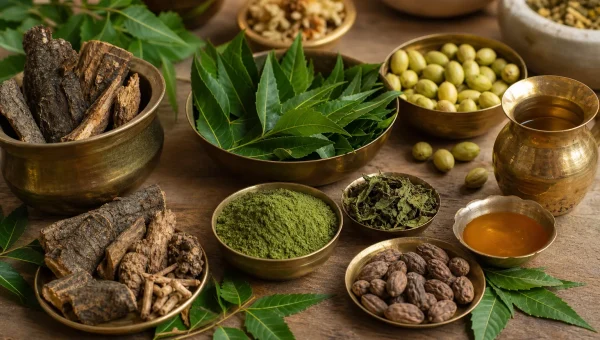
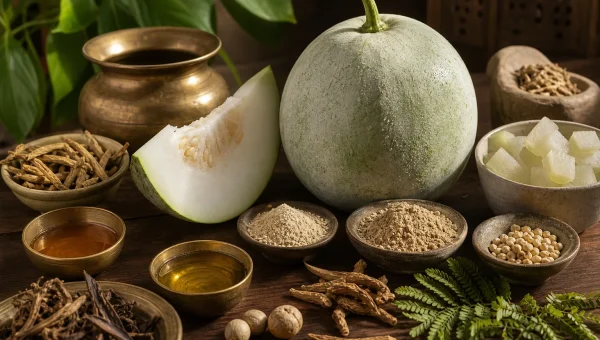
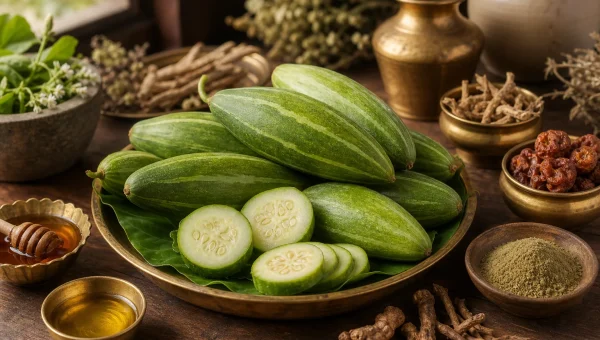
The classical Charaka formulation is built around Amalaki (Phyllanthus emblica, Indian gooseberry), supported by a large group of roots, fruits, aromatics, fats, sweeteners, and final powdered additions. Charaka’s recipe uses 500 amalaki fruits with herbs such as bilva, agnimantha, shyonaka, kashmarya, patala, bala, shalaparni, prishniparni, pippali, gokshura, brihati, kantakari, draksha, jivanti, pushkaramula, guduchi, musta, punarnava, vidari, vasa, kakoli, and others, followed by ghee, sesame oil, sugar candy, honey, and aromatic powders.
Modern standardized versions may vary in exact ingredient lists, but the core logic remains the same: amalaki provides the fruit base; Dashamoola-type roots and related herbs support the respiratory and musculoskeletal systems in Ayurvedic terms; pippali supports digestion and delivery; guduchi, bala, shatavari, ashwagandha, and similar herbs may appear in later or standardized formulations for strength, nourishment, and Rasayana support; ghee and sesame oil act as lipid media; sugar or jaggery gives preservation and structure; and honey is added only after the mixture has cooled.
- Amalaki: the backbone of the formulation and one of Ayurveda’s most valued Rasayana fruits.
- Pippali: a warming digestive herb traditionally used to support agni and the movement of herbs through the system.
- Guduchi: a Rasayana herb included in classical lists under the name amrita.
- Bala and nourishing roots: used for strength, tissue support, and recovery from depletion.
- Ghee and sesame oil: used to process the amalaki pulp and carry lipid-soluble plant constituents.
- Honey: mixed after cooling, in keeping with the Ayurvedic rule against heating honey.
- Aromatic powders: such as cardamom, cinnamon leaf/bark, and nagakeshara are added toward the end to complete the formulation.
The cooking process matters as much as the ingredient list. In the classical method, amalaki is boiled with the herbal decoction, the seeds are removed, the pulp is fried in ghee and sesame oil, the decoction is reduced with sugar into a linctus, and honey and fine aromatic powders are added after the preparation is cooked and cooled. This sequence is part of the formulation’s samskara, the Ayurvedic idea that processing transforms the qualities of the finished medicine-food.
Classical Benefits, Kept in Context
Charaka places Chyawanprash in the Rasayana chapter and associates it with cough, breathlessness, hoarseness, chest disorders, depletion, aging, childhood growth, strength of the senses, memory, complexion, longevity, digestive fire, and proper movement of vata. These descriptions belong to the Ayurvedic clinical framework and should be understood as traditional indications rather than a substitute for modern diagnosis or treatment.
From an Ayurvedic perspective, the formula is especially valued when the body is depleted, digestion is weak but still responsive, respiratory strength needs support, or seasonal changes challenge resilience. Its sweet-sour-spiced profile and nourishing base make it more of a daily tonic than a quick symptomatic remedy.
What Contemporary Investigation Adds
Published work on Chyawanprash includes laboratory assays, animal models, and human clinical studies. In vitro work has reported effects on macrophage phagocytosis, dendritic-cell cytokines, and natural killer cell activity. A two-arm randomized open-label multicenter clinical study in school-age children used Cyavanaprāśa with milk over six months and reported fewer illness-related episodes and improvements in energy, strength, stamina, and quality-of-life measures compared with the control group.
These findings fit the traditional use of Chyawanprash as a daily Rasayana, but the practical takeaway remains modest and sensible: it belongs in the category of supportive food-medicine, not emergency care, not an antibiotic, not an antiviral, and not a replacement for vaccination, medical evaluation, or prescribed treatment.
The Simplified Home Recipe
A complete classical Chyawanprash is difficult to prepare at home because it requires many herbs, careful proportions, and a specific cooking sequence. The recipe below is therefore not the full classical formulation. It is a practical amalaki-based Rasayana-style preparation that preserves the main Ayurvedic logic: amla as the base, ghee and sesame oil as processing media, warming aromatics, pippali for digestive support, and honey added only after cooling.
Ingredients
Use clean, fresh ingredients and prepare a small batch. Because this is a homemade food preparation rather than a commercially tested product, refrigeration and freshness matter.
| Ingredient | Quantity | Notes |
|---|---|---|
| Fresh amla (Indian gooseberry) | 500 g | Use firm fruits; remove seeds after boiling |
| Ghee | 3 tablespoons | Used to process the amla pulp |
| Sesame oil | 1 tablespoon | Cold-pressed sesame oil is preferred |
| Jaggery or raw cane sugar | 200-250 g | Adjust to taste; also helps preserve texture |
| Pippali powder | 1 teaspoon | Use less if heat, acidity, or burning sensation is present |
| Cardamom powder | 1 teaspoon | Freshly ground is best |
| Cinnamon powder | 1/2 teaspoon | Use true cinnamon if available |
| Turmeric powder | 1/4 teaspoon | Optional; keep the amount small |
| Ashwagandha powder | 1 teaspoon | Optional; avoid in pregnancy, breastfeeding, liver disease, and unsupervised use with sedatives, thyroid medicine, immunosuppressants, or other prescriptions |
| Shatavari powder | 1 teaspoon | Optional; traditionally nourishing, but use under guidance in pregnancy or hormone-sensitive conditions |
| Raw honey | 1 tablespoon | Add only after the mixture is warm, not hot |
Method
Keep the heat low and stir frequently. The goal is a thick, glossy, dark amla jam with the herbs folded in after the main cooking is complete.
- Cook the amla: Boil the fresh amla fruits in enough water to cover them until soft. Drain, cool slightly, remove the seeds, and mash the pulp into a smooth paste.
- Prepare the lipid base: Warm the ghee and sesame oil in a heavy-bottomed pan on low heat. Add the amla paste and stir until the mixture thickens and begins to pull together.
- Add the sweetener: Add jaggery or raw cane sugar and continue cooking on low heat until fully dissolved and integrated into a jam-like consistency.
- Add powdered herbs and spices: Turn off the heat. When the mixture is warm but no longer hot, stir in pippali, cardamom, cinnamon, turmeric, and any optional herbs being used.
- Add honey last: Once the mixture has cooled to a comfortable warm temperature, stir in the honey. Do not boil or cook after adding honey.
- Store safely: Transfer to a clean, dry glass jar. Refrigerate and use a clean, dry spoon each time. Make small batches and discard if there is mold, fermentation, off-smell, or visible spoilage.
Dosage and How to Take It
Classically, Charaka gives the most important dosing rule: take only as much as does not interfere with appetite and digestion. For many adults, this means starting with 1 teaspoon daily, preferably in the morning, followed by warm milk or warm water. Those with stronger digestion may use a larger amount, but heavy, sweet Rasayana preparations are best increased gradually.
For children, elders, pregnant or nursing women, people with diabetes, liver disease, autoimmune conditions, chronic digestive disorders, or anyone taking prescription medicine, dosing should be individualized by a qualified practitioner. Children under five should not be given herbal Rasayana preparations without professional guidance.
Seasonally, Chyawanprash is especially associated with colder months and periods when strength, respiratory comfort, and steady nourishment are priorities. If it causes heaviness, coating on the tongue, acidity, loose stools, nausea, or reduced appetite, the dose is too high or the timing is unsuitable.
Why Commercial Brands Vary So Much
Commercial Chyawanprash products differ in sweetness, amla content, herb list, texture, flavor, and manufacturing quality. Some follow classical or Ayurvedic Formulary-style ingredient logic more closely, while others are modern proprietary products with altered sweeteners, flavorings, or simplified herb lists.
When buying, look for a transparent ingredient list, amla as a major ingredient, no unnecessary artificial coloring, a valid manufacturing license, GMP-style quality controls, and clear testing for contaminants such as heavy metals. If a product is marketed as sugar-free, diabetic-friendly, or fortified, read the label carefully because those changes alter the classical formulation.
- Check the first ingredients: amla and traditional base ingredients should be prominent.
- Avoid bright artificial colors: traditional Chyawanprash is dark brown to blackish-brown.
- Prefer tested products: choose manufacturers that disclose quality testing and contaminant screening.
- Read sweetener details: sugar, jaggery, or sugar substitutes change both taste and traditional processing.
Who Should Be Careful
Chyawanprash is widely used as a daily tonic, but it is still a dense polyherbal preparation. The sweet base may be unsuitable for some people with diabetes or insulin resistance unless supervised. The warming spices and pippali may aggravate acidity, burning sensation, mouth ulcers, or strong pitta presentations in sensitive individuals.
Pregnant and nursing women should not self-prescribe Chyawanprash, especially homemade versions containing optional herbs such as ashwagandha. People with liver disease, autoimmune disease, thyroid disorders, cancer treatment plans, organ transplants, anticoagulant use, immunosuppressant use, or multiple prescription medications should consult a qualified healthcare provider before using it regularly.
Quality is also a safety issue. Ayurvedic products from unreliable sources may be contaminated or mislabeled. Buy only from trusted manufacturers with clear testing standards, and stop use if any unusual symptoms appear.
Beyond Immunity: The Rasayana Effect
In Ayurveda, the deeper value of Chyawanprash is its Rasayana role. Rasayana therapy is concerned with longevity, vitality, tissue quality, ojas, digestion, and the proper functioning of channels. Chyawanprash supports this aim through a combination of fruit, roots, aromatics, fats, sweeteners, and careful processing.
The simplified recipe above is a practical kitchen adaptation, not a replacement for the full classical formulation prepared by a trained vaidya. Still, making it carefully can reconnect the daily routine with one of Ayurveda’s central insights: nourishment, digestion, season, and medicinal plants are meant to work together.
Safety Note: This recipe and dosage information is for general educational purposes only. Individuals with chronic health conditions, diabetes, liver disease, autoimmune disease, pregnancy, breastfeeding, children, elders, and anyone taking prescription medications should consult a qualified Ayurvedic practitioner and healthcare provider before using Chyawanprash or any herbal preparation.
References
- Charaka Samhita — Rasayana Adhyaya
- Mdpi (mdpi.com)
- Evaluation of immunostimulatory activity of Chyawanprash using in vitro assays (2015), PubMed
- Evaluation of Cyavanaprāśa on Health and Immunity related Parameters in Healthy Children: A Two Arm, Randomized, Open Labeled, Prospective, Multicenter, Clinical Study (2017), PubMed
- Studies on the physicochemical characteristics of heated honey, honey mixed with ghee and their food consumption pattern by rats (2010), PubMed Central
- NCCIH
- FDA
- Nchfp (nchfp.uga.edu)
My family has had a matka of Chyawanprash in the kitchen every winter since before I was born. Reading the specific herbs and mechanisms described here tells me what we were taking and why. The folk tradition contained a sophisticated formulation that we followed without understanding the clinical reasoning.
The sugar content variation between traditional and modern formulations is relevant for diabetic and pre-diabetic readers. Is there a meaningful clinical difference between honey-based traditional Chyawanprash and sugar-free commercial preparations in terms of bioavailability and therapeutic outcome?
The primary Amalaki Vitamin C content and its role in preserving the other herbs in the formulation is a piece of Ayurvedic pharmaceutical logic that I hadn’t previously understood. Amalaki isn’t just one ingredient. It’s also the preservation system for the entire preparation.
What’s the evidence specifically for Chyawanprash versus isolated Amalaki versus isolated Ashwagandha? The synergy claim between 49 herbs is interesting but if the primary active components are a few well-studied herbs, simplifying the formulation might produce equivalent outcomes with better quality control.
I gave Chyawanprash to my children through every winter for five years. The comparison to years before that protocol is difficult to control for but their respiratory illness frequency felt lower and severity felt milder during those years. Parent observation isn’t clinical data but it reinforced continuation.
The safest part of the Chyawanprash advice is keeping it simple. The main idea is clear even if someone is new to Ayurveda.
My integrative medicine doctor actually mentioned this herb last month so finding this detailed write-up feels like perfect timing. The research references at the bottom are really reassuring.
Wonderful to see someone from a medical background engaging with this content thoughtfully
the part about preparations really helped me understand why the powder form I was using wasn’t working as well as the decoction my practitioner switched me to. Such an important distinction
the combination approach you described is exactly what my practitioner recommended too. Validation always feels good.
I appreciate that you included the safety section and didn’t just hype benefits. That kind of balanced reporting is rare and it makes me trust the rest of the information more.
I was nodding along reading your comment. Exactly my experience too
I liked the practical side of Chyawanprash. The safety notes could be expanded a little.
I had the exact same confusion about this. Glad the article cleared it up for both of us.
I’ve been researching Ayurvedic herbs for my mother who has kidney issues and this is the most thorough explanation I’ve found online. The dosage section especially is helpful. Sharing this with her doctor.
The professional background you bring to this comment is really valuable. Thank you for reading and contributing.
Really appreciate the mention of quality sourcing. So much of what’s sold online is adulterated. Your guidance on what to look for when buying is genuinely useful
I ordered this from an Ayurvedic supplier after reading this post. Just received it today, wish me luck! I’ll check back in a few weeks with an update.
The manufacturing quality variation between artisanal and mass-produced Chyawanprash is a significant concern. Standardizing a 49-herb formulation produces a different product than the traditional preparation and the clinical outcomes from studied preparations may not generalize to the commercial brands most consumers buy.
Im a naturopath and I share quality Ayurvedic content with my clients. This one is going straight into my resources folder. The contraindications section is thorough and honest.
This helped me understand Chyawanprash without too much jargon. Would be useful to see a short checklist next.
Visiting India next month and planning to consult an Ayurvedic physician there. This article is helping me prepare intelligent questions. Thank you for the depth.
Been lurking on this site for a while. This is the post that finally made me create an account to comment. Such thorough research. Keep doing what you’re doing.
The morning consumption with warm milk instruction is consistent across every source I’ve found. Is there a specific reason timing matters for Chyawanprash or is the morning timing traditional rather than pharmacologically necessary?
Started this about six weeks ago. First two weeks I noticed nothing, then around week three something shifted. Digestion is smoother, less brain fog in the mornings. Cautiously optimistic.
The traditional context you provided alongside the modern research is what sets this apart. So many articles do one or the other. This does both beautifully
does anyone know if the quality differs significantly between brands? I’ve tried two and noticed what seemed like a difference in potency but wasn’t sure if I was imagining it.
I’ve been taking this herb for about three months now and the difference is genuinely noticeable. My energy levels have improved and the chronic bloating I used to struggle with has reduced significantly. Thank you for putting this together so clearly.
Same here! The practitioner recommendation made all the difference for me. Don’t try to do this without guidance
The section on preparation methods is gold. I’d been making it wrong for months. No wonder results were inconsistent. Switching to the decoction method this week.
Grew up in a household where my grandmother used herbal remedies like this and seeing the science now validate what she always believed is so satisfying. This kind of content bridges the gap so well
Your persistence through the adjustment period is inspiring. I’m currently in it and your comment helps.
Three months of daily Chyawanprash during the winter and I had zero sick days compared to four sick days the previous winter. I work in an open office environment with consistent exposure. The sample size is one and the prior year was a bad flu season but the contrast was notable.
The safest part of the Chyawanprash advice is keeping it simple. I would still ask a practitioner before changing medicines.
Would love a follow-up post on herb interactions, specifically with common supplements like ashwagandha and triphala. A lot of us take multiple things and it’s hard to find clear guidance.
My Ayurvedic practitioner recommended this to me last year and I wasn’t sure at first, but after reading your breakdown of the clinical evidence I feel much more confident. Really well-written article
It’s wonderful to see both believers and skeptics engaging respectfully in the comments. That’s how we all learn.
The safest part of the Chyawanprash advice is keeping it simple. I appreciate that it does not oversell the result.
My concern with articles like this is that people might delay proper medical treatment. A stronger disclaimer would be responsible
This is constructive feedback we take seriously. We’ve added a note about consulting with your healthcare provider, especially if you’re on existing medications.
Helpful for beginners but if you already know the basics, there’s not much new here. Was hoping for more advanced protocols
We appreciate your candid feedback. You’re right that we should distinguish more clearly between traditional knowledge and clinical evidence. We’re working on adding more research citations.
Can Chyawanprash be used year-round or is it specifically a winter Rasayana? Some practitioners I’ve consulted advise stopping in summer because of the warming herbs in the base formulation. Others recommend year-round use with seasonal dosage adjustments.
The amalaki backbone really stands out, especially knowing its vitamin C stays stable after cooking.
The safest part of the Chyawanprash advice is keeping it simple. This is the kind of detail readers can test slowly.
I wonder how the sequential addition of powdered herbs affects the final taste compared to mixing everything at once.
The historical attribution to Ashwini Kumara and the sages of the forest and the classical story of the aging sage whose youth was restored is the narrative frame that makes Chyawanprash memorable. The story encodes the indication in a way that ensures it gets passed down with its clinical context intact.
Using ghee and sesame oil as lipid media makes sense for extracting fat soluble compounds from ashwagandha and turmeric.
It’s interesting that the recipe calls for raw honey only after the mixture cools below 40°C to preserve its enzymes.
One thing I noticed is the suggestion to increase the dose to a tablespoon twice daily for adults over 60 during recovery.
The seasonal tip about taking it from November through March lines up with when Kapha tends to accumulate.
I appreciate the warning about diabetics needing to watch sugar content, even though jaggery acts as a preservative.
Seeing that commercial brands vary so much in vitamin C levels makes me want to check the label for amla as the first ingredient.
The study on NK cell activity after 60 days of supplementation caught my eye as a concrete immune marker.
Adding black pepper for bioavailability seems like a small tweak that could enhance the absorption of curcumin from turmeric.
I’ve never tried shatavari in a jam before; it’s noted as optional but recommended for women’s tissue nourishment.
The advice to store the finished chyawanprash in a glass jar at room temperature for up to three months feels practical.
It’s good to see a reminder to consult a physician if you’re on blood thinners because of the amla vitamin C content.
The concept of Samskara, or pharmaceutical transformation, explains why the cooking process matters as much as the ingredient list.
I made a small batch at home following the recipe here and the process of sourcing the amla and preparing it was almost as valuable as the final product. One question: the recipe calls for clarified ghee as the base fat, but I have seen some preparations use sesame oil instead. Is there a traditional reason for preferring one over the other in the original formulation?
Making a simplified version at home still captures the synergistic effect of the polyherbal blend, even without the full 40+ ingredients.
The long-tail effect of consistent Ayurvedic practice is real. Month 1 I was skeptical. Month 4 the cumulative effect is undeniable for my insomnia.
Tried several brands of bibhitaki before finding one that worked. The CoA (certificate of analysis) is the key quality indicator I look for now.
@Kiran Exactly what I was thinking. Same results on my end after about 10 weeks.
What brand of shatavari do you recommend? I’m finding huge quality differences between suppliers.
I was told my low energy might be constitutionally driven. The Vata-pacifying protocol has been more effective than the generic one I tried first.
The mention of 1g in warm milk as the research-backed dose for neem aligns with what I see in the PubMed abstracts I’ve been reading.
This topic comes up a lot in my family since we have a tradition of Ayurvedic home remedies. Nice to see the scientific context alongside. ✨
Just got my quarterly blood panel back. Inflammation markers are down from last quarter. Attributing some of that to consistent amalaki use.
The advice around Chyawanprash is specific enough to be useful. Good starting point for a cautious reader.
I’ve recommended this article to 3 people from my yoga class who were asking about natural approaches to memory.
The two capsules dosage mentioned in this post matches exactly what my Ayurvedic doctor prescribed. Good to see it confirmed here.
The 3g dose of moringa seems standard across multiple sources I’ve checked. Good to see consistency in the recommendation.
@Deepak Exactly what I was thinking. Same results on my end after about 10 weeks.
Good reminder on Chyawanprash. Would be useful to see a short checklist next.
I keep this article bookmarked for when people ask me about natural approaches to stress. It explains the basics well without being condescending.
The article mentions combining guduchi with turmeric. Is there a specific ratio recommended? 🙏
My grandmother used to give us trikatu every winter. Never knew the full reasoning behind it until I started reading articles like this.
The reduction in digestion severity was gradual enough that I almost didn’t notice until I compared my symptom diary from week 1 to week 8.
I came for Chyawanprash and this answered the main question. The main idea is clear even if someone is new to Ayurveda.
The specific guidance on storing amalaki away from heat and moisture is practical. I had to relocate my herb storage after reading this.