
Nobody warned me how painful the days after birth would be, and I say this as someone who had a relatively uncomplicated vaginal delivery. The stitches, the swelling, the first bathroom visits, the inability to sit comfortably for two weeks – I was not prepared. What helped me most, in the end, was my mother-in-law arriving from Thrissur and immediately taking over the kitchen and bathroom with something she had been making for women in our family for three generations: the morning herbal sitz bath that she called “the medicine that lives in the bucket.”
It is worth telling you what happened when I eventually researched the actual science behind what she was doing. Neem for antimicrobial action. Turmeric for wound healing acceleration. Sesame oil for soothing and tissue support. Triphala for cleansing and reducing swelling. These are not folk customs that survived because of tradition alone. They survived because they work, and the modern wound healing literature is now explaining the mechanisms behind practices that our grandmothers used with complete confidence.
The Anatomy of Postpartum Perineal Trauma
Perineal trauma occurs in up to 90% of first-time vaginal births. It ranges from minor first-degree lacerations (involving skin only) to fourth-degree tears (through the anal sphincter). Even with episiotomy repair or well-sutured spontaneous tears, the perineal region faces significant healing challenges:
- High bacterial load from proximity to the rectum
- Constant mechanical stress from sitting, walking, and urination
- Hormonal environment of early postpartum that alters wound healing (estrogen drop reduces collagen synthesis rate)
- Sleep deprivation and nutritional demand of breastfeeding further slow systemic healing
Ayurveda classifies postpartum perineal healing within the broader Sutika Paricharya (postpartum care protocol), specifically the Garbhashaya Shuddhi and Yoni Prakshalana (uterine recovery and perineal/vaginal washing) practices. Postnatal care is described in the Charaka Samhita Sharira Sthana (chapter 8, Jatisutriya Shariram) and in the Sushruta Samhita Sharira Sthana (10/16-18), not in the Uttara Tantra.
The Ayurvedic Sitz Bath: Three Formulations
In classical surgery these warm herbal washes correspond to Avagaha Sweda (sitz or tub immersion) and Parisheka/Prakshalana (pouring and washing of the wound) – herb-laden water used to cleanse the site, soothe pain and swelling, and encourage healthy granulation. The three formulations below cover the common postpartum scenarios: routine healing, higher infection risk, and a cooling bath for inflamed Pitta-type tissue.
Formula 1: The Classic Triphala Sitz Bath
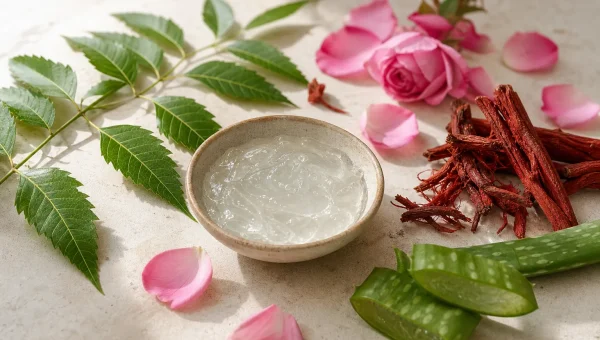
This is the most frequently used postpartum wash preparation. The three fruits – Haritaki, Amalaki, and Vibhitaki – provide complementary cleansing and wound-healing activity.
Ingredients:
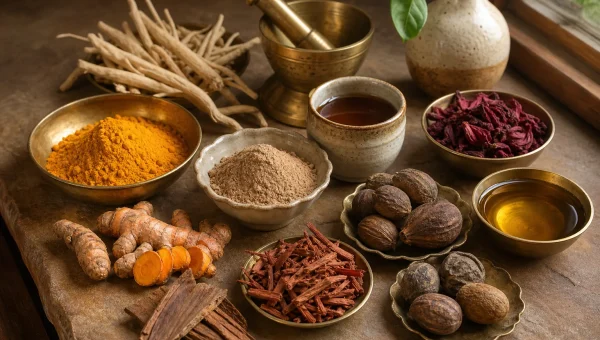
- 30 g Triphala churna (combined powder of three fruits)
- 10 g turmeric powder (Haridra)
- 5 g neem leaf powder (Nimba)
- 1 teaspoon rock salt (Saindhava lavana)
- 2 liters water
Preparation: Bring water to boil. Add all herbs. Simmer on low heat for 15-20 minutes. Strain thoroughly through fine cloth. Cool to comfortable temperature (37-40°C). Pour into clean sitz bath basin or shallow tub.
Protocol: 15-20 minutes soak, twice daily – morning and evening – for the first 14 days. Pat dry gently. Do not rub.
Evidence and classical basis: Triphala is one of the foremost Vrana Shodhana and Vrana Ropana (wound-cleansing and wound-healing) drugs of classical surgery; Sushruta repeatedly recommends Triphala kashaya (decoction) for Prakshalana – washing of wounds. Modern preclinical work supports this traditional use: in an infected full-thickness dermal wound model, a Triphala preparation accelerated wound closure, lowered bacterial counts, and raised collagen, hexosamine, and antioxidant (superoxide dismutase) levels compared with controls. Robust clinical trials of Triphala specifically as a postpartum sitz bath are still limited, so it is best used as an adjunct to – not a replacement for – standard perineal care.
Formula 2: Neem-Sesame Antibacterial Sitz Bath
For women with confirmed wound infection risk (signs of early inflammation, third/fourth degree tears, diabetes or immune compromise), this preparation provides stronger antimicrobial activity.
Ingredients:
- 25 g neem leaf powder
- 15 g turmeric
- 10 g Amla powder
- 5 g Lodhra (Symplocos racemosa) – astringent, hemostatic
- 2 tablespoons sesame oil
- 2 liters water
Prepare as above, adding sesame oil last (after cooling to about 40°C) to form a mild oil emulsion. Sesame oil contributes lignans – sesamin, sesamolin, and sesaminol are antioxidants that help protect collagen from oxidative damage, while sesamol additionally shows mild antimicrobial activity. These complement the antimicrobial action of Neem, which comes chiefly from its terpenoids and limonoids (nimbidin, nimbin, azadirachtin) rather than from alkaloids.
Formula 3: The Soothing Rose-Vetiver Bath
For women without significant trauma who primarily need cooling, soothing relief from swelling and discomfort, particularly those with Pitta constitution or summer birth:
Ingredients:
- 2 tablespoons rose petal powder or 4 tablespoons fresh rose petals
- 10 g Ushira (Vetiveria zizanioides) root powder
- 10 g Chandana (Sandalwood) powder
- 5 g Amalaki powder
- 1.5 liters cool-to-lukewarm water (cooler than the Triphala bath)
Six-Week Sitz Bath Schedule
The bath and the post-bath oil are stepped down as the wound matures – from twice-daily antimicrobial washes in the first week toward gentle, soothing, once-daily care by weeks five and six.
| Week | Recommended Bath | Frequency | Additional Application |
|---|---|---|---|
| Week 1 | Triphala + Neem | Twice daily | Jatyadi oil after each bath |
| Week 2 | Triphala sitz bath | Twice daily | Sesame oil or Dhanwantaram oil |
| Week 3-4 | Triphala sitz bath or Rose-Vetiver | Once daily | Panchaguna oil or coconut oil |
| Week 5-6 | Rose-Vetiver sitz bath | Every other day | Sesame oil gentle massage to perineum |
Herbal Oils for Post-Bath Application
Once the wound has been cleansed by the sitz bath, a thin film of medicated oil (Sneha) supports Vrana Ropana – the healing and re-epithelialization phase – while keeping the tissue supple and reducing scar contracture. Two classical oils are most useful here.
Jatyadi Oil: The Wound Healing Standard
Jatyadi Taila is the classical Ayurvedic wound-healing oil. In the Sushruta and Sharangadhara tradition it is a multi-herb medicated sesame oil (around nineteen ingredients); its principal herbs include Jati (Jasminum grandiflorum), Nimba (Neem), Haridra (Turmeric), Manjistha, and Lodhra. A few drops applied to clean gauze and gently placed against the perineal wound site after each sitz bath provides:
- Antimicrobial protection (Neem, Jati)
- Scar tissue reduction (Manjistha promotes even collagen organization)
- Wound closure support (Lodhra’s astringent tannins tighten tissue)
- Soothing of the wound surface (sesame oil base keeps tissue supple)
Jatyadi Taila is available from Kottakkal, Arya Vaidya Sala, and other GMP-certified Ayurvedic manufacturers and does not need to be prepared at home.
Dhanwantaram Oil: For Deep Tissue Recovery
Dhanwantaram Taila is a classical medicated sesame oil built on Bala (Sida cordifolia) and the Dashamoola (ten roots), processed with milk; it is documented in the Ashtanga Hridaya and the Kerala compendium Sahasrayogam. Ingredient counts vary across recensions, so there is no single fixed formula and no established “65-herb” version. Widely used in Kerala postnatal care, it pacifies Apana Vata (the downward-moving vital force governing pelvic-floor function) and supports deep-tissue recovery beyond the surface wound layer. It is best used externally for perineal and lower-back massage; any internal (oral) use of Dhanwantaram Taila should only be undertaken on the dosing and advice of a qualified Ayurvedic physician.
Internal Herb Protocol for Systemic Postpartum Healing
The sitz bath addresses local tissue. These internal herbs support systemic recovery, milk production, and uterine healing. Begin any internal regimen in consultation with your practitioner, especially while breastfeeding:
- Shatavari (Asparagus racemosus): 3 grams powder in warm milk twice daily. A classical galactagogue (Stanyajanana) that supports lactation and nourishes the postpartum body. Begin after delivery.
- Ashoka (Saraca asoca) bark: 500 mg standardized extract twice daily. Classically the foremost drug for Raktapradara/Asrigdara (excessive uterine bleeding); with its Sheeta Virya (cooling potency) and astringent, Stambhana (flow-checking) action it helps control heavy lochia and ease uterine cramping (Garbhashaya Shula). It is a uterine tonic for bleeding, not an agent that stimulates uterine tissue growth.
- Triphala churna: 3 grams at bedtime in warm water. Prevents constipation (the enemy of perineal healing) and supports gentle daily elimination during recovery.
- Haritaki: 500 mg at bedtime specifically for women who had episiotomies or third-degree tears. Supports regular, soft bowel movements so the healing perineum is not strained.
Always inform your midwife, OB, or postpartum care team about any herbal preparations you are using. Most Ayurvedic sitz bath preparations are safe and may be used alongside standard care, but individual wound assessment requires professional monitoring, particularly for second-degree and above tears. Consult your Ayurvedic practitioner for a personalized postpartum protocol.
For the broader postpartum nutritional protocol including galactagogue foods and Ayurvedic confinement diet, see the guidance at the Ayurvedic breast milk quality guide. Information on Ayurvedic mastitis management for breastfeeding mothers is available at the mastitis protocol guide.
References
- Sciencedirect (sciencedirect.com)
- Therapeutics Role of Azadirachta indica (Neem) and Their Active Constituents in Diseases Prevention and Treatment (2016), PubMed Central
- Curcumin as a wound healing agent (2014), PubMed
- Anti-Inflammatory and Skin Barrier Repair Effects of Topical Application of Some Plant Oils (2017), PubMed Central
- Postpartum Use of Shavari Bar® Improves Breast Milk Output: A Double-Blind, Prospective, Randomized, Controlled Clinical Study (2022), PubMed Central
- Easyayurveda (easyayurveda.com)
- Easyayurveda (easyayurveda.com)
- Planetayurveda (planetayurveda.com)
- Netmeds (netmeds.com)
- Charaka Samhita — Sutika Paricharya
- Rcog (rcog.org.uk)
My mother-in-law arrived from Thrissur two days after my delivery and immediately set up the herbal sitz bath routine. I had stitches from a second-degree tear and the maternity ward nurse had given me cold packs and told me to wait. The difference the warm herbal bath made in the first week was not subtle. The hospital-recommended protocol now seems inadequate by comparison.
I had an episiotomy with my first birth and the recovery was much harder than my second birth where I used a herbal sitz bath protocol from day three. The triphala and dashamoola combination my vaidya recommended was different from what you describe here. Are there significant regional variations in the classical sitz bath formula?
As a midwife I have started recommending warm herbal sitz baths to all my postpartum patients after seeing the research on wound healing acceleration with heat and antimicrobial herbs. I would love to see clinical trial data specifically on the Ayurvedic formulas. The anecdotal evidence from my patients is consistent but not rigorous.
For Postpartum Perineal Healing, consistency seems like the hard part. The article avoids making it sound like a quick fix.
Can this protocol be used after a c-section? I had an emergency section with my first and am pregnant now, likely another section. My incision area has been numb for two years. I want to prepare properly this time but am not sure which elements of the perineal protocol apply to abdominal delivery.
I tried the sesame oil perineal massage starting at 36 weeks based on recommendations similar to what is described here. My midwife said the tissue was significantly more supple than she expected for a first birth. I had a small graze rather than a tear. Sample size of one but I will absolutely do this again.
What’s the shelf life of the prepared postpartum formulations? I ask because some preparations I’ve used seemed less potent after 2-3 months.
I remember reading about the mother-in-law from Thrissur who brought her special bucket sitz bath and how it reminded me of the stories my own family tells about after birth care.
I wish I had known about this with my first delivery. The hospital sent me home with ibuprofen, a spray bottle, and a pamphlet. I sat on a frozen pad for three days. Recovery was miserable and slow. By my second child I knew to prepare differently and the experience was genuinely different.
My concern is whether the herbs recommended, particularly neem and triphala, are safe for use so close to the genital-anal area when breastfeeding. Some of the systemic absorption through perineal skin is unknown and I would want reassurance from a practitioner before using anything medicinal in that area postpartum.
How do you distinguish between a genuine healing response and placebo when monitoring progress with postpartum? What objective markers should I track?
I wonder if the neem and sesame sitz bath is safe for someone with gestational diabetes or should they stick to the plain triphala wash first.
For Postpartum Perineal Healing, consistency seems like the hard part. The examples make the advice less abstract.
The mix of triphala powder turmeric and neem leaf powder sounds simple enough to try at home after boiling water and letting it cool to a comfortable temperature.
I showed this to my OB and she was not dismissive but she asked about sterility of the herbal preparation. Her concern was that a home-prepared herbal decoction used on a fresh perineal wound creates infection risk if the water source or herbs are contaminated. She suggested at minimum boiling the water and cooling to appropriate temperature. Worth noting for readers.
been using ayurvedic protocols for 2 years and this is one of the more accurate breakdowns ive seen ❤️
The part about the warm oil massage timing hit me hard because my mother-in-law kept insisting on it and I kept refusing because I was too tired and sore to let anyone near me. Reading this I understand now what she was trying to do. Wish I had been more open to it. ❤️
Bookmarked this to share with my mother who has been struggling with the same issue for years.
is this suitable for pitta dominant people or mainly vata? i get confused about the cross-dosha applications ठीक है
Just found this post, the section 3 protocol seems intensive for a beginner, any lighter version.
not sure i trust the quality of supplements available online, too many adulterated products out there
Just had my second baby three weeks ago and this article came at the right time. The sitz bath described here is very close to what my aunt brought when she visited but she used more triphala in hers. Can the herb ratios vary by region or is there a standard preparation?
I want to flag that for some women the oil application mentioned may not be appropriate right after delivery if there are open sutures. The timing guidance in the article is helpful but I think it deserves a stronger caution. My midwife specifically said to wait until the stitches had fully closed before any oil contact.
anyone know if this is okay for kids or only adults? my 14 year old has similar symptoms
The recipe proportions seem higher than what I see in other sources, is the difference intentional.
my constitution is vata-pitta, the article seems to focus on one or the other, any advice
I have low Agni according to my vaidya, does that change which phase to start with.
been following this for 3 weeks now and my energy levels are much better, the protocol you described really clicked for me
This helped me understand Postpartum Perineal Healing without too much jargon. This would be easier to follow with a one-week sample plan.
Helpful 💯
Quick question: does the dosage change if someone is also on metformin? asked my doc but he wasn’t sure.
My mother did something very similar after both my sister and I were born. I always assumed it was just a local family custom but seeing the actual herb names here I recognize most of them from what she described. Did not realize how systematic it was. Sharing this with my wife who is due in August.
My wife had a very difficult recovery after our son was born and we had no idea these kinds of protocols existed. Reading this makes me wish we had known at the time. Is the sitz bath preparation something a husband can reasonably put together at home, or does it really need someone who knows the herbs well to get right?
some of these claims are very strong for what is essentially anecdote-level evidence
This helped me understand Postpartum Perineal Healing without too much jargon. This feels more usable than a long list of herbs.
How do I know if I’m seeing genuine results vs just placebo? any markers to watch.
The Pitta protocol in here did not work well for me, caused a lot of heat and skin irritation.
packaging this as science when most of it is tradition makes me skeptical, need more rigorous sourcing 🙏
Two months in and my symptoms are actually slightly worse, stopping and going back to basics.
While the article cites preclinical studies I would like to see more randomized trials before recommending the herbal sitz bath as a routine part of postpartum care.
can pregnant women follow this or are there modifications? the article doesn’t address that specifically 🙏
my functional medicine doctor had mentioned something similar, good to have the ayurvedic framing too ✨
is there a hindi or regional language resource you’d recommend alongside this for my parents 🌿
How long before seeing results typically? the article mentions 4 to 6 weeks but is that for everyone.
Started the sitz bath routine on day four postpartum and noticed real relief by day six. The swelling came down much faster than it did after my first delivery when I used nothing. Not placebo I think because the difference was obvious enough that my husband noticed without me saying anything.
where are the actual clinical trials for this? referencing classical texts is fine but i need rct data before trying
the table in the middle of the article was very clear but i couldn’t figure out the seasonal column
just started exploring ayurveda after years of allopathy, this is helpful as an intro but still a lot to absorb
What would the western equivalent supplement be for someone who can’t get the herb locally.
The dosage here seems higher than what my Ayurvedic doctor recommended, a bit concerned.
Starting this next week, will come back to report results in about a month.
quick question: does the dosage change if someone is also on metformin? asked my doc but he wasn’t sure
the specific morning timing recommendation is practical, most articles skip that detail entirely
is this suitable for pitta dominant people or mainly vata? i get confused about the cross-dosha applications
Where can you source the herbs in India outside of major cities? I’m in a tier-2 town.
How does this compare to the classic Ashtanga Hridayam recommendation on the same topic.
For a summer birth the rose and vetiver cooling bath seems like a gentle way to ease swelling without adding heat to the inflamed tissue.
Would this protocol work if I travel frequently and can’t maintain a fixed routine.
I was looking for a plain explanation of Postpartum Perineal Healing. I would still ask a practitioner before changing medicines.
late to this but wanted to ask, do these recommendations still hold or has newer research changed anything
I was looking for a plain explanation of Postpartum Perineal Healing. This is the kind of detail readers can test slowly.
noted
this is the kind of content that makes people delay real medical care, that concern is valid
@Divya followed the dosage table exactly for 10 days and my sleep improved, will continue ✨
The science section feels thin, I’d want to see more than cell studies before calling something proven.
After each sitz bath I plan to apply a thin layer of jatyadi oil on clean gauze and leave it on the perineal area to keep the tissue supple.
Feels like a lot of the advice is very general, my case is quite specific and this didn’t really address it.
the dosage here seems higher than what my ayurvedic doctor recommended, a bit concerned
starting this next week, will come back to report results in about a month
what brand of the extract do you personally use or recommend? the market is full of fake products
tried this for 6 weeks and saw no difference, maybe im applying it wrong but nothing changed for me
tried the morning routine for 2 months, gave up. the timing is impossible with a 9 to 5 job and kids
Is this suitable for Pitta dominant people or mainly Vata? I get confused about the cross-dosha applications.
can pregnant women follow this or are there modifications? the article doesn’t address that specifically
this works in theory but practically very hard to source authentic herbs in most parts of india
started the triphala protocol you described in the third section, two weeks in and digestion is noticeably smoother
The advice around Postpartum Perineal Healing is specific enough to be useful. The practical details matter more than people think.
Tried the morning routine for 2 months, gave up. the timing is impossible with a 9 to 5 job and kids.
Just started exploring Ayurveda after years of allopathy, this is helpful as an intro but still a lot to absorb.
feels like a lot of the advice is very general, my case is quite specific and this didnt really address it
Been eating the kitchari variation from this post 4 days a week, feels lighter in the mornings. 🙏
The advice around Postpartum Perineal Healing is specific enough to be useful. I appreciate that it does not oversell the result.
how does this compare to the classic ashtanga hridayam recommendation on the same topic
@Lakshmi Tried this for 6 weeks and saw no difference, maybe I’m applying it wrong but nothing changed for me.
The advice around Postpartum Perineal Healing is specific enough to be useful. The main idea is clear even if someone is new to Ayurveda.
What brand of the extract do you personally use or recommend? the market is full of fake products.
the recipe proportions seem higher than what i see in other sources, is the difference intentional
Will try this
does anyone know if this works with the churna form or only the tablet? cant find ksm-66 locally
appreciate that this goes into contraindications, most blogposts skip that part
The Postpartum Perineal Healing angle is useful here. Would be useful to see a short checklist next.
Same here
just found this post, the section 3 protocol seems intensive for a beginner, any lighter version
The Postpartum Perineal Healing angle is useful here. The timing advice is the part I would start with.
where can u source the herbs in india outside of major cities? i’m in a tier-2 town
Packaging this as science when most of it is tradition makes me skeptical, need more rigorous sourcing.
how long before seeing results typically? the article mentions 4 to 6 weeks but is that for everyone
what would the western equivalent supplement be for someone who can’t get the herb locally
shared this with my sister who is a yoga teacher and she said the dosing info was spot on
read this twice and took notes, the distinction between shamana and shodhana applications is really helpful
@Laura where r teh actual clinical trials for this? referencing classical texts is fine but i need rct data before trying
how does this compr to the classic ashtanga hridayam recommendation on the same topic
My vaidya recommended something similar last month, good to see the science backing it up here.
Off topic but has anyone here tried this approach for hair loss? curious if similar principles apply. ✨
Good reminder on Postpartum Perineal Healing. I would still ask a practitioner before changing medicines.
what would the western equivalent supplement be for someone who cant get the herb locally
Good reminder on Postpartum Perineal Healing. The article avoids making it sound like a quick fix.
Doing this
where are teh actual clinical trials for this? referencing classical texts is fine but i need rct data before trying
two months in and my symptoms are actually slightly worse, stopping and going back to basics
finally someone explains the theory behind it and not just the recipe, this made sense to me 💯
Not sure I trust the quality of supplements available online, too many adulterated products out there.
The table in the middle of the article was very clear but i couldn’t figure out the seasonal column.
the part about adjusting based on prakriti was exactly what i needed to understand, thanks
the science section feels thin, i’d want to see more than cell studies before calling something proven
would this protocol work if i travel frequently and can’t maintain a fixed routine
I came for Postpartum Perineal Healing and this answered the main question. I would still ask a practitioner before changing medicines.
My constitution is Vata-Pitta, the article seems to focus on one or the other, any advice.
just found this post, teh section 3 protocol seems intensive for a beginner, any lighter version
been eating the kitchari variation from this post 4 days a week, feels lighter in the mornings
Followed the dosage table exactly for 10 days and my sleep improved, will continue.