
Mastitis can develop suddenly during breastfeeding: a painful, hot, swollen, or reddened area of one breast may be accompanied by fever, chills, body aches, headache, or marked fatigue. Redness may be less obvious on darker skin, so increasing warmth, tenderness, swelling, firmness, and changes in breast texture are also important signs. Mastitis is most common early in lactation, especially during the first postpartum month, but it can occur at any stage.
Reported frequency varies substantially because studies use different definitions and follow-up periods. A systematic review found that incidence is highest during the first four postpartum weeks, while an individual six-month cohort reported mastitis in approximately 20% of participants. These figures should not be presented as a universal rate for all breastfeeding women.
Current clinical guidance no longer treats every episode as a simple “blocked duct that became infected.” Mastitis is understood as a spectrum beginning with ductal inflammation and tissue edema. Some episodes remain inflammatory and improve with conservative care; others progress to bacterial mastitis, phlegmon, galactocele, or breast abscess. Fever and flu-like symptoms can occur from inflammation even when bacterial infection has not been established.
This distinction matters because older advice to repeatedly heat, deeply massage, and “empty” the affected breast can worsen swelling and stimulate oversupply. The safest approach combines physiological breastfeeding, anti-inflammatory care, assessment of feeding technique, and prompt medical treatment when bacterial infection or abscess is suspected.
The Ayurvedic Understanding: What the Classical Texts Actually Say
Classical Ayurveda discusses diseases of the breast, but it does not contain a biomedical diagnosis exactly equivalent to modern lactational mastitis. The Sushruta Samhita, Nidana Sthana chapter 10, describes Stana Roga, diseases affecting the breast, and discusses Stana Vidradhi, a mammary abscess or suppurative breast disorder. It explains that aggravated doshas affecting the local flesh and blood can produce mammary disease and compares the signs of mammary abscess with those of external abscesses.
Stanya Dushti, by contrast, refers to classical descriptions of altered or vitiated breast milk and its perceived effects. It should not be used as a direct synonym for mastitis. A contemporary Ayurvedic practitioner may interpret pain, heat, swelling, heaviness, tenderness, or impaired milk flow through dosha-based clinical reasoning, but that interpretation must not replace examination for bacterial infection, cellulitis, galactocele, or abscess.
The Sushruta Samhita, Chikitsa Sthana chapter 17, advises removing milk in cases of Stana Vidradhi. That historical instruction supports maintaining milk flow and avoiding abrupt suppression of lactation. It should, however, be applied according to current lactation physiology: allow normal feeding and express only what is needed for comfort or infant intake rather than repeatedly forcing the breast to become “empty.”
Classical categories such as Vata-, Pitta-, Kapha-, and blood-associated presentations are historical diagnostic frameworks, not descriptions of specific bacteria or modern inflammatory pathways. Claims that milk stasis is literally Ama, or that one dosha is the proven cause of mastitis, should therefore be presented as interpretive Ayurvedic theory rather than established biomedical fact.
First Response: Reduce Inflammation and Feed Physiologically
For early inflammatory symptoms, the Academy of Breastfeeding Medicine recommends measures that reduce edema rather than intensify milk production. Many mild inflammatory episodes improve without antibiotics, but a breastfeeding parent should remain in contact with a physician, midwife, or qualified lactation professional, particularly when fever or systemic symptoms are present.
- Continue breastfeeding on demand: Let the baby feed according to normal hunger cues. There is usually no need to avoid the affected breast, but do not add repeated feeds solely to clear it or attempt to empty it completely.
- Use cold for comfort: Apply a cloth-wrapped cold pack for approximately 10 minutes at a time. Cold can reduce pain and swelling. Do not place ice directly on the skin.
- Use pain relief appropriately: Paracetamol or ibuprofen are commonly compatible with breastfeeding when medically suitable. Follow the product label or a clinician’s instructions, and avoid ibuprofen when a medical contraindication is present.
- Express only what is needed: If swelling or pain prevents effective attachment, gently hand-express a small amount for comfort or to feed the infant. Excessive pumping can increase milk production and prolong inflammation.
- Rest and maintain normal nourishment: Rest as much as circumstances allow, eat regular meals, and drink according to thirst. A supportive but non-constricting bra may improve comfort.
- Check latch and pump fit: A qualified lactation professional can assess attachment, milk transfer, nipple pain, pump-flange size, suction settings, and signs of oversupply.
Abrupt weaning is generally not required and can worsen breast fullness and inflammation. When feeding directly from the affected side is temporarily too painful, milk may be removed gently for comfort and infant feeding while professional advice is obtained.
Why the Old Warm-Compress and Deep-Massage Protocol Was Removed
Warmth may briefly feel soothing or help milk let-down for some people, but sustained or frequent heat causes vasodilation and may increase edema. The revised Academy of Breastfeeding Medicine protocol notes that warm showers did not improve outcomes in a randomized trial. It therefore favors cold application and anti-inflammatory care over repeated hot compresses.
Deep massage is also discouraged. Firm kneading, vibrating devices, forceful squeezing, and attempts to push a supposed plug toward the nipple can cause microvascular injury, increased swelling, bruising, and tissue trauma. When touch is comfortable, it should be light and superficial, similar to gentle lymphatic sweeping, rather than deep pressure.
Sesame oil, turmeric paste, castor-oil packs, saline soaks, and other topical poultices have not been shown to resolve lactational mastitis. Applying oily or abrasive products to acutely inflamed skin may cause irritation, trap moisture, or contaminate the nipple area. Any substance placed near the nipple would also need to be safely removed before feeding.
Ayurvedic Food Support During Recovery
Ayurvedic postpartum care traditionally favors freshly prepared, warm, digestible meals. This can be a practical way to maintain nourishment when appetite and energy are low, but food remains supportive care rather than a substitute for antibiotics or abscess drainage. There is no clinical evidence that cold food mechanically blocks milk ducts or that ordinary dietary sugar directly feeds bacteria inside the breast.
- Simple meals: Mung dal, rice, soft vegetables, soups, porridge, or khichari may be easier to eat during fever or fatigue.
- Adequate protein and energy: Continue a balanced lactation diet rather than fasting, detoxing, or adopting a highly restrictive regimen during illness.
- Turmeric and garlic as foods: Normal culinary amounts are generally compatible with breastfeeding. They may be used for flavor, but neither has been proven to cure bacterial mastitis.
- Normal hydration: Water, milk, soups, and other usual fluids may be taken according to thirst. Forced overhydration has not been shown to resolve inflammation or reliably increase milk production.
Herbs During Breastfeeding: Evidence and Limits
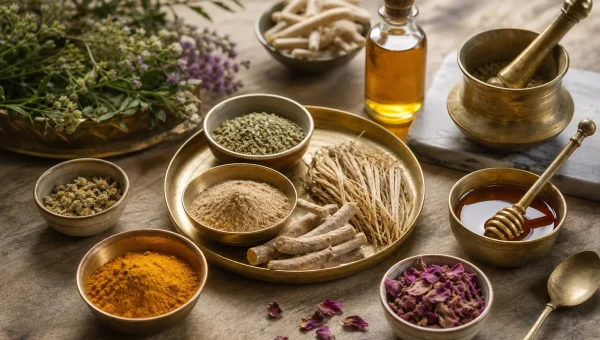
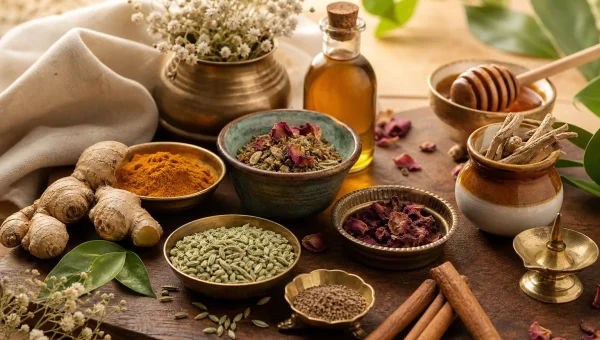
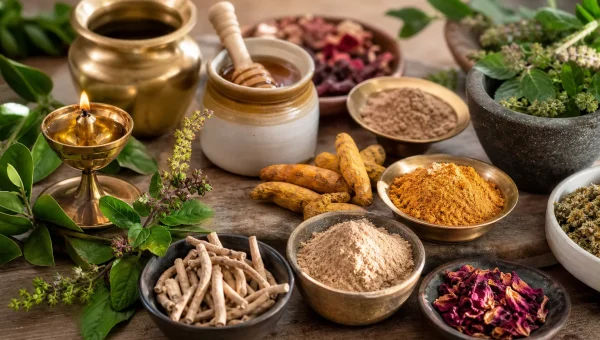
Medicinal-dose herbs should not be treated as automatically safe because they are traditional. The amount reaching breast milk is unknown for many herbal constituents, commercial supplements may vary in identity and concentration, and products can be contaminated or adulterated. An herb that increases milk production may also be counterproductive when oversupply is contributing to inflammation. No herb discussed below has reliable clinical evidence as a treatment for bacterial mastitis.
Shatavari (Asparagus racemosus)
Shatavari is an authentic Ayurvedic medicinal plant traditionally used as a galactagogue. LactMed describes mixed evidence: some small controlled studies reported improvements in early milk volume or prolactin-related outcomes, while other studies found no clear benefit. Safety has not been rigorously established, although small studies have not identified major maternal or infant adverse effects.
Shatavari should not be started automatically during mastitis, especially when the breast is already overfull or milk production is excessive. The earlier fixed recommendation of five grams twice daily has been removed because an appropriate dose depends on the preparation, product quality, maternal health, feeding pattern, and infant circumstances.
Turmeric (Curcuma longa, Haridra)
Turmeric is acceptable in normal culinary amounts during breastfeeding. LactMed notes that data are lacking on the excretion of turmeric constituents into human milk, and no clinical trial establishes oral or topical turmeric as a mastitis treatment. Concentrated curcumin products can cause gastrointestinal symptoms or allergic reactions, while some enhanced-bioavailability formulations have been associated with rare liver injury.
The earlier recommendation to combine a teaspoon of turmeric with black pepper twice daily has been removed. Piperine can alter the absorption and metabolism of medicines, and concentrated products should not be assumed safe during breastfeeding merely because turmeric is commonly used as a food.
Fenugreek (Trigonella foenum-graecum, Methika)
Fenugreek is widely used as a galactagogue, but systematic reviews and LactMed describe inconsistent efficacy and limited nursing-safety evidence. Reported adverse effects include gastrointestinal upset, allergic reactions, worsening asthma, lowered blood glucose, interactions with warfarin, and a maple-syrup-like odor in sweat, urine, or milk.
Fenugreek can also contribute to excessive production in some users and is not an antimicrobial treatment for mastitis. Culinary use is different from taking concentrated seed powders or extracts. The unsupported claim that clinical trials consistently increase milk volume by 20–30% has been removed.
Lodhra and Amalaki
Lodhra (Symplocos racemosa) and Amalaki (Emblica officinalis, also accepted botanically as Phyllanthus emblica) are authentic Ayurvedic drugs, but reliable human evidence for treating lactational mastitis is lacking. The previous Lodhra-bark compress and fixed Amalaki powder dose have therefore been removed.
Their use during breastfeeding should be individualized by a qualified Ayurvedic practitioner who can verify the botanical material, product quality, formulation, dose, maternal conditions, concurrent medicines, and the infant’s age and health. They must not delay evaluation of persistent fever, bacterial infection, or a breast mass.
Antibiotics and Breastfeeding
Antibiotics are not required for every inflammatory episode, but they are appropriate when bacterial mastitis is suspected, systemic symptoms persist, symptoms worsen despite careful conservative management, or examination suggests cellulitis. Common organisms include Staphylococcus and Streptococcus species, but the older explanation that infection is always caused by Staphylococcus aureus entering through a nipple crack is too simplistic.
First-line choices in the Academy of Breastfeeding Medicine protocol include dicloxacillin or flucloxacillin where available and cephalexin. Allergy history, local antimicrobial resistance, previous cultures, maternal health, and clinical findings determine the final prescription. Antibiotic selection and duration must be decided by a healthcare professional.
Breastfeeding usually continues during bacterial mastitis and while taking commonly prescribed compatible antibiotics. Milk from the affected breast is considered safe for a healthy infant. If symptoms do not improve after approximately 48 hours of first-line treatment, clinicians may obtain a milk culture and evaluate for resistant organisms, phlegmon, galactocele, or abscess. Do not use leftover antibiotics or shorten a prescribed course without medical advice.
When to Seek Medical Care Urgently
Early professional contact is appropriate whenever mastitis causes fever, marked pain, or rapid change. Seek same-day medical advice if symptoms are not beginning to improve within 12–24 hours of careful home measures, and seek urgent assessment sooner if you feel severely unwell.
- Persistent or rising fever, shaking chills, rapid heart rate, faintness, confusion, dehydration, or inability to keep fluids down
- Rapidly spreading redness, worsening swelling, severe pain, blistering, or unusual skin discoloration
- A firm enlarging mass, fluctuant or fluid-like lump, or symptoms that improve and then return, which may indicate phlegmon or abscess
- No clear improvement within approximately 48 hours after beginning prescribed antibiotics
- Repeated episodes in the same breast location, a nipple wound that is not healing, or a mass that persists after the acute illness
- A sick, unusually sleepy, feverish, or poorly feeding infant
A breast abscess generally requires ultrasound assessment and drainage in addition to appropriate antimicrobial care. Repeated inflammation in the same location warrants clinical examination and imaging to exclude an underlying mass or another breast disorder.
Preventing Recurrence
There is no verified universal recurrence rate of 25%, and recurrence should not be prevented with routine Shatavari, daily breast oil massage, or preventive antibiotics. Current guidance focuses on identifying factors that perpetuate inflammation, trauma, dysbiosis, or oversupply.
- Feed responsively: Continue normal on-demand breastfeeding without scheduling extra “emptying” sessions.
- Avoid unnecessary pumping: Pump only when needed for separation, infant intake, or comfort, using a correctly fitted flange and moderate suction.
- Avoid deep breast massage: Use only light touch and stop if pressure increases pain, swelling, or redness.
- Address oversupply: Hyperlactation can maintain edema and inflammation and may require a professionally supervised feeding plan.
- Review latch and nipple pain: Obtain skilled help for persistent trauma, painful feeding, or ineffective milk transfer.
- Investigate genuine recurrence: Repeated bacterial episodes may require examination, milk culture, and imaging rather than repeated empirical treatment.
For broader postpartum nourishment, see our guide on Ayurvedic breast milk quality and Stanya Poshana. General Abhyanga may be used as a relaxing postpartum ritual when medically appropriate, but the acutely inflamed breast should not be deeply massaged or coated with oil.
Further Reading
The most useful references are the Academy of Breastfeeding Medicine mastitis protocol, the World Health Organization review, NHS patient guidance, LactMed monographs for breastfeeding exposures, and the classical Sushruta passages concerning Stana Roga and Stana Vidradhi.
- Academy of Breastfeeding Medicine Clinical Protocol #36: The Mastitis Spectrum, Revised 2022
- World Health Organization: Mastitis—Causes and Management
- NHS: Mastitis
- LactMed: Wild Asparagus, Fenugreek, Turmeric, and Garlic
- Sushruta Samhita, Nidana Sthana 10 and Chikitsa Sthana 17
References
- Bfmed (bfmed.org)
- Incidence of and Risk Factors for Lactational Mastitis: A Systematic Review (2020), PubMed
- Incidence of mastitis in breastfeeding women during the six months after delivery: a prospective cohort study (1998), PubMed
- World Health Organization
- NHS
- Wisdomlib — classical text
- Wisdomlib — classical text
- Ayurvedic Pharmacopoeia of India
- NCBI
- Randomized controlled trial of Asparagus racemosus (Shatavari) as a lactogogue in lactational inadequacy (1996), PubMed
- NCBI
- NCCIH
- NCBI
- NCBI
- NCBI
- The role of bacteria in lactational mastitis and some considerations of the use of antibiotic treatment (2008), PubMed
I had mastitis twice with my first child and antibiotics cleared it both times but the recurrence rate was frustrating. With my second I started the warm compress and pippali milk protocol the moment I felt the first signs of engorgement and did not develop full mastitis once. I cannot claim causality but the timing is suggestive.
I am a lactation consultant and I routinely recommend warm compresses and gentle massage as first-line before antibiotics for early mastitis. Reading the Ayurvedic explanation for why these interventions work gives my clinical recommendation a pharmacological basis I did not previously have.
Started the inflammation protocol my Ayurvedic doctor recommended last summer and my energy has been noticeably more consistent. This explains the mechanism.
The article recommends continuing breastfeeding through mastitis which is correct and evidence-based. But it also recommends several herbal preparations that are not fully evaluated for safety in breastfeeding infants. I want those two pieces addressed together, not separately.
My doctor in Bangalore suggested something similar but used different herbs. Is there regional variation in how Ayurvedic practitioners approach this condition?
I noticed the redness was harder to see on my skin tone, so focusing on warmth and tenderness helped me spot early mastitis.
The Mastitis section feels grounded enough to try carefully. This is the kind of detail readers can test slowly.
What’s the shelf life of the prepared inflammation formulations? I ask because some preparations I’ve used seemed less potent after 2-3 months.
The Mastitis section feels grounded enough to try carefully. I appreciate that it does not oversell the result.
Using a cloth wrapped cold pack for ten minutes a few times a day eased the pain without making me pump more.
The research cited here is from the 2015-2020 period. Is there more recent work that confirms or updates these findings?
I wondered if continuing to breastfeed on demand would actually worsen the swelling, but the article says it’s fine as long as you don’t overdo it.
I am a nurse-midwife and I shared this with my postpartum unit team. The integrative approach combining antibiotic management with herbal anti-inflammatory support is something some of my colleagues are now exploring for patients with recurrent mastitis.
The advice to avoid deep massage made sense; I tried gentle stroking instead and felt less bruising.
I appreciated the note about turmeric in food being okay, but I’ll skip the concentrated curcumin supplements while nursing.
The Mastitis section feels grounded enough to try carefully. The safety notes could be expanded a little.
where can you source the herbs in india outside of major cities? im in a tier-2 town 🌿
late to this but wanted to ask, do these recommendations still hold in 2027? ✨
quick question: does the dosage change if someone is also on other medication? ❤️
this works in theory but practically very hard to source authentic herbs
I was looking for a plain explanation of Mastitis. This feels more usable than a long list of herbs.
appreciate that this goes into contraindications, most blog posts skip that part ठीक है
just found this post, teh section 3 protocol seems intensive for a beginner, any lighter version?
the cabbage leaf evidence is anecdotal, and combining it with herbal remedies without medical supervision worries me
Same here
Bookmarked this to share with my mother who has been struggling with the same issue.
how long before seeing results? the article mentions 4 to 6 weeks but is that for everyone
Tried the morning routine from this article and noticed a difference by day 5. 🙏
The Pitta protocol here caused a lot of heat and skin irritation for me.
where can you source the herbs in india outside of major cities? im in a tier-2 town
my vaidya recommended something similar last month, good to see the reasoning explained
quick question: does the dosage change if someone is also on other medication?
Mastitis can turn into abscess quickly, this article should be clearer that medical evaluation comes first.
It’s useful to know that fenugreek can increase milk supply, which might not be helpful when you’re already dealing with oversupply.
the section on pitta-aggravating foods to avoid during breastfeeding was something no one had told me before
the article mentions shatavari for milk supply does it also help with the infection or just supply?
just started exploring ayurveda after years of allopathy, still a lot to absorb 🙌
When my fever spiked, I called my midwife right away, just as the article suggests for persistent systemic symptoms.
my functional medicine doctor mentioned something similar, helpful to have the ayurvedic framing too
where are the actual clinical trials? i need rct data before trying anything
packaging this as science when most of it is tradition makes me skeptical
at what point should someone stop trying herbal approaches and go directly to antibiotics?
Starting this next week, will report back in about a month.
As a first-time mother this protocol was clear and actionable, I used it alongside guidance from my lactation consultant. 💯
नमस्ते, मेरी बहन को भी दूसरे बच्चे के बाद मास्टाइटिस हुई थी और एंटीबायोटिक के साथ-साथ घर के नुस्खे भी चले। आपने जिस गर्म पोटली का जिक्र किया, क्या वो एकदम शुरुआती लक्षणों पर काम करती है या जब बुखार आ जाए तभी? हमारे यहाँ भी माँ ऐसी ही कुछ जड़ी-बूटियाँ लाती थीं।
@Laura Is this safe to use while continuing to breastfeed or does the treatment require stopping feeds temporarily? धन्यवाद
The specific morning timing recommendation is practical, most articles skip that detail.
The dosage here seems higher than what my Ayurvedic doctor recommended.
at what point should someone stop trying herbal approaches and go directly to antibiotics? 🙏
is this safe to use while continuing to breastfeed or does teh treatment require stopping feeds temporarily?
appreciate that this goes into contraindications, most blog posts skip that part
where are the actual clinical trials? i need rct data before trying anything ✨
My functional medicine doctor mentioned something similar, helpful to have the Ayurvedic framing too.
Will try
Some of these claims are very strong for what is essentially anecdote-level evidence.
Where can you source the herbs in India outside of major cities? I’m in a tier-2 town.
Reading this after finding it on Google, is this dosage still recommended?
Packaging this as science when most of it is tradition makes me skeptical.
The part about not needing to empty the breast completely relieved my anxiety about pumping constantly.
would this protocol work if i travel frequently and cant maintain a fixed routine
followed the dosage table for 10 days and my sleep improved, will continue 🙏
is this suitable for pitta dominant people or mainly vata?
Been following this for 3 weeks and my energy levels are much better, the protocol described here really clicked for me.
the pitta protocol here caused a lot of heat and skin irritation for me
as a first-time mother this protocol was clear and actionable, i used it alongside guidance from my lactation consultant
The part about adjusting based on prakriti was exactly what I needed.
is this safe to use while continuing to breastfeed or does the treatment require stopping feeds temporarily?
Tried the morning routine for 2 months, gave up the timing is impossible with kids and a job.
Would this protocol work if I travel frequently and can’t maintain a fixed routine.
As a first-time mother this protocol was clear and actionable, I used it alongside guidance from my lactation consultant.
at what point should someone stop trying herbal approaches and go directly to antibiotics? ❤️
I found the distinction between inflammatory mastitis and bacterial infection clarifying, especially regarding when antibiotics might be needed.
Will try this
Helpful
Followed the dosage table for 10 days and my sleep improved, will continue 🙏. धन्यवाद
starting this next week, will report back in about a month
tried this for 6 weeks and saw no difference, maybe im applying it wrong
just started exploring ayurveda after years of allopathy, still a lot to absorb
where can you source the herbs in india outside of major cities? i’m in a tier-2 town
tried the morning routine for 2 months, gave up the timing is impossible wth kids and a job
Good reminder on Mastitis. A few more examples would still help.
late to this but wanted to ask, do these recommendations still hold in 2027?
my constitution is vata-pitta, the article seems focused on one or the other
Reading about the Ayurvedic view of Stana Vidradhi made me curious about how traditional texts approach breast abscesses.
My wife went through mastitis with our first baby and the antibiotics cleared the infection but left her with such bad gut issues she almost stopped breastfeeding anyway. Wish we had known about the herbal warm compress approach back then. Did you find the fever responded to the herbal protocol on its own or did you still end up needing the antibiotics alongside it?
Good reminder on Mastitis. This would be easier to follow with a one-week sample plan.
Good reminder on Mastitis. The safety notes could be expanded a little.
The suggestion to eat simple meals like khichari and mung dal felt doable when I was low on energy.
just found this post, the section 3 protocol seems intensive for a beginner, any lighter version?
Just started exploring Ayurveda after years of allopathy, still a lot to absorb.
This works in theory but practically very hard to source authentic herbs.
Good reminder on Mastitis. I would like to know how long to try it before judging results.
I came for Mastitis and this answered the main question. A few more examples would still help.
Would this protocol work if I travel frequently and can’t maintain a fixed routine. 🙏
Tried the morning routine from this article and noticed a difference by day 5.
The cabbage leaf evidence is anecdotal, and combining it with herbal remedies without medical supervision worries me.
I liked that the article warns against routine Shatavari for prevention, since evidence isn’t strong.
How long before seeing results? the article mentions 4 to 6 weeks but is that for everyone.
been following this for 3 weeks and my energy levels are much better, the protocol described here really clicked for me
It’s reassuring to know that breastfeeding can continue while on antibiotics like dicloxacillin, if a doctor approves.
The warning about warm showers not improving outcomes made me switch to cold compresses exclusively.
is this suitable for pitta dominant people or mainly vata? धन्यवाद
is this safe to use while continuing to breastfeed or does the treatment require stopping feeds temporarily? 🌿
I’ll keep an eye out for a firm lump or returning pain after treatment, as those could signal an abscess needing drainage.
mastitis can turn into abscess quickly, this article should be clearer that medical evaluation comes first
at what point should someone stop trying herbal approaches and go directly to antibiotics? 💯
just found this post, the section 3 protocol seems intensive for a beginner, any lighter version? 💯
some of these claims are very strong for what is essentially anecdote-level evidence
is this safe to use while continuing to breastfeed or does the treatment require stopping feeds temporarily? ठीक है
I came for Mastitis and this answered the main question. Good starting point for a cautious reader.
is this suitable for pitta dominant people or mainly vata? 🌿
The part about Mastitis feels realistic. Would be useful to see a short checklist next.
the part about adjusting based on prakriti was exactly what i needed
The part about Mastitis feels realistic. The article avoids making it sound like a quick fix.
Where are the actual clinical trials? I need RCT data before trying anything.
Off topic but has anyone here tried this approach for hair loss? ❤️
My constitution is Vata-Pitta, the article seems focused on one or the other.
bookmarked this to share with my mother who has been struggling with the same issue
starting this next week, will report back in about a month 🙏
the specific morning timing recommendation is practical, most articles skip that detail
Some of these claims are very strong for what is essentially anecdote-level evidence. 🙏
Doing this
some of these claims r very strong for what is essentially anecdote-level evidence
late to this but wanted to ask, do these recommendations still hold in 2027? 🙏
This makes sense for Mastitis. This is the kind of detail readers can test slowly.
Appreciate that this goes into contraindications, most blog posts skip that part.
tried the morning routine from this article and noticed a difference by day 5
the section on pitta-aggravating foods to avoid during breastfeeding was something no one had told me before नमस्ते
As a first-time mother this protocol was clear and actionable, I used it alongside guidance from my lactation consultant. 🙌
This makes sense for Mastitis. The main idea is clear even if someone is new to Ayurveda.
is this suitable for pitta dominant people or mainly vata? 🙏
teh cabbage leaf evidence is anecdotal, and combining it with herbal remedies without medical supervision worries me
This makes sense for Mastitis. Good starting point for a cautious reader.