
When afternoon sweet cravings feel relentless, the first Ayurvedic question is often not “how do I suppress dessert?” but “was lunch truly complete?” A thin, rushed, overly light, or mostly sweet-starchy midday meal can leave hunger, low satisfaction, and a search for fast sweetness later in the day. An Ayurvedic sugar reset therefore begins by rebuilding the main meal around nourishment, digestive steadiness, and the full range of tastes rather than by treating sweet taste as the enemy.
Why Ayurveda Classifies Sweet Taste Differently
Ayurveda recognizes six tastes: sweet (madhura), sour (amla), salty (lavana), pungent (katu), bitter (tikta), and astringent (kashaya). Sweet taste is not inherently wrong. In classical Ayurvedic language, madhura rasa is nourishing, building, strength-supporting, and generally pacifying to Vata and Pitta when used appropriately. The difficulty begins when sweet taste becomes excessive, isolated, and unsupported by bitter, pungent, sour, astringent, protein-rich, fiber-rich, and satisfying foods. Excess sweet taste is Kapha-promoting and can contribute to heaviness, dullness, and the desire for still more sweetness.
For a sugar reset, the practical distinction is between sweetness that arrives within a complete food or meal and sweetness that arrives as a concentrated add-on. Dates, grains, milk, root vegetables, and seasonal fruits contain sweet taste within a broader food matrix. White sugar, syrups, sweet drinks, candy, and frequent desserts concentrate sweetness and make it easy to exceed ordinary appetite signals. The goal is not to erase sweetness from life; it is to reduce repeated exposure to sharp added sweetness until naturally sweet foods taste satisfying again.
The Three Phases of an Ayurvedic Sugar Reset
This 21-day reset is a food-level dietary practice, not a medical detox. It focuses on lunch structure, taste balance, steady meals, and reducing added sugars gradually enough that the palate can adjust without turning the process into punishment.
Eat a complete lunch daily
Include dal, grains, vegetables, and healthy fat
Add bitter or astringent taste daily
Use fruit or one date only if truly hungry
Keep meals regular, warm, and satisfying
Choose whole fruit instead of juice
Add methi, karela, greens, or other bitter foods
Use sour and pungent tastes to complete the meal
Avoid skipping lunch
Notice whether cravings follow under-eating
Use jaggery or honey only as small accents
Never cook honey or add it to boiling liquids
Maintain bitter and astringent foods
Build lunch before changing dessert
Set a long-term meal rhythm
The Bitter Taste as Antidote
The most useful counterweight to constant sweetness is tikta rasa, the bitter taste. In a practical Ayurvedic sugar reset, bitter foods prevent lunch from becoming only soft, sweet, salty, and starchy. Bitter taste adds contrast, sharpens the palate, and supports the broader rasa profile of a complete meal. Bitter receptors are also present in the gut and participate in digestive hormone signaling, which makes bitter taste more than a surface flavor.
Karela, known in Ayurveda as karavallaka, is a strong example. The Ayurvedic Pharmacopoeia of India describes it as predominantly bitter and pungent in taste, light in quality, hot in potency, and pungent in post-digestive effect, with traditional use that includes prameha. Fenugreek, or methi, brings a bitter-aromatic note through its leaves or seeds and is easy to place in ordinary meals. During a reset, bitter foods should be used as culinary support, not as a replacement for medical care or glucose management.
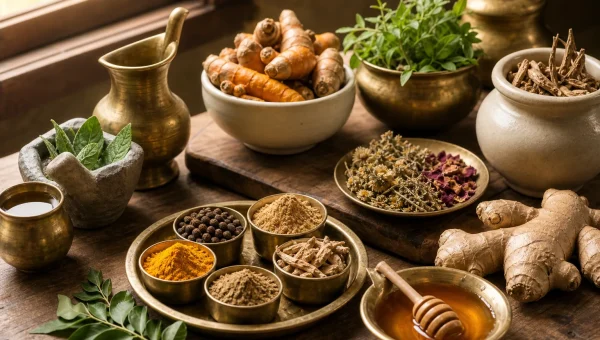
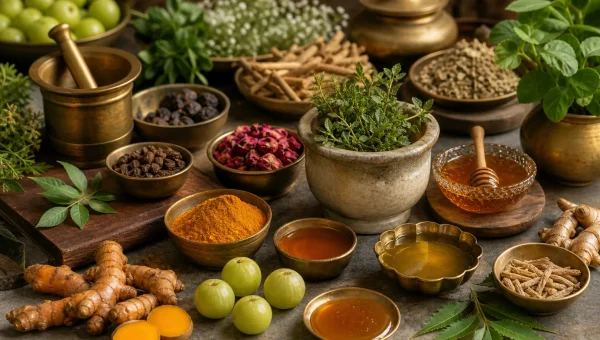
Good bitter and balancing foods for this reset include karela, fresh methi leaves, small amounts of fenugreek seed in cooking, arugula, dandelion greens, mustard greens, turmeric used as a spice, and dark leafy vegetables. Concentrated herbal extracts and powders should be used only with practitioner guidance, especially for anyone pregnant, breastfeeding, prone to low blood sugar, diagnosed with diabetes, or taking glucose-lowering medication.
Natural Sweeteners in Ayurveda
The transition away from refined sugar does not require eliminating sweet taste. It means choosing sweetness deliberately, in small amounts, and preferably as part of a complete meal. Jaggery, honey, and dates all have a place in Ayurvedic food culture, but none of them are sugar-free or unlimited. For diabetes, prediabetes, hypoglycemia, metabolic syndrome, pregnancy, or medication use, sweetener choices should be individualized with a qualified practitioner or healthcare provider.
Jaggery (guda): Jaggery is made from concentrated sugarcane juice and is recognized in the Ayurvedic Pharmacopoeia of India. Classically, it carries sweet taste and a nourishing quality, but it is also Kapha-promoting when used excessively. Nutritionally, it remains a concentrated sugar. In a reset, jaggery is best used as a small culinary accent, such as a pinch in a bitter vegetable dish, not as a health license to replace white sugar spoon-for-spoon.
Honey (madhu): Honey is one of Ayurveda’s most nuanced sweet substances. Classical and pharmacopoeial descriptions present it as sweet with an astringent undertone, drying in quality, and traditionally useful where Kapha and heaviness predominate. The important rule is that honey should not be heated, cooked, baked, or added to boiling drinks. If used, add a small amount only after food or liquid has cooled to a warm, comfortable temperature.
Dates (kharjura): Dates are classically nourishing, sweet, heavy, and unctuous, making them more food-like than refined sugar. They are still concentrated in carbohydrate, so portion matters. During a reset, one or two dates with nuts, seeds, or a meal is more appropriate than date syrup, date paste desserts, or repeated snacking. Dates can help the palate return to whole-food sweetness without keeping the same intensity of refined sugar.
A Reset Recipe: Spiced Methi and Karela Sabzi
This dish uses bitter taste as a lunch correction. Karela brings the direct bitter edge, methi adds bitter-aromatic depth, amchur brings sourness, spices add pungency, and dal or chapati completes the meal with steadiness. It is not meant to taste like dessert; it is meant to make lunch more complete so the palate does not keep searching for sweetness later.
Ingredients (serves 2)
Use fresh vegetables when possible and keep the jaggery optional. Its role is to round the bitterness, not to make the dish sweet.
- 2 medium bitter melons (karela), seeded, sliced thin, sprinkled with salt for 20 minutes, then rinsed
- 1.5 cups fresh fenugreek leaves, or 3 tablespoons dried kasuri methi
- 1 medium onion, sliced thin
- 2 cloves garlic, minced
- 1 teaspoon mustard oil
- 1/2 teaspoon cumin seeds
- 1/4 teaspoon turmeric
- 1/4 teaspoon coriander powder
- 1/4 teaspoon dry mango powder (amchur)
- Salt to taste
- 1/2 to 1 teaspoon jaggery, optional
Method
Warm the mustard oil in a pan and lower the heat once aromatic. Add cumin seeds, then onion and garlic, and cook until lightly golden. Add the rinsed karela slices and cook for about 8 minutes, stirring occasionally. Add turmeric, coriander powder, and fenugreek leaves. Stir well, cover, and cook for 5 more minutes. Add amchur, salt, and the optional jaggery. Serve with chapati and warm moong dal so the meal contains bitter, sour, pungent, sweet, salty, and astringent elements in a balanced way.
Sugar Reset Nutrition Reference
The table below is a practical guide rather than a permission list. Whole-food sweetness is preferred, added sweeteners are kept small, and anyone managing blood sugar should treat even natural sweeteners as concentrated sources of carbohydrate.
| Sweet Source | Ayurvedic/Nutrition Note | Reset Use | Caution |
|---|---|---|---|
| White sugar and sweet drinks | Concentrated added sugar without meaningful fiber or meal structure | Avoid during the 21-day reset | Easy to overuse and poor for satiety |
| Jaggery (guda) | Traditional sugarcane product; sweet and nourishing, but still concentrated sugar | Use only as a small accent in food | Not a low-sugar substitute |
| Honey (madhu) | Sweet with astringent undertone; traditionally Kapha-reducing when used properly | Use rarely, in small unheated amounts | Do not heat, cook, or add to boiling liquids |
| Dates (kharjura) | Whole sweet fruit; nourishing but carbohydrate-dense | Use 1-2 pieces with food, nuts, or seeds | Portion carefully with blood-sugar concerns |
| Seasonal fruit and root vegetables | Whole-food sweetness with fiber, water, and broader taste complexity | Use as the main sweet taste during the reset | Prefer whole fruit over juice |
The 21-day reset is not about suffering through deprivation. It is about giving the palate enough time away from sharp added sweetness to rediscover the gentler sweetness in ripe fruit, well-cooked grains, root vegetables, and dates used with restraint. The long-term Ayurvedic rule is simple: eat enough at lunch, include the six tastes intelligently, keep bitter and astringent foods in rotation, and use sweeteners as accents rather than anchors.
Nothing in this article diagnoses, treats, or cures a medical condition. Use it as educational information and consult a qualified Ayurvedic practitioner or healthcare provider before starting herbs, supplements, detoxes, or therapeutic dietary protocols, especially if pregnant, breastfeeding, managing diabetes or another medical condition, prone to low blood sugar, or taking medication.
References
- Charaka Samhita — Atreyabhadrakapyiya Adhyaya
- Charaka Samhita — Annapanavidhi Adhyaya
- FDA
- Nutritionsource (nutritionsource.hsph.harvard.edu)
- Nutritionsource (nutritionsource.hsph.harvard.edu)
- Sugars and Sweet Taste: Addictive or Rewarding? (2021), PubMed Central
- Denatonium induces secretion of glucagon-like peptide-1 through activation of bitter taste receptor pathways (2014), PubMed Central
- Ia800501 (ia800501.us.archive.org)
- Ayurvedic Pharmacopoeia of India
- Nutritionj (nutritionj.biomedcentral.com)
- NCCIH
- Mskcc (mskcc.org)

The midday meal connection to afternoon sugar cravings is the insight I needed. I changed my lunch to a complete cooked meal with all six tastes and my 4pm chocolate craving reduced by about 80% within ten days.
The willpower framing vs metabolic signal framing for sugar cravings is genuinely important. I’ve fought cravings for years through discipline. Addressing the underlying meal structure addressed the root in two weeks.
What is the role of the sweet taste at the beginning of a meal for Pitta types? The article recommends it but I’ve seen conflicting guidance about whether the sweet element should come first or last.
I was looking for a plain explanation of Sugar Detox. The timing advice is the part I would start with.
The Madhura rasa craving as a request for earth and water element is poetic but does it have pharmacological backing? Or is this a traditional interpretation that happens to produce good results?
The transition period without sweetness is hard. The article says 7-10 days but mine was closer to three weeks before the cravings reduced. Is that longer than typical or does Pitta constitution change the timeline?
I was looking for a plain explanation of Sugar Detox. The main idea is clear even if someone is new to Ayurveda.
The idea of starting the detox at lunch makes sense because cravings often trace back to an unsatisfying midday meal.
The jaggery vs white sugar distinction is important for implementation. The article should be clearer about whether natural sweeteners like jaggery, dates, and honey count as the sweet taste that satisfies or whether they continue the craving cycle.
I was looking for a plain explanation of Sugar Detox. The examples make the advice less abstract.
How many grams of jaggery do they suggest using each day during the first five days?
The cultural Indian meal structure already incorporates most of what this article recommends and the sugar cravings I had were a symptom of adopting Western meal patterns. Coming back to proper Indian meals fixed it.
I tried adding fenugreek to my meals and noticed less afternoon craving after a few days.
Bitter melon sounds tough to love, but the recipe balances it with jaggery to make the dish palatable.
The Sugar Detox angle is useful here. A few more examples would still help.
tried this for 30 days, mixed results. maybe my constitution assessment is wrong
my vaidya says the same thing about agni being central to everything नमस्ते
Will try
Switching to dates for sweetness seems doable for my breakfast oats and still gives that needed fiber.
The Sugar Detox angle is useful here. The safety notes could be expanded a little.
@Nicole which of these approaches works best for Kapha constitution? the article mixes all three doshas 🙌
The Sugar Detox angle is useful here. I would like to know how long to try it before judging results.
the sugar detox section is the most practical thing I’ve read here. 4 week protocol is manageable
reading this in 2027, has anything changed about the dosage recommendations since this was published?
🌿 just found this via Google search, is the protocol here still the current recommendation?
the translation of Sanskrit terms throughout helps a lot for those of us learning this system
sharing with my mom
useful info but hard to find a practitioner who does this type of treatment outside major cities
@Anand would prefer more citations in the text itself
I came for Sugar Detox and this answered the main question. The practical details matter more than people think.
does the approach differ for someone with multiple doshas elevated at once?
@Geeta same here
been following this blog for 6 months and this is one of the more grounded posts
will try and report back. fingers crossed
been doing this for 6 months, amazing difference in energy levels
@Suresh late to this but wanted to ask if anyone has combined these approaches with conventional treatment
I wish more doctors knew about this approach
tried 3 of the suggestions here. 2 worked well, 1 made no difference. good enough ratio for me
same question as above, any substitute for herbs not available outside India? ✨
the basic concepts here match what I learned in my yoga teacher training
I would like more detail on Sugar Detox. The safety notes could be expanded a little.
the quality of herbs varies so much between brands. really hard to replicate these results ✨
good information but the references section would make this much more credible
started this protocol 2 weeks ago. nothing notable yet but will report back in a month
following this from UK, hard to find some of these herbs here
would love a follow-up article on the same topic but for elderly patients
my vaidya in Pune recommended exactly this. nice to see it confirmed here 🙏
active men and fasting is complicated. I lost too much muscle on 18:6. the article should address this more
धन्यवाद for the detailed protocol
this is the most detailed breakdown of the topic I’ve found. saving for reference
not sure if its the herbs or the diet changes that made the difference