
Ojas: The Ayurvedic Concept of Vital Essence and Deep Immunity
Ayurveda describes Ojas as the refined essence that sustains vitality, strength, resilience, nourishment, and resistance to disease. It is not identical to a single modern immune marker such as white blood cell count, antibody level, or inflammatory score. Rather, it is a broader Ayurvedic concept that links digestion, tissue quality, mental steadiness, sensory clarity, recovery capacity, and Vyadhikshamatva, the body’s capacity to resist and withstand disease.
For a serious student of Ayurveda, Ojas is one of the most useful bridges between gross physiology and subtle well-being. It connects Agni, Dhatu formation, Bala, mental composure, complexion, voice, immunity, and the long-term effects of diet, conduct, sleep, herbs, and daily routine.
The Nature of Ojas in Classical Ayurveda
Classical Ayurvedic sources describe Ojas as the finest essence of the seven Dhatus. In embryological discussion, Ojas is said to manifest early in intra-uterine life and to support the developing embryo. After birth, it is understood as the purest essence formed through the proper nourishment and metabolism of the Dhatus. Just as ghee exists in milk in a potential form and is expressed through proper processing, Ojas is expressed through the proper transformation of food into Rasa, Rakta, Mamsa, Meda, Asthi, Majja, and Shukra.
Ayurvedic commentators distinguish two forms of Ojas:
- Para Ojas: The supreme form of Ojas, measured as eight bindu and located in the heart. It is considered essential for life, and its destruction is said to lead to death.
- Apara Ojas: The form of Ojas described as half anjali in measure, present throughout the body and associated with the essence of the Dhatus, strength, nourishment, and immunity.
The classical qualities of Ojas include cooling, unctuous, soft, smooth, sweet, stable, heavy, clear, pleasant, and slightly viscous or sticky qualities. These qualities explain why Ojas-supportive care is usually nourishing rather than harsh, steady rather than erratic, and restorative rather than depleting.
10 Signs of Strong Ojas
Strong Ojas is recognized through the combined picture of physical strength, tissue nourishment, clarity, steadiness, and resistance to disease. No single sign proves the presence of abundant Ojas; the pattern matters.
- Deha Pushti: A well-nourished body with stable tissue quality and healthy development of the Dhatus.
- Bala: Physical and mental strength, stamina, and the ability to sustain effort without quick collapse.
- Varna Prasadana: A clear, pleasing complexion and healthy lustre of the skin.
- Svara Prasadana: A steady, clear, pleasant voice rather than a weak, tremulous, or exhausted tone.
- Indriya Prasadana: Clear functioning of the sense organs, with brightness of perception and alertness.
- Manas Prasadana: A calm, contented, stable mind with good emotional tolerance.
- Vyadhikshamatva: Resistance to illness and better capacity to recover when disease does occur.
- Smriti: Good memory, continuity of attention, and retention of learning.
- Medha: Sound intelligence, comprehension, and discrimination.
- Dhairya: Courage, patience, steadiness, and resilience under stress.
Factors That Deplete or Disturb Ojas
Classical descriptions of Ojas disturbance emphasize trauma, malnourishment, impaired metabolism, anger, grief, excessive thinking, excessive exertion, and hunger. In clinical practice, these causes are understood as patterns that disturb Vata and Pitta, weaken tissue nourishment, and reduce the stable Kapha-like foundation that supports Ojas.
- Abhighata: Injury, trauma, severe shock, or physical damage that disturbs the body’s vital stability.
- Kshaya: Malnourishment, depletion, chronic undernourishment, or poor Dhatu formation.
- Kopa or Krodha: Repeated anger or inflammatory emotional intensity that aggravates Pitta.
- Shoka: Grief, loss, and prolonged sadness that weaken the heart-mind axis of vitality.
- Dhyana or Chinta: Excessive thinking, worry, rumination, and mental overuse that aggravate Vata.
- Shrama: Excessive exertion, overwork, or intense exercise without adequate recovery.
- Kshudha: Strong hunger, insufficient nourishment, or long-term failure to feed the body appropriately.
- Irregular rest: Habitual sleep disruption and overstimulation, which weaken recovery and disturb the daily rhythm needed for tissue repair.
Ojas Assessment in Practice
Ojas is assessed through observation, history, and the overall pattern of vitality. The following table presents practical clinical cues without reducing Ojas to a single laboratory value.
| Classical Ojas Indicator | Practical Observation | Clinical Meaning |
|---|---|---|
| Bala | Strength, stamina, posture, recovery after effort | Shows the depth of physical and mental reserve |
| Varna | Complexion, lustre, freshness of skin | Reflects Dhatu nourishment and inner vitality |
| Svara | Clear and steady voice | Suggests stable strength and absence of marked depletion |
| Indriya Prasadana | Bright eyes, clear senses, alertness | Shows the clarity of sense organs and mind |
| Manas Prasadana | Calmness, contentment, emotional tolerance | Reflects the mental expression of healthy Ojas |
| Vyadhikshamatva | Resistance to recurrent illness and good recovery | Shows the protective aspect of Ojas and Bala |
| Dhatu Sara | Good tissue tone, nourishment, and stability | Indicates proper transformation of food into tissues |
| Oja Kshaya Signs | Weakness, fatigue, fearfulness, dry rough skin, emaciation | Suggests depletion or disturbance of Ojas |
The Ojas-Building Protocol
Ojas is built slowly. Ayurveda does not treat it as an instant supplement effect, but as the result of sound Agni, proper nourishment, regular routine, restorative sleep, ethical conduct, appropriate Rasayana therapy, and removal of depleting causes.
1. Protect Agni First
Ojas depends on proper digestion and Dhatu formation. Heavy tonics, milk preparations, ghee, and Rasayana herbs are best used when Agni can digest and assimilate them. When there is Ama, heaviness, coated tongue, poor appetite, or sluggish digestion, the first step is to restore digestive clarity with appropriate diet, spices, routine, and practitioner-guided care.
2. Use Rasayana Appropriately
Rasayana therapy is the primary Ayurvedic strategy for supporting longevity, memory, intelligence, complexion, voice, strength, sense clarity, tissue quality, and resistance to disease. Classical Rasayana is not merely “anti-aging”; it is a complete rejuvenative discipline that includes diet, herbs, conduct, preparation of the body, and correct timing.
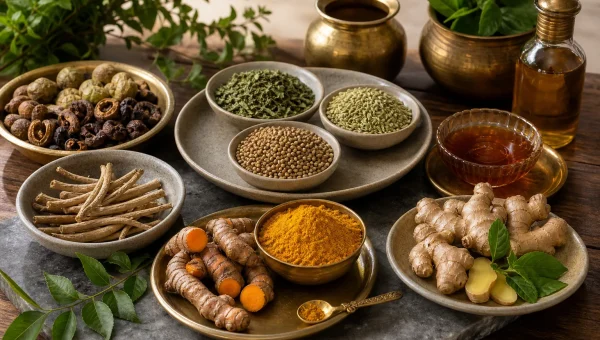
- Amalaki (Emblica officinalis): A major Rasayana fruit in classical Ayurveda and the central fruit in Chyavanaprasha. It is traditionally used to support vitality, tissue quality, and rejuvenation.
- Chyavanprash: A classical Rasayana preparation based on Amalaki with many supporting ingredients in a nourishing medium. It is traditionally used for strength, nourishment, voice, respiratory support, and rejuvenation when digestion is suitable.
- Ashwagandha (Withania somnifera): A traditional Ayurvedic herb widely used for stress, sleep, strength, and restorative support. It is best selected according to constitution, condition, dose, and safety profile, especially because it is not suitable for everyone.
- Shatavari (Asparagus racemosus): A nourishing Rasayana especially associated with tissue support, reproductive nourishment, dryness, and Pitta-sensitive depletion patterns.
- Guduchi (Tinospora cordifolia): Traditionally known as Amrita and used in Ayurveda for immune and Rasayana purposes. Because concentrated or unsupervised use may not suit every person, it should be used with guidance in those with liver disease, autoimmune disease, pregnancy, diabetes medication, or complex medical conditions.
3. Choose Ojas-Supportive Foods
Ojas-supportive foods are generally fresh, digestible, nourishing, mildly sweet, unctuous, and stabilizing. The right choice depends on Agni, Prakriti, season, age, and disease state.
- Ghee: Traditionally valued for supporting strength, nourishment, complexion, voice, and Ojas when used in a suitable amount.
- Warm milk: Used in Ayurveda as a nourishing food and as a vehicle for some Rasayana preparations when the person digests milk well.
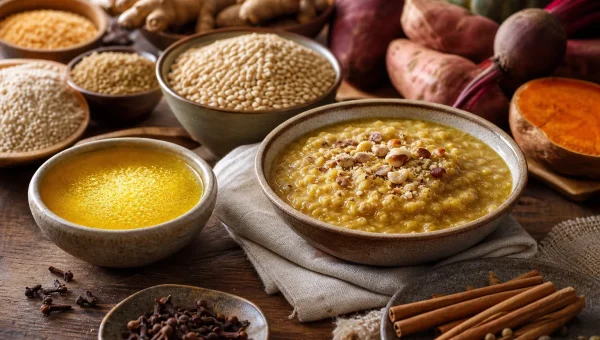
- Rice, wheat, mung, and well-cooked foods: Gentle, stable foods that help rebuild after depletion when properly prepared.
- Dates, soaked almonds, and nourishing fruits: Commonly used in restorative diets for people who tolerate them and have sufficient digestive fire.
- Chyavanprash with warm milk: A classical form of Rasayana use for suitable individuals, in a dose that does not obstruct appetite or digestion.
4. Stabilize Daily Routine
Regularity protects Ojas because it steadies Vata. A consistent Dinacharya, regular meals, appropriate bedtime, moderate work, and calm transitions between activities reduce the daily depletion caused by irregularity and overstimulation.
5. Practice Abhyanga
Abhyanga with warm oil is a practical way to bring unctuousness, softness, warmth, and steadiness into the body. It is especially useful when depletion appears with dryness, restlessness, poor sleep, muscle tightness, or Vata aggravation. Oil choice should be adjusted for constitution and season.
6. Prioritize Sleep and Recovery
Rest is essential for rebuilding Ojas. Ayurveda gives importance to balanced sleep and waking, and modern physiology also recognizes sleep as deeply connected with immune regulation, inflammation, recovery, and resilience. For Ojas support, sleep should be regular, sufficient, and protected from excessive screen use, late meals, stimulants, and mental overwork.
7. Include Meditation, Pranayama, and Sattvic Conduct
Ojas is preserved not only by food and herbs but also by conduct. Achara Rasayana emphasizes truthfulness, non-violence, calmness, compassion, cleanliness, respect for teachers and elders, balanced sleep, appropriate food, self-control, and spiritual orientation. Meditation, gentle pranayama, prayer, mantra, and a Sattvic diet help protect the mind from the emotional patterns that drain Ojas.
Ojas and Vyadhikshamatva: The Immunity Connection
Vyadhikshamatva is the Ayurvedic capacity to resist disease and withstand the force of disease when it arises. Ojas is closely related to this capacity because it supports strength, tissue integrity, sense clarity, mental steadiness, and the protective functions of the body. In this sense, Ojas is not merely “immunity” in a narrow biomedical sense; it is the deeper vitality that allows immunity, recovery, and stability to function properly.
Modern psychoneuroimmunology offers a useful parallel: stress, sleep, mood, endocrine function, autonomic tone, inflammation, and immune response are deeply connected. Ayurveda expresses this relationship through Agni, Ojas, Bala, Manas, and Vyadhikshamatva. The Ayurvedic approach is therefore not limited to stimulating the immune system; it aims to restore intelligent resilience so the body is neither weak nor overreactive.
Ojas Kshaya: Signs of Depletion
Ojas Kshaya means depletion or serious weakening of Ojas. Classical signs include fearfulness, weakness, fatigue of the sense and motor organs, altered complexion, lack of self-confidence, dry or rough skin, and emaciation. More severe descriptions include fainting, wasting, confusion, delirium, and danger to life.
In day-to-day practice, mild Ojas depletion is often considered when a person has persistent exhaustion, poor recovery, dull complexion, unstable emotions, repeated illness, dryness, low stamina, weak voice, and loss of enthusiasm. These signs require careful assessment because similar symptoms can arise from many medical conditions, including anemia, thyroid disease, infection, depression, autoimmune disease, nutrient deficiency, and sleep disorders.
Clinical Use of the Ojas Framework
The Ojas framework is most useful when it leads to a complete plan rather than a single-product recommendation. A proper Ojas-building plan restores Agni, removes depleting causes, nourishes the Dhatus, supports sleep, calms Vata, cools excessive Pitta, uses Rasayana appropriately, and strengthens the person’s daily rhythm.
Clinical pearl: In practical assessment, observe complexion, voice, eye lustre, steadiness of the mind, strength, tissue nourishment, sleep quality, frequency of illness, and recovery time. Together, these signs give a clearer picture of Ojas than any single symptom.
Safety and Practitioner Guidance
Ojas-building care should be individualized. Heavy tonics, ghee, milk, Chyavanprash, Ashwagandha, Shatavari, Guduchi, and other Rasayana substances may be unsuitable in certain conditions, poor digestion, pregnancy, breastfeeding, liver disease, autoimmune disease, diabetes, thyroid disorders, hormone-sensitive conditions, medication use, or active illness. Consult a qualified Ayurvedic practitioner or healthcare provider before starting herbs, supplements, detoxes, or therapeutic protocols.
This article is educational and does not diagnose, treat, cure, or prevent any disease. Seek medical care for persistent fatigue, recurrent infections, unexplained weight loss, fever, jaundice, severe insomnia, mental health symptoms, or any ongoing medical concern.
References
- Charaka Samhita — Ojas
- Charaka Samhita — Rasayana Chikitsa
- NCCIH
- NIH Office of Dietary Supplements
- Plant profile, phytochemistry and pharmacology of Asparagus racemosus (Shatavari): A review (2013), PubMed Central
- Immunomodulatory activity of Asparagus racemosus on systemic Th1/Th2 immunity: implications for immunoadjuvant potential (2009), PubMed
- Tinospora Cordifolia: A review of its immunomodulatory properties (2022), PubMed
- Immunomodulatory active compounds from Tinospora cordifolia (2012), PubMed
- Rxlist (rxlist.com)
- NCCIH
- Sleep and immune function (2012), PubMed Central
- The Sleep-Immune Crosstalk in Health and Disease (2019), PubMed Central
- Psychological stress and the human immune system: a meta-analytic study of 30 years of inquiry (2004), PubMed Central
- Current Directions in Stress and Human Immune Function (2015), PubMed Central
I’ve been practicing yoga for 12 years but only discovered Ayurveda two years ago. Wish I’d found it sooner. Posts like this make the learning curve much gentler.
The lifestyle recommendations here are practical and specific. A lot of Ayurvedic advice is vague but this gives you actual things to change. Starting with the morning routine
I appreciated that you acknowledged the difference between birth Prakriti and current Vikriti. That confusion trips up so many people just starting out.
The professional background you bring to this comment is really valuable. Thank you for reading and contributing.
Your explanation of how constitution relates to digestion was the missing piece for me. I’ve been treating symptoms without understanding the root constitution factor.
as a yoga teacher I find this foundational knowledge essential for understanding my students. Different students need different approaches and this framework helps me serve them better.
has anyone else noticed the sleep improvement you mentioned? I’ve been experiencing the same thing
My therapist actually recommended Ayurveda to me as a complement to our work and Im so glad she did. This article is where I’ll send anyone who wants to start learning.
The connection between Ojas and psychoneuroimmunology here was genuinely eye-opening. I kept getting sick every time work got stressful and my doctor had no real explanation. The idea that stress directly depletes this vital essence and doesn’t just suppress immunity indirectly — that framing actually motivates me to protect sleep and rest differently.
Growing up Ayurvedic concepts were just called common sense in my family. Seeing them articulated this clearly makes me appreciate how sophisticated this system really is
Does low Ojas show up in specific ways that are easy to self-assess? I relate to almost everything in the depletion section — poor sleep quality, catching every cold, feeling mentally scattered — but I’m not sure if that’s genuinely low Ojas or just modern life. Would love a follow-up on early warning signs.
I’m a student in an Ayurvedic studies program and I share resources with my cohort. This is going on our reading list. Really solid foundational content.
Your experience with the diet changes mirrors mine almost exactly. Week two is when it clicks
I love that you included a note about not becoming obsessed with labels. It’s a framework for understanding, not a rigid box. That balanced perspective matters.
Could you write something about how Ojas shifts during and after pregnancy? I’ve noticed my immunity and energy have been quite different since having my second child and I’m curious whether the rebuilding protocols here apply or whether postpartum is its own category in Ayurveda.
I took this to my Ayurvedic doctor and she confirmed my self-assessment was pretty accurate. Felt good validating my understanding with a professional.
I came here to say exactly this and you said it better. Completely agree
I’ve been telling my friends about dosha theory for years but always struggled to explain it clearly. Now I can just send them this article. Perfectly accessible without being dumbed down
Thank you for sharing the practical tip about sourcing. That’s something I’ve been confused about.
The part about balancing opposite qualities is so elegant and logical. Once you understand it, it becomes intuitive and you start applying it without thinking.
So encouraging to hear! Starting my first week and this is motivating me to stick with it.
The practical suggestions at the end are what make this actionable rather than just theoretical. I wrote them all down and will implement them gradually this month.
long-time reader, first comment. Just want to say this site has changed my relationship with my health. The constitutional framework has given me so much useful self-knowledge.
finally an explanation of my Vata imbalance that actually makes sense to me. I’ve read about it before but never connected it to my sleep problems and anxiety the way this article did
I’ve been using it for a year and can confirm, the results you’re describing are consistent with my longer-term experience.
The Ojas concept mapped onto psychoneuroimmunology is one of those moments where Ayurveda seems to have described something that modern science is now measuring. The deep immunity framing is more accurate than counting white blood cells.
The case examples you included really helped me see myself in the descriptions. Abstract concepts become concrete very quickly with real-world illustrations
I was nodding along reading your comment. Exactly my experience too.
The part about Ojas feels realistic. This is the kind of detail readers can test slowly.
Thank you for sharing the practical tip about sourcing. That’s something I’ve been confused about
My practitioner explains every recommendation through the Ojas lens and it’s the most useful clinical framing I’ve encountered. The downstream measurement of tissue repair and stress resilience is what clinical practice should be tracking.
Good information but the sourcing could be stronger. Linking to specific studies rather than just saying ‘research shows’ would add credibility.
Valid concerns. Ayurveda works best as a complementary approach, not a replacement for evidence-based medicine. Thank you for highlighting this important distinction.
The 8-drop versus 16-drop Ojas description in the texts is obviously metaphorical but does it have any correlate in what we can measure? The concept is interesting but validation would strengthen the argument.
Interesting perspective, but I’ve read contradicting information from other Ayurvedic sources. How does a beginner know who to trust?
parts of this are genuinely brilliant, particularly the section on timing. Other parts read like they were copied from every other Ayurveda blog
While I appreciate the Ayurvedic perspective, some of the dietary advice here contradicts current nutritional research. Balance is key.
This is constructive feedback we take seriously. We’ve added a note about consulting with your healthcare provider, especially if you’re on existing medications.
The description of Para Ojas as eight drops in the heart really caught my attention.
I wonder how the qualities like Snigdha and Sita translate into everyday food choices.
Reading about Ojas as the essence of all seven Dhatus made me rethink my diet.
The map between classical Ojas signs and modern markers like grip strength and HRV seems practical.
One thing that stands out is the emphasis on consistent daily routine for preserving vital essence.
Adding a spoon of ghee to warm milk before bed has made my mornings feel smoother.
The section on factors that deplete Ojas resonates with my experience of chronic worry affecting energy.
Could the Apara Ojas circulating in the body be measured through something like serum albumin?
I appreciate the reminder that excessive exercise without recovery can drain the essence.
The link between Tejas burning unchecked and autoimmune tendencies offers a fresh perspective.
Practicing abhyanga with sesame oil has become a calming part of my evening ritual.
Warm milk with saffron and cardamom before bed is now my anchor ritual.
Started this last January and will report back after 3 months. Results are slow but steady.
It’s interesting how Ojas ties into psychoneuroimmunology and stress resilience.
The integration with modern physiology is what makes this article stand out. Finding a good source was the challenge.
Anyone else tried combining this with Guduchi? Took 3 weeks before I noticed anything.
Would appreciate a follow-up article specifically on the dosage for elderly patients. Will update in a few months.
Is there a seasonal rhythm to Ojas building? I read that autumn is the optimal time for Rasayana.
I would like more detail on Ojas. Small daily changes are easier to follow than a perfect plan.
Tried the recipe/formula mentioned and the results after 6 weeks were encouraging. The quality of the herb matters a lot.
Any contraindication for Ojas-building herbs for immunocompromised patients?
The diet changes listed here are harder to follow than the herbs but more impactful. My practitioner is monitoring.
Any recommended books for deeper reading on this topic? Digestive improvement came before other benefits.
Late to this post but it answered a question I’ve had for months. Finding a good source was the challenge.
I would like more detail on Ojas. The timing advice is the part I would start with.
The avoidance of cold foods during treatment is something my body confirmed independently. My practitioner is monitoring.
The contraindication list should be read first before starting anything here. My sleep improved first, then energy.
Does anyone know if this applies for a Vata-Pitta dual prakriti? Took 3 weeks before I noticed anything.
Recovering from dengue. Energy still low 3 months later. The Ojas depletion framing is accurate.
The dosage section here is more specific than most sources I’ve seen. The diet changes helped too.
The herb quality issue is real I’ve noticed significant variation across brands. The timing of doses matters more than I expected.
My integrative doctor agrees with this approach, which surprised me. Combined with yoga practice for better results.
The integration with modern physiology is what makes this article stand out. Digestive improvement came before other benefits.
Does Ojas have any relationship to the microbiome?
Bookmarking this. Need to discuss it with my doctor first. My practitioner is monitoring.
The diet changes listed here are harder to follow than the herbs but more impactful. More research needed but encouraging.
My vaidya prescribed something nearly identical. Good to see the classical basis. Combining with dietary changes.
The contraindication list should be read first before starting anything here. Finding a good source was the challenge.
Does anyone know if this applies for a Vata-Pitta dual prakriti? The quality of the herb matters a lot.
Is this safe with antacids? Combining with dietary changes.