
The Ayurvedic Spice Box: 12 Healing Spices Every Kitchen Needs
In many Indian homes, the masala dabba is more than a convenient spice box. It keeps the most-used spices close to the stove so that small amounts can be added daily to dal, rice, vegetables, soups, chutneys, teas, and tempering. In Ayurvedic cooking, this everyday use is important: spices are not treated only as flavouring agents, but as simple household supports for appetite, digestion, aroma, warmth, circulation of food qualities, and seasonal balance.
Ayurveda describes a substance through rasa (taste), guna (qualities), virya (potency), vipaka (post-digestive effect), and karma (actions). The Ayurvedic Pharmacopoeia of India records these attributes for many single drugs, including several kitchen spices. The doses below refer to adult pharmacopoeial powder or paste ranges where available; ordinary culinary use is usually smaller and spread through food.
1. Turmeric (Haridra)
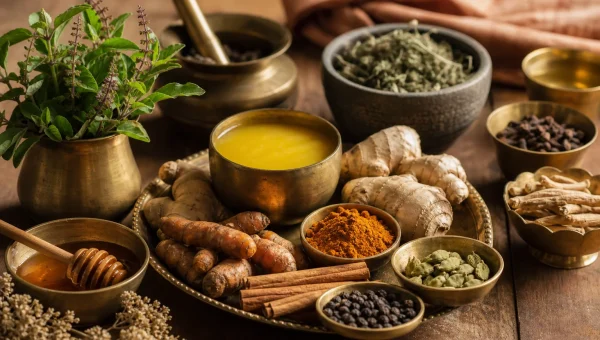
Turmeric is the dried and cured rhizome of Curcuma longa. In the Ayurvedic Pharmacopoeia of India, Haridra is described as containing essential oil and the colouring matter curcumin. Its kitchen role is especially strong in dal, sabzi, rice, pickles, soups, and warm milk preparations because it brings colour, bitterness, pungency, and a clean earthy aroma to food.
Ayurvedic properties: Rasa: katu (pungent), tikta (bitter). Guna: ruksha (dry). Virya: ushna (heating). Vipaka: katu (pungent). Karma includes krimighna, kushthaghna, varnya, vishaghna, kaphapittanut, and pramehanashaka.
Traditional uses: Haridra is classically used in contexts such as skin disorders, wounds, prameha, pandu, itching eruptions, rhinitis, and rakta-related imbalance. In food, it is best used regularly in small amounts rather than as a large isolated dose.
Daily amount: The pharmacopoeial adult powder range is 1-3 grams. For cooking, a pinch to half a teaspoon in a dish is a practical household amount.
Quick preparation: Simmer a small pinch of turmeric with milk or water, a little ghee, and a light touch of black pepper. Keep the pepper modest if Pitta symptoms such as burning, acidity, or heat sensitivity are present.
2. Cumin (Svetajiraka / Jiraka)
Cumin is one of the most dependable digestive spices in the Ayurvedic kitchen. The Ayurvedic Pharmacopoeia describes Svetajiraka as the dried ripe fruit of Cuminum cyminum, commonly used as cumin seed. Its aroma opens quickly in warm ghee or oil, making it a foundation spice for dal, khichdi, vegetable dishes, raita, and digestive water.
Ayurvedic properties: Rasa: katu (pungent). Guna: laghu (light), ruksha (dry), tikshna (sharp). Virya: ushna (heating). Vipaka: katu (pungent). Karma includes dipana, pachana, grahi, rucya, krimighna, and kaphavatahara.
Traditional uses: Cumin is used for agnimandya, atisara, krimi, low appetite, abdominal heaviness, and post-meal bloating. Its grahi and pachana actions make it useful in foods that need digestive support without making the dish excessively heavy.
Daily amount: The pharmacopoeial adult powder range is 1-3 grams. In cooking, half to one teaspoon of whole cumin for a family-sized dish is a common culinary range.
Quick preparation: Boil one teaspoon of cumin in two cups of water until reduced and aromatic; sip warm after meals when food feels heavy or gas-forming.
3. Coriander (Dhanyaka)
Coriander is valued because it is aromatic, gentle, and compatible with many foods. The Ayurvedic Pharmacopoeia identifies Dhanyaka as the dried ripe fruit of Coriandrum sativum. Although coriander is often described in household language as refreshing, the pharmacopoeial monograph lists its virya as ushna and its karma as tridoshanut and mutrala.
Ayurvedic properties: Rasa: madhura (sweet), katu (pungent), tikta (bitter), kashaya (astringent). Guna: laghu (light), snigdha (unctuous). Virya: ushna (heating). Vipaka: madhura (sweet). Karma includes chakshushya, dipana, grahi, hridya, pachana, tridoshanut, and mutrala.
Traditional uses: Dhanyaka is used for atisara, chardi, daha, jvara, trishna, and ajirna. In the kitchen, coriander powder softens the sharpness of hotter spices and gives body to vegetable dishes, dals, and spice blends.
Daily amount: The pharmacopoeial adult powder range is 1-3 grams. Coriander powder may be used more freely as a food spice when tolerated.
Quick preparation: Soak crushed coriander fruits overnight in water, strain in the morning, and drink as a mild household digestive and urinary-support drink when suitable for the person and season.
4. Fennel (Mishreya / Madhurika)
Fennel is the dried ripe fruit of Foeniculum vulgare, commonly called fennel seed. In the Ayurvedic Pharmacopoeia it is listed as Mishreya, with Madhurika among its synonyms. This is a useful correction because Shatapushpa is commonly associated with dill rather than fennel in pharmacopoeial usage.
Ayurvedic properties: Rasa: madhura (sweet), katu (pungent), tikta (bitter). Guna: laghu (light), ruksha (dry). Virya: shita (cooling). Vipaka: madhura (sweet). Karma includes anulomana, balya, dipana, vatapittahara, and amadoshahara.
Traditional uses: Mishreya is used for shula, agnimandya, kasa, pravahika, raktadosha, and arsha. As a kitchen spice, fennel is especially useful when a meal needs digestive support but too much heat would be unsuitable.
Daily amount: The pharmacopoeial adult powder range is 3-6 grams. For routine use, half a teaspoon of fennel after food or in tea is a practical household amount.
Quick preparation: Chew a small spoon of fennel after meals or steep crushed fennel in hot water for a sweet, aromatic digestive drink.
5. Cardamom (Sukshmaila / Ela)
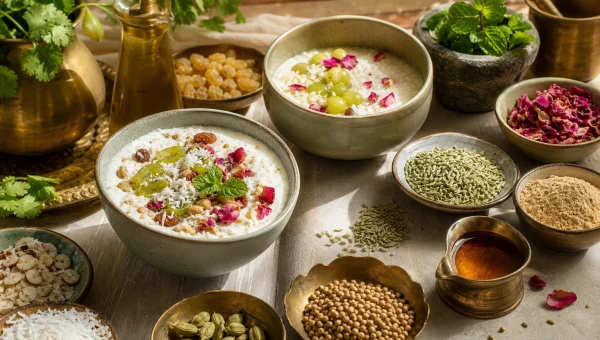
Green cardamom is listed in the Ayurvedic Pharmacopoeia as Sukshmaila, the seed of Elettaria cardamomum. It is small in dose but strong in aroma, which is why one or two pods can transform milk, tea, rice, kheer, chutney, or herbal preparations.
Ayurvedic properties: Rasa: madhura (sweet), katu (pungent). Guna: laghu (light). Virya: shita (cooling). Vipaka: madhura (sweet). Karma includes anulomana, dipana, hridya, mutrala, and rochana.
Traditional uses: Cardamom is used for aruchi, shvasa, chardi, kasa, and mutrakrichchhra. In the kitchen, it helps lighten heavy milk-based and sweet dishes while adding fragrance without the fierceness of very hot spices.
Daily amount: The pharmacopoeial adult powder range is 250-500 mg. One or two pods in a dish or beverage is generally enough for culinary use.
Quick preparation: Crush one or two pods just before use and add them during the final simmer of tea, milk, kheer, or rice so the volatile aroma is not lost.
6. Fenugreek (Methi / Methini)
Fenugreek is the seed of Trigonella foenum-graecum. The Ayurvedic Pharmacopoeia notes that methi seeds are bitter and become mucilaginous when soaked in water. This soaking quality explains why methi behaves differently from many sharp dry spices in the kitchen.
Ayurvedic properties: Rasa: tikta (bitter). Guna: snigdha (unctuous). Virya: ushna (heating). Vipaka: katu (pungent). Karma includes dipana, kaphahara, rucya, and vatahara.
Traditional uses: Methi is used for grahani, jvara, prameha, and aruchi. In cooking, it is best used carefully because the bitterness becomes dominant when the seeds are overused or burnt.
Daily amount: The pharmacopoeial adult powder range is 3-6 grams. In daily cooking, a pinch to half a teaspoon is usually sufficient.
Quick preparation: Soak a small amount of methi overnight and use the softened seeds in dal, vegetable dishes, or chutney. People taking glucose-lowering medicines should use therapeutic amounts only with professional guidance.
7. Mustard Seeds (Sarshapa)
Mustard seed is a classic tempering spice. The Ayurvedic Pharmacopoeia monograph for Sarshapa describes the seed of Brassica campestris, with fixed oil as a major constituent. In cooking, mustard is usually allowed to crackle briefly in hot oil so its sharpness spreads through the dish.
Ayurvedic properties: Rasa: katu (pungent), tikta (bitter). Guna: snigdha (unctuous), tikshna (sharp). Virya: ushna (heating). Vipaka: katu (pungent). Karma includes dipana, kaphahara, pittakara, vatahara, vidaha, and hridya.
Traditional uses: Sarshapa is used for kandu, kushtha, kosthakrimi, and related Kapha-Vata presentations. Because it is sharp, heating, and vidaha in action, it should be used with caution in strong Pitta conditions, burning, ulcers, and sensitive skin.
Daily amount: The pharmacopoeial paste range is 0.5-1 gram. Culinary tempering uses small quantities distributed through a whole dish.
Quick preparation: Heat ghee or oil, add mustard seeds, and wait until they crackle; then add cumin, curry leaves, or hing according to the dish.
8. Asafoetida (Hingu)
Asafoetida is the oleo-gum-resin obtained from species of Ferula, including Ferula foetida and Ferula narthex in the Ayurvedic Pharmacopoeia. Its aroma is intense when raw, but when bloomed in ghee or oil it becomes a powerful digestive companion for beans, lentils, cabbage-family vegetables, and heavy dals.
Ayurvedic properties: Rasa: katu (pungent). Guna: tikshna (sharp). Virya: ushna (heating). Vipaka: katu (pungent). Karma includes anulomana, dipana, hridya, krimighna, pachana, rucya, and vatakaphaprashamana.
Traditional uses: Hingu is used for shula, adhmana, gulma, hrdroga, krimi, udara, agnimandya, and anaha. Its place in the spice box is especially important for Vata-type gas, distension, and heaviness after legumes.
Daily amount: The pharmacopoeial adult range is 125-500 mg. For cooking, a tiny pinch is usually enough.
Quick preparation: Add a pinch of hing to hot ghee at the start of a tadka, then immediately add cumin or mustard so the hing does not burn.
9. Black Pepper (Maricha)
Black pepper is the dried mature fruit of Piper nigrum. The Ayurvedic Pharmacopoeia lists piperine-containing alkaloids and essential oil among its constituents. In the kitchen, Maricha adds heat, sharpness, and penetration, so it is best used freshly crushed and in modest amounts.
Ayurvedic properties: Rasa: katu (pungent), tikta (bitter). Guna: laghu (light), ruksha (dry), tikshna (sharp). Virya: ushna (heating). Vipaka: katu (pungent). Karma includes shleshmahara, dipana, medohara, pittakara, rucya, kaphavatajit, vatahara, chedana, and jantunashana.
Traditional uses: Maricha is used for shvasa, shula, krimiroga, and skin disorders. It is also a key ingredient in Trikatu Churna along with Pippali and Shunthi.
Daily amount: The pharmacopoeial adult powder range is 250 mg-1 gram. In cooking, a few freshly crushed peppercorns are often enough.
Quick preparation: Add freshly cracked black pepper near the end of cooking, or pair a small pinch with turmeric in warm milk or dal when heat is appropriate.
10. Ginger (Shunthi / Ardraka)
Ginger is used in both dry and fresh forms. The Ayurvedic Pharmacopoeia describes Shunthi as the dried rhizome of Zingiber officinale and Ardraka as the fresh rhizome of the same plant. Dry ginger is more concentrated and powder-like, while fresh ginger is juicy, aromatic, and easier to use in daily cooking.
Ayurvedic properties of dry ginger: Rasa: katu (pungent). Guna: laghu (light), snigdha (unctuous). Virya: ushna (heating). Vipaka: madhura (sweet). Karma includes anulomana, dipana, hridya, pachana, vatakaphapaha, and amadoshahara.
Ayurvedic properties of fresh ginger: Rasa: katu (pungent). Guna: guru (heavy), ruksha (dry), tikshna (sharp). Virya: ushna (heating). Vipaka: madhura (sweet). Karma includes dipana, hridya, kaphahara, vatahara, rochana, bhedana, svarya, and vrishya.
Traditional uses: Shunthi is used for agnimandya, shvasa, adhmana, amavata, pandu, and udara. Ardraka is used for shula, vibandha, anaha, swelling, and throat conditions. In the kitchen, ginger is one of the most practical spices for warming a meal and making heavy foods more digestible.
Daily amount: The pharmacopoeial adult powder range for Shunthi is 1-2 grams. For Ardraka, the pharmacopoeial juice dose is 2-3 ml with honey; ordinary cooking amounts vary by dish.
Quick preparation: Before meals, a thin slice of fresh ginger with a little rock salt and lime may be used as a traditional appetite-kindling preparation when heat, acidity, or mouth irritation are not present.
11. Cinnamon (Tvak / Dalchini)
Cinnamon in the Ayurvedic Pharmacopoeia is Tvak, the dried inner bark of Cinnamomum zeylanicum, also known as true or Ceylon cinnamon. This distinction matters for regular use because different cinnamon species vary in composition and safety considerations.
Ayurvedic properties: Rasa: madhura (sweet), katu (pungent), tikta (bitter). Guna: laghu (light), ruksha (dry), tikshna (sharp). Virya: ushna (heating). Vipaka: katu (pungent). Karma includes kaphavatahara, rucya, vishaghna, and kanthashuddhikara.
Traditional uses: Tvak is used for arsha, hrdroga, krimi, trishna, mukhashosha, throat and mouth disorders, pinasa, and basti disorders. In cooking, it brings warmth and sweetness to rice, milk, teas, stewed fruits, and spice blends.
Daily amount: The pharmacopoeial adult powder range is 1-3 grams. For long-term daily use, choose true/Ceylon cinnamon and avoid large supplemental amounts unless guided by a practitioner.
Quick preparation: Add a small cinnamon stick to rice, tea, milk, or stewed fruit, then remove it before serving.
12. Ajwain (Yavani / Carom Seeds)
Ajwain is the dried fruit of Trachyspermum ammi, commonly called carom seed or bishop’s weed. The Ayurvedic Pharmacopoeia describes Yavani as thymolic in odour and pungent in taste, which matches its strong kitchen reputation for cutting heaviness.
Ayurvedic properties: Rasa: katu (pungent), tikta (bitter). Guna: laghu (light), ruksha (dry), tikshna (sharp). Virya: ushna (heating). Vipaka: katu (pungent). Karma includes shulahara, anulomana, dipana, krimighna, pachana, and rucya.
Traditional uses: Yavani is used for shula, adhmana, anaha, gulma, krimi, and udara. It is especially useful in flour-based foods, fried snacks, legumes, and heavy meals where Vata-type bloating is likely.
Daily amount: The pharmacopoeial adult powder range is 3-6 grams. For routine food use, a pinch to half a teaspoon is usually enough because ajwain is very sharp.
Quick preparation: For a simple post-meal preparation, chew a small pinch of ajwain with warm water. Avoid heavy use when there is burning, acidity, ulcer tendency, pregnancy, or strong Pitta aggravation unless professionally advised.
The Complete Spice Comparison Table
The following table summarizes the 12 spices by their corrected pharmacopoeial names, Ayurvedic attributes, primary kitchen role, and adult pharmacopoeial amount where available.
| Spice | Ayurvedic Name | Rasa | Virya | Vipaka | Key Ayurvedic Actions | Pharmacopoeial Amount |
|---|---|---|---|---|---|---|
| Turmeric | Haridra | Katu, tikta | Ushna | Katu | Kushthaghna, varnya, kaphapittanut | 1-3 g powder |
| Cumin | Svetajiraka / Jiraka | Katu | Ushna | Katu | Dipana, pachana, grahi, kaphavatahara | 1-3 g powder |
| Coriander | Dhanyaka | Madhura, katu, tikta, kashaya | Ushna | Madhura | Dipana, grahi, tridoshanut, mutrala | 1-3 g powder |
| Fennel | Mishreya / Madhurika | Madhura, katu, tikta | Shita | Madhura | Anulomana, balya, dipana, vatapittahara | 3-6 g powder |
| Cardamom | Sukshmaila / Ela | Madhura, katu | Shita | Madhura | Anulomana, dipana, hridya, mutrala, rochana | 250-500 mg powder |
| Fenugreek | Methi / Methini | Tikta | Ushna | Katu | Dipana, kaphahara, rucya, vatahara | 3-6 g powder |
| Mustard | Sarshapa | Katu, tikta | Ushna | Katu | Dipana, kaphahara, vatahara, pittakara | 0.5-1 g paste |
| Asafoetida | Hingu | Katu | Ushna | Katu | Anulomana, dipana, pachana, vatakaphaprashamana | 125-500 mg |
| Black Pepper | Maricha | Katu, tikta | Ushna | Katu | Shleshmahara, dipana, medohara, rucya | 250 mg-1 g powder |
| Dry Ginger | Shunthi | Katu | Ushna | Madhura | Anulomana, dipana, pachana, vatakaphapaha | 1-2 g powder |
| Cinnamon | Tvak | Madhura, katu, tikta | Ushna | Katu | Kaphavatahara, rucya, kanthashuddhikara | 1-3 g powder |
| Ajwain | Yavani | Katu, tikta | Ushna | Katu | Shulahara, anulomana, dipana, pachana | 3-6 g powder |
Building a Basic Masala Dabba
A practical masala dabba usually holds the spices used most often in daily cooking. Many homes keep seven small cups inside one round or square box, with a spoon for quick use. For an Ayurvedic kitchen, the core dabba can hold turmeric, cumin, coriander, fennel, mustard, fenugreek, and hing, while black pepper, cardamom, cinnamon, ginger, and ajwain can be kept nearby in separate airtight jars.
- Keep whole spices where possible: Cumin, coriander, fennel, pepper, cardamom, mustard, fenugreek, and ajwain retain aroma better when kept whole and crushed or ground close to cooking.
- Keep hing separate if needed: Hing has a strong aroma and can spread to nearby spices, so a tightly closed inner container is helpful.
- Use small refill quantities: The dabba should hold working amounts, while the larger reserve stock stays sealed away from heat and light.
- Match the dabba to your cooking: A family that cooks dal daily may keep cumin, hing, turmeric, and mustard in front; a family that makes more teas and sweets may keep fennel, cardamom, cinnamon, and ginger closer.
Storage Tips for Maximum Potency
The aroma and culinary strength of spices depend on volatile oils and other constituents that weaken with heat, light, air, and moisture. Good storage is therefore part of the medicinal discipline of an Ayurvedic kitchen.
- Store cool, dry, and dark: Keep spices away from the stove, direct sun, steam, and wet counters.
- Use airtight containers: Moisture and air reduce aroma and can spoil powders faster.
- Grind in small batches: Whole spices are better for storage; powders are better for speed, so grind only what you will use soon.
- Use a dry spoon: Wet spoons introduce moisture and shorten the life of powdered spices.
- Bloom spices correctly: Mustard, cumin, hing, ajwain, and fenugreek often work best when briefly opened in warm ghee or oil; delicate powders should not be burnt.
- Refresh by aroma: When a spice has lost its natural fragrance, it has lost much of its kitchen value even if it still has colour.
The strength of the Ayurvedic spice box is not in dramatic doses, but in intelligent repetition: small amounts, cooked into suitable food, adjusted for constitution, season, age, appetite, and tolerance. Used this way, the masala dabba becomes one of the simplest ways to bring Ayurvedic food wisdom into daily life.
This article is for educational purposes only and does not diagnose, treat, or replace medical care. Consult a qualified Ayurvedic practitioner or healthcare provider before using spices therapeutically, especially during pregnancy, breastfeeding, childhood, chronic illness, ulcers, reflux, liver disease, diabetes, bleeding disorders, surgery preparation, or when taking medication.
I inherited my father’s masala dabba and never understood the organization until reading this article. The placement of each spice in specific positions and the combination rationale wasn’t arbitrary. It was clinical logic encoded in a kitchen tool.
The suggestion that the specific spice combinations in the traditional spice box were organized by Tridosha balancing properties rather than flavor compatibility alone is interesting. Is there classical textual support for this claim or is it a contemporary interpretation of traditional practice?
I was resistant to giving up raw salads, feels counterintuitive when you’ve been told salads are healthy. But three weeks of warm cooked vegetables and my digestion is so much calmer.
I tried the morning routine recommended here including the warm water with lemon and ginger and within a week my afternoon energy crash was noticeably better.
Same here! The practitioner recommendation made all the difference for me. Don’t try to do this without guidance.
I was looking for a plain explanation of Spice Box. A few more examples would still help.
I love how this connects food to season rather than giving one-size-fits-all advice. I always felt worse eating the same things in winter as in summer. Now I understand why
I switched to eating this way about two months ago and my digestion has completely transformed. I used to have bloating every single day. It’s almost gone now.
I was nodding along reading your comment. Exactly my experience too
The cumin, coriander, fennel combination as the neutral tridoshic base is something I’ve seen recommended across multiple Ayurvedic sources. Why these three specifically and not other combinations that might also be roughly tridoshic in their properties?
Would love to see a version of this for people who travel frequently. Maintaining Ayurvedic eating habits while eating out or at hotels is really challenging.
I run a small Ayurvedic cooking class in my city and I share resources with participants. This article is going on the required reading list immediately.
This is so helpful to read. Im just starting out with this and hearing positive experiences helps me stay motivated.
I’ve been following this for three weeks. The first week was an adjustment but by week two I felt notably more energized. The midday slump I used to have has mostly disappeared
I was looking for a plain explanation of Spice Box. The examples make the advice less abstract.
The section on spice freshness and the degradation of volatile compounds in poorly stored spices is the most practically useful content in the article. I’ve been using preground spices for years and the difference after switching to whole spice toasting and grinding was immediate and noticeable.
I was looking for a plain explanation of Spice Box. I appreciate that it does not oversell the result.
The timing guidance around eating is new to me. I’d never considered when I eat as significant as what I eat. Already experimenting with making lunch my biggest meal
Your grandmother sounds like an amazing woman! Traditional knowledge passed through families is so precious.
I was looking for a plain explanation of Spice Box. The article avoids making it sound like a quick fix.
It’s wonderful to see both believers and skeptics engaging respectfully in the comments. That’s how we all learn
my vaidya recommends something slightly different but the core approach is the same
Finally addressed my ghee confusion! I’d been avoiding it thinking fat is fat. Understanding it as medicine rather than just a cooking fat completely changes things
The advice around Spice Box is specific enough to be useful. I would still ask a practitioner before changing medicines.
The seasonal eating section is so logical once you read it. Eating what grows locally and seasonally is the original human diet. We just forgot somewhere along the way
The combination approach you described is exactly what my practitioner recommended too. Validation always feels good.
How long are typical dried whole spices usable at peak potency if properly stored? The article recommends replacing spices regularly but gives no specific guidance on how often or what quality indicators signal that a spice has degraded beyond therapeutic utility.
I would like more detail on Spice Box. The safety notes could be expanded a little.
The food combining rules here helped me understand why certain meals left me feeling heavy and uncomfortable even when the individual foods were healthy.
The meal plan here is so practical. I was intimidated by Ayurvedic cooking but seeing it broken down like this makes it feel achievable for a busy working parent.
I work in healthcare too and I appreciate you engaging with this from a clinical standpoint.
I appreciate that you explained WHY these foods are recommended, not just what they are. Understanding the reasoning helps me make better choices when I’m in situations not covered by the list.
my nutritionist and my Ayurvedic practitioner have me working together and articles like this help me bridge the two frameworks in my own cooking.
The spice information here overlaps beautifully with what I learned from my Indian mother-in-law. She always cooked this way intuitively. Now I understand the science behind it.
I came here to say exactly this and you said it better. Completely agree
I think the article could be improved by addressing the quality control issues with Ayurvedic herbs. Heavy metal contamination is a real concern with unregulated products.
Started drinking CCF tea after reading this. Two weeks in and my appetite feels more regulated and I’m not craving sweets the way I used to after meals.
Valid concerns. Ayurveda works best as a complementary approach, not a replacement for evidence-based medicine. Thank you for highlighting this important distinction.
I was looking for a plain explanation of Spice Box. I would still ask a practitioner before changing medicines.
the shopping list format is brilliant. Ive tried following Ayurvedic diet advice before but always got stuck at the grocery store not knowing what to buy. This solves that
has anyone else noticed the sleep improvement you mentioned? I’ve been experiencing the same thing.
Helpful for beginners but if you already know the basics, there’s not much new here. Was hoping for more advanced protocols.
I’m skeptical of the claim that spice combinations at typical culinary doses produce clinically meaningful Doshic effects. The dosage gap between culinary use and therapeutic dose is significant for most Ayurvedic herbs and I’d want data on whether kitchen quantities actually achieve the described physiological effects.
I respectfully disagree with the characterization of modern medicine as inferior here. Both systems have their place and ideally should complement each other.
We appreciate your candid feedback. You’re right that we should distinguish more clearly between traditional knowledge and clinical evidence. We’re working on adding more research citations.
I tried adding a pinch of turmeric to my morning tea and noticed less joint stiffness after a week.
Switched to a Vata-specific spice box setup after my practitioner’s recommendation and my chronic bloating and gas that I’d had for years reduced significantly within a month. The warming, grounding spice profile made a measurable difference in my daily digestive symptoms.
Does the article mention how long ground coriander stays potent in a steel dabba?
Could you share a specific starter guide for someone building their first Ayurvedic spice box without a family tradition to draw from? The article explains the principles but a practical shopping and organization guide for beginners would make this actionable for Western readers.
The tip about heating asafoetida in ghee before adding beans makes sense for reducing gas.
I appreciate the breakdown of each spice’s rasa and virya; it helps me choose based on my dosha.
Could someone explain why black pepper boosts curcumin absorption so much?
Storing whole spices in the dabba for three to four weeks seems practical for everyday cooking.
The section on fennel being safe for infants caught my attention; I’ll try it for my baby’s colic.
I wonder if the daily dose of fenugreek seeds for diabetes is safe to take with medication.
Using cinnamon sticks in rice sounds like an easy way to moderate blood sugar spikes.
The masala dabba layout suggestion, keeping frequently used spices front, makes the kitchen workflow smoother.
I’ve been dealing with this issue for 2 years and tried multiple things. Starting the approach you outlined here.
The specific dosage mentioned in the article, is that for adults only or does it change for elderly users?
Just found this post through a search. Is the recommendation still current or has anything changed?
Will try
Doing this
Does this interfere with standard medications? I take something daily and want to be careful.
The section on diet modifications alongside the herb protocol is what makes this more complete than other guides.
The research citations are good but mostly from small studies. Would like to see larger trial data.
Late to this post but finding it very helpful. The practical step-by-step format makes it easy to follow.
I’m a Kapha type and the protocol seems designed more for Vata. Any modifications?
Good reminder on Spice Box. Small daily changes are easier to follow than a perfect plan.
Useful
tried this and the results surprised me after only 10 days
This confirmed what I was already doing intuitively. Nice to have the Ayurvedic framework to understand why.
I started following the protocol you described 3 weeks back. Early results are encouraging.
I wish you had included more on the Vata-specific approach. The article focuses heavily on Pitta.
The section on contraindications was the most useful part. I have a pre-existing condition and needed that clarity.
The historical context from Charaka Samhita grounding the recommendation was reassuring.
Same here
The morning routine elements you suggest are already part of my dinacharya. Adding the missing piece you mentioned now.
Does the treatment timeline change if you’ve had this issue long-term vs recently?
The comparison to modern medicine approach was helpful. My doctor and vaidya recommend different things.
The quality of the herb source makes a big difference I’ve found. The article should mention what to look for when buying.
Does this protocol vary by dosha type? I’m Pitta dominant and some of what you describe seems heating.
Skeptical but trying anyway because conventional medicine hasn’t helped. Will report back.
my grandmother used to do something similar. not exactly this but the core principle was the same
Does age affect how this works? I’m 52 and wondering if the protocol needs adjustment.
The 3-week timeline seems optimistic based on my experience. More like 6 weeks for me.
I wish the article addressed what to do if you notice no effect after the recommended duration.
Any guidance for people who travel frequently? Hard to maintain a consistent protocol.
Just tried this for the first time this week. Too early to say but no adverse effects so far.