
Building Children’s Immunity From the Inside Out
Ayurveda looks at children’s immunity through the wider idea of bala: strength, steadiness, nourishment, and the capacity to withstand seasonal stress without losing healthy growth and vitality. A child with well-supported bala is not expected to never catch a cold; rather, the Ayurvedic aim is that digestion stays steady, appetite returns quickly, sleep remains restorative, growth continues, and recovery is uncomplicated. This is why pediatric Ayurveda gives so much importance to food, breast milk in infancy, digestion, seasonal routine, and rasayana-style supports rather than treating every childhood sniffle as an isolated event.
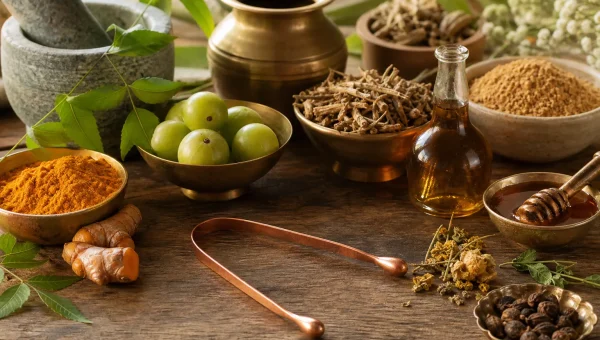
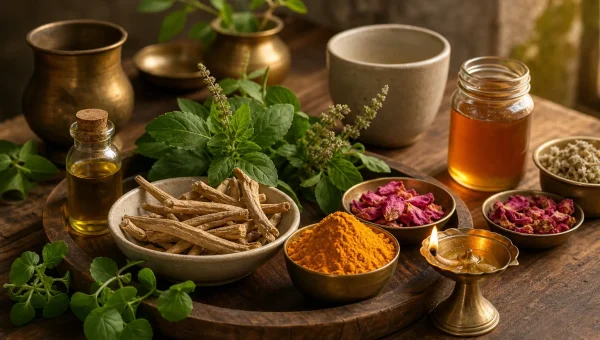
The traditional benefit of herbs and foods such as Chyawanprash, Suvarna Prashan, Amla, ghee, Tulsi, Bala, Brahmi, and Shankhapushpi is that they are used to build resilience from the inside out when they are matched to age, constitution, appetite, digestion, and season. Chyawanprash offers a child-friendly rasayana built around Amalaki. Suvarna Prashan belongs to the classical pediatric context of supporting medha, agni, bala, and healthy development. Everyday foods such as warm cooked meals, ghee, seasonal Amla, and simple herbal infusions provide the practical foundation that makes stronger bala possible.
Understanding Bala: The Ayurvedic Immunity Framework for Children
Charaka describes bala as threefold: sahaja bala, the inborn strength carried from birth; kalaja bala, strength influenced by age and season; and yuktikrita bala, strength developed through suitable diet, activity, and planned supportive measures. This framework is especially useful for children because the same herb or food is not equally appropriate at every age. Infant nourishment, toddler digestion, school-age respiratory resilience, and adolescent stress tolerance all require different forms of support.
The benefit-focused Ayurvedic approach is therefore not to force adult herbs into a child’s routine, but to nourish the correct layer of bala at the correct stage. In infancy, the strongest foundation is breast milk and maternal nourishment. During weaning and early childhood, the focus shifts to digestion, regular appetite, and tissue building. In school-age children, classical rasayana foods such as Chyawanprash become more relevant because they can support energy, respiratory comfort, and seasonal resilience in a palatable form.
Age-Wise Bala-Building Supports for Children
Children’s immunity support works best when it follows development. The table below keeps the traditional benefit emphasis while avoiding one-size-fits-all dosing. Exact quantity, timing, and suitability depend on the child’s age, constitution, digestive strength, medical history, and the formulation being used.
| Age Group | Primary Bala Focus | Traditional Supports | Benefit Emphasis |
|---|---|---|---|
| 0-6 months | Early nourishment and maternal support | Exclusive breastfeeding where possible; maternal diet and rest; physician-guided Suvarna Prashan only where appropriate | Foundation for growth, digestion, and early resilience |
| 6 months – 2 years | Agni, gut comfort, and tissue nourishment | Warm cooked complementary foods, small food-use amounts of ghee, age-suitable nourishment; Bala or Shatavari only when prescribed | Smooth transition from milk to food and steady weight gain |
| 2-5 years | Digestive steadiness and seasonal respiratory comfort | Amla foods, Tulsi infusion, ghee with meals, age-appropriate Chyawanprash when suited | Better appetite, smoother seasonal adjustment, and stronger daily vitality |
| 5-10 years | School-age resilience, stamina, and concentration | Chyawanprash, seasonal Amla, Tulsi, Brahmi or Shankhapushpi when individually suitable | Support for energy, respiratory resilience, learning, and recovery |
| 10-15 years | Growth, stress resilience, and strength during transition | Chyawanprash, Amla, balanced meals, adequate sleep, and clinician-guided use of herbs such as Ashwagandha when appropriate | Support for stamina, healthy growth, and steadier adaptation during adolescence |
Suvarna Prashan: Classical Bala and Medha Support
Suvarna Prashan is described in the classical pediatric stream of Ayurveda as the administration of properly prepared gold with carriers such as honey and ghee, often in a context of supporting medha, agni, bala, longevity, complexion, and auspicious childhood development. Its traditional value is not merely “gold for immunity,” but a carefully framed bala-medhya support within Kaumarabhritya, the Ayurvedic branch concerned with child health.
Modern Ayurvedic practice uses physician-prepared or pharmacy-made Suvarna Prashan rather than improvised household preparations. Only purified and properly processed gold preparations intended for internal Ayurvedic use belong in this context. Since many classical and modern forms include honey, routine home administration to infants under 12 months is not appropriate without qualified guidance; standard pediatric safety guidance advises against giving honey before 12 months of age.
Chyawanprash: The School-Age Immunity Foundation
Chyawanprash, traditionally known as Cyavanaprasha, is one of Ayurveda’s best-known rasayana preparations. It is a jam-like avaleha centered on Amalaki, supported by many additional herbs and nourishing carriers such as ghee, oil, and honey. Its benefit for children is practical as well as classical: it turns Amalaki-based rasayana nourishment into a palatable daily food-like preparation that can fit school-age routines when digestion and suitability are good.
Amalaki is especially important in this formula because it is both a classical rasayana fruit and a naturally vitamin C-rich food. Published values for Amla’s vitamin C content vary by variety, maturity, and processing, but the fruit is consistently recognized as a concentrated natural source. In a six-month randomized open-label multicenter clinical evaluation of healthy children aged 5-12 years, regular Cyavanaprasha use with milk was associated with fewer infection- and allergy-related illness episodes and better reported energy, physical fitness, strength, stamina, and quality-of-life measures than milk alone.
Seasonal Immunity Foods: The Kitchen Pharmacy for Children
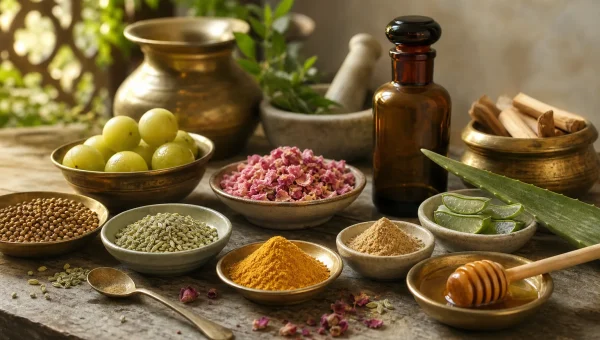
The most sustainable bala-building support for most children begins in the kitchen. Ayurvedic immunity is closely tied to digestion and nourishment, so warm, freshly prepared, age-appropriate foods often do more for a child’s resilience than complicated herbal routines. Herbs and rasayanas work best when the daily diet is steady, digestible, and suited to the season.
- Amla: Fresh Amla in season, Amla-based foods, or well-made Chyawanprash bring the classical rasayana value of Amalaki into the child’s diet in a familiar form.
- Ghee: Ghee is traditionally valued as a nourishing carrier and food support. Used appropriately within meals, it supports a more lubricated, satisfying, and child-friendly diet.
- Tulsi: Tulsi is a traditional household herb for seasonal respiratory comfort. For age-appropriate children, a mild Tulsi infusion can be used as a warm, aromatic drink.
- Haridra milk: Turmeric in warm milk, often with a little ghee, is a familiar Ayurvedic household preparation for cold-season comfort and kapha-prone periods.
- Bala and medhya herbs: Bala, Brahmi, Shankhapushpi, Shatavari, and Ashwagandha have respected places in Ayurvedic materia medica, but for children they should be selected by suitability rather than used casually.
Signs That a Child May Need Stronger Bala Support
Repeated colds alone do not always mean weak immunity; young children commonly experience several colds per year, especially after starting school or group care. Ayurvedic concern rises when illnesses are unusually prolonged, appetite remains poor, growth is slow, sleep is disturbed, digestion is irregular, or the child does not regain normal energy after minor sickness. These patterns point to the need for a fuller look at diet, digestion, sleep, season, constitution, and pediatric health status.
- Frequent respiratory illnesses with slow return of appetite and energy
- Poor weight gain, persistent fatigue, or dullness between illnesses
- Irregular appetite, bloating, loose stools, constipation, or recurrent abdominal discomfort
- Disturbed sleep, daytime tiredness, or low stamina for play
- Repeated illness patterns that seem tied to season changes, school stress, or poor digestion
The connection between early nourishment and long-term bala begins at birth. For a companion discussion, see colostrum and prathama stanya newborn immunity. Ayurveda can add a valuable nourishment-and-resilience lens, but it should sit alongside normal pediatric care, growth monitoring, and appropriate medical assessment when a child is repeatedly or severely unwell.
Medical disclaimer: This article provides general pediatric wellness information and does not replace diagnosis, vaccination, emergency care, or treatment from a pediatrician. Honey should not be given to infants under 12 months. Consult a qualified Ayurvedic physician and your child’s healthcare provider before giving children herbomineral preparations, concentrated herbal extracts, or regular medicinal doses of any Ayurvedic formulation.
References
- Charaka Samhita — Tistraishaniya Adhyaya
- World Health Organization
- Chyawanprash: A Traditional Indian Bioactive Health Supplement (2019), PubMed Central
- Functional and Nutraceutical Significance of Amla (Phyllanthus emblica L.): A Review (2022), PubMed Central
- Evaluation of Cyavanaprāśa on Health and Immunity related Parameters in Healthy Children: A Two Arm, Randomized, Open Labeled, Prospective, Multicenter, Clinical Study (2017), PubMed
- A critical appraisal on Swarnaprashana in children (2014), PubMed Central
- Immunomodulatory activity of Swarna Prashana (oral administration of gold as electuary) in infants – A randomized controlled clinical trial (2019), PubMed
- CDC
- Tulsi – Ocimum sanctum: A herb for all reasons (2014), PubMed Central
- Ayurvedic Pharmacopoeia of India
- Jaims (jaims.in)
- Dravyaguna notes
- Natural Ingredient Resource Center
- Stanfordchildrens (stanfordchildrens.org)
- World Health Organization

Doing this