Kutaja’s Specificity for Gut Infections: What Sets It Apart
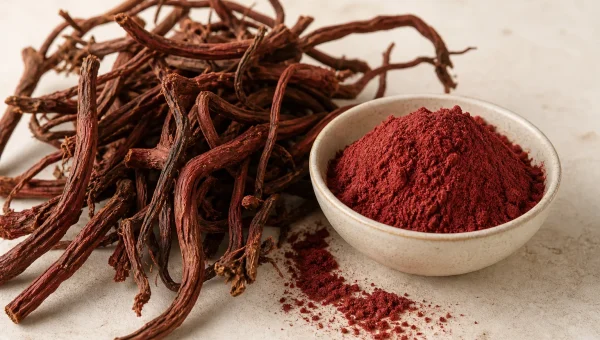
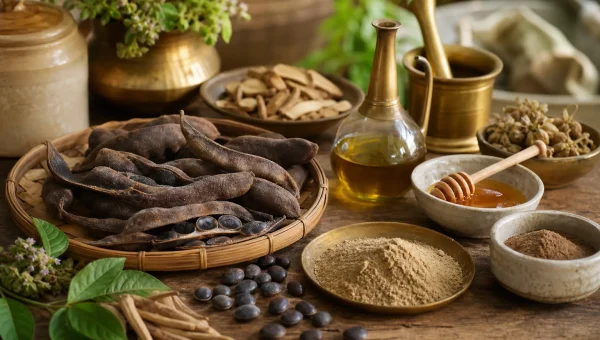
Kutaja is one of Ayurveda’s clearest digestive herbs for atisara and pravahika—loose stool, dysentery-like presentations, and bowel conditions marked by excessive intestinal fluid, mucus, griping, and impaired digestive fire. In the Ayurvedic Pharmacopoeia of India, the official single drug “Kutaja” is the dried stem bark of Holarrhena antidysenterica (Roth) A. DC., family Apocynaceae. Current botanical databases often treat this name as a synonym of Holarrhena pubescens Wall. ex G. Don, but the pharmacopoeial Ayurvedic drug identity remains the stem bark known as Kutaja, Kurchi, Kalinga, Shakra, or Vatsaka.
What sets Kutaja apart from ordinary astringent herbs is its combined Ayurvedic and phytochemical profile. Ayurveda classifies it as tikta and kashaya in taste, laghu and ruksha in quality, shita virya, and katu vipaka. Its actions include dipana, sangrahi, and kapha-pitta-shamana. This means Kutaja is not merely a stool-stopper; it is selected when the bowel needs drying, consolidation, digestive correction, and reduction of kapha-pitta type intestinal disturbance.
Phytochemical Profile: Alkaloids Behind the Classical Use
Kutaja bark is pharmacopoeially assayed for total alkaloids and is stated to contain conessine and related alkaloids. This alkaloid-rich identity is central to its specificity. Unlike tannin-dominant herbs that mainly tighten tissues by astringency, Kutaja combines a bitter-astringent Ayurvedic profile with a characteristic steroidal alkaloid fraction. Publications on Holarrhena list conessine along with related alkaloids such as holarrhimine, kurchicine, conimine, conessidine, isoconessimine, and other members of the same alkaloid group.
Modern pharmacological work on Holarrhena antidysenterica has described antidiarrhoeal activity in animal models and gut motility effects in isolated intestinal tissue. These findings fit the classical positioning of Kutaja for bowel disorders involving excessive liquidity, intestinal urgency, mucus, and disturbed motility, while still requiring proper diagnosis when infection, bleeding, dehydration, or systemic illness is present.
| Kutaja Feature | Verified Position | Practical Meaning |
|---|---|---|
| Official source drug | Dried stem bark of Holarrhena antidysenterica, Apocynaceae | The bark is the principal pharmacopoeial material for classical Kutaja use. |
| Ayurvedic actions | Dipana, sangrahi, kapha-pitta-shamaka | Supports digestive fire while helping consolidate loose stool and intestinal fluidity. |
| Key constituents | Conessine and related alkaloids | Gives Kutaja a chemical identity beyond ordinary plant astringency. |
| Classical indications | Atisara, pravahika, jvaratisara, arsha | Best suited to diarrhoeal and dysentery-like presentations after practitioner assessment. |
| Formulation identity | Kutajarishta, Kutajavaleha, Kutajaghana Vati | Different dosage forms allow acute, chronic, and practical use under qualified guidance. |
Clinical Use: Amoebic and Dysentery-Like Gut Patterns
A published Ancient Science of Life clinical report described 40 cases of amoebiasis and/or giardiasis and recorded the use of Kutaja bark in Entamoeba histolytica cyst passers. The report noted loose motions, flatulence, abdominal cramping, diminished appetite, mucus in stools, and a 70% good response among E. histolytica cyst passers treated with Kutaja bark. This supports the traditional positioning of Kutaja in intestinal amoebiasis-related bowel disturbance, but it does not make Kutaja a substitute for medical treatment in severe invasive amoebiasis.
In practical Ayurvedic use, Kutaja fits chronic or recurrent loose stool with kapha-pitta features: mucus, heaviness, foul smell, griping, incomplete evacuation, low appetite, and bowel looseness that worsens after unsuitable food. Its sangrahi role is especially relevant where the bowel is losing proper containment and the stool remains watery or semi-formed. Because it is ruksha and grahi in effect, it is not chosen casually for every stomach upset, nor for constipation-predominant conditions unless a practitioner identifies a specific indication.
Kutaja in Grahani and Chronic Loose Stool
Kutajarishta is listed in the Ayurvedic Formulary of India with Kutaja stem bark as the main ingredient, along with draksha, madhuka flowers, gambhari, guda, and dhataki. Its listed therapeutic uses include jvara, grahani, raktatisara, and agnimandya. This makes it especially relevant when loose stool is linked with weak digestion, post-infectious bowel irregularity, malabsorption-type patterns, or recurrent pitta-kapha intestinal disturbance.
For modern readers, grahani should not be reduced to a single biomedical diagnosis such as IBS-D. It is an Ayurvedic diagnostic category involving digestive fire, stool formation, appetite, strength, and the capacity of the gut to hold and transform food properly. Kutaja-based medicines may be considered within that framework, while persistent bowel change, blood, weight loss, fever, nighttime diarrhea, or dehydration needs medical evaluation.
Formulations and Dosage Context
Kutaja appears in several important Ayurvedic preparations, and the form is selected according to presentation, strength, chronicity, and the physician’s assessment. The Ayurvedic Pharmacopoeia lists Kutajarishta, Kutajavaleha, and Kutajaghana Vati as important formulations of Kutaja, while the Ayurvedic Formulary gives a standard adult dose of 12 to 24 ml for Kutajarishta. The single-drug monograph gives 20 to 30 g of the drug for decoction.
Kutaja decoction: This is the direct classical approach using the bark as a decoction. It is usually suited to clearly loose, watery, mucus-associated, or dysentery-like bowel patterns where a qualified practitioner has assessed the patient and ruled out emergency signs.
Kutajarishta: This fermented formulation is classically linked with grahani, raktatisara, agnimandya, and fever-associated digestive weakness. It is generally taken after meals in practice, but the exact schedule should follow practitioner advice, especially in patients with acidity, alcohol restriction, liver disease, pregnancy, or multiple medicines.
Kutajaghana Vati: This solid extract form is practical for travel and routine use when a physician wants the Kutaja action in tablet form. Because tablet strength varies by manufacturer, dose should be based on the product standard and a practitioner’s instruction rather than a fixed internet dosage.
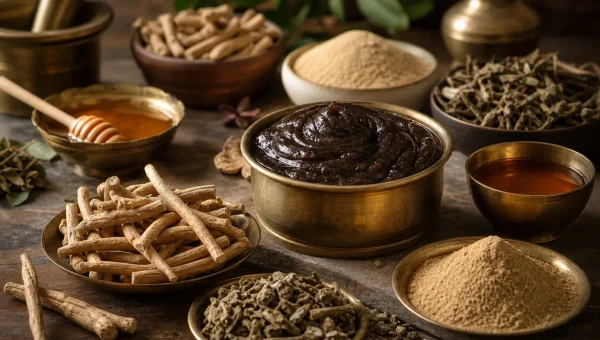
Kutajavaleha: This semisolid preparation is one of the important Kutaja formulations listed in the pharmacopoeial monograph. It may be selected where the patient needs a more palatable or nourishing form, but it should still match the bowel pattern and digestive state.
Comparison With Pharmaceutical Alternatives
Kutaja belongs to Ayurvedic bowel management and should be understood in that context. In confirmed symptomatic amoebiasis, invasive intestinal disease, or suspected liver abscess, modern medical treatment commonly uses a tissue amoebicide such as metronidazole or tinidazole followed by a luminal agent. Kutaja may have a role in practitioner-supervised supportive Ayurvedic care, but severe amoebiasis is not a self-treatment situation.
Loperamide is a symptomatic anti-motility drug and is not a substitute for diagnosis in infectious diarrhea. It is contraindicated in acute dysentery with blood and fever, bacterial enterocolitis caused by invasive organisms, and certain colitis situations. Kutaja is also not meant to simply “block” diarrhea without diagnosis; its Ayurvedic use depends on the atisara, pravahika, grahani, agni, dosha, and strength context.
The most responsible comparison is therefore not “Kutaja versus antibiotic,” but “properly diagnosed infection versus Ayurvedic bowel pattern.” When diarrhea is mild, non-severe, and assessed as suitable for Ayurvedic management, Kutaja is a specific and classical choice. When diarrhea is bloody, febrile, dehydrating, persistent, recurrent without explanation, or associated with severe abdominal pain, investigation and medical treatment take priority.
Safety and When to Seek Care
Kutaja’s drying and consolidating action is useful only when the condition is suitable. It should not be used casually in infants, young children, pregnancy, frail elderly patients, immunocompromised patients, severe dehydration, high fever, blood in stool, suspected food poisoning, severe abdominal pain, or suspected amoebic liver involvement without medical supervision. Oral rehydration, diagnosis, and appropriate antimicrobial treatment may be essential in infectious diarrhea.
Medical disclaimer: Persistent or severe diarrhea, diarrhea with blood or fever, repeated vomiting, signs of dehydration, severe abdominal pain, weight loss, or symptoms in infants, children, elderly patients, pregnant women, or immunocompromised individuals requires medical evaluation. This educational content does not replace diagnosis or treatment by a qualified physician or Ayurvedic practitioner. Consult a qualified healthcare provider before using Kutaja or any herbal anti-diarrhoeal preparation.
References
- Ayurvedic Pharmacopoeia of India
- Powo (powo.science.kew.org)
- Worldfloraonline (worldfloraonline.org)
- Metabolic Diversity and Therapeutic Potential of Holarrhena pubescens: An Important Ethnomedicinal Plant (2020), PubMed Central
- Ijpbs (ijpbs.com)
- Ijpbs (ijpbs.com)
- Researchgate (researchgate.net)
- Veterinaryworld (veterinaryworld.org)
- Pharmacological basis for the medicinal use of Holarrhena antidysenterica in gut motility disorders (2010), PubMed
- Dravyaguna notes
- Msdmanuals (msdmanuals.com)
- CDC
- NCBI
- Idsociety (idsociety.org)
- World Health Organization