Prostate Symptoms Are Not Inevitable – They Are Treatable
Prostate health in Ayurveda is a practical conversation that many men postpone until urinary symptoms become hard to ignore: delayed starting, weak or interrupted stream, straining, post-void dribbling, nocturia, urgency, frequency, and the feeling that the bladder has not emptied completely. In modern medicine, this common non-cancerous enlargement is called benign prostatic hyperplasia, or BPH. In Ayurveda, this presentation is most commonly discussed under Mutraghata and especially Mutrashthila or Vatashtheela-type obstruction, where urinary flow is impeded in the region of the bladder outlet and lower urinary tract.
Ayurveda does not offer a miracle cure for prostate enlargement. It offers a structured, practitioner-guided protocol that combines Mutravaha Srotas support, Apana Vata regulation, Kapha-reducing formulations, diet, bowel regularity, bladder habits, and objective monitoring. Histological prostate enlargement becomes increasingly common with age, but symptoms do not have to be ignored or normalized. The right approach is to evaluate the prostate medically, rule out serious disease, and then use Ayurvedic support as a conservative or adjunctive strategy where appropriate.
Understanding Mutraghata and Mutrashthila Pathology
Mutraghata refers to obstructed, suppressed, or difficult urination. Classical descriptions of Mutraghata include several varieties, and the BPH-like presentation is commonly correlated with Mutrashthila or Vatashtheela, where disturbed Vata in the lower pelvic region contributes to obstruction in urinary passage. In practical Ayurvedic interpretation, Apana Vata governs the downward movement needed for urination, defecation, and pelvic coordination, while Kapha-type heaviness, swelling, and granthi-like tissue enlargement can contribute to slow, obstructed flow.
This combined Vata-Kapha pattern explains why prostate enlargement often produces both voiding symptoms and storage symptoms. Weak stream, hesitancy, straining, and incomplete emptying reflect obstruction and impaired Apana movement, while urgency, frequency, nocturia, and dribbling reflect bladder irritation and poor coordination around voiding. A useful protocol must therefore do more than “shrink” tissue; it must support urinary flow, reduce pelvic obstruction, regulate Apana Vata, protect digestion and bowel movement, and monitor whether urine is actually emptying well.
| Symptom Type | Example Symptoms | Ayurvedic Reading | Treatment Target |
|---|---|---|---|
| Voiding / Obstructive | Weak stream, hesitancy, straining, incomplete emptying | Apana Vata obstruction with Kapha-type heaviness in the lower urinary passage | Kanchanara Guggulu, Varuna-Shigru support, bowel regularity, clinician-guided Basti |
| Storage / Irritative | Frequency, urgency, nocturia, bladder discomfort | Vata disturbance in Basti with Mutravaha Srotas irritation | Gokshura, Gokshuradi Guggulu, Chandraprabha Vati when suitable, evening fluid and caffeine control |
| Post-void | Dribbling, residual sensation, repeat urination soon after voiding | Incomplete Apana coordination and possible residual urine | Pelvic floor practice, double voiding, IPSS tracking, post-void residual assessment when advised |
The Core Ayurvedic Herb Stack for BPH-Type Mutraghata
The strongest Ayurvedic approach for BPH-type Mutraghata is not a single “prostate pill” but a combined urinary-flow and obstruction protocol. The herbs and formulations below should be chosen by a qualified Ayurvedic practitioner after considering age, urinary retention risk, PSA status, kidney function, diabetes, blood pressure medicines, anticoagulants, digestion, bowel habits, and the presence or absence of burning urination or infection-like symptoms.
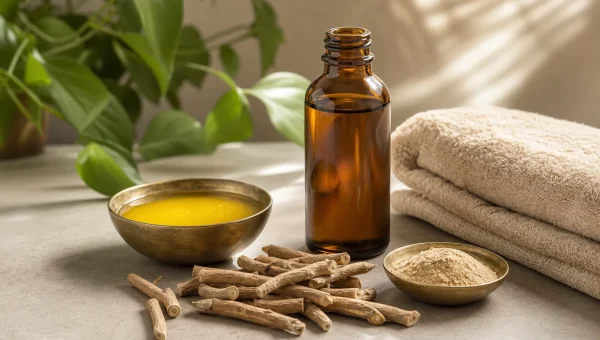
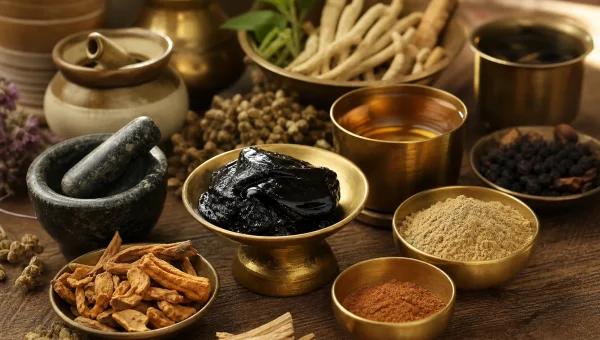
Kanchanara Guggulu: Kanchanara Guggulu is a classical formulation containing Kanchanara bark, Varuna, Triphala, Trikatu, Trijataka, and purified Guggulu. It is traditionally used in granthi, glandular swelling, and Kapha-type accumulations, which is why it is frequently adapted in Ayurvedic management of prostate enlargement with obstructive symptoms. Published Ayurvedic BPH protocols have used Kanchanara Guggulu in doses such as 500 mg to 1 g three times daily for short supervised courses, often alongside Vata-directed therapy such as Matra Basti.
Varuna (Crataeva nurvala): Varuna is an important Mutravaha Srotas herb used from the stem bark of Crataeva nurvala. In prostate protocols it is best understood as a urinary-flow and obstruction-support herb rather than as a direct substitute for pharmaceutical 5-alpha-reductase inhibitors. It may be used as Varuna bark decoction, Varuna-Shigru Kwatha, or Varuna-Shigru Guggulu according to constitution and symptom pattern. One supervised clinical protocol used Varuna-Shigru Guggulu 500 mg three times daily together with Bala Taila Matra Basti for 30 days.
Gokshura (Tribulus terrestris): Gokshura is a major Mutrala herb used for urinary tract support, urinary flow, and soothing the bladder channel. In prostate enlargement, it is especially useful when frequency, mild irritation, urinary sediment tendency, or bladder discomfort accompanies obstructive flow. Classical-style dosing often uses Gokshura fruit powder in the range of 3-6 g daily, or decoction-based preparations, but product strength and plant part vary; it should be adjusted by a practitioner, especially in men with kidney disease, diuretic use, or complex urinary symptoms.
Gokshuradi Guggulu, Chandraprabha Vati, and Trinapanchamula Kwatha: These formulations appear in Ayurvedic prostate-enlargement guidance as urinary-system supports. Gokshuradi Guggulu is often considered when Gokshura-type urinary support is needed with Guggulu-based channel clearing. Chandraprabha Vati is used in many urinary disorders but should not be self-prescribed because formulas and manufacturing standards vary. Trinapanchamula Kwatha is a decoction-style urinary support used when a lighter, fluid-regulating approach is appropriate.
Matra Basti: Several Ayurvedic clinical protocols for Mootraghata/BPH have combined oral formulations with Matra Basti using oils or medicated ghee such as Bala Taila or Dhanyaka-Gokshura Ghrita. This fits the Ayurvedic logic of treating Apana Vata at its pelvic seat. It is not a home enema practice; it is a clinical procedure that should be selected and performed by a trained practitioner.
Kanchanara Guggulu: Where It Fits
Kanchanara Guggulu deserves special attention because prostate enlargement is not merely a urine problem; it also involves tissue enlargement and obstruction. In Ayurvedic logic, Kanchanara addresses Kapha-granthi patterns, while the Guggulu base supports scraping, channel-clearing, and metabolic correction. The presence of Varuna, Triphala, and Trikatu in the classical formulation also makes it relevant where urinary obstruction coexists with sluggish digestion, constipation, heaviness, and slow tissue metabolism.
For BPH-type symptoms, Kanchanara Guggulu is most appropriate when the symptom picture includes gradual enlargement, weak flow, hesitancy, heaviness, and incomplete emptying. It is less complete as a stand-alone approach when urgency, nocturia, burning, infection-like symptoms, severe retention, or high post-void residual dominates the picture. In those cases, the protocol needs adjustment, and medical evaluation becomes even more important.
Dietary Protocol for Prostate Health
An Ayurvedic prostate diet should reduce Kapha heaviness without drying or aggravating Vata. It should also avoid bladder irritants, prevent constipation, maintain hydration in the daytime, and reduce unnecessary fluid load at night. The goal is not a harsh detox diet; it is a steady daily pattern that keeps digestion light, Apana Vata moving, and urination less irritated.
- Favor light grains and legumes such as old rice, wheat, barley water, green gram, and kulatha when they suit digestion and constitution.
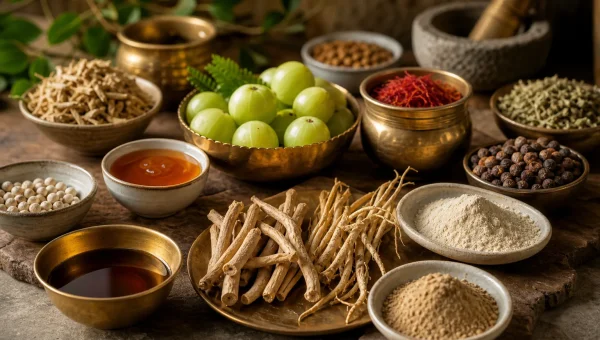
- Use urinary-supportive spices and foods such as coriander, cumin, turmeric, ginger, garlic, patola, shigru, cucumber, coconut, grapes, and buttermilk when appropriate for the individual.
- Drink adequate water earlier in the day, but reduce large fluid intake close to bedtime to support nocturia control.
- Limit coffee, alcohol, fizzy drinks, and strong bladder irritants, especially in the evening.
- Avoid suppression of natural urges, because holding urine or stool aggravates Apana Vata and can worsen lower urinary tract symptoms.
- In a strict CCRAS-style Ayurvedic prostate plan, reduce excess hot and spicy food, black gram, peas, tomato, spinach, mustard-heavy foods, sesame-heavy foods, and jaggery-heavy sweets.
- As a modern food adjunct, pumpkin seed preparations may be used in mild-to-moderate lower urinary tract symptoms, but they should remain supportive food therapy rather than a replacement for evaluation or prescribed treatment.
Daily Practices and Monitoring Protocol
Daily practice matters because BPH symptoms are influenced by bladder habits, evening fluid intake, caffeine, alcohol, constipation, physical inactivity, and medicines that tighten the urinary outlet. Empty the bladder before sleep, shift most hydration earlier in the day, avoid large late-night drinks, reduce evening caffeine and alcohol, avoid holding urine, maintain daily bowel movement, walk regularly, and break up long sitting with short movement intervals.
Pelvic floor exercises can help bladder control and post-void dribbling when performed correctly. The practice should feel like gently lifting and releasing the pelvic floor, not straining the abdomen or forcing urine out. A simple starting protocol is 10 gentle contractions, holding each for a few seconds, followed by complete relaxation; repeat once or twice daily and stop if pain, pressure, or worsening urinary difficulty appears.
Monitoring should be objective. Use the International Prostate Symptom Score every 4-12 weeks to track whether frequency, urgency, weak stream, straining, nocturia, incomplete emptying, and quality of life are improving. A urologist may also advise urinalysis, PSA testing when appropriate, prostate examination, ultrasound, uroflowmetry, or post-void residual measurement. The srotas system framework helps contextualize Mutraghata within Mutravaha Srotas, while the broader hormonal and metabolic context is discussed in testosterone decline and cortisol stress axis.
Medical disclaimer: Prostate symptoms require proper medical evaluation because BPH, urinary infection, bladder stones, kidney effects, and prostate cancer can overlap in presentation. Seek urgent medical care for inability to pass urine, blood in urine, fever with urinary symptoms, severe burning, flank pain, recurrent infections, rapidly worsening symptoms, or abnormal PSA. Consult a qualified Ayurvedic practitioner and a healthcare provider before using herbs, Guggulu formulations, Basti therapy, or supplements for prostate symptoms, and do not stop prescribed medication without medical advice.
References
- NIDDK
- Sciencedirect (sciencedirect.com)
- A clinical evaluation of Kanchanara Guggulu and Bala Taila Matra Basti in the management of Mutraghata with special reference to benign prostatic hyperplasia (2018), PubMed
- CCRAS
- Baus (baus.org.uk)
- Management of Lower Urinary Tract Symptoms Attributed to Benign Prostatic Hyperplasia: AUA GUIDELINE PART I-Initial Work-up and Medical Management (2021), PubMed
- Ijapr (ijapr.in)
- Ayurvedic Pharmacopoeia of India
- Efficacy of Kanchanara Guggulu and Matra Basti of Dhanyaka Gokshura Ghrita in Mootraghata (benign prostatic hyperplasia) (2015), PubMed
- Gokshuradi Vati and Dhanyaka-Gokshura Ghrita Matra Basti in the management of Benign Prostatic Hyperplasia (2012), PubMed
- LWW Journals
- Modulatory effects of Crataeva nurvala bark against testosterone and N-methyl-N-nitrosourea-induced oxidative damage in prostate of male albino rats (2012), PubMed
- Phytopharmacological overview of Tribulus terrestris (2014), PubMed Central
- NIDDK
- MedlinePlus
- Mayoclinic (mayoclinic.org)
- Icurology (icurology.org)
- Effects of pumpkin seed in men with lower urinary tract symptoms due to benign prostatic hyperplasia in the one-year, randomized, placebo-controlled GRANU study (2015), PubMed