
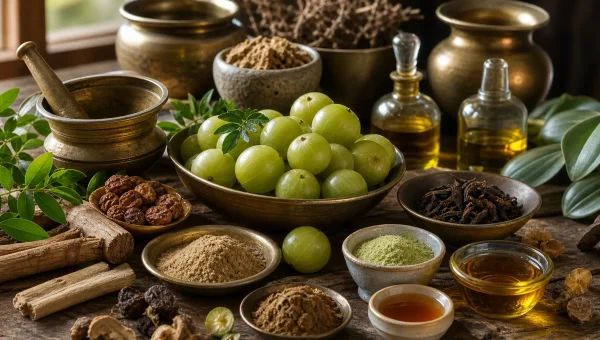
Fresh amla, also called Amalaki or Indian gooseberry, is small, sour, astringent, and unusually rich in vitamin C. Published analyses report wide variation by cultivar and handling, with fresh amla commonly reported at about 193 to 720 mg of vitamin C per 100 grams. In Ayurveda, Amalaki (Emblica officinalis, also known botanically as Phyllanthus emblica) is a classical Rasayana fruit and appears in well-known formulations such as Chyawanprash and Triphala.
The practical challenge is taste. Plain amla can be too sharp for daily use, so traditional kitchens usually pair it with sweet, salty, pungent, or fatty ingredients. These six preparations keep the focus on simple home use while respecting the Ayurvedic character of Amalaki as sour-astringent, cooling, light, dry, Rasayana, and Tridosha-balancing when used appropriately.
1. Fresh Amla Morning Juice
This is the simplest way to use fresh amla when the fruit is in season. The preparation is intentionally raw and quick, because fresh juice is best consumed soon after preparation. Ayurveda traditionally places Amalaki among cooling Rasayana substances, while the small amount of ginger helps make the drink more agreeable for digestion.
Ingredients (Serves 1)
Use firm, fresh amla fruits and adjust the water according to how strong you like the sour taste. Honey is optional and should be stirred in only after blending, not heated.
- 2 fresh amla fruits, seeds removed and roughly chopped
- 1/2 cup (120 ml) water
- 1/2 inch fresh ginger (Zingiber officinale), peeled
- 1 teaspoon raw honey, added after blending
- 1 pinch rock salt
- 1 pinch black pepper, optional
Method
Prepare this juice fresh each morning rather than storing it, because the flavor and aroma are best immediately after blending.
- Blend the amla pieces, ginger, and water until the fruit is well crushed.
- Strain through a fine sieve, pressing with a spoon to extract the liquid.
- Stir in honey, rock salt, and black pepper if using.
- Drink immediately, preferably before breakfast or between meals if it suits your digestion.
Why it works: Fresh amla juice gives the fruit in a concentrated but simple form. Its sour and astringent taste is softened by honey and salt, while ginger adds warmth and digestive support. People with acidity, loose stools, sensitive digestion, or medication use should start with a smaller amount and consult a qualified practitioner if unsure.
2. Amla Chutney for Meals
Amla chutney turns the fruit into a practical condiment that can be eaten with rice, roti, dosa, dal, or simple cooked vegetables. This style is especially useful for people who want amla in food rather than as a separate tonic.
Ingredients (Makes about 1 cup)
The coconut and jaggery soften the sharpness of the fruit, while cumin, ginger, mustard, and curry leaves give the chutney a familiar meal-friendly flavor.
- 4 fresh amla fruits, seeds removed
- 1/2 cup fresh grated coconut
- 1 to 2 green chilies, adjusted to taste
- 1/2 inch ginger, peeled
- 1/2 teaspoon cumin seeds (Cuminum cyminum), lightly roasted
- 1/4 teaspoon rock salt, or to taste
- 1 teaspoon jaggery
- 1 teaspoon coconut oil
- 1/4 teaspoon mustard seeds
- 6 curry leaves
Method
Keep the texture slightly coarse rather than turning it into a completely smooth paste.
- Grind the amla, coconut, green chilies, ginger, cumin, salt, and jaggery. Add 1 to 2 tablespoons of water only if needed.
- Heat coconut oil in a small pan. Add mustard seeds and curry leaves.
- When the mustard seeds begin to pop, pour the tempering over the chutney and mix well.
- Store in a clean glass jar in the refrigerator and use within 3 to 4 days.
Why it works: The Ayurvedic Pharmacopoeia of India describes fresh Amalaki as having five tastes: sweet, sour, pungent, bitter, and astringent, with the sour and astringent taste especially noticeable in the fresh fruit. This chutney balances that intensity with coconut, jaggery, salt, and spices, making small daily servings easier to maintain with meals.
3. Amla Murabba-Style Sweet Preserve
Amla murabba is a traditional sweet preserve that makes the fruit soft, glossy, and much easier to eat. This version uses jaggery syrup and aromatic spices, creating a dessert-like preparation for people who cannot tolerate the raw sourness of amla.
Ingredients (Makes about 2 cups)
Choose medium-sized fruits without bruises. Pricking the fruits helps the syrup enter the fruit evenly.
- 10 fresh amla fruits, pricked all over with a fork
- 1.5 cups grated jaggery
- 2 cups (480 ml) water
- 4 green cardamom pods, lightly crushed
- 3 to 4 saffron strands (Crocus sativus), optional
- 1/2 teaspoon fennel seeds (Foeniculum vulgare)
Method
Cook the fruits gently so they soften without falling apart.
- Steam or blanch the pricked amla fruits for about 5 minutes. Drain and set aside.
- In a heavy-bottomed pan, dissolve jaggery in water over medium heat.
- Strain the syrup if the jaggery contains grit, then return it to the pan.
- Add cardamom, saffron if using, and fennel seeds.
- Add the blanched amla fruits and simmer on low heat for 25 to 30 minutes, until the fruits soften and the syrup thickens lightly.
- Cool completely and transfer to a clean glass jar.
- Eat 1 fruit at a time as an occasional sweet preparation. Store refrigerated and use within 2 to 3 weeks.
Why it works: This preparation keeps the amla fruit central while using sweetness and aromatics to make it pleasant. In classical Ayurveda, Amalaki is associated with Rasayana use and is an important fruit in Chyawanprash. Because murabba is sugar-rich, people with diabetes, insulin resistance, or blood sugar concerns should use it only with professional guidance.
4. Amla Powder for Cooking and Smoothies
Dried amla powder is useful when fresh fruit is unavailable. The Ayurvedic Pharmacopoeia of India recognizes dried Amalaki fruit pericarp as a classical drug and lists its powder dose separately from fresh juice, so dried amla is not merely a substitute but a traditional form of use.
Ingredients
Drying works best in strong sun or in a dehydrator at low heat. The slices must become fully brittle before grinding.
- 500 grams fresh amla fruits
- 1/4 teaspoon turmeric powder (Curcuma longa), optional
Method
Moisture is the main cause of spoilage, so dry the slices thoroughly and store the powder away from heat, light, and dampness.
- Wash the amla fruits and pat them completely dry.
- Cut into thin slices and discard the seeds.
- Spread the slices on a clean tray. Add a light dusting of turmeric if desired.
- Sun-dry for several days until brittle, or use a food dehydrator at about 45 degrees Celsius (113 degrees Fahrenheit) until fully dry.
- Grind the dried slices into a fine powder.
- Store in an airtight glass jar away from direct light.
Daily Usage
Classical powdered doses are modest, so culinary use should also stay moderate unless guided by a practitioner.
- In smoothies: Add 1/2 to 1 teaspoon to a fruit smoothie.
- In warm water: Stir 1/2 teaspoon into warm water after the water has cooled slightly; honey may be added after the drink is no longer hot.
- In cooking: Add a small pinch to dal, soup, chutney, or vegetable dishes near the end of cooking for a sour note.
Why it works: Dried Amalaki is traditionally described with the same core Ayurvedic profile as fresh Amalaki: five tastes excluding salty, light and dry qualities, cooling potency, sweet post-digestive effect, Rasayana action, and Tridosha-balancing use. Its concentrated sourness means a small amount is usually enough.
5. Amla and Honey Rasayana-Style Paste
This paste is inspired by the Ayurvedic habit of taking powdered herbs with suitable vehicles such as honey or ghee. It is not a replacement for a classical formula, but it is a simple household preparation for people who prefer powder over fresh fruit.
Ingredients (Makes about 1/2 cup)
Honey and ghee should not be mixed in equal quantities by weight, and honey should not be heated. Keep this paste unheated and use a small amount of ghee only if it suits your digestion.
- 3 tablespoons amla powder
- 2 tablespoons raw honey
- 1/8 teaspoon pippali powder (long pepper, Piper longum), optional
- 1/4 teaspoon ghee, optional
Method for Internal Use
Make a small batch and keep it refrigerated. Skip pippali if you have heat sensitivity, acidity, pregnancy, bleeding concerns, or are taking regular medication unless advised by a practitioner.
- Mix amla powder and honey into a smooth paste.
- Add pippali and ghee only if appropriate for you.
- Take 1/2 to 1 teaspoon in the morning or between meals, followed by warm water.
- Use within 5 to 7 days.
Method for Hair Mask
For external use, make a separate paste with water and oil rather than using the honey paste meant for eating.
- Mix 2 tablespoons of amla powder with enough warm water to form a thick paste.
- Add 1 teaspoon coconut oil if the scalp is dry.
- Apply to the scalp and hair and leave on for 20 to 30 minutes.
- Rinse thoroughly and wash with a mild cleanser if needed.
- Use once weekly, and stop if irritation occurs.
Why it works: Internally, this preparation keeps the dose small and combines amla powder with a pleasant vehicle. Externally, amla powder offers a traditional plant-based hair rinse or mask. People with sensitive skin should patch test before applying it to the scalp.
6. Quick Amla Pickle (No-Oil Refrigerator Version)
This quick pickle is tangy, salty, and pungent, and it is ready after a short resting period. It is not a long-fermented pickle; it is a fresh refrigerator condiment designed for small servings with meals.
Ingredients (Makes about 1.5 cups)
The spices make the pickle digestive and flavorful, while lemon juice and salt help preserve it briefly under refrigeration.
- 6 fresh amla fruits, seeds removed and cut into small pieces
- 2 teaspoons rock salt
- 1/2 teaspoon turmeric powder
- 1 teaspoon red chili powder, adjusted to taste
- 1/2 teaspoon fenugreek powder (Trigonella foenum-graecum)
- 1 teaspoon mustard powder
- Juice of 1 lemon
Method
Use a clean, dry jar and keep the pickle refrigerated after the first day.
- Toss the amla pieces with rock salt in a glass bowl and rest for 2 hours.
- Add turmeric, chili powder, fenugreek powder, mustard powder, and lemon juice.
- Mix thoroughly and transfer to a clean glass jar.
- Press down to remove air pockets.
- Leave at room temperature for 12 to 24 hours, shaking the jar once or twice.
- Refrigerate and use within 1 to 2 weeks.
Why it works: A small spoonful of this pickle brings sour, salty, bitter, astringent, and pungent flavors into a meal. It is especially useful when raw amla is too sharp but you still want the fruit in a savory form. Because it is salty and spicy, it may not suit people with hypertension, gastritis, ulcers, or strong heat symptoms.
Building Amla into Your Daily Routine
You do not need all six preparations at once. Start with one form that fits your routine: juice if you like fresh tonics, chutney or pickle if you prefer food-based use, powder if you need convenience, or murabba if sourness is the main obstacle. In Ayurveda, suitability depends on constitution, digestion, season, dose, and the form in which a substance is taken.
| Preparation | Most Useful For | Best Time | Shelf Life |
|---|---|---|---|
| Fresh Juice | Fresh seasonal use | Morning or between meals | Drink immediately |
| Chutney | Daily meal condiment | With lunch or dinner | 3 to 4 days refrigerated |
| Murabba-Style Preserve | Making sour amla palatable | Morning or as an occasional sweet | 2 to 3 weeks refrigerated |
| Dried Powder | Off-season convenience | Any suitable time | Several months if fully dry and airtight |
| Honey Paste | Small-dose powder use | Morning or between meals | 5 to 7 days refrigerated |
| No-Oil Pickle | Savory meal support | With meals | 1 to 2 weeks refrigerated |
Safety disclaimer: Amla is generally used safely as a food in modest culinary amounts, but concentrated daily use may not suit everyone. Consult a qualified Ayurvedic practitioner or healthcare provider before using amla therapeutically, especially if pregnant, nursing, giving it to a child, managing kidney stones, iron-overload conditions such as hemochromatosis, bleeding disorders, diabetes, acidity, chronic illness, or taking regular medication. Do not give honey to infants under 12 months. These preparations are educational food recipes and are not intended to diagnose, treat, cure, or prevent any disease.
Amla is sharp on the tongue but remarkably versatile in the kitchen. Juice, chutney, murabba, powder, honey paste, and pickle each solve the same practical problem in a different way: they make a classical Rasayana fruit easier to use regularly, without forcing you to eat it plain.
Nothing in this article diagnoses or treats a medical condition. Use it as educational information and consult a qualified Ayurvedic practitioner or physician before starting herbs, supplements, detoxes, or therapeutic protocols, especially if pregnant, managing a condition, or taking medication.
References
- Functional and Nutraceutical Significance of Amla (Phyllanthus emblica L.): A Review (2022), PubMed Central
- NIH Office of Dietary Supplements
- Ayurvedic Pharmacopoeia of India
- Charaka Samhita — Rasayana Adhyaya
- Studies on the physicochemical characteristics of heated honey, honey mixed with ghee and their food consumption pattern by rats (2010), PubMed Central
- CDC
- NIH Office of Dietary Supplements
- NCCIH

What’s the best time of year to start this? Does the season matter for effectiveness?
the way you connect traditional wisdom with modern understanding is brilliant
The 600-800mg vitamin C figure stops people who have only ever thought of Amla as a traditional pickle ingredient. Eight to ten times an orange is the calibration that converts skeptics.
Helpful for beginners but if you already know the basics, there’s not much new here. Was hoping for more advanced protocols
Thank you for sharing your experience! Stories like yours help other readers see what’s possible with consistent practice.
My grandmother used to swear by this and now I understand why. The part about triphala specifically matches what I observed in her health over the years.
The Amla candy recipe is what I use to give to children. They’ll eat it without complaint. Getting functional amounts of Amla into a 10-year-old who rejects anything healthy by taste is its own achievement.
Is fresh Amla meaningfully better than powder for vitamin C content? I live outside India and the fresh fruit is seasonal and expensive. The powder is available year-round but I’ve read that drying affects the ascorbic acid content.
The Amla-ghee-black pepper preparation is something my Ayurveda teacher prescribed as a daily morning supplement. Having it contextualized as one of six preparation methods rather than a standalone recommendation makes the framework clearer.
The vitamin C stability in cooked Amla versus fresh is worth addressing. Ascorbic acid degrades with heat. If you’re making the murabba (which involves cooking) are you preserving the vitamin C or are you relying on other Amla actives?
The fresh amla juice recipe looks simple enough to try tomorrow morning.
The Amla-ginger-jaggery chutney is something I make in batches for the whole family and everyone eats it as a condiment without knowing it’s therapeutic. Food medicine integration is most successful when the medicine is indistinguishable from food.
My hair was the reason I started taking Amla and within three months my nails, skin, and energy all changed. The Rasayana breadth of Amla beyond a single-nutrient supplement is what the article explains well.
The Amla 6 Ways explanation is clearer than most short posts. The article avoids making it sound like a quick fix.
I wonder if the ginger amount can be adjusted for a milder flavor.
I have hyperacidity and found fresh Amla made it worse. Tried the cooked murabba form and it was fine. The preparation method genuinely changes the effect on the stomach and the article is right to present all six as alternatives rather than equivalents.
Adding rock salt and black pepper to the juice seems like a nice touch for digestion.
The Amla 6 Ways explanation is clearer than most short posts. The timing advice is the part I would start with.
I’ve tried everything for my condition and triphala combined with the dietary changes described here is the first thing that’s moved the needle. Four months now.
The amla chutney could be a great accompaniment to my lunchtime rice.
The Triphala connection is the thing most Amla articles miss. Amla as a standalone is good. Amla as part of Triphala is a different clinical application. Understanding that you’re getting partial Triphala benefit from Amla alone changes the protocol rationale.
I like that the chutney uses coconut for healthy fats, makes it more satisfying.
Making amla murabba with jaggery and saffron sounds like a treat that also feels medicinal.
The tip about storing murabba in the fridge for three weeks is helpful for batch prep.
The amla powder blends well into a mango smoothie to mask the sourness.
Using turmeric while drying the amla slices seems like a smart preservation trick.
The honey and pippali paste for immunity sounds easy to prepare in small batches.
Applying the amla hair mask once a week could be worth trying for stronger strands.
The quick no oil pickle being ready in a day makes it perfect for impromptu meals.
Starting with just one recipe, like the morning juice, feels like a manageable way to add amla to the routine.