
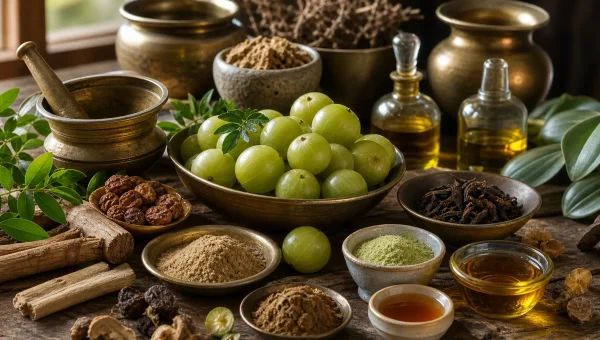
Spring in Ayurveda is the season for lightening, warming, and clearing the heaviness that builds through the cold months. The practical goal is not a generic bottled “detox,” but a focused Vasanta routine: lighter food, stronger digestive support, movement, and carefully chosen herbs for the dominant Kapha pattern—nasal congestion, sluggish digestion and weight heaviness, fatigue with dullness, or seasonal resilience.
Understanding Vasanta Ritu: Kapha’s Annual Release
Classical Ayurveda describes Vasanta Ritu as the time when Kapha accumulated during the cold season is loosened by increasing warmth. When this loosened Kapha weakens agni, the person may feel heavy, sleepy, congested, dull, slow after meals, or resistant to movement. The classical correction is langhana—lightening measures—supported by deepana and pachana herbs that kindle digestion and help metabolize heaviness without exhausting the body.
For most people, the safest spring strategy is simple: reduce heavy, oily, sweet, cold, and excessive dairy foods; avoid daytime sleeping; favor warm, light meals; move daily; and select one herb stack that matches the main presentation. Strong cleansing procedures such as therapeutic emesis and medicated nasya belong under the supervision of a qualified practitioner, not as casual home routines.
Spring Herb Stack 1: The Allergy and Sinus Protocol
This stack is for the spring pattern of nasal congestion, thick mucus, repeated sneezing, dull headache, poor appetite, and heaviness in the upper respiratory passages. The Ayurvedic emphasis is to warm, dry, and mobilize Kapha while protecting irritated mucosa and keeping digestion active.
| Herb or Formula | Classical Spring Role | Typical Adult Use When Appropriate | Best Timing |
|---|---|---|---|
| Tulsi / Surasā (Ocimum sanctum) | Kapha-reducing, digestion-kindling, traditionally listed for cough, breathing difficulty, and cold-type nasal conditions. | 2–3 g powder, or a warm infusion prepared from fresh leaves. | Morning or early afternoon. |
| Trikatu (Śuṇṭhī, Marica, Pippalī) | A warming deepana-pachana combination for cold, heavy, mucus-dominant Kapha with low appetite. | A small pinch up to 1 g of the combined powder, adjusted to tolerance. | Before food with warm water or honey, if suitable. |
| Haridrā (Curcuma longa) | Warming, drying, Kapha-Pitta balancing support; traditionally listed for pīnasa and skin-metabolic Kapha-Pitta patterns. | 1–3 g powder with food. | With meals. |
| Sitopaladi Churna | A classical respiratory churna containing sitopala, vaṃśalochana, pippalī, elā, and tvak, commonly carried with honey or ghee. | 1–3 g, practitioner-adjusted. | After meals or between meals, according to the symptom pattern. |
When the nose is dry, irritated, or blocked, do not overuse strong drying herbs. Gentle steam, warm water sipping, and professional guidance for nasya are more appropriate than forcing nasal oils or pungent powders into a reactive nose. If wheezing, fever, facial pain, blood, severe sinus pressure, or breathing difficulty is present, seek medical care.
Spring Herb Stack 2: Sluggish Digestion and Weight Heaviness
This stack is for the Kapha pattern of low appetite, post-meal heaviness, coated tongue, sluggish bowels, bloating, water retention, and weight that feels resistant to normal effort. The aim is not rapid weight loss; it is to restore agni, reduce heaviness, and keep elimination regular while using light food and daily movement.
Guggulu (Commiphora wightii): Guggulu is classically described with medohara action and is listed for medoroga, prameha, and swelling-type conditions. It is strong and should be used as a short, supervised course, especially if thyroid disease, liver disease, pregnancy, lactation, or multiple medications are involved.
General adult range: 2–4 g of the gum resin in traditional use, or a prepared classical guggulu formulation as directed by a practitioner.
Musta (Cyperus rotundus): Musta is light, dry, deepana, pachana, grahi, and Kapha-Pitta reducing. It is useful where spring heaviness appears as poor appetite, bloating, loose or irregular digestion, and abdominal dullness.
General adult range: 3–6 g powder, or 20–30 ml decoction, adjusted by constitution and digestion.
Triphala: Triphala is a classical formulation associated with Amalaki, Haritaki, and Bibhitaki and is commonly used when bowel regularity is part of the Kapha-clearing plan. It should be started low because larger amounts can loosen the stool.
General adult range: 1–2 g at bedtime with warm water, reduced if stools become loose.
Vidanga (Embelia ribes): Vidanga is best reserved for practitioner-guided use when the presentation includes āma, coating, abdominal heaviness, or krimi-type signs. It is not a daily long-term spring supplement for everyone.
General adult range: Use only in short courses under guidance.
Spring Herb Stack 3: Fatigue, Dullness, and Mental Heaviness
Spring fatigue is not always true depletion. In Kapha season it often feels like heaviness: oversleeping, cloudy thinking, low motivation, sweet cravings, slow digestion, and a reluctance to move. This stack should be chosen according to whether the person is heavy and congested, genuinely depleted, or both.
| Herb | Best Fit | Typical Adult Use When Appropriate |
|---|---|---|
| Brahmi (Bacopa monnieri) | Medhya support for mental clarity, learning, and dullness with nervous-system strain. | 1–3 g powder, or a prepared extract as directed. |
| Pippali (Piper longum) | Best when fogginess comes with low appetite, coldness, mucus, and weak agni. | 1–3 g powder in traditional use; begin much lower if heat, acidity, or sensitivity is present. |
| Ashwagandha (Withania somnifera) | Balya and rasayana support when fatigue reflects depletion, weakness, poor recovery, or Vata-Kapha strain. | 3–6 g root powder, or a prepared extract as directed. |
| Guduchi (Tinospora cordifolia) | Rasayana, balya, and deepana support for seasonal transition when the person needs steadiness without excessive stimulation. | 3–6 g powder or 20–30 ml decoction. |
If the person feels heavy, sleepy, coated, congested, and slow after meals, begin with Pippali, Tulsi, Musta, movement, and lighter food rather than immediately using heavy tonics. If the person is underweight, weak, anxious, or overworked, Ashwagandha and Guduchi may be more appropriate than strong drying herbs.
Spring Herb Stack 4: Seasonal Resilience Reset
This stack is for people who want a gentle seasonal reset rather than a symptom-specific protocol. It emphasizes rasayana support, bitter and light herbs, and steady digestion during the transition from cold to warm weather.
Guduchi (Tinospora cordifolia): Guduchi is described as tridosha-shamaka, balya, deepana, and rasayana. It is a strong fit for spring because it supports digestion and resilience without being as sharply heating as Trikatu.
General adult range: 3–6 g powder or 20–30 ml decoction.
Nimba / Neem leaf (Azadirachta indica): Neem leaf is bitter, light, dry, cooling, and traditionally listed for skin, wound, krimi, prameha, and inflammatory patterns. It is best used briefly and carefully, especially when spring Kapha appears with itching, skin eruptions, heaviness, and heat.
General adult range: 1–3 g leaf powder or 10–20 ml decoction; avoid prolonged self-use.
Amalaki (Emblica officinalis): Amalaki is a rasayana and tridosha-balancing fruit with a cooling nature and classical use in formulations such as Triphala and Chyavanaprasha. It is a good spring companion when clearing herbs feel too sharp or drying.
General adult range: 3–6 g dried fruit powder, or as part of Triphala.
Spring Dietary Adjustments
No spring herb stack works well if the diet continues to feed Kapha. Vasanta meals should be warm, light, and easy to digest. Favor barley, wheat in moderation, millets, mung soup, lightly spiced vegetables, bitter greens, fenugreek leaves, drumstick leaves, bitter gourd, warm water, and early dinners. Reduce heavy dairy, cold smoothies, fried foods, excess sesame and oils, sweets, large wheat-heavy meals, and daytime sleeping.
Honey is traditionally included in spring regimens because it is light and Kapha-reducing when used appropriately. A practical daily option is 1 teaspoon of raw honey stirred into warm—not boiling—water in the morning. Avoid this if honey is unsuitable for you, if blood sugar control is poor, or if your clinician has advised against added sugars.
Daily movement is as important as herbs. Brisk walking, light sweating exercise, dry powder massage, warm bathing, and regular waking times all match the classical spring direction of reducing heaviness. The best stack will fail if the day is sedentary, meals are late, and sleep continues after sunrise.
How to Choose the Right Spring Stack
Choose one dominant pattern rather than taking every herb together. For congestion and sneezing, choose the sinus stack. For post-meal heaviness and weight stagnation, choose the digestion and meda stack. For dullness and fatigue, choose the clarity stack according to whether the fatigue is heavy or depleted. For general transition support, choose the seasonal resilience stack.
Use these stacks seasonally, not indefinitely. A practical window is 4–8 weeks during spring, with dose, duration, and anupana adjusted by constitution, digestion, age, medication use, pregnancy status, and disease history. Stop if a herb causes burning, rash, diarrhea, palpitations, worsening anxiety, menstrual changes, or any unusual symptom.
Safety note: This article is educational and does not diagnose, treat, or replace medical care. Consult a qualified Ayurvedic practitioner or healthcare provider before starting herbs, supplements, detoxes, nasya, emesis, or therapeutic protocols, especially if pregnant, trying to conceive, breastfeeding, managing thyroid disease, liver disease, diabetes, autoimmune disease, respiratory disease, depression, allergies, or taking prescription medication.
Actionable tip: For the next 30 days, start with the lowest-risk spring routine before adding complex supplements: warm water on waking, a lighter breakfast, a warm cooked lunch, no daytime sleeping, 20–30 minutes of brisk movement, and early dinner. If honey is suitable for you, add 1 teaspoon to warm water in the morning and track sinus congestion, appetite, bowel regularity, and post-meal heaviness.
References
- Pocketayurveda (pocketayurveda.com)
- Ritucharya: Answer to the lifestyle disorders (2011), PubMed Central
- Ia800501 (ia800501.us.archive.org)
- Scholarsresearchlibrary (scholarsresearchlibrary.com)
- Healthline (healthline.com)
- Rjptonline (rjptonline.org)
- NCCIH
- NCBI
- Webmd (webmd.com)
- Webmd (webmd.com)
- NCCIH
Every March without fail I feel heavy, sluggish, and congested. My Ayurvedic practitioner diagnosed this as accumulated Kapha from winter melting in spring and the supplement protocol she gave me is essentially what is described here: Trikatu, Triphala, Guggulu and bitter greens. It works.
How long before seeing results with this protocol? My practitioner said 4 weeks but I’m seeing other timelines mentioned online.
How long before the start of spring should you begin the Kapha season supplement protocol? I am Kapha constitution and always start feeling the heaviness in late January, before official spring. Should I start the Trikatu and bitter herbs in February or wait until March?
Is there a difference in efficacy between the churna form and capsules for kapha? I’ve heard the powder absorbs differently.
Triphala in spring is underrated. Most people associate it with daily digestion but the Vasanta Ritu application of Triphala as a liver and lymphatic support during the seasonal transition is its most powerful application in my experience as a practitioner.
I was looking for a plain explanation of Spring Herb Stacks. The main idea is clear even if someone is new to Ayurveda.
The breakdown of Kapha Sravana really clarified why my spring sinus issues feel worse each year.
I was looking for a plain explanation of Spring Herb Stacks. This feels more usable than a long list of herbs.
I want to understand the distinction between using these spring herb stacks as a seasonal protocol for a few months versus using them year-round. The article implies seasonal use but for someone with chronic Kapha imbalance year-round, would the protocols be appropriate ongoing?
Neem in spring is the most classical seasonal intervention in Indian medical tradition. My grandparents ate fresh Neem leaves on the first day of Ugadi. This is not folk practice; the bitter principle in Neem specifically counteracts the sweet Kapha accumulation of winter. Ancient empirical practice confirmed by Ayurvedic pharmacology.
I wonder if adding a morning honey drink would actually help with the sluggish digestion mentioned.
I am skeptical about the claim that a supplement stack can prevent the 10-pound winter weight gain described. The caloric and lifestyle factors driving winter weight gain are the primary cause. A herbal protocol that does not address those inputs will not produce meaningful metabolic change regardless of the Kapha theory.
The Allergy and Sinus Protocol looks practical especially the Nasya oil tip with sesame oil.
Has anyone tried the Guggulu dose for weight management and noticed any change in appetite?
I appreciate that the article distinguishes between generic detox and specific herb stacks for Kapha.
The Spring Fatigue and Mood Support stack seems promising for those brain fog days.
Do the herbs in the Immune Reset stack interact with common over the counter cold medicines?
Reading about Vasanta Ritu made me think about adjusting my breakfast to lighter grains like barley.
The caution about Neem use for more than four weeks is something I hadn’t considered before.
I find the suggestion to use raw honey in warm water each morning a simple habit to try.
The dosage details for Tulsi and Trikatu make it easy to follow the protocol without guesswork.
Is there a recommended time of day to take Brahmi for best effect on mental clarity?
The article’s focus on seasonal living resonates with my own experience of feeling stuck in March.
My family follows some of these practices but never knew the classical reasoning. Sharing this with my mother.
Reading this later and the Spring Herb Stacks advice still feels relevant. The safety notes could be expanded a little.
would love a video version of the preparation method
The seasonal adjustment framework changed how I think about my year. Not just diet but sleep, exercise, everything. ✨
What brand of triphala do you recommend? So many options and quality varies greatly. 🙌
could you address the quality certification issue in a future article? Third-party tested herbs are hard to find. 🙌
the before-and-after in my experience matches what the article predicts. That’s meaningful.
Reading this later and the Spring Herb Stacks advice still feels relevant. I would like to know how long to try it before judging results.
The Spring Herb Stacks explanation is clearer than most short posts. Small daily changes are easier to follow than a perfect plan.
practical + scientific = rare combo in Ayurveda content. Good work.
Real information. Not fluff. Rare.
for an old post this is still very relevant. good information doesnt expire.
first year I actually followed the winter-to-spring transition protocol and my sinuses were clear all season.
three herbs three outcomes surprisingly simple when laid out like this
yoga sequences for joints are hard to find that are actually therapeutic rather than just general wellness.
my grandma was right about all of this. just didn’t have the explanation. ✨
Been meaning to try this for two years. This article finally pushed me to start. 💯
the seasonal protocol is smart. Most people try to use the same routine all year. ❤️
Read this in September and started the Vata-season prep early. Smoothest autumn I’ve had in years.
The safest part of the Spring Herb Stacks advice is keeping it simple. Would be useful to see a short checklist next.
my family follows some of these practices but never knew the classical reasoning. Sharing this with my mother. नमस्ते
Late to this but skeptical but curious. trying the minimal version first.
Doing this
my grandma was right about all of this. just didnt have the explanation. 🙌
what brand of triphala do you recommend? So many options and quality varies greatly.
does anyone know a practitioner in Hyderabad who works with this kind of protocol?
my constitution is Vata-Pitta so some of this applies and some doesnt. A chart for dual types would help.
tried. Liked. Continuing.
The classical text reference to Charaka Samhita gave this article more credibility in my eyes.
Could you address the quality certification issue in a future article? Third-party tested herbs are hard to find.
Any recommendation for online vaidya consultations for those of us not near an Ayurvedic clinic?
The dose specificity here is what makes this actionable. Vague ‘take regularly’ instructions are useless.
The seasonal adjustment framework changed how I think about my year. Not just diet but sleep, exercise, everything.
Forwarded to my whole family WhatsApp group. Three replies already asking for more details.
The Spring Herb Stacks section feels grounded enough to try carefully. I appreciate that it does not oversell the result.
As someone who does both allopathy and Ayurveda I appreciate that this article doesn’t demonize either.
does this protocol need modification for someone who is fasting during Navratri?
i dont comment usually but this was actually helpful
Brilliant breakdown. Forwarding this.
tried the protocol. Week 2 no change yet but following through to the full period.
the balance between Sanskrit terminology and plain English is really well done.
the integration of modern evidence with traditional practice is the right approach.
My experience perfectly matches what is described in the long-term use section.
for an old post this is still very relevant. good information doesn’t expire.
The advice around Spring Herb Stacks is specific enough to be useful. This is the kind of detail readers can test slowly.
read this in September and started the Vata-season prep early. Smoothest autumn Ive had in years.
Skeptical about Ayurveda in general but this is presented honestly enough that I’ll try it.
starting today. Fingers crossed.
The Spring Herb Stacks angle is useful here. The practical details matter more than people think.
Can someone here who has tried this protocol confirm the timeline? Two weeks vs six weeks? 💯
read this in September and started the Vata-season prep early. Smoothest autumn Ive had in years. 🙏
people should know this. Sharing everywhere.
will come back to this when I hit the cooling phase very detailed.
been meaning to try this for two years. This article finally pushed me to start.
three months later: the results held. Happy to report.
Good reminder on Spring Herb Stacks. Would be useful to see a short checklist next.
can this be taken in summer or only winter months?
Good reminder on Spring Herb Stacks. The timing advice is the part I would start with.
i was prescribed this by a practitioner 2 years back but never understood why. now i do. ❤️
Good reminder on Spring Herb Stacks. I would like to know how long to try it before judging results.
the depth here is unusual for a blog. reads more like a textbook chapter.
Good info
The seasonal adjustment framework changed how I think about my year. Not just diet but sleep, exercise, everything. ❤️
i appreciate that the dosages are given in actual mg not just ‘a pinch’ or ‘as needed’.
the balance between Sanskrit terminology and plain English is really well done. 🌿
old post but still helpful. read this in September and started the Vata-season prep early. Smoothest autumn Ive had in years. ❤️
What brand of triphala do you recommend? So many options and quality varies greatly. ठीक है
nani used to say the same things in different words. There’s real wisdom here.
the seasonal protocol is smart. Most people try to use the same routine all year.
This makes sense for Spring Herb Stacks. The practical details matter more than people think.
for Kapha-dominant types is the warm water recommendation essential or can it be room temp?
Found this searching for answers, this site is different from other ayurveda blogs. feels researched not just copied.
yoga sequences for joints are hard to find that are actually therapeutic rather than just general wellness. ❤️
Never thought I’d become an Ayurveda convert but here I am reading every article.
late to this but shared this with my 68-year-old father. He said its exactly what his vaidya prescribed 30 years ago.
i asked my dr about this. she said she doesnt have enough info on it but didnt say no
will try for a month and report back here.
I would like more detail on Spring Herb Stacks. This would be easier to follow with a one-week sample plan.
I would like more detail on Spring Herb Stacks. The main idea is clear even if someone is new to Ayurveda.
Reading this in 2027, the dose specificity here is what makes this actionable. Vague ‘take regularly’ instructions are useless.
My yoga teacher recommended this site and now I see why. 🙏
The dosage for children per kg bodyweight would be useful to add.
Found this searching for answers, the seasonal adjustment framework changed how I think about my year. Not just diet but sleep, exercise, everything. 💯
my yoga teacher recommended this site and now I see why. ठीक है
Click Here For The Best Real Money Payid Casino
Basically, it links a simple identifier – like your mobile number or email –
directly to your bank account. Our experts have also assessed platform security,
evaluated available bonuses, and compared PayID with alternative payment methods, enabling informed
selection of casinos offering efficient and secure payouts.
This guide details the PayID setup process, provides step-by-step instructions for deposits and withdrawals, outlines limit policies, and covers verification procedures.
To deposit using PayID, first register your PayID via your bank’s mobile app or
online banking platform. Remember to verify the casino’s reputation through player reviews and industry watchdog sites.
The process maintains bank-grade security while offering the convenience of quick deposits.
Making a PayID deposit at Australian online pokies sites is quick and straightforward.
You can complete the payment in your online banking
or mobile banking app. He bought Bitcoin and Verge as his first cryptocurrencies and
developed a strong interest in blockchain technology and digital assets.
Many players prefer using their phones or tablets because mobile pokies are easy to access, load
quickly, and work smoothly on most devices.
Look for a site that shows its licence, explains how payments work, and lists clear bonus terms.
But remember, these sites aren’t legal under Australian rules, and players don’t have the same protections
they would with local operators. Our How to Buy Bitcoin in Australia guide walks
through setting up an exchange account, buying BTC,
and moving funds into a self-custody wallet. Australia is generally considered a crypto-friendly nation, thanks to the Aussie government’s efforts to develop well-defined laws to regulate
digital assets and blockchain technology.
Deposit limits using PayID are similar to other conventional payment methods,
like debit or credit card transactions and bank wire transfers.
No, you don’t have to pay a cent to deposit using a PayID account.
A deep library of FAQs also demonstrates a commitment
to your enjoyment and safety. If well-known game providers like these are listed within a PayID-friendly casino’s game lobby, it’s a sure-fire sign that they favour legit
games. Many providers are also moving towards blockchain-based, provably fair games that allow you to verify the
legitimacy of game outcomes with your own eyes.
However, the best PayID-friendly casinos in Australia
do things properly by giving you a safe and legitimate
place to play your favourite games.
It is operated by BPAY Group, a company owned by
a consortium of Australian banks and financial institutions.
We verify every licence by checking the footer or “About”
page for a licence number, cross-referencing it on the regulator’s official registry, and confirming the
casino domain is listed under that licence. Over 100 Australian financial institutions support PayID,
including Commonwealth Bank, Westpac, ANZ,
NAB, Bendigo Bank, and ING. If your bank supports Osko
(instant payments), it supports PayID.
Track email drops religiously, as ND25 vanishes quick and rewards
verified punters with faster processing. The cashier section lists active codes when funding via PayID, BPAY, or Neosurf, right there as you select your
method — no digging required. Always verify the code’s validity
during peak hours, as high traffic can sometimes delay activation,
but PayID’s speed usually sorts it quick smart.
Exact limits, processing times and any fees depend on the specific promotion, the player’s bank
and verification status, so the cashier page should
always be checked before confirming a payment. The safest way to obtain a promo code is
by checking the official promotion banners, terms pages and the cashier
section once logged in. When the code is entered correctly in the registration or cashier form and the qualifying
deposit is made in AUD, the system automatically credits the matching bonus balance and any linked free spins, according to
the current terms. Neither is safer in terms of casino trustworthiness — that’s determined
by licensing, not payment method.
Once you enter that code, your account is active and ready for casino
deposits. The bank usually sends a quick SMS verification code to confirm your identity.
You head to the settings menu and look for the
specific payment options. I test dozens of payment methods every month, and nothing beats the speed of a direct bank transfer.
Once your PayID is linked to your bank account, the actual deposit process is
quick and consistent. If the name looks wrong, you simply cancel the transaction and keep your money safe.
But organising one can be (read the article) Use PayID and collect money quickly, without mistakes.
But remembering all those numbers and (read the article) One in four PayID users have stopped or
edited a PayID payment, preventing a mistaken payment or money being sent (read the article) In 2021 Australian businesses and consumers lost $227 million to scammers who pretended to be another person or company – (read the article)
Still, for an AUD banking option, PayID is a fantastic choice compared to other
competitors on the list. Not all online casinos exclusively list PayID
as one of their payment methods. Summing up, PayID is a quick and easy
payment method for managing your money transfers. Osko is operated by BPAY Group, a company owned by a consortium of Australian banks and financial institutions.
Users can make payments using BPAY through their online banking platform
or by phone, and they can schedule payments in advance or set
up automatic payments to be made regularly.
References:
https://payidpokies1.com/payid-pokies-instant-withdrawal
can someone here who has tried this protocol confirm the timeline? Two weeks vs six weeks?
my western trained MD friend looked at this and said the pharmacology section was reasonable.
The Hindi terms alongside English make this usable in both languages.
the language is accessible which is rare for classical Ayurveda writing
i appreciate the acknowledgment that this isnt a substitute for professional consultation.
For Spring Herb Stacks, consistency seems like the hard part. The timing advice is the part I would start with.
the comments section here is almost as useful as the article itself
For Spring Herb Stacks, consistency seems like the hard part. The main idea is clear even if someone is new to Ayurveda.
Reading this later and the Spring Herb Stacks advice still feels relevant. The practical details matter more than people think.
Reading this later and the Spring Herb Stacks advice still feels relevant. I would still ask a practitioner before changing medicines.
my yoga teacher recommended this site and now I see why.
as someone who does both allopathy and Ayurveda I appreciate that this article doesnt demonize either.
finally an article that doesnt treat Ayurveda as magic and also doesnt dismiss it entirely
late to this but my family follows some of these practices but never knew the classical reasoning. Sharing this with my mother. 🙏
My family follows some of these practices but never knew the classical reasoning. Sharing this with my mother. 💯
going to share this at my wellness group meeting next week. Very useful. ❤️
for Kapha-dominant types is the warm water recommendation essential or can it be room temp? 💯
i dont comment usually but this was actually helpful 🙌
I liked the practical side of Spring Herb Stacks. The practical details matter more than people think.
Finally something that explains the why, not just the what.
going to share this at my wellness group meeting next week. Very useful.
my grandma was right about all of this. just didnt have the explanation.
so much misinformation out there. Good to find something grounded.
the depth here is unusual for a blog. reads more like a textbook chapter. 🙏
does this work for people over 60? The age range in the examples skews younger.
this is now my reference article for explaining this topic to friends.
just found this via Google, for Kapha-dominant types is the warm water reccomendation essential or can it be room temp?
This helped me understand Spring Herb Stacks without too much jargon. The article avoids making it sound like a quick fix.
three months later: the results held. Happy to report. 🌿
thanks for the clear writing. This isnt easy material to explain simply.
read this in September and started the Vata-season prep early. Smoothest autumn Ive had in years. 🙌
found this searching for answers, the dosage for children per kg bodyweight would be useful to add. नमस्ते
The Spring Herb Stacks section feels grounded enough to try carefully. The timing advice is the part I would start with.
The Spring Herb Stacks section feels grounded enough to try carefully. The safety notes could be expanded a little.
The morning versus evening split for herbs is something I always get confused about. Clear here.
Late to this but first year I actually followed the winter-to-spring transition protocol and my sinuses were clear all season.
u said it better than my 45-min consult with the vaidya tbh
the seasonal adjustment framework changed how I think about my year. Not just diet but sleep, exercise, everything. 🌿
found this article after searching for 3 days. Exactly what I needed.
the Q&A format at the end would make this even more useful. Would love a FAQ section.
Helpful
u said it better than my 45-min consult with the vaidya tbh ✨
Old post but still helpful. read this in September and started the Vata-season prep early. Smoothest autumn I’ve had in years.
skeptical but curious. trying the minimal version first.
The advice around Spring Herb Stacks is specific enough to be useful. The main idea is clear even if someone is new to Ayurveda.
The advice around Spring Herb Stacks is specific enough to be useful. I would like to know how long to try it before judging results.
The Spring Herb Stacks angle is useful here. Small daily changes are easier to follow than a perfect plan.
yoga sequences for joints r hard to find that r actualy therapeutic rather than just general wellness. नमस्ते
going to share this at my wellness group meeting next week. Very useful. 🙌
just found this via Google, can someone here who has tried this protocol confirm the timeline? Two weeks vs six weeks?
The Spring Herb Stacks angle is useful here. I would like to know how long to try it before judging results.
Good reminder on Spring Herb Stacks. The practical details matter more than people think.
Just found this via Google, my western trained MD friend looked at this and said the pharmacology section was reasonable.
the question about brand quality is important. not all suppliers are equal.
i took notes from this and created a personal protocl. Three weeks in, positive changes.
late to this but found this article after searching for 3 days. Exactly what I needed.
first comment here. been lurking for months. this is the one that made me want to say thank u
Old post but still helpful. yoga sequences for joints are hard to find that are actually therapeutic rather than just general wellness.
Found this searching for answers, read this in September and started the Vata-season prep early. Smoothest autumn I’ve had in years.
I came for Spring Herb Stacks and this answered the main question. The safety notes could be expanded a little.
Yoga sequences for joints are hard to find that are actually therapeutic rather than just general wellness. ✨
Will try
The combination of theory and practical steps is what I appreciate most about this blog.
does ghee quality affect results significantly? I use store-bought A2 ghee. 🙌
The part about Spring Herb Stacks feels realistic. The safety notes could be expanded a little.
finally an article that doesn’t treat Ayurveda as magic and also doesn’t dismiss it entirely
first year I actually followed the winter-to-spring transition protocol and my sinuses were clear all season. 🙌
This makes sense for Spring Herb Stacks. The main idea is clear even if someone is new to Ayurveda.
old post but still helpful. nani used to say the same things in different words. There’s real wisdom here.
shared this with my 68-year-old father. He said its exactly what his vaidya prescribed 30 years ago. ✨ ठीक है
The IST timings in the practical section are a nice touch. Feels like it’s written for us.
My Ayurvedic practitioner of 12 years said this is one of the better online resources she’s seen on the topic.
Coming from a conventional medicine background this article impressed me with its rigor.
going to share this at my wellness group meeting next week. Very useful. 🙏
Does ghee quality affect results significantly? I use store-bought A2 ghee.
the seasonal adjustment framework changed how I think about my year. Not just diet but sleep, exercise, everything. ठीक है
The classical text reference to Charaka Samhita gave this article more credibility in my eyes. 🙌
Useful post on Spring Herb Stacks. This is the kind of detail readers can test slowly.
my family follows some of these practices but never knew the classical reasoning. Sharing this with my mother. ✨
Useful post on Spring Herb Stacks. This feels more usable than a long list of herbs.