
Most snacking advice in Ayurveda is cautious about eating between meals. Eating again before the previous meal has digested can burden Agni, the digestive fire, so a snack is best treated as a small, intentional support rather than a habit of constant grazing. Still, real days can be messy: travel, meetings, errands, school pickup, or a light breakfast can leave you genuinely hungry before the next meal.
That is where these dosha-specific trail mixes can help. Each blend is built around the Ayurvedic principle that qualities matter: cold is balanced with warmth, dryness with unctuousness, heaviness with lightness, and excess heat with cooling sweetness. The goal is not to replace a proper meal, but to offer a small, portable option that matches your current state and season.
Ayurveda describes Ojas as a deep essence of vitality and steadiness that is supported by nourishing food that is well digested. For that reason, these mixes keep portions modest, use simple ingredients, and pair nuts, seeds, fruits, and spices in ways that support the intended doshic direction without overwhelming digestion.
Before You Start: Soak, Rinse, and Dry for Texture
Soaking is used here as a practical preparation step: it softens nuts and seeds, helps almond skins loosen when peeling is desired, and creates a gentler texture before drying. It is not necessary for every person or every ingredient, but it can make the finished mix easier to chew and more pleasant to eat.
How to soak: Place raw nuts or seeds in a bowl, cover with clean water, and add a small pinch of salt if desired. After soaking, drain and rinse thoroughly.
| Nut/Seed | Suggested Soaking Time |
|---|---|
| Almonds | 8 to 12 hours, or overnight |
| Cashews | 2 to 4 hours |
| Walnuts | 4 to 6 hours |
| Pumpkin seeds | 4 to 6 hours |
| Sunflower seeds | 2 to 4 hours |
After rinsing, spread the nuts or seeds in a single layer and dry them until fully crisp. A food dehydrator works well. You can also use an oven on its lowest setting, ideally around 45 to 65 degrees Celsius / 115 to 150 degrees Fahrenheit, with the door slightly ajar if needed. Let everything cool fully before mixing and storing.
Fully dried nuts and seeds keep their crunch, mix more evenly with dried fruit and spices, and are less likely to become sticky in storage. The key is to dry them completely before sealing them in a jar.
Blend 1: Vata-Calming Trail Mix
Vata is classically described with dry, light, cold, rough, subtle, and mobile qualities. When Vata is aggravated, a person may feel scattered, depleted, chilly, gassy, or irregular. This blend uses sweet, dense, mildly oily, and gently warming ingredients to bring steadiness and grounding.
Ingredients
This batch makes about 2 cups, or roughly 10 small servings.
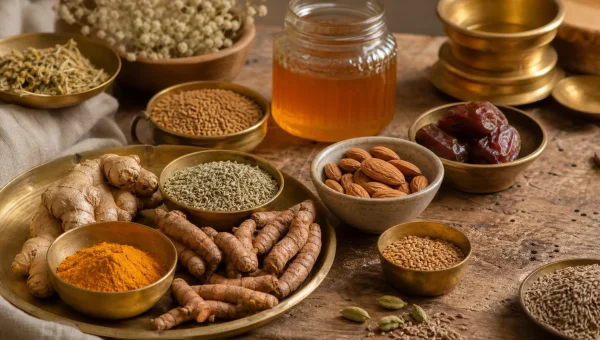
- 1/2 cup (70 g) soaked and dehydrated almonds, roughly chopped
- 1/4 cup (35 g) soaked and dehydrated cashews, left whole
- 1/4 cup (30 g) soaked and dehydrated walnuts, broken into halves
- 1/3 cup (50 g) dates, pitted and chopped into small pieces
- 1/4 cup (35 g) dried apricots, chopped, preferably unsulphured and without added sugar
- 1 tablespoon (10 g) raw cacao nibs, optional, for a slightly bitter crunch
- 2 tablespoons (15 g) shredded unsweetened coconut
- 1/4 teaspoon ground cinnamon (Tvak)
- 1/8 to 1/4 teaspoon ground cardamom (Ela)
- Pinch of mineral salt or rock salt
Instructions
Combine the almonds, cashews, and walnuts in a large bowl. Add the chopped dates and apricots, tossing gently so the sticky fruit pieces become lightly coated by the nuts and do not clump together. Fold in the cacao nibs, if using, and the shredded coconut. Sprinkle cinnamon, cardamom, and salt over the top and toss until evenly distributed.
Serving size: About 3 tablespoons, or roughly 30 to 35 g. This is enough to feel grounded without turning a snack into a second meal.
Why it works: Almonds, cashews, and walnuts bring density and oiliness, which helps counter Vata’s light and dry qualities. Dates and apricots add sweetness and nourishment. Cinnamon contributes warmth and lightness, while cardamom adds aromatic digestive support without making the mix aggressively hot. The optional cacao nibs should stay modest because their bitter, dry quality may not suit everyone with aggravated Vata.
Blend 2: Pitta-Cooling Trail Mix
Pitta is associated with hot, sharp, slightly oily, spreading, and intense qualities. When Pitta is aggravated, a person may feel overheated, irritable, acidic, inflamed, or impatient. This blend leans on cooling, sweet, mild, and non-sour ingredients while avoiding excess salt, sharp spices, and strong heating flavors.
Ingredients
This batch makes about 2 cups, or roughly 10 small servings.
- 1/2 cup (70 g) soaked and dehydrated almonds, skins removed after soaking, chopped
- 1/4 cup (35 g) soaked and dehydrated sunflower seeds
- 1/4 cup (30 g) soaked and dehydrated pumpkin seeds
- 1/3 cup (45 g) dried white mulberries, or golden raisins
- 2 tablespoons (20 g) chopped dried figs, or more golden raisins
- 3 tablespoons (20 g) unsweetened coconut flakes
- 1 tablespoon (10 g) raw hulled hemp seeds
- 1/4 teaspoon ground fennel seed powder (Mishreya / Madhurika, commonly Saunf)
- 1/8 teaspoon ground cardamom (Ela)
Instructions
After soaking almonds overnight, pinch each almond to slip off the skin, then dry the peeled almonds until crisp before chopping. This keeps the Pitta blend softer, milder, and more cooling in character.
Combine the peeled almonds, sunflower seeds, and pumpkin seeds in a bowl. Add the mulberries or raisins, chopped figs, coconut flakes, and hemp seeds. Dust with fennel powder and cardamom, then mix thoroughly.
Serving size: About 3 tablespoons, or roughly 30 to 35 g.
Why it works: Coconut is sweet, cooling, unctuous, and Pitta-pacifying in classical Ayurvedic description, though it is also heavy and Kapha-building when overused. Fennel is cooling and supports comfortable digestion, making it especially useful in a Pitta-leaning snack. Sweet dried fruits keep the blend gentle, while the absence of strong salt, sour fruit, chili, and excess heating spices helps preserve its cooling direction.
Blend 3: Kapha-Energizing Trail Mix
Kapha is associated with heavy, cold, slow, soft, oily, sweet, and stable qualities. When Kapha is aggravated, a person may feel sluggish, congested, dull, heavy, or unmotivated. This blend is lighter, drier, and warmer than the Vata and Pitta versions, with seeds, roasted legumes, puffed grains, and pungent spices used in small amounts.
Ingredients
This batch makes about 2 cups, or roughly 10 smaller servings.
- 1/3 cup (45 g) soaked and dehydrated pumpkin seeds
- 1/3 cup (45 g) soaked and dehydrated sunflower seeds
- 1/4 cup (30 g) dry-roasted chickpeas, lightly salted or unsalted
- 2 tablespoons (10 g) puffed rice or murmura
- 1 tablespoon (10 g) roasted flaxseeds, optional
- 1 to 2 tablespoons (10 to 15 g) raisins or goji berries, optional, kept minimal
- 1/4 teaspoon ground dry ginger (Shunthi)
- 1/4 teaspoon ground turmeric (Haridra)
- 1/8 teaspoon ground black pepper (Maricha)
- Pinch of cayenne pepper, optional, only if well tolerated
- 1/2 teaspoon raw honey, optional, added only to an individual serving just before eating
Instructions
Combine the pumpkin seeds, sunflower seeds, roasted chickpeas, puffed rice, and optional roasted flaxseeds. Add the raisins or goji berries if using. In a small bowl, mix the dry ginger, turmeric, black pepper, and optional cayenne, then sprinkle the spice mixture over the trail mix and toss well.
Important note about honey: Classical Ayurveda advises that honey should not be heated or cooked. Do not bake, roast, dehydrate, or store this mix with honey already added. If honey suits you, drizzle 1/2 teaspoon raw honey over your individual serving just before eating.
Serving size: About 2 to 3 tablespoons, or roughly 25 to 30 g. Kapha types usually do better with smaller snack portions and more space between meals.
Why it works: Seeds, puffed rice, and roasted chickpeas keep the mix drier and lighter than a nut-heavy blend. Dry ginger is warming and traditionally used to support Agni while reducing Vata and Kapha. Black pepper adds pungent heat, and turmeric contributes a dry, bitter-pungent profile that suits a Kapha-oriented mix. This is not classical Trikatu, because classical Trikatu contains dry ginger, black pepper, and long pepper; this blend simply borrows a small warming logic from that direction while keeping the recipe snack-friendly.
Storage Tips for All Three Blends
Trail mix keeps best when moisture, heat, light, and air exposure are kept low. Because these blends contain nuts, seeds, and dried fruit, smell and texture are good guides: discard any mix that smells rancid, tastes bitter in an unpleasant way, feels damp, or shows any sign of mold.
- Store in clean, dry, airtight glass jars or food-safe resealable containers.
- Keep jars in a cool, dark, dry place if you plan to finish the mix within one to two weeks.
- For longer storage, keep the mix in the refrigerator, especially in humid climates.
- Do not store any of the blends with honey already added.
- Prepare small weekly portions in snack containers so you do not accidentally overeat from the main jar.
When to Snack and When Not To
A trail mix serving is best eaten only when there is clear hunger and the previous meal feels digested. For many people, that may be mid-morning after a light breakfast or mid-afternoon when lunch was early, but the clock should not be the only guide. Avoid snacking out of boredom, stress, or habit, and avoid late-night grazing.
For Vata, a small snack can be useful when meals are delayed and energy feels shaky. For Pitta, a mild and cooling snack can prevent excess sharp hunger without adding heat. For Kapha, snacks should be lighter, smaller, and less frequent, with more emphasis on warmth, movement, and proper meal spacing.
A note on individual needs: These recipes are general Ayurvedic food guidelines, not medical treatment. If you have nut or seed allergies, diabetes, blood-sugar concerns, reflux, kidney disease, digestive disorders, pregnancy-related dietary restrictions, or any other medical condition, consult a qualified healthcare provider or Ayurvedic practitioner before adding these mixes to your routine. Do not give honey to children under 12 months of age.
I like to rotate these blends by season as much as by constitution. During cold, dry weather, the Vata blend feels most grounding. During hot weather, the Pitta blend is the gentlest choice. During damp, heavy spring days, the Kapha blend is the better fit. Your dominant dosha matters, but your current state, climate, appetite, and digestion matter just as much. Keep the serving small, eat with attention, and let the recipe serve your Agni rather than distract from it.
References
- Charaka Samhita — Dinacharya
- Ayurveda-online (ayurveda-online.net)
- Amrtasiddhi (amrtasiddhi.com)
- Easyayurveda (easyayurveda.com)
- Ayurvedic Pharmacopoeia of India
- Dravyaguna notes
- Ayurvedic Pharmacopoeia of India
- Ijrap (ijrap.net)
- Charaka Samhita — Annapanavidhi Adhyaya
- Viruddha Ahara: A critical view (2012), PubMed Central
- CDC
- Ucfoodsafety (ucfoodsafety.ucdavis.edu)
- Foodsmartcolorado (foodsmartcolorado.colostate.edu)
This helped me understand Dosha Trail Mix without too much jargon. The main idea is clear even if someone is new to Ayurveda.
The Vata-pacifying trail mix with ghee-roasted nuts and sesame is exactly what I eat when my anxiety spikes in the afternoon. I made this connection after reading about Vata and snacking from this site. Having a name for why this specific combination grounds me is useful.
I struggled with this for years before discovering Ayurveda. Six months later, I barely recognize my old self.
The dosage guidance here is more specific and helpful than what I got from my last consultation
I am Kapha dominant and the light Kapha trail mix recommendation with roasted seeds and dried cranberry is something I have been defaulting to intuitively. I prefer lighter snacks when others reach for dense nuts. Reading the constitutional explanation for this preference is satisfying.
The Ojas-building concept for trail mix is interesting but I want to know the actual caloric density of these blends compared to commercial trail mix. For athletes who need to know exactly how much energy they are carrying for a long hike, caloric density per ounce matters.
This is the kind of content that makes Ayurveda accessible to beginners without dumbing it down.
As someone with a science background, I find the mechanism explanations here a bit hand-wavy. Correlation isn’t causation.
research citations make this so much more credible than most wellness content out there
I have been snacking on commercially roasted nuts from a bag for years with excessive salt and oil. Making the lightly ghee-toasted version described here this weekend. The satiety-per-calorie difference with quality fat and spice combination should be interesting to observe.
Just ordered the herbs mentioned here. Excited to start this protocol
love that theres actual research cited here. not just another blog making claims without evidence
The Dosha Trail Mix section feels grounded enough to try carefully. Small daily changes are easier to follow than a perfect plan.
The Vata blend with dates and walnuts is exactly what I needed for long drives. I used to reach for whatever was at the petrol station and regret it an hour later. Made a batch on Sunday and the dates keep it sweet enough that I don’t feel deprived. Does soaking the walnuts overnight before drying them make any difference to how they digest?
Having studied both Ayurveda and Western nutrition, I think this article overstates some benefits while ignoring well-established nutritional science
finally an article that gets the balance right. not too simple not too complex
I want to flag that for people following this as actual trail food rather than desk snacking, the ghee-coated preparations may not hold up well in warm weather. Ghee liquefies above 32C which is common on summer hikes. The summer Pitta blend may need a different fat base.
Reading this later and the Dosha Trail Mix advice still feels relevant. The examples make the advice less abstract.
Are there food interactions with dosha that I should be aware of? My Ayurvedic doctor mentioned something about dairy but wasn’t specific.
The Vata blend really helped curb my afternoon cravings without feeling heavy.
The mixed three-dosha blend for travelers who do not know their constitution is a thoughtful inclusion. I travel frequently for work and my food choices vary too much to maintain a dosha-specific protocol. Having a balanced default blend is practical.
I wonder if the soaking step makes a noticeable difference in digestion?
The Dosha Trail Mix explanation is clearer than most short posts. A few more examples would still help.
Can anyone share how long the mixes stay fresh in a humid climate?
The Pitta mix sounds perfect for hot summer days at the office.
I’ve been adding a drizzle of honey just before eating the Kapha blend and it works.
Removing the almond skins for the Pitta recipe seems like a smart tweak.
Do the cacao nibs in the Vata mix affect sleep if eaten late?
Storing the trail mix in mason jars keeps it crunchy for weeks.
I appreciate the clear serving sizes; it stops me from overdoing it.
The spice blend in the Kapha mix gives a nice warmth without being overpowering.
Has anyone tried substituting sunflower seeds for pumpkin seeds in any of the blends?
Regarding the vata blend with dates and almonds, the amount you gave seems high for someone my size. thoughts?
Really useful post. the the vata blend with dates and almonds section answered a question I had for months.
Not related to this post but does anyone know a good Ayurvedic remedy for migraines?
The roasted vs raw debate in section 3 , this worked for me after 6 weeks of consistency.
The part about Dosha Trail Mix feels realistic. The practical details matter more than people think.
The part about Dosha Trail Mix feels realistic. This is the kind of detail readers can test slowly.
the part about the portion size guidance for each dosha was exactly what I needed. added it to my routine last month.
tried the pitta version with cooling seeds , genuinely surprised it worked for me. Will continue.
the evidence for the portion size guidance for each dosha is still thin. anecdotal results vary widely.
not sure I fully get the pitta version with cooling seeds yet. Will re-read the section 🙏
what’s the source for the vata blend with dates and almonds? asking because I want to look at the original research.
the benefits for the roasted vs raw debate in section 3 are real but overstated here. took 5 months for mild improvement.
The part about the vata blend with dates and almonds was exactly what I needed. added it to my routine last month. नमस्ते
The section on the portion size guidance for each dosha was helpful. any follow-up posts planned on this?
The portion size guidance for each dosha , this worked for me after 6 weeks of consistency.
your kapha mix with fewer nuts and more spices , this worked for me after 6 weeks of consistency.
bookmarked this for the portion size guidance for each dosha. shared with my sister who has the same issue.
tried the vata blend with dates and almonds for about 3 weeks now and genuinely impressed with the results.
regarding the roasted vs raw debate in section 3, the amount you gave seems high for someone my size. thoughts?
trying to understand the pitta version with cooling seeds a bit more. how long before results show?
tried the roasted vs raw debate in section 3 , genuinely surprised it worked for me. Will continue.
Useful info 💯
Late to this post but wanted to ask about the roasted vs raw debate in section 3. Is the guidance still current?
i’d want a peer-reviewed source for the roasted vs raw debate in section 3 before recommending to patients.