
Alopecia Areata and the Indralupta Framework: Ayurvedic Hair Regrowth Approaches
Finding a smooth, circular bald patch can be emotionally unsettling even when the skin itself looks calm. Alopecia areata is a non-scarring autoimmune pattern of hair loss in which the follicle is usually not permanently destroyed, yet the course can be unpredictable. In Ayurveda, patchy hair loss is commonly approached through the framework of indralupta and khalitya, with attention to the scalp, dosha involvement, rakta, digestion, stress load, and the person’s overall resilience.
An Ayurvedic approach to alopecia areata Ayurveda care should not be presented as a guaranteed cure. Regrowth may happen slowly, may happen spontaneously in limited disease, and may relapse. The practical value of Ayurvedic management is active supportive care: gentle scalp applications, carefully selected keshya and rasayana herbs, avoidance of irritant practices, and clear monitoring so that conventional dermatology care is not delayed when the disease is extensive or rapidly progressive.
The Ayurvedic Understanding of Indralupta
The classical Ayurvedic explanation used for indralupta describes a two-part process. Aggravated vata and pitta affect the hair roots and contribute to hair fall, while kapha together with rakta obstructs the follicular openings and interferes with the appearance of new hair. Charaka’s discussion of khalitya is also commonly understood through the involvement of heat or tejas with vata and other doshas reaching the scalp. This framework does not mean that doshas are identical to immune cells; it offers an Ayurvedic clinical map for reducing heat, irritation, stagnation, and recurrence while protecting the scalp tissue.
Modern dermatology describes alopecia areata as an autoimmune condition involving loss of immune privilege around the hair follicle and T-cell activity directed at the follicle bulb. Because it is usually non-scarring, regrowth remains possible, especially in limited patchy disease. The Ayurvedic and biomedical explanations use different languages, but both make careful monitoring important: new patches, widening patches, eyebrow or eyelash involvement, nail changes, or rapid progression should change the level of medical urgency.
Topical Scalp Support: Oil and Lepa
Topical care for indralupta should be gentle, consistent, and non-irritating. Vigorous rubbing, burning applications, and harsh stimulation can inflame the scalp without improving the follicle cycle. Patch-test every new oil or paste, avoid broken or infected skin, and stop any application that causes persistent burning, redness, oozing, swelling, or itching.
Application 1: Bhringaraja Oil Support
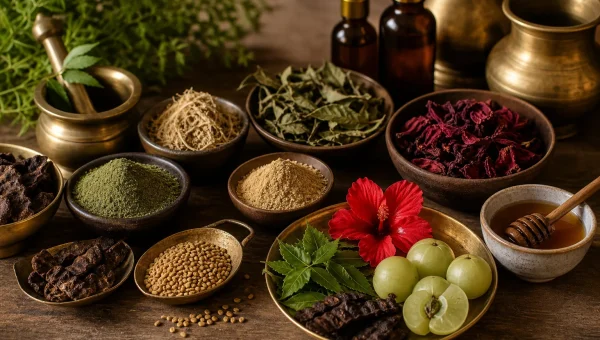
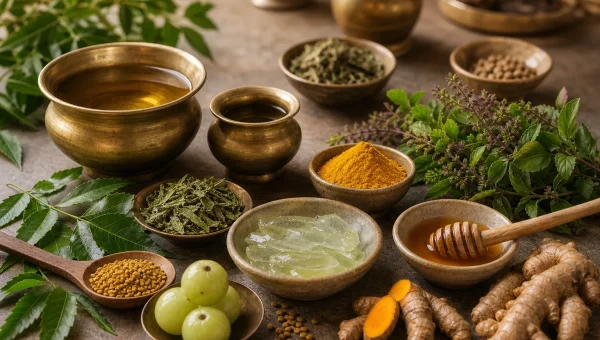
Bhringaraja is identified in the Ayurvedic Pharmacopoeia of India as Eclipta alba Hassk. and is listed with keshya, rasayana, and tvacya actions. Classical and pharmacopoeial formulations include Bhringaraja Taila and Nili Bhringadi Taila, which makes Bhringaraja oil a suitable traditional base for scalp support when it agrees with the person’s skin and constitution.
Warm a small amount of Bhringaraja-based oil between the palms and apply it to each patch and the surrounding margin. Massage with very light circular pressure for 2-3 minutes per patch; the purpose is to spread the oil and soften the scalp, not to scrub the area. Leave it for 1-3 hours, or longer only if well tolerated, then wash with a mild cleanser. Once or twice weekly is sufficient for many people.
Application 2: Bhringaraja-Manjistha Lepa
Mix 1 teaspoon fine Bhringaraja powder with 1/4 teaspoon Manjistha powder and enough cooled boiled water to form a soft paste. A few drops of Bhringaraja oil may be added if the paste dries too quickly. Apply a thin layer only over the patch and its margin, leave for 20-30 minutes, and rinse before the paste becomes tight or crusted.
This lepa keeps the protocol aligned with verified Ayurvedic materia medica: Bhringaraja is traditionally keshya, while Manjistha is listed with kaphapittashamaka, shothaghna, kushtaghna, varnya, and shonitasthapana actions. Use this paste once weekly if the scalp is calm. Avoid adding strong irritants such as undiluted essential oils, garlic, mustard, or caustic pastes to alopecia patches without direct practitioner supervision.
Application 3: Whole-Scalp Gentle Oil Massage
On a separate day, use a small amount of a practitioner-approved scalp oil over the whole scalp. Spend 5-10 minutes with light pressure, including normal hair-bearing areas around the patch. This supports scalp comfort and prevents the treatment from becoming a narrow attack on the bald spot alone. The guide to dosha-based hair oiling offers broader context for choosing oils according to scalp condition and constitution.
Internal Ayurvedic Support
Internal herbs for alopecia areata should be individualized. A person with heat, itching, acidity, and inflammatory skin tendencies does not need the same prescription as a person with exhaustion, poor sleep, dryness, anxiety, and recurrent relapse after stress. Fixed extract stacks copied from the internet are not an Ayurvedic protocol; they are best replaced by a practitioner-guided plan that considers prakriti, vikriti, digestion, bowel pattern, medications, pregnancy status, and the extent of hair loss.
Guduchi (Tinospora cordifolia) is listed in the Ayurvedic Pharmacopoeia of India as tikta and kashaya in rasa, madhura in vipaka, ushna in virya, and with actions including rasayana, tridoshashamaka, raktashodhaka, and balya. In an indralupta plan, Guduchi may be considered where immune reactivity, heat, skin involvement, or recurrent inflammatory patterns are prominent.
Bhringaraja may be used internally by a qualified practitioner when the person’s digestion, constitution, and overall condition are suitable. Its pharmacopoeial actions include keshya, rasayana, tvacya, balya, vatahara, and kaphahara, making it one of the central Ayurvedic herbs for hair and scalp-oriented care.
Manjistha (Rubia cordifolia) is a rakta– and skin-oriented herb used in many classical formulations. Its listed actions include kaphapittashamaka, shothaghna, kushtaghna, varnya, shonitasthapana, and rasayana. It is most relevant when the presentation includes heat, redness, inflammatory skin tendency, or a practitioner identifies rakta-pitta involvement.
Ashwagandha (Withania somnifera) is not a hair-specific remedy for every alopecia areata patient. It is better reserved for patterns of depletion, poor sleep, stress burden, weakness, or vata-dominant relapse tendency, when appropriate. The Ayurvedic Pharmacopoeia of India lists Ashwagandha with rasayana, balya, vata-kaphapaha, and vajikarana actions. It should be avoided or used only with medical supervision in pregnancy, complex autoimmune illness, thyroid disorders, liver disease, or when taking sedatives, immunosuppressants, or other long-term medication.
Monitoring Regrowth Without Overpromising
Regrowth monitoring should be calm and photographic rather than anxious and daily. Take clear photos in the same lighting every 4 weeks, measure the largest patch, and note new patches separately. Fine pale hairs can appear before thicker pigmented hairs, but absence of visible change in the first few weeks does not automatically mean failure. Progress, spread, and scalp tolerance matter more than wishful interpretation.
| Timeline | What to Watch | Practical Adjustment |
|---|---|---|
| Weeks 1-4 | Scalp comfort, no irritation, stable patch size | Continue only if oils and lepa are well tolerated |
| Months 2-3 | Possible fine pale or vellus hairs in responsive patches | Maintain gentle care and compare monthly photos |
| Months 4-6 | Possible thicker or pigmented regrowth if the patch is recovering | Simplify to oil maintenance if the scalp is stable |
| 6-month review | No change, expanding patch, new patches, or eyebrow/nail involvement | Reassess with an Ayurvedic practitioner and dermatologist |
| Any time | Rapid spread, extensive scalp loss, alopecia totalis, or alopecia universalis | Do not rely on herbs alone; seek dermatology care promptly |
Realistic Expectations and When to Combine with Conventional Treatment
Limited patchy alopecia areata has a better chance of regrowth than extensive disease, but spontaneous regrowth and relapse can both occur. This is why the Ayurvedic plan should be judged by stability, scalp tolerance, monthly photographs, and the person’s overall wellbeing rather than by a promise of a fixed cure date. The goal is to support recovery where possible and to recognize quickly when the pattern requires escalation.
Dermatology evaluation is important for diagnosis and for ruling out other causes of patchy hair loss. It is especially important when hair loss is rapid, widespread, recurrent, associated with nail changes, involves eyebrows or eyelashes, affects a child, or causes major distress. For severe alopecia areata, clinician-supervised options now include FDA-approved JAK inhibitors such as baricitinib, ritlecitinib, and deuruxolitinib, with eligibility depending on age, disease severity, contraindications, and monitoring needs.
For limited, stable patchy alopecia areata, Ayurvedic topical care and individualized internal support may be used alongside observation or prescribed dermatologic treatment. For alopecia totalis, alopecia universalis, or rapidly progressive disease, herbs and oils should be considered supportive rather than primary treatment. A combined plan is often the most sensible path: protect the scalp, support the person, monitor carefully, and use medical therapy when the risk and extent of disease justify it.
Medical Disclaimer: This article is for educational purposes only and does not diagnose, treat, or cure alopecia areata. Consult a qualified dermatologist for diagnosis and monitoring, and consult a qualified Ayurvedic practitioner or physician before starting herbs, supplements, oils, lepa applications, detoxes, or therapeutic protocols. This is especially important if you are pregnant or breastfeeding, treating a child, taking medication, managing autoimmune disease, thyroid disease, liver disease, or experiencing rapid or extensive hair loss.
References
- Alopecia areata is driven by cytotoxic T lymphocytes and is reversed by JAK inhibition (2014), PubMed Central
- Immunopathogenesis of alopecia areata (2021), PubMed Central
- Alopecia Areata: Burden of Disease, Approach to Treatment, and Current Unmet Needs (2023), PubMed Central
- Effective management Alopecia totalis by Ayurveda – A case report (2023), PubMed Central
- Jaims (jaims.in)
- Ayurvedic Pharmacopoeia of India
- Ayurvedic Pharmacopoeia of India
- Ayurvedic Pharmacopoeia of India
- Naaf (naaf.org)
- Pfizer (pfizer.com)
The emotional dimension this article opens with is so accurate. Doctors kept reassuring me it would grow back but couldn’t tell me when or why it happened in the first place. The Indralupta concept at least offers a framework for understanding the trigger, not just the symptom.
The Indralupta framework is new to me. I’d been treating my alopecia areata patches with minoxidil and getting modest results, but the article’s explanation of bhrajaka pitta and follicle dormancy gives a different angle on why the circular patches form where they do. Does the Ayurvedic protocol work alongside conventional treatment or is it meant as an alternative?
for male-pattern alopecia areata versus female diffuse alopecia areata, does the Indralupta protocol differ?
I came for Alopecia Areata and this answered the main question. This is the kind of detail readers can test slowly.