
Your body follows daily rhythms. Modern chronobiology describes a master circadian pacemaker in the suprachiasmatic nucleus of the hypothalamus and peripheral clocks in many tissues. Ayurveda approaches the same daily pattern through Dinacharya and the time-wise movement of Vata, Pitta, and Kapha. The practical goal is simple: time food, movement, work, rest, and sleep so they support digestion, steadiness, clarity, and recovery instead of fighting the natural day-night cycle.
Modern Chronobiology and Ayurveda’s Daily Rhythm
The 2017 Nobel Prize in Physiology or Medicine was awarded to Jeffrey C. Hall, Michael Rosbash, and Michael W. Young for discoveries explaining molecular mechanisms of circadian rhythm. In modern physiology, circadian rhythm influences sleep, hormones, appetite, body temperature, digestion, and many other functions across a roughly 24-hour cycle. Ayurveda expresses this through Kala, the importance of time, and through daily routine practices that repeat with sunrise, midday, sunset, and night.
Ayurveda does not need to be forced into modern molecular language to be useful. Its strength is practical timing: rise early, cleanse, move the body, eat the main meal when digestion is strongest, keep the evening light, and sleep before the late-night metabolic phase becomes stimulating.
The Dosha Clock: Full 24-Hour Map
The common Ayurvedic body-clock model divides the day and night into repeating periods of Kapha, Pitta, and Vata. Exact times shift with season, sunrise, climate, age, constitution, work demands, and health condition, but the 6-10, 10-2, and 2-6 rhythm is a useful teaching map for applying Dinacharya.
Kapha Time: 6-10am and 6-10pm
Kapha is associated with heaviness, stability, lubrication, cohesion, and endurance. The morning Kapha window is a good time to prevent sluggishness through cleansing, walking, yoga, mobility, or appropriately vigorous exercise. Classical Dinacharya includes Vyayama and advises moderation, traditionally stopping before exhaustion rather than training to depletion. For many people, this makes the morning a useful time for structured movement, especially when followed by bathing and a steady breakfast if hungry.
Evening Kapha, from about 6-10pm, supports slowing down. This period is better suited to a light, warm dinner, quiet conversation, gentle walking, reading, prayer, and preparation for sleep. Heavy meals, stimulating screens, intense work, and late exercise can make the night feel dull at first but restless later.
Pitta Time: 10am-2pm and 10pm-2am
Pitta is associated with transformation, heat, digestion, discrimination, and focused effort. The midday Pitta window is the best time for the main meal of the day in the Ayurvedic body-clock model. This is also a practical time for demanding work, decision-making, study, and tasks that require sharp attention. Skipping lunch and then compensating with a heavy dinner works against this rhythm.
The night Pitta window, from about 10pm-2am, is best spent asleep. In Ayurveda, this period belongs to internal transformation rather than external activity. Going to bed before this window helps the body enter the night calmly; staying awake into it can bring a second wind, late-night hunger, sharper thinking, or restlessness that delays deep rest.
Vata Time: 2-6am and 2-6pm
Vata is associated with movement, subtle perception, the nervous system, elimination, creativity, and transition. The pre-dawn Vata window is traditionally valued for waking, prayer, meditation, pranayama, study, and quiet creative work. Brahma Muhurta is commonly calculated as beginning about 96 minutes before sunrise and is described in the Dinacharya tradition as an auspicious time for a healthy person to rise.
The afternoon Vata window, from about 2-6pm, is a transition period. It suits creative output, communication, skill practice, lighter work, planning, and a small warm snack if needed. Very heavy meals in this period often reduce clarity, while excessive stimulation can aggravate restlessness.
Circadian-Aligned Daily Protocol
This routine keeps the original Ayurvedic intent: align daily activity with the qualities of each time window. It should be adapted for night-shift workers, children, pregnancy, illness, older age, intense athletic training, and any medical condition.
| Time Window | Dosha | Ideal Activities | Avoid |
|---|---|---|---|
| 4:30-6am | Vata | Wake before sunrise when suitable, elimination, meditation, pranayama, gentle walk | Heavy food, rushed work, overstimulation |
| 6-10am | Kapha | Exercise, yoga, mobility, bathing, steady start to work | Sleeping late, excessive sitting, heavy dull foods without hunger |
| 10am-2pm | Pitta | Main meal, focused work, study, important decisions | Skipping lunch, grazing all day, anger-driven work |
| 2-6pm | Vata | Creative work, communication, skill practice, light snack if needed | Largest meal of the day, excessive caffeine, scattered multitasking |
| 6-10pm | Kapha | Light dinner, gentle walk, family time, wind-down, sleep preparation | Intense exercise, heavy eating, stimulating screens late |
| 10pm-2am | Pitta | Sleep and internal restoration | Working, heavy meals, bright screens, late-night stimulation |
Herbs That Support a Steady Daily Rhythm
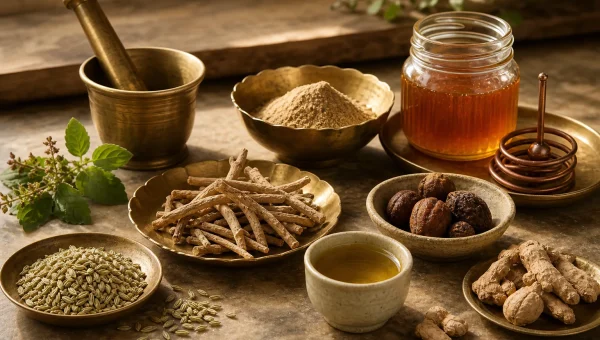
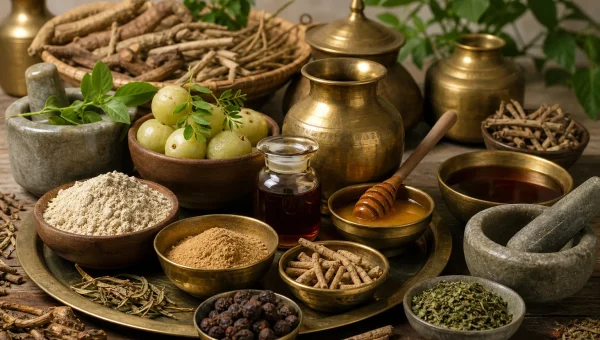
Herbs are supportive tools, not substitutes for sleep, food timing, movement, or medical care. The most important rhythm-supporting practices remain consistent waking, regular meals, morning light, appropriate exercise, an early light dinner, and sleep before late night.
Brahmi (Bacopa monnieri): Brahmi is recognized in the Ayurvedic Pharmacopoeia of India as the dried whole plant of Bacopa monnieri. In the Ayurvedic tradition it is used as a Medhya herb, meaning it supports intellect, memory, and mental clarity. In a daily routine, it fits best with morning or daytime practices that require calm attention, study, or meditation. Use dose and form according to a qualified practitioner or a reputable product label.
Ashwagandha (Withania somnifera): Ashwagandha root is recognized in the Ayurvedic Pharmacopoeia of India and is traditionally used as a strengthening, grounding Rasayana. It is often paired with evening routines when the aim is calmness, nourishment, and steadier sleep. It is not suitable for everyone; pregnant people, those with liver disease, thyroid disorders, autoimmune conditions, sedative use, or complex medication plans should seek professional guidance before using it.
Triphala: Triphala is the classical three-fruit combination of Amalaki, Haritaki, and Bibhitaki. It is traditionally used to support digestion and regular elimination, which makes it relevant to the early-morning Vata window when bowel movement is ideally encouraged. Many people take it in the evening with warm water, but it can loosen stools and may not suit pregnancy, diarrhea, dehydration, frailty, or certain medication schedules.
The Highest-Value Practice: Protect the Night
The simplest circadian-aligned intervention is to make dinner early, warm, light, and easy to digest, then maintain a consistent overnight fasting window. Modern time-restricted eating trials and reviews support the idea that earlier eating windows can improve several cardiometabolic markers in selected populations, while Ayurveda frames the same practice through Agni, Kapha evening calm, and the importance of sleeping before the late-night Pitta window.
Nothing in this article diagnoses or treats a medical condition. Use it as educational information and consult a qualified Ayurvedic practitioner or physician before starting herbs, supplements, detoxes, fasting, or therapeutic protocols, especially if pregnant, managing a condition, elderly, underweight, working night shifts, or taking medication.
References
- NobelPrize.org
- Central and peripheral circadian clocks in mammals (2012), PubMed Central
- My (my.clevelandclinic.org)
- Associations between circadian disruption and cardiometabolic disease risk: A review (2023), PubMed Central
- Charaka Samhita — Matrashiteeya Adhyaya
- Easyayurveda (easyayurveda.com)
- Phytojournal (phytojournal.com)
- Maharishiayurvedaindia (maharishiayurvedaindia.com)
- Ayurvedacollege (ayurvedacollege.com)
- Herbal (herbal.baps.org)
- Early Time-Restricted Feeding Improves Insulin Sensitivity, Blood Pressure, and Oxidative Stress Even without Weight Loss in Men with Prediabetes (2018), PubMed Central
- Beneficial Effects of Early Time-Restricted Feeding on Metabolic Diseases: Importance of Aligning Food Habits with the Circadian Clock (2021), PubMed Central
- Ayurvedic Pharmacopoeia of India
- NCBI
- Ayurvedic Pharmacopoeia of India
- NIH Office of Dietary Supplements
- Effect of Ashwagandha (Withania somnifera) extract on sleep: A systematic review and meta-analysis (2021), PubMed
- Therapeutic Uses of Triphala in Ayurvedic Medicine (2017), PubMed Central
- Utoronto (utoronto.scholaris.ca)

The 2017 Nobel Prize connection is the perfect hook for someone who dismissed Ayurveda’s body clock claims. Chronobiology legitimizing the Tridosha Kala framework is the kind of cross-system validation that makes the classical concepts harder to dismiss.
The before and after difference in how I feel is remarkable. Three weeks in and counting.
I’ve been looking for exactly this information for weeks. Thank you for being so thorough
My mother has been doing this her whole life and she’s the healthiest 70-year-old I know.
Useful post on Circadian Rhythm and Dosha. Good starting point for a cautious reader.
shared this with my yoga teacher and she was impressed by the depth here
For Circadian Rhythm and Dosha, consistency seems like the hard part. A few more examples would still help.
omg this is exactly what I needed today.. bookmarked for later
Clear, evidence-based, and practical. Everything a good health article should be.
The peripheral clock gene expression in tissues aligning with the Tridosha Kala cycles is the connection I’ve been trying to articulate to a scientist friend for months. Thank you for saying it this clearly with specific references.
yep the combination approach is what worked for me too. good to see it validated
sent this to 3 friends whove been asking about ayurveda. perfect intro
You make an excellent point about individual variation. What works beautifully for one person may need adjustment for another, that’s the beauty of personalized Ayurvedic care.
the brain fog I’d normalized as just being tired is largely gone since I started this protocol.
Does this framework apply differently in southern hemisphere locations where seasonal patterns are reversed? And what about Arctic or tropical regions where the day-night cycle is dramatically different from the Indian subcontinent where these systems were developed?
You’ve raised a really important point, thank you! I’m actually planning a follow-up post on exactly this aspect, so stay tuned.
Useful post on Circadian Rhythm and Dosha. The timing advice is the part I would start with.
step by step is great, makes it way more doable than other articles ive read
My Ayurvedic practitioner actually disagrees with several points made here. This is one area where Ayurveda itself has diverse opinions
Some genuinely useful tips mixed in with some questionable claims. The dietary advice is spot on but the herbal recommendations feel too generic.
Your experience is a perfect example of what the classical texts describe. Thank you for sharing, it will definitely help other readers here.
Adjusting my meal timing to align with the Pitta peak at midday made more difference to my digestion than any food change I’d made. The same food eaten at noon versus 7pm is processed differently. The timing variable is undervalued in both conventional and Ayurvedic nutrition advice.
We appreciate your candid feedback. You’re right that we should distinguish more clearly between traditional knowledge and clinical evidence. We’re working on adding more research citations.
The Vata afternoon window between 2 and 6pm as the optimal learning and creative time is consistent with chronotype research showing that most people have a secondary alertness peak in the early afternoon after the post-lunch dip. Classical observation and modern chronobiology converge.
For Circadian Rhythm and Dosha, consistency seems like the hard part. This is the kind of detail readers can test slowly.
The breakdown of Kapha, Pitta, and Vata windows makes it easy to see where my current schedule is off.
The 3pm Vata window explaining the 3pm energy dip is elegant. Everyone experiences that dip and the solutions offered are usually coffee or snacking. Understanding it as a Vata transition that needs Vata-calming rather than more stimulation is the reframe that changes the intervention.
Is there research specifically linking Tridosha Kala timing to circadian gene expression rather than just chronobiology generally? The parallel is compelling but I’d want to know if anyone has tried to directly map the Ayurvedic timing categories to the molecular clock cycles.
Maybe shifting my biggest meal to noon instead of evening could help with digestion.
I appreciate the concrete herb dosing tips for Brahmi and Ashwagandha.
Reading about the liver detox peak between 10pm and 2am explains why late night snacking feels so rough.
It’s interesting that the article links time restricted eating after sunset to metabolic health without mentioning calories.
The suggestion to wake before 6am to avoid Kapha heaviness matches what I’ve felt when I sleep in.
regarding the dinacharya alignment chart in section 3, the amount you gave seems high for someone my size. thoughts?
similar issue here. still figuring out the melatonin and pitta timing correlation for my situation.
tried the dinacharya alignment chart in section 3 , genuinely surprised it worked for me. Will continue.
i have kapha prakriti, does the vata-pitta-kapha time cycle you explained still apply for me?
the section on your note about midnight snacking and pitta disturbance was helpful. any follow-up posts planned on this?
agreed. took me a few weeks with the vata-pitta-kapha time cycle you explained but worth it.
i appreciate the write-up but the 10pm sleep window connection to kapha phase caused me stomach upset after 4 days.
Tried the vata-pitta-kapha time cycle you explained , genuinely surprised it worked for me. Will continue.
I came for Circadian Rhythm and Dosha and this answered the main question. This is the kind of detail readers can test slowly.
adding your note about midnight snacking and pitta disturbance to my protocol. This post made it clear why.
i’d want a peer-reviewed source for the vata-pitta-kapha time cycle you explained before recommending to patients.
The article is good but the melatonin and pitta timing correlation should come with a stronger dosage caution.
Good point.
Where are the RCTs for your note about midnight snacking and pitta disturbance? traditional use isn’t the same as clinical evidence.
three months in with your note about midnight snacking and pitta disturbance, bloodwork showed improvement in my last checkup.
Tried the vata-pitta-kapha time cycle you explained for 2 months and saw no improvement. not everyone responds the same.
Tried your note about midnight snacking and pitta disturbance for 2 months and saw no improvement. not everyone responds the same.
Helpful.
regarding the vata-pitta-kapha time cycle you explained, the amount you gave seems high for someone my size. thoughts?
The part about Circadian Rhythm and Dosha feels realistic. The main idea is clear even if someone is new to Ayurveda.
Not related to this post but does anyone know a good Ayurvedic remedy for migraines?
three months in with the dinacharya alignment chart in section 3, bloodwork showed improvement in my last checkup.
Started the vata-pitta-kapha time cycle you explained after reading and my energy levels are much steadier now. 🙏
Starting your note about midnight snacking and pitta disturbance next week. will update if I remember to.
Just found this via Google, still wondering about the dinacharya alignment chart in section 3.