
At a glance
| Type (internal/external/Panchakarma) | External Ayurvedic therapy, commonly used as a supportive Panchakarma procedure; classically related to mūrdha taila and śiro-seka/śirodhārā, not one of the five main cleansing karmas. |
| Typical duration | About 30–45 minutes per session, usually given for 3–7 days or longer when prescribed by a physician. |
| Main indications | Sleep disturbance, stress, mental overactivity, anxiety-like restlessness, Vata-Pitta type headache, burning sensation of the head, scalp dryness and selected psychosomatic conditions. |
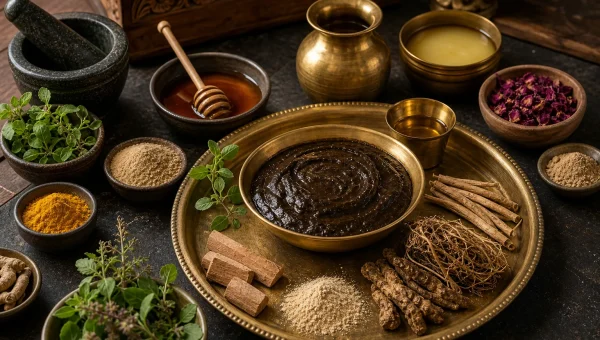
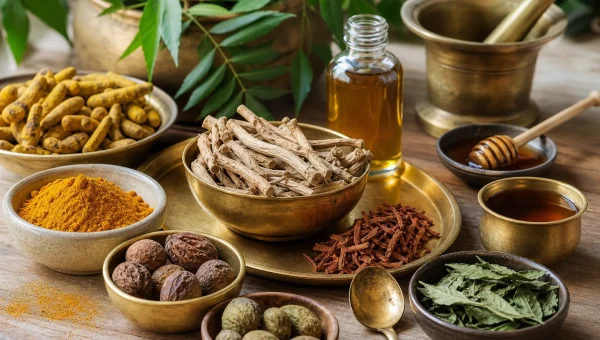
| Oils/herbs used | Warm sesame-based medicated oils such as Brahmi taila, Ksheerabala taila, Dhanvantaram taila, Bala-Ashwagandha preparations, Jatamansi preparations; in selected cases milk, decoction or medicated buttermilk variants are used. |
| Primary dosha | Mainly pacifies Vata; also useful for Pitta when cooling or mildly unctuous preparations are selected. |
What is it?
Shirodhara is an external Ayurvedic therapy in which a steady, gentle stream of warm medicated oil is poured over the forehead, usually around the sthapanī marma region between the eyebrows, and allowed to flow over the scalp. The word comes from śiras, meaning head, and dhārā, meaning a continuous stream. In classical Ayurvedic language, it is closely related to śiro-seka or śiro-pariṣeka, a form of mūrdha taila, the therapeutic application of oil to the head. Vāgbhaṭa describes four forms of mūrdha taila: head massage, pouring, oil-soaked pichu and shirobasti; Charaka also praises regular oiling of the head for strengthening the head, supporting sense organs, promoting sleep and comfort. In modern Panchakarma practice, Shirodhara is used mainly as a calming, Vata-pacifying, mind-settling therapy rather than as a purificatory treatment by itself.
How it is done
- Assessment and planning: The physician assesses prakriti, vikriti, dosha state, sleep, digestion, mental state, blood pressure, skin/scalp condition and contraindications. The oil or liquid is selected accordingly.
- Preparation: The patient is asked to eat lightly beforehand, empty natural urges and remove jewellery or lenses. The room is kept warm, quiet and free from strong wind or cold exposure.
- Positioning: The patient lies comfortably on the dhara table, usually supine, with the head supported and the eyes protected with cotton pads or a cloth if needed.
- Optional abhyanga: A gentle head, face, neck or full-body oil massage may be given first, especially when Vata is dominant, stiffness is present or the treatment is part of a broader Panchakarma plan.
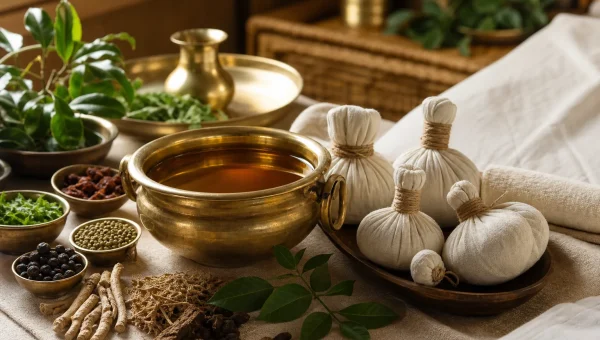
- Warming the medicine: The selected oil is warmed to a comfortable temperature. It should be warm, not hot; excess heat over the forehead is avoided.
- Dhara stream: The medicated oil is poured from a dhara vessel in a smooth, continuous stream over the forehead and gently moved from side to side. The flow should be even, soft and rhythmic, without splashing or excessive pressure.
- Maintaining temperature and duration: The oil is collected, filtered if needed, rewarmed and recirculated during the session. A typical session lasts around 30–45 minutes, but the duration is adjusted by the physician.
- Completion: The stream is stopped gradually. Excess oil is wiped away, and the head may be gently massaged or wrapped with a towel to prevent cold exposure.
- Rest: The patient rests quietly for 15–30 minutes. Bathing, if advised, is done later with warm water, never immediately with cold water.
Indications
Shirodhara is traditionally chosen when aggravated Vata affects the head, nervous system and mind, producing restlessness, light sleep, worry, mental fatigue, dryness, tension or heightened sensitivity. It is also used in selected Pitta-dominant conditions such as burning sensation of the head, irritability, heat-related scalp discomfort and certain headache patterns, provided the correct cooling or mildly unctuous medium is selected. In clinical practice it may be included in treatment plans for insomnia, stress-related complaints, anxiety-like symptoms, Vata-Pitta headache, mental overwork, convalescence, menopausal sleep disturbance and supportive care after periods of exhaustion. It should not be used as a stand-alone cure for serious neurological, psychiatric, cardiovascular or endocrine disease.
Benefits
When properly selected and performed, Shirodhara can produce a deep sense of relaxation, heaviness of the eyelids, quieter thought flow and improved ease of sleep. From an Ayurvedic perspective, warm unctuous dhara calms Vata, softens dryness, steadies the senses and supports manas by reducing excessive movement and stimulation. Patients often report reduced mental restlessness, less tension in the head and neck, improved sleep onset and a more settled mood. In classical terms, the broader practice of oiling the head is associated with support for sleep, comfort, sense-organ clarity, scalp health and strength of the head. These benefits depend on correct indication, correct oil, skilled technique, appropriate season and good after-care.
Oils & herbs used
The medicine is selected according to dosha, strength, season and disease. For Vata-dominant sleeplessness, dryness, anxiety-like restlessness and nervous exhaustion, sesame-based oils such as Ksheerabala taila, Bala taila, Dhanvantaram taila or Brahmi taila are commonly used. Brahmi, Jatamansi, Shankhapushpi, Yashtimadhu, Bala and Ashwagandha may be chosen in suitable formulations for calming, nourishing or strengthening effects. For Pitta-dominant heat, irritability, burning sensation or inflammatory tendency, cooler preparations such as coconut-based oils, medicated milk preparations or Takra Dhara may be selected by the physician. For Kapha-dominant heaviness, congestion, lethargy or excess oiliness, heavy oil dhara may be avoided or modified, and lighter, more stimulating measures may be preferred.
Contraindications
Shirodhara should be avoided during acute fever, chills, acute cold, active sinus congestion, severe cough, acute indigestion with ama, nausea, vomiting, diarrhea, immediately after a heavy meal, intoxication, extreme exhaustion without proper preparation, uncontrolled hypertension, fainting tendency, acute migraine with vomiting, recent head injury, active scalp infection, open wounds, severe dandruff with infection, sunburn or inflamed skin on the scalp or forehead. It is also avoided or used only with specialist supervision in pregnancy, severe psychiatric instability, epilepsy, serious neurological disease, severe depression with suicidal thoughts, severe vertigo and in people who cannot safely lie still. People with oil allergy, nut allergy, sesame sensitivity or very sensitive skin should inform the practitioner before treatment.
What to expect & after-care
During the session, most people feel warmth, rhythmic pressure, relaxation and drowsiness. Some may feel emotional release, mild heaviness of the head or a desire to sleep afterward. After Shirodhara, the head should be protected from wind, air-conditioning, cold water and direct sun. Avoid cold drinks, heavy meals, late-night screen exposure, intense exercise, alcohol, sexual exertion, loud environments and mental overwork on the treatment day. A warm bath may be taken later if advised, using mild herbal powder or gentle cleanser to remove excess oil. Light, warm, digestible food such as rice, mung soup, vegetable stew or thin khichadi is usually preferred. Good after-care is important; exposure to cold or strain immediately after dhara may reduce benefit or aggravate symptoms.
What the research says
Modern clinical research on Shirodhara is promising but still limited. Small studies, pilot trials and case series have reported improvements in relaxation, sleep quality, stress markers, anxiety-like symptoms and insomnia-related outcomes. A study in healthy volunteers reported changes consistent with relaxation, including effects on vital signs and psychophysiological measures. A randomized single-blinded crossover pilot study comparing sesame-oil Shirodhara with warm-water Shirodhara suggested potential sleep and quality-of-life benefits, but the sample size was small. An insomnia case series using Brahmi oil reported improvement without major adverse events, but case series cannot prove efficacy. Reviews on hypertension and stress-related outcomes suggest possible benefit as an adjunct, yet the evidence base is heterogeneous and many studies have limitations such as small samples, lack of blinding, variable oils and combined therapies. Overall, Shirodhara is best understood as a supportive mind-body Ayurvedic therapy with plausible relaxation benefits, not as a replacement for necessary medical care.
FAQ
It is commonly offered in Panchakarma clinics and may be used before, during or after Panchakarma plans, but technically it is an external mūrdha taila therapy rather than one of the five main cleansing procedures: vamana, virechana, basti, nasya and raktamokshana.
It may help selected people with stress-related or Vata-type sleep disturbance, especially when combined with diet, routine, abhyanga, herbs and correction of digestion. Clinical evidence is encouraging but limited, so chronic insomnia should also be medically evaluated.
There is no single best oil for everyone. Brahmi taila, Ksheerabala taila, sesame-based oils, Jatamansi preparations or cooling Pitta-specific preparations may be used depending on the person’s dosha, symptoms, season, skin sensitivity and medical condition.
A simple head oiling or gentle scalp massage can be done at home if suitable, but true Shirodhara requires temperature control, correct stream, proper hygiene, safety screening and after-care. It is best performed under a trained Ayurvedic practitioner, especially for therapeutic use.
References
- Charaka Samhita, Sutra Sthana, Matrashitiya Adhyaya, Chapter 5: verses on regular oil application to the head and its benefits for head strength, hair, sense organs, sleep and comfort.
- Ashtanga Hridaya, Sutra Sthana, Gandushadi Vidhi Adhyaya, Chapter 22: description of mūrdha taila and its forms, including abhyanga, seka, pichu and basti.
- Ashtanga Hridaya, Sutra Sthana, Dvividhopakramaniya Adhyaya, Chapter 14: principles of snehana and suitability of unctuous therapies in Vata-dominant conditions.
- Dhuri KD, Bodhe PV, Vaidya AB. “Shirodhara: A psycho-physiological profile in healthy volunteers.” Journal of Ayurveda and Integrative Medicine. 2013;4(1):40–44. DOI: 10.4103/0975-9476.109550.
- Tokinobu A, Yorifuji T, Tsuda T, Doi H. “Effects of Ayurvedic Oil-Dripping Treatment with Sesame Oil vs. with Warm Water on Sleep: A Randomized Single-Blinded Crossover Pilot Study.” Journal of Alternative and Complementary Medicine. 2016;22(1):52–58. DOI: 10.1089/acm.2015.0018.
- Vinjamury SP, Vinjamury M, Der Martirosian C, Miller J. “Ayurvedic Therapy (Shirodhara) for Insomnia: A Case Series.” Global Advances in Health and Medicine. 2014;3(1):75–80. DOI: 10.7453/gahmj.2012.086.
- Pokharel S, Sharma AK. “Evaluation of Insomrid Tablet and Shirodhara in the management of Anidra (Insomnia).” AYU. 2010;31(1):40–47. DOI: 10.4103/0974-8520.68209.
- Khapre M, et al. “The effect of Shirodhara on essential hypertension: Systematic review and meta-analysis.” Journal of Education and Health Promotion. 2025;14:28.
Never knew shirodhara was tied so closely to that steady stream over the forehead around the sthapani marma area. The way you broke down the warm oil and calm effect makes it easy to picture why people use it for stress and sleep.
This makes the difference between a relaxation treatment and a full cleansing procedure a lot clearer. The 30 to 45 minute timing and the idea of choosing the oil based on the person’s dosha were especially useful.
Seeing the different options like Brahmi taila, Ksheerabala taila, and even milk or buttermilk variants was interesting. nice to see that shirodhara is not one single setup but gets adjusted for Vata or Pitta patterns.
That explanation of why the room should stay warm and quiet felt very practical. Details like that make the therapy seem more thoughtful than just oil being poured on the forehead.
Curious how often people usually do the full 3 to 7 day course versus a longer plan. Is the choice mostly based on the condition or on how someone responds after the first session?
What kind of screening is usually done for blood pressure or scalp issues before starting this? The precautions section made me wonder how strict the contraindications are in real practice.
The mention of abhyanga before shirodhara raised a question for me. Is the head massage optional only for Vata cases, or do some clinics use it for most patients?
Sounds relaxing, but I would still want stronger evidence on how much of the benefit is from the oil therapy itself versus simply resting quietly in a warm room for 45 minutes. Some studies on traditional therapies can be pretty small.
the safety part matters a lot here. Warm oil on the forehead seems fine if the temperature is controlled, but cost, repeat visits, and making sure the right herb or oil is chosen feel like real practical hurdles for a lot of people.