
I Lost a Third of My Hair Before I Built a 90-Day Ayurvedic Hair Protocol
When hair fall becomes visible in the shower drain, on the pillow, and in the comb, the most tempting response is to keep changing products. The protocol below takes a different route: internal herbs, medicated oiling, scalp massage, food correction, stress regulation, and a clear point at which to seek medical evaluation.
This is a practical 90-day plan for diffuse, non-scarring hair fall patterns such as stress-linked shedding, nutritional depletion, postpartum or perimenopausal weakness, scalp dryness, and mild early thinning. It is not a promise of overnight regrowth, and it is not a substitute for diagnosis when hair loss is sudden, patchy, painful, or rapidly worsening.
Here is the complete protocol: what to take, what to apply, how often to oil, what to eat, what to reduce, and when to involve a dermatologist or qualified Ayurvedic practitioner.
Understanding Why Hair Falls: The Ayurvedic View
Ayurveda does not treat hair as an isolated cosmetic structure. Hair quality is understood through the condition of Agni, nourishment of the Dhatus, the state of the scalp, and the balance of Vata, Pitta, and Kapha. Classical Ayurvedic teaching also links hair and nails with Asthi Dhatu, so long-term thinning, brittleness, and weak nails are often assessed together rather than separately.
The three doshas can show up in hair and scalp patterns in different ways:
- Vata-type hair fall: dryness, roughness, frizz, split ends, breakage, irregular shedding, dry scalp, poor sleep, or anxiety-like restlessness.
- Pitta-type hair fall: heat in the scalp, redness, tenderness, burning, early greying tendency, receding hairline, or shedding that worsens with stress, anger, heat, spicy food, or overwork.
- Kapha-type hair fall: oiliness, heaviness, sticky dandruff, scalp buildup, itching, and slow but persistent thinning.
Identifying your dominant dosha helps refine the details, but the foundation remains the same: nourish internally, keep the scalp clean but not stripped, correct obvious deficiencies, reduce stress load, and use hair-supportive herbs consistently.
Phase 1: Internal Herbs and Nutritional Support
Start internal support from day 1. In Ayurveda, external oiling is valuable, but hair is still nourished from inside the body through digestion, tissue metabolism, minerals, sleep, and nervous-system stability. Use the dosages below as general educational ranges; individual dosage should be adjusted by a qualified practitioner, especially if you are pregnant, breastfeeding, on medication, or managing thyroid, liver, kidney, autoimmune, hormonal, or psychiatric conditions.
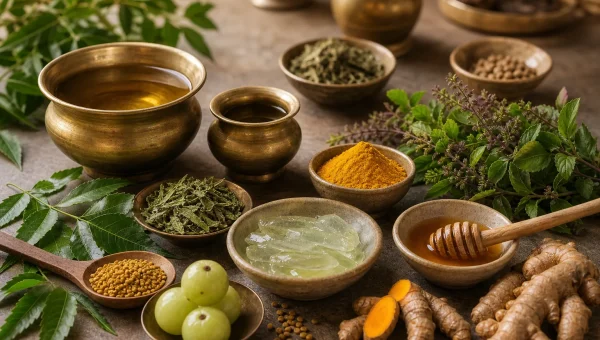
1. Bhringaraj: Eclipta alba, the Classical Keshya Herb
Bhringaraj is identified in the Ayurvedic Pharmacopoeia of India as Eclipta alba Hassk. The text lists Kesharaja among its Sanskrit synonyms and describes it as Keshya, Rasayana, Balya, Tvacya, Vatahara, and Kaphahara. This makes it one of the most relevant classical herbs for a hair-restoration protocol.
How to use: For classical-style use, Bhringaraj may be taken as fresh juice or as decoction material under guidance. For tablets or capsules, follow the product label and practitioner advice rather than converting raw-herb doses on your own. Take it after meals if your digestion is sensitive.
Best fit: diffuse shedding, dryness with weakness, stress-linked thinning, and hair fall where the scalp is not acutely inflamed or infected.
2. Amalaki: Emblica officinalis for Rasayana and Collagen Support
Amalaki, also called Dhatri, is identified in the Ayurvedic Pharmacopoeia of India as Emblica officinalis. It is listed as Rasayana, Tridoshajit, Vrishya, and Chakshushya, with Shita Virya and Madhura Vipaka. The pharmacopoeia also lists ascorbic acid and gallotannins among its constituents. Vitamin C is required for normal collagen biosynthesis, which is relevant because the skin and connective-tissue environment around follicles depend on healthy collagen formation.
How to use: Use Amalaki powder in the classical range only if it suits your digestion, or use a capsule/tablet as directed on the product. It is commonly taken in the morning or after meals with warm water. If it causes acidity, loose stools, or abdominal discomfort, reduce the dose or stop and consult a practitioner.
Best fit: Pitta-type hair fall, heat-prone scalp, early greying tendency, post-illness weakness, and people needing gentle daily Rasayana support.
3. Ashwagandha: Withania somnifera for Stress-Linked Hair Fall
Ashwagandha is identified in the Ayurvedic Pharmacopoeia of India as Withania somnifera root. It is listed as Rasayana, Balya, Vata-Kaphapaha, and Vajikarana. In a stress-linked hair protocol, its role is not to “force” hair growth, but to support the stress physiology, sleep rhythm, and depleted Vata state that often accompany diffuse shedding.
How to use: Classical root powder and standardized extracts are used differently. A common standardized extract pattern in clinical use is 300 mg twice daily, but suitability depends on the person, product, and health history. Avoid self-use during pregnancy, and use caution if you take thyroid medication, sedatives, immunosuppressants, or medication for anxiety or depression.
Best fit: stress-triggered shedding, poor sleep, fatigue, nervous exhaustion, and Vata-dominant depletion.
4. Shatavari: Asparagus racemosus for Female Nourishment and Pitta-Vata Support
Shatavari is identified in the Ayurvedic Pharmacopoeia of India as Asparagus racemosus root. It is listed as Rasayana, Balya, Pittahara, Stanyakara, Vrishya, and Agnipushtikara, with Madhura and Tikta Rasa, Guru and Snigdha Guna, Shita Virya, and Madhura Vipaka. In a women’s hair protocol, it is most useful when hair fall appears with dryness, heat, postpartum depletion, lactation demands, perimenopausal dryness, or menstrual weakness.
How to use: Shatavari powder is traditionally taken with warm milk or water when appropriate, while capsules should be taken according to product instructions. People with estrogen-sensitive conditions, unexplained bleeding, severe congestion, or very sluggish digestion should use it only with professional guidance.
Best fit: Pitta-Vata depletion, postpartum weakness, dryness, heat, and female reproductive-tissue nourishment.
5. Iron, Ferritin, and Mineral Support
Low ferritin means low stored iron, and iron status can be relevant in women with non-scarring hair loss. Do not guess your iron status from symptoms alone. Ask your clinician about ferritin, CBC, serum iron studies, vitamin D, B12, and thyroid testing before starting iron.
How to use: If ferritin or iron markers are low, correct them with food and clinician-guided supplementation. In Ayurveda, formulations such as Dhatri Lauha are traditionally used, but herbo-mineral products and Bhasma preparations should not be self-prescribed. Use only practitioner-guided, quality-tested products.
Best fit: heavy periods, postpartum depletion, vegetarian diets with low iron intake, fatigue with shedding, brittle nails, or hair fall that began after illness, blood loss, crash dieting, or prolonged under-eating.
Phase 2: External Therapies for the Scalp
External therapy begins on day 1 alongside internal support. The aim is to nourish the scalp, reduce dryness and buildup, support circulation through massage, and maintain a calm scalp environment. Do not apply oils or masks over infected, painful, oozing, or severely inflamed skin without medical advice.
The Signature Oil Blend
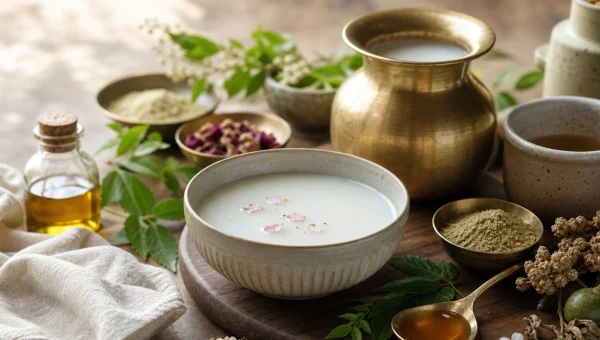
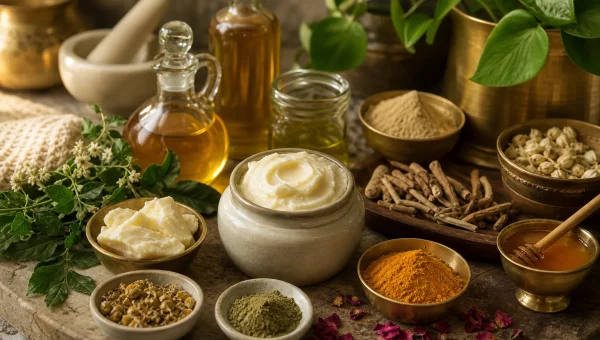
This blend keeps the Ayurvedic base simple: Bhringaraj for classical hair support, a stable carrier oil, optional Brahmi oil, and a very small amount of diluted essential oils when tolerated. Patch-test behind the ear or on the inner arm for 24 hours before applying it to the full scalp.
Ingredients:
- 100 ml Bhringaraj Tailam or a classical Bhringaraj-based hair oil
- 50 ml cold-pressed coconut oil or sesame oil, depending on scalp type
- 1-2 tablespoons Brahmi oil, optional, for a calming scalp massage base
- 10 drops rosemary essential oil, optional and always diluted
- 5 drops tea tree essential oil, optional for dandruff-prone scalp and always diluted
- 1 teaspoon fenugreek seed infusion, optional: warm crushed fenugreek seeds gently in the carrier oil, cool, strain completely, then mix
Combine the oils in a dark glass bottle and store in a cool place. Shake before each use. Do not add undiluted essential oils directly to the scalp, and stop immediately if there is burning, rash, headache, watering eyes, or increased irritation.
The Application Method
The method matters as much as the oil. Heavy oiling without proper application can leave buildup, while rough massage can worsen breakage. Use fingertips, not nails, and treat the scalp as skin that needs care rather than force.
- Warm the oil gently. Place the bottle in a bowl of hot water for a few minutes. The oil should feel comfortably warm, not hot.
- Part the hair into sections. Create small sections across the scalp and apply the oil directly to the scalp with fingertips or a dropper.
- Massage for 5-10 minutes. Use slow circular movements from the temples to the crown and then to the nape. Keep the pressure pleasant and steady.
- Leave it on for 1-2 hours. Overnight oiling is suitable only if your scalp tolerates it and you do not develop itching, acne, heaviness, or congestion.
- Wash gently. Use a mild shampoo and avoid aggressive scrubbing. If the hair remains oily, wash twice rather than using harsh cleansers.
Frequency: Use 2-3 times weekly for the first month if the scalp is dry or Vata-Pitta dominant. Reduce to 1-2 times weekly for maintenance. If the scalp is very oily or dandruff-prone, use lighter oiling and wash the same day.
Weekly Herbal Hair Mask
A weekly mask can support scalp comfort, reduce roughness, and improve hair texture. Keep it soft, fully rinsable, and non-irritating. Do not let herbal powders dry into a hard crust on the scalp.
Ingredients:
- 2 tablespoons hibiscus flower or leaf powder
- 1 tablespoon Amalaki powder
- 1 tablespoon fenugreek seed paste, made by soaking seeds overnight and grinding smoothly
- 2 tablespoons plain yogurt, if tolerated
- 1 teaspoon honey
Mix into a smooth paste with a little water if needed. Apply to the scalp and hair, leave for 20-30 minutes, then rinse and wash gently. Skip yogurt if your scalp is very cold, oily, itchy, or prone to fungal dandruff; use warm water or aloe gel instead.
Phase 3: Diet and Lifestyle
Hair fall protocols fail when digestion, protein intake, mineral status, sleep, and stress remain unchanged. Ayurveda places digestion and assimilation at the center of tissue nourishment, so the diet phase is not optional; it is the foundation that allows herbs and oils to work better.
Foods to Eat Daily
Build meals around warm, cooked, mineral-rich, protein-containing foods. The goal is not an extreme diet, but steady nourishment that supports Agni, blood quality, mineral reserves, and tissue repair.
| Food | Why It Matters | How Much |
|---|---|---|
| Soaked almonds | Provide healthy fats and vitamin E-rich nourishment | 5-7 almonds, soaked overnight and peeled if digestion is sensitive |
| Sesame seeds, especially black sesame | Mineral-dense food traditionally favored for Asthi-oriented nourishment | 1 tablespoon daily, roasted or powdered |
| Pumpkin seeds | Provide minerals such as zinc and magnesium | 1 tablespoon daily |
| Dal, beans, paneer, curd, eggs, fish, or other suitable protein | Hair shafts are protein-rich, so chronic under-eating or low protein can worsen shedding | One protein serving with main meals |
| Amalaki, guava, citrus, or other vitamin C-rich foods | Vitamin C supports collagen formation and helps non-heme iron absorption | One serving daily, adjusted to digestion |
| Ghee, if tolerated | Adds unctuousness to warm meals and helps counter dryness in Vata-Pitta patterns | 1-2 teaspoons with meals |
Pair this with a warm, cooked Ayurvedic breakfast instead of relying only on cold smoothies, dry snacks, or coffee. If digestion is weak, prioritize khichdi, dal, cooked vegetables, rice, millets, soups, stewed fruit, and lightly spiced meals.
Foods and Habits to Reduce
Reduce habits that interfere with mineral status, digestion, and stress recovery. Keep tea and coffee away from iron-rich meals or iron supplements, because they can reduce iron absorption. Avoid crash dieting, long fasting windows when already depleted, excessive refined sugar, frequent ultra-processed foods, and very large raw salads if they leave you bloated or cold.
For Pitta-type hair fall, reduce excess chilli, alcohol, overheating, and late nights. For Vata-type hair fall, reduce skipped meals, dry snacks, over-exercising, and irregular sleep. For Kapha-type hair fall, reduce heavy fried foods, excess dairy, sugar, and sleeping immediately after meals.
Stress Management
Stress-linked shedding requires nervous-system care. Add 10 minutes of Nadi Shodhana or slow breathing in the evening, a consistent bedtime, and 10-15 minutes of morning stillness or dosha-specific meditation. This is especially important if hair fall began after grief, illness, exams, work overload, postpartum sleep loss, surgery, fever, or a major life change.
Keep exercise moderate during active shedding. Walking, yoga, light strength training, and gentle mobility are better than punishing workouts when the body is already depleted.
The 90-Day Timeline: What to Expect
Hair responds slowly because follicles move through cycles. Use the timeline as a tracking guide, not as a guarantee. Count trends rather than individual strands: wash-day shedding, comb shedding, scalp itching, breakage, sleep, energy, and the width of your part line under the same lighting.
| Period | What You May Notice |
|---|---|
| Days 1-14 | Scalp comfort may improve first. Shedding may not change yet, especially if the trigger was recent. |
| Days 15-30 | Dryness, itching, and breakage may reduce. Wash-day hair fall may begin trending down if the trigger is corrected. |
| Days 30-60 | Hair texture may feel stronger. Short new hairs may become visible along the hairline or part line, though this varies. |
| Days 60-90 | Overall shedding trend should be clearer. If the protocol is helping, the scalp usually feels calmer and hair fall becomes less dramatic. |
| Beyond 90 days | Continue maintenance oiling, food correction, and stress care. If there is no meaningful improvement, get medical evaluation rather than adding more products. |
When This Protocol Is Not Enough
This protocol is best suited for diffuse, non-scarring shedding and mild early thinning. It is not enough when follicles are being destroyed, when the immune system is attacking follicles, when a medical disease is driving the hair fall, or when medication, chemotherapy, thyroid disease, severe deficiency, or hormonal disorder is the main trigger.
- Alopecia areata: patchy hair loss needs dermatology assessment and appropriate treatment.
- Scarring alopecia: once follicles are destroyed, regrowth is limited; early diagnosis matters.
- Thyroid-related hair fall: correct the thyroid disorder with medical care.
- Severe iron, vitamin D, B12, or protein deficiency: correct the deficiency with testing and clinical guidance.
- Chemotherapy-related hair loss: follow your oncologist’s advice.
- Painful, burning, oozing, crusted, or infected scalp: do not oil over active inflammation without diagnosis.
If hair loss is sudden, patchy, rapidly worsening, or accompanied by scalp pain, scaling, pus, fever, weight change, menstrual irregularity, acne, unwanted facial hair, fatigue, or palpitations, see a dermatologist or healthcare provider. Discuss blood work such as CBC, ferritin, iron studies, vitamin D, B12, thyroid panel, and hormone testing when clinically appropriate.
Disclaimer: This article is for educational purposes only and does not replace medical advice. Consult a qualified Ayurvedic practitioner, dermatologist, or healthcare provider before starting herbs, supplements, essential oils, or herbo-mineral formulations, especially if you are pregnant, breastfeeding, taking prescription medication, or managing a medical condition.
Use this protocol as a disciplined 90-day reset: nourish from inside, oil correctly, eat for mineral and protein sufficiency, sleep on time, reduce stress load, and seek diagnosis when the pattern is not simple diffuse shedding.
References
- Ayurvedic Pharmacopoeia of India
- Eclipta alba extract with potential for hair growth promoting activity (2009), PubMed
- Ayurvedic Pharmacopoeia of India
- NIH Office of Dietary Supplements
- A prospective, randomized double-blind, placebo-controlled study of safety and efficacy of a high-concentration full-spectrum extract of ashwagandha root in reducing stress and anxiety in adults (2012), PubMed Central
- Ayurvedic Pharmacopoeia of India
- MedlinePlus
- Jkms (jkms.org)
- Iron Deficiency and Nonscarring Alopecia in Women: Systematic Review and Meta-Analysis (2022), PubMed Central
- NCCIH
- Rosemary oil vs minoxidil 2% for the treatment of androgenetic alopecia: a randomized comparative trial (2015), PubMed
- Treatment of dandruff with 5% tea tree oil shampoo (2002), PubMed
- Standardized Scalp Massage Results in Increased Hair Thickness by Inducing Stretching Forces to Dermal Papilla Cells in the Subcutaneous Tissue (2016), PubMed
- In vivo and in vitro evaluation of hair growth potential of Hibiscus rosa-sinensis Linn (2003), PubMed
- Fdc (fdc.nal.usda.gov)
- Inhibition of food iron absorption by coffee (1983), PubMed
- A comprehensive investigation of biochemical status in patients with telogen effluvium: Analysis of Hb, ferritin, vitamin B12, vitamin D, thyroid function tests, zinc, copper, biotin, and selenium levels (2024), PubMed Central
- My (my.clevelandclinic.org)
- Aad (aad.org)
- Easyayurveda (easyayurveda.com)

Six months into the oil-based scalp routine and my hairdresser keeps commenting on how much healthier my scalp looks. I had chronic dryness and flaking for years. The idea of putting oil on a flaky scalp felt completely wrong at first but the results are hard to argue with.
I was nodding along reading your comment. Exactly my experience too.
The stress connection is something I really needed to read. My hairfall always spikes during deadlines and I kept looking for a topical fix when the actual trigger was internal. The idea of working on the nervous system first and the scalp second makes a lot of sense the way it’s explained here.
wonderful to see someone from a medical background engaging with this content thoughtfully
I run a small Ayurvedic beauty brand and content like this educates customers in ways that make my work easier. Well-written educational material raises everyone.
I’ve been incorporating these practices into my self-care ritual and the psychological effect is as meaningful as the physical. It’s a form of self-honoring that feels good.
The section connecting gut health to hairfall was new to me. I’d never made that link before. I started addressing the digestion piece alongside the topical treatments and I think it’s the combination that’s finally moving things. Worth following even if it takes longer than you’d like.
Good reminder on Hairfall Rescue. The practical details matter more than people think.
The Rasa and tissue nourishment explanation is a really different way of thinking about skin health. Surface-level treatments make more sense when you understand the layers beneath
I like this site generally but this particular article feels rushed compared to your usual standard. Some sections need more depth.
The Hairfall Rescue angle is useful here. The examples make the advice less abstract.
I was spending a lot on hair serums and growth sprays with barely anything to show for it. The 90-day framing here is actually useful because it stops you from abandoning the protocol after two weeks when nothing visible has happened yet. That’s always been my problem with consistency.
Your grandmother sounds like an amazing woman! Traditional knowledge passed through families is so precious
Thank you for sharing your experience, it’s important that readers see the full range of outcomes, not just success stories. Not every approach works for everyone.
Im a dermatologist interested in integrative approaches and the discussion of skin as a reflection of gut health is something I discuss with patients regularly
The part about stress being a root cause and not just a contributing factor finally explains why my hairfall always got worse during busy work periods even though my diet was fine. I’ve been treating it as purely a scalp issue for years. Starting the ashwagandha this week.
So encouraging to hear! Starting my first week and this is motivating me to stick with it
I want to believe this works, but after trying three different Ayurvedic protocols with zero results, I’m starting to think individual mileage varies way more than these articles suggest.
The Hairfall Rescue angle is useful here. The article avoids making it sound like a quick fix.
The hair care section in your related article brought me here. Now Im going down a rabbit hole of Ayurvedic beauty knowledge. Everything connects so logically.
Three months sounds right from my experience too. Commit to that and then evaluate.
I shared this with my book club, we have a wellness focus this month. Everyone immediately wanted to try the face mask recipe. It’s become our next group activity.
The telogen effluvium piece really hit home for me. My hairfall spiked right after a prolonged stressful period at work and no one connected those dots until much later. I’ve started the scalp massage routine and I’m about three weeks in. Not dramatic results yet but the shedding does seem a little less alarming in the shower.
The Hairfall Rescue angle is useful here. I appreciate that it does not oversell the result.
your comment prompted me to finally try this. Thank you for the push!
Three months into this protocol and my ponytail is measurably thicker. I was skeptical about the dietary changes making a difference for hair specifically, but cutting out the cold drinks and adding more sesame seems to have done something. Wish I’d taken a proper before photo.
I would like more detail on Hairfall Rescue. The article avoids making it sound like a quick fix.
Where are the controlled trials? Personal anecdotes are useful context but they’re not evidence. I need to see RCT data before recommending this to patients.
The Hairfall Rescue angle is useful here. I would like to know how long to try it before judging results.
The Hairfall Rescue angle is useful here. The timing advice is the part I would start with.
I had a very similar experience! The first few weeks are the adjustment period, it really does get better
I went through almost the same experience — biotin did nothing, minoxidil left my scalp a mess. What I want to know is whether the bhringraj oil needs to be warmed before application or if room temperature works just as well. I’ve seen it mentioned both ways and I’m not sure it makes a difference.
The combination approach you described is exactly what my practitioner recommended too. Validation always feels good.
I would like more detail on Hairfall Rescue. The timing advice is the part I would start with.
I would like more detail on Hairfall Rescue. This would be easier to follow with a one-week sample plan.
While I appreciate the Ayurvedic perspective, some of the dietary advice here contradicts current nutritional research. Balance is key
I would like more detail on Hairfall Rescue. The safety notes could be expanded a little.
Please consider adding a note about consulting with a healthcare provider before starting any new supplement regimen. Some readers might not know this
Your skepticism is healthy and welcome. We never intend for our content to replace medical advice, and we’ll make that clearer going forward.
I would like more detail on Hairfall Rescue. The main idea is clear even if someone is new to Ayurveda.
For the scalp massage technique, I want to know whether the direction of massage matters. Classical Shiroabhyanga uses specific directional strokes and practitioners I have spoken to disagree on whether follicular stimulation requires working with or against the hair growth direction.
The detailed breakdown of internal herbs like Bhringaraj and Ashwagandha makes me curious about sourcing quality powders.
I am 3 weeks into this protocol and I want to note that the first week the shedding actually increased. I was concerned and almost stopped. The article does not prepare you for this initial increase which is apparently a normal part of the transition. Knowing this in advance would have prevented significant anxiety.
I would like more detail on Hairfall Rescue. I would like to know how long to try it before judging results.
I would like more detail on Hairfall Rescue. Good starting point for a cautious reader.
Has anyone tried the fenugreek seed powder step in the oil blend and noticed less itching after a couple weeks?
After 90 days I would say my results are about 70 percent of what the article describes. Significant hairfall reduction, some new growth, better scalp condition. The full outcome probably requires another 90 days. Managing expectations on the timeline is important. This is not a 30-day result.
I appreciate the warning about thyroid checks before assuming it’s just stress-related shedding.
The scalp massage technique described reminds me of the barber shop routine, interesting to see research backing it.
Wonder if the dietary suggestions like soaked almonds and black sesame really fit into a busy morning schedule?
The protocol’s mention of increased shedding in the first two weeks aligns with what I read about telogen effluvium.
Seeing the emphasis on pranayama and meditation makes me think about pairing this with my yoga practice.
I’m still skeptical about essential oils like rosemary matching minoxidil results, but willing to give it a try.