
If I could bring only one herb into summer, it would be Chandana. Sandalwood is not merely a temple fragrance or a cosmetic note; in Ayurveda, white sandalwood is a cooling, aromatic heartwood with a long place in Grishma routines. Used wisely, it belongs in summer pastes, cooling waters, body powders, bath rituals, and classical formulations.
The key is to use real Śveta Chandana—the heartwood of Santalum album—and to keep each preparation in its proper lane. Sandalwood paste and sandalwood-scented water are everyday external summer allies; internal use belongs under professional guidance and with verified, food-grade material.
Understanding Chandana’s Ayurvedic Profile
Śveta Chandana is described in the Ayurvedic Pharmacopoeia of India as the dried heartwood of Santalum album Linn. Its rasa is Madhura and Tikta, its guna are Laghu and Ruksha, its virya is Śīta, and its vipaka is Katu. Its listed actions include Pittahara, Kaphahara, Varnya, Durgandhahara, Dāhapraśamana, and Tṛṣṇāhara. In plain language, Ayurveda values it for cooling heat, soothing burning sensations, supporting complexion, reducing unpleasant odor, and easing thirst-related heat discomfort.
This profile is why Chandana becomes so useful in Grishma. Charaka’s summer regimen favors sweet, cold, liquid, and unctuous foods and drinks, avoidance of heat-aggravating habits, cool shelters, and local application of Chandana. Ashtanga Hridaya also describes applying Chandana paste in summer to relieve heat-related exhaustion.
1. Chandana Lepa (Sandalwood Paste)
Chandana Lepa is the most direct and traditional external form. It is applied as a thin cooling paste on the forehead, chest, arms, neck, and soles when the body feels heated, flushed, or uncomfortable in summer.
How to Make It
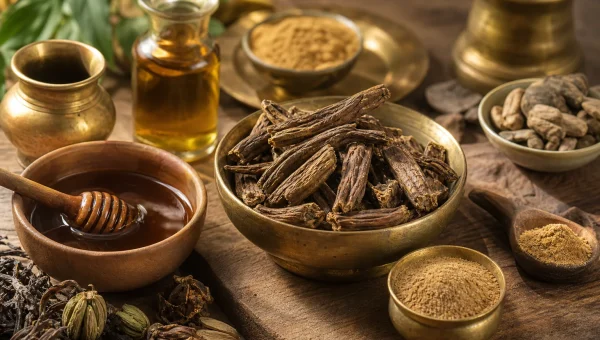
Traditional method: Rub a genuine sandalwood stick on a clean, flat grinding stone with a few drops of cool water until a smooth paste forms. This produces a fresh, aromatic paste from the heartwood itself.
Practical method: Mix 1 teaspoon of pure Santalum album heartwood powder with enough rose water, plain cool water, or a little coconut water to form a smooth paste. For dry skin, add a few drops of cold-pressed coconut oil. The paste should be spreadable but not runny.
Where to Apply
Apply a thin layer to the forehead, temples, upper chest, back of the neck, arms, or soles of the feet. Keep it for 15–30 minutes, then rinse with cool or lukewarm water. Before applying to a large area, test a small patch of skin first, especially if your skin is sensitive.
- Forehead and temples: Useful when summer heat is felt in the head or face.
- Chest and neck: Useful when heat, sweat, and body odor are prominent.
- Soles of the feet: A gentle bedtime application, especially when combined with a little coconut oil.
Timing: Evening and pre-bedtime are ideal. In strong heat, it may also be used before bathing.
2. Chandanodaka (Sandalwood Water)
Chandanodaka means sandalwood water. In Charaka’s summer regimen, sandalwood-cooled water appears as an external cooling aid, used with fans and touch to reduce the burden of heat. This makes it especially useful for compresses, wiping, and cooling cloths in Grishma.
Preparation
Add 1 teaspoon of pure sandalwood powder to 500 ml of clean, previously boiled and cooled water. Let it stand for 1–2 hours, then strain through fine muslin. Use the strained water the same day.
How to Use It
Soak a clean cotton cloth in the strained water and place it on the forehead, neck, or wrists for 5–10 minutes. It can also be used to wipe the arms, chest, and back after returning from heat exposure. Do not use cosmetic-grade powder for internal drinking.
For internal use, follow a qualified practitioner’s direction. The Ayurvedic Pharmacopoeia gives the adult dose of Chandana powder as 3–6 g in powder form, but that does not mean every household sandalwood powder is suitable for drinking. Internal use requires correct identity, purity, and assessment of the person’s condition.
3. Chandana Taila (Sandalwood Oil)
Sandalwood essential oil is concentrated and should be treated differently from paste or powder. It should not be swallowed, should not be applied undiluted, and should be used sparingly. In summer, its best role is as a diluted aromatic oil for skin comfort and fragrance.
Diluted Body Oil
Mix 8–10 drops of pure sandalwood essential oil into 100 ml of cold-pressed coconut oil. Shake well and label the bottle clearly. Apply a small amount before bathing or after bathing on slightly damp skin. Focus on the scalp line, arms, chest, and feet rather than using a heavy full-body coating in extreme humidity.
Room Fragrance
Add 1–2 drops of sandalwood essential oil to a diffuser or a bowl of warm water for a gentle evening fragrance. Keep the aroma mild, ventilate the room, and stop use if it causes headache, throat irritation, nausea, or breathing discomfort.
Pulse Point Application
Use only diluted oil. Apply a tiny amount to the wrists or behind the ears as a natural sandalwood fragrance. This is pleasant in summer and avoids the heaviness of synthetic perfumes, but it should be avoided on broken, inflamed, or allergy-prone skin.
4. Chandana Churna as a Summer Body Powder
Before modern perfumed powders, Indian households used simple herbal powders to keep the skin dry, fragrant, and comfortable. Chandana combines well with other cooling aromatic herbs such as Ushira and Musta.
Summer Body Powder Recipe
Use this as a dry external powder after bathing or whenever sweat collects in folds of the skin.
- Chandana powder: 4 tablespoons
- Ushira powder: 2 tablespoons
- Musta powder: 1 tablespoon
- Optional: finely powdered rose petals, 1 tablespoon
Mix thoroughly and store in a clean, dry, airtight jar. Apply lightly to the neck, underarms, inner elbows, under the breast fold, behind knees, or other sweat-prone areas. Do not rub aggressively. Avoid use on open cuts, active infection, oozing eczema, or irritated skin.
Shelf life: About 3 months if kept dry and handled with a clean spoon. Discard it if the fragrance changes, moisture enters, or any mold appears.
5. Chandanasava (Classical Fermented Preparation)
Chandanasava is a classical fermented formulation listed in the Ayurvedic Formulary of India, with Śveta Chandana as the first ingredient along with herbs such as Hrivera, Musta, Gambhari, Utpala, Priyangu, Padmaka, Lodhra, Manjistha, Rakta Chandana, Patha, Kiratatikta, Nyagrodha, Pippali, Shati, Parpata, Madhuka, Rasna, Patola, Kanchanara, Amra bark, Mocarasa, Dhataki, Draksha, sugar, and jaggery.
Dose and Use
The Ayurvedic Formulary of India lists the adult dose as 12–24 ml. It should be taken only when appropriate for the person and condition, usually with water and under guidance. It is not simply a casual summer beverage.
Classical indications listed for Chandanasava include Śukrameha, Mūtrakṛcchra, Hṛdroga, Balakṣaya, Kārśya, and Agnimāndya. For summer self-care, most people should stay with external Chandana paste, sandalwood water compresses, and gentle aromatic use unless a practitioner prescribes internal medicine.
Sourcing Real Chandana: The Quality Problem
Real Santalum album heartwood is valuable, slow-growing, and often adulterated or substituted. The Ayurvedic Pharmacopoeia describes genuine sandalwood powder as light-brown and aromatic, with numerous oil globules microscopically, and sets identity and purity standards including limits for foreign matter, ash, extractives, and volatile oil.
Look for a label that clearly says Santalum album heartwood. Avoid products that only say “sandal fragrance,” “chandan perfume powder,” or “red sandalwood” when you need white sandalwood. Red sandalwood is a different plant, Pterocarpus santalinus, with different properties and uses.
Good Chandana has a subtle, persistent, creamy-woody aroma. It should not smell like synthetic perfume, incense chemicals, or sharp solvent. For internal preparations, rely only on pharmacy-grade or practitioner-sourced material with identity and purity assurance.
Buy from established Ayurvedic pharmacies or government-backed sandalwood sources that provide species identification, batch details, and quality testing. For essential oil, choose a supplier that identifies the botanical name, plant part, country of origin, and purity testing.
A Summer Day with Chandana
A Chandana-centered summer routine does not require using every form every day. Choose the right form for the moment: paste for direct cooling, sandalwood water for compresses, diluted oil for fragrance and skin comfort, body powder for sweat-prone areas, and classical internal medicines only when professionally advised.
- Morning: After bathing, dust a small amount of Chandana-Ushira-Musta body powder on sweat-prone areas.
- Midday: Use Chandanodaka as a cool cloth on the forehead, neck, or wrists after heat exposure.
- Pre-bath: Apply diluted Chandana oil in coconut oil for 10–15 minutes, then bathe.
- Evening: Apply a thin Chandana Lepa to the forehead, chest, or soles if the body feels overheated.
- Bedtime: Use a very mild sandalwood aroma in the room or a tiny amount of diluted oil on the wrists.
- Practitioner-directed only: Use internal Chandana powder or Chandanasava only when prescribed for your constitution and condition.
Used this way, Chandana remains what Ayurveda has always valued it for: a refined summer ally for heat, burning discomfort, fragrance, complexion, and Pitta-heavy seasonal strain.
Consult a qualified Ayurvedic practitioner or healthcare provider before internal use of Chandana preparations, before using essential oils during pregnancy or breastfeeding, and if you have kidney disease, urinary symptoms, chronic skin disease, allergies, or are taking regular medicines.
The Chandana (Sandalwood) for Summer angle is useful here. I would like to know how long to try it before judging results.
The alpha-santalol content you mention varies enormously across commercial sandalwood products. How do you identify genuine Mysore sandalwood vs the cheaper substitutes being sold as sandalwood?
I’ve been using the rose and sandalwood water mist on my face and neck all morning for three weeks. The Pitta heat on my face that gets worse in the afternoon has reduced significantly.
The Chandana taila recipe you describe, is that the same as what’s used in the Keri Taila formulation? Asking because I have that available and want to know if it could serve the same cooling function.
The sandalwood milk bath for summer heat is something I want to try but I’m concerned about the environmental sourcing. Is there a responsible way to source actual sandalwood in 2026?
The description of applying Chandana Lepa on the forehead as an Ajna Marma point really caught my attention.
My wife rubs sandalwood paste on her temples when she has a stress-related headache. She says it works better than paracetamol for that kind of head pain. The cooling action reaching the Pitta in the head makes sense.
The internal preparation with sandalwood in milk is something I hadn’t heard of. Which variety is safe for internal use and in what quantity? External application is different from ingestion.
I tried mixing sandalwood powder with rose water for a paste and noticed it stayed put without dripping.
Good reminder on Chandana (Sandalwood) for Summer. This is the kind of detail readers can test slowly.
Using Chandanodaka as an internal drink sounds like a simple way to tackle summer thirst and burning sensations.
Good reminder on Chandana (Sandalwood) for Summer. The article avoids making it sound like a quick fix.
The tip about adding a few drops of cold pressed coconut oil to the paste for dry skin seems practical.
I appreciate the detailed method for making sandalwood water overnight in a clay container.
The diffuser suggestion with just five drops of sandalwood oil for evening relaxation is something I might try.
Good reminder on Chandana (Sandalwood) for Summer. I appreciate that it does not oversell the result.
Learning that Chandana Churna can be blended with vetiver and nagarmotha for a body powder gave me a new DIY idea.
The caution about adulterated sandalwood powder being too cheap and bright yellow is useful for buyers.
Chandanasava taken twice daily after meals appears to be a convenient internal option for prolonged summer use.
Applying diluted sandalwood oil to wrists and behind ears as a cooling perfume feels like a subtle yet effective habit.
The explanation of how sandalwood cools Pitta, purifies blood, calms the mind, and nourishes skin all at once makes it stand out.
finally something that explains the dosage properly instead of just saying ‘take as needed’
I found the note about storing the homemade body powder for up to three months if kept dry helpful for planning.
finding the herbs in my city is nearly impossible, the ones available are often low quality
what’s the recommended dose for someone with a Pitta constitution? the article mentions general ranges but i want to confirm
Could you clarify whether the herbal preparation needs to be freshly made each day or if a week’s batch is acceptable?
what brand of ashwagandha do you recommend? KSM-66 or Sensoril or just regular churna?
does anyone know if this works the same way for Kapha types? feels like the article is more Vata focused
The timeline expectations seem unrealistic for a chronic condition. Most patients I’ve spoken to report much longer recovery arcs.
tried it, didnt work for me. maybe need proper vaidya supervision 🙌
some of the herb names in english vs sanskrit are confusing, i ended up buying the wrong thing
The safest part of the Chandana (Sandalwood) for Summer advice is keeping it simple. The article avoids making it sound like a quick fix.
Is this protocol safe to follow alongside standard allopathic treatment, or does it need to be spaced out?
can you take this during pregnancy or is it contraindicated? my wife is asking
2 weeks in n no change yet. maybe giving up soon 🙌
The mechanism explanation is interesting. I would like to understand whether the effect diminishes with long-term use.
I appreciate the distinction between the acute and chronic management approaches. That nuance matters a lot.
sleeping so much cooler with chandan on pulse points. game changer
Without knowing a patient’s Prakriti and Agni status, applying a generic protocol seems premature. This kind of generalized advice can actually cause harm. ✨
I notice the article doesn’t address interactions with thyroid medication. Is there a concern there?
works!! been doin this 2 months n feeling much better tbh ✨
I have a question about the duration. Is the 30-day protocol meant to be repeated or is one cycle sufficient for chronic cases?
can sandalwood oil be used in a diffuser for the cooling mental effect or does it need to be topical?
the dose ranges seem very broad, like 1 to 3 grams is quite a big difference. would be more helpful with narrower guidance 🙌
honestly i’ve been doing this for 2 months and the results are underwhelming. might just be my body type नमस्ते
I’m skeptical of the causal claims here. Symptom improvement after starting a protocol can easily be a placebo response or regression to the mean. 🌿
tried this last month, honestly surprised how well it worked for me 🙌
This helped me understand Chandana (Sandalwood) for Summer without too much jargon. The article avoids making it sound like a quick fix.
where do u buy quality herbs in India? the market stuff seems adulterated
this is the kind of detail u cant find anywhere else, other sites just give vague advice
I started this protocol last month. Would it be acceptable to continue Triphala alongside it or would that be too much?
Is there a difference in outcome between using the classical formulation versus the standardized extract?
This helped me understand Chandana (Sandalwood) for Summer without too much jargon. The main idea is clear even if someone is new to Ayurveda.
Will try this.
The section on timing was exactly what I was missing. Started the morning dose earlier and sleep improved.
The ecological concern around Santalum album harvesting deserves mention. Recommending increased use without discussing sustainability is problematic.
can kids take this? what age is safe
Just found this searching for alternatives to long-term medication. How does one find a qualified Ayurvedic practitioner to supervise this?
Same here.
shared this with my mom, she has been struggling with this for years and finally has a proper plan
how long u take this before seeing results? asking for my dad
Been following this for 3 weeks and my energy levels are noticeably steadier throughout the day.
My Ayurvedic practitioner recommended the same protocol. Good to see it written out clearly with timings.