
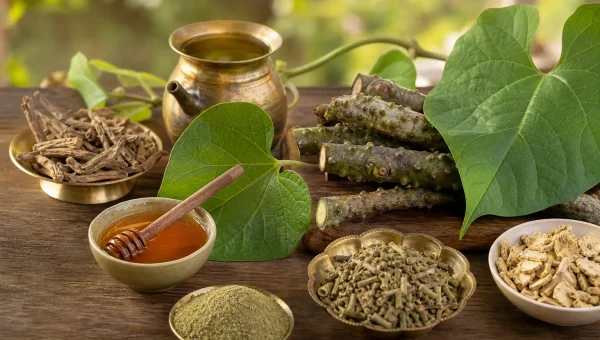
The village pharmacy in my grandmother’s home was a clay pot. Inside it, covered with a piece of cloth tied with twine, was a slow-working preparation that the whole family trusted: turmeric stirred into raw honey until the colour deepened to amber and the flavour became something between medicine and food. She called it her “golden medicine.” Ayurveda gives honey, or Madhu, a respected place as an Anupana, a carrier taken with herbs, especially when a small dose is wanted to reach the body without heaviness. This is the spirit of medicated Ayurvedic honey: simple, room-temperature herbal honeys made carefully for household support, while keeping classical safety rules intact.
Why Honey Is the Perfect Herbal Vehicle
Honey is not treated in Ayurveda as an ordinary sweetener. The classical description presents it as sweet and astringent in taste, cold and dry in quality, light when used in proper quantity, Kapha-clearing, and best used unheated. These qualities explain why a small amount of honey is traditionally paired with powders, pastes, and linctuses for throat, respiratory, digestive, and skin-support preparations.
- Anupana and Yogavahi use: Honey is traditionally valued as a carrier that helps deliver herbs while keeping the dose small and easy to take.
- Kapha-clearing action: Its dry and astringent character makes it suitable in many Kapha-type situations, especially when heaviness, coating, mucus, or sluggishness is present.
- Palatability: Bitter, pungent, and astringent herbs such as neem, turmeric, tulsi, ginger, and triphala become easier to take when blended into honey.
- Natural preservation support: Honey’s low water activity, acidity, osmotic effect, hydrogen peroxide activity, and bee-derived antimicrobial factors help explain why clean, dry honey preparations can remain stable when handled properly.
Critical Ayurvedic safety rule: honey should not be heated or mixed into boiling liquids. Heat processing can also reduce honey’s enzyme activity and raise hydroxymethylfurfural (HMF), a heat- and storage-related compound used as a quality marker in honey. For every formula below, mix only at room temperature and take with lukewarm, not hot, water or milk.
Before You Start: Method and Storage
Medicated Ayurvedic honey works best when the preparation is clean, dry, small-batch, and clearly labelled. Use a glass jar, a dry spoon, powdered herbs from a reliable source, and honey that has not been heated. Moisture is the main enemy of home honey preparations, so fresh leaves or sliced roots should be washed, dried completely, and used only in small batches.
- Use a clean, dry glass jar with a tight lid.
- Do not boil, cook, microwave, or warm honey directly.
- Use powdered herbs when longer storage is desired; fresh herbs introduce more moisture.
- Label each jar with the preparation date and ingredients.
- Discard any batch that ferments, smells alcoholic, develops gas pressure, or shows visible contamination.
- Keep all honey preparations away from infants under 12 months of age.
Formula 1: Turmeric-Honey (Haridra Madhu)
Haridra (Curcuma longa) is described in the Ayurvedic Pharmacopoeia of India as pungent and bitter in taste, dry in quality, hot in potency, and useful in classical indications such as skin disorders, wounds, Kapha-Pitta conditions, and metabolic imbalance. Honey gives turmeric a smooth, throat-coating base, while a small pinch of black pepper and dry ginger adds traditional pungency.
Preparation
This is the simplest medicated Ayurvedic honey to keep in a home pharmacy. Make a small batch first, because turmeric stains and the taste becomes stronger as it stands.
- 100 g raw, unheated honey
- 10 g turmeric powder (Haridra, Curcuma longa)
- 1 small pinch black pepper powder
- 1 g dry ginger powder (Sunthi)
- Mix thoroughly in a clean glass jar at room temperature. Cover and keep for 3 to 7 days, stirring daily with a dry spoon.
Uses and Dosage
This formula is best suited for short-term household support in Kapha-type throat discomfort, seasonal heaviness, and general turmeric use. It should not be used as a substitute for prescribed treatment in infection, inflammatory disease, diabetes, wounds, or chronic skin disorders.
- Throat and seasonal Kapha support: 1/2 to 1 teaspoon once or twice daily.
- Digestive heaviness after oily meals: 1/2 teaspoon after food, when suitable for the person.
- Skin-support use: take internally only in small amounts; do not apply homemade honey to deep, infected, surgical, or serious wounds.
- External use on intact skin: patch test first and avoid the eyes, broken skin, and sensitive areas.
Formula 2: Tulsi-Ginger Honey (Tulsadi Madhu)
Tulasi (Ocimum sanctum, also known as holy basil) is classically used in conditions such as cough, breathlessness, hiccup, poor appetite, worms, skin disease, cold-type nasal catarrh, and side pain. Its pungent, bitter, astringent, light, dry, sharp, and heating qualities pair well with ginger in a honey base for a warming seasonal preparation.
Preparation
Fresh tulsi gives a bright aroma, but it also brings moisture into the jar. For longer keeping, use dried tulsi leaf powder; for the freshest taste, make a small batch with fresh leaves and use it promptly.
- 100 g raw, unheated honey
- 20 to 30 fresh tulsi leaves, washed and dried completely, or 2 g dried tulsi leaf powder
- 5 to 10 g fresh ginger, thinly sliced and surface-dried, or 1 g dry ginger powder
- 1 small pinch black pepper powder, optional
- Mix in a clean glass jar at room temperature. If using fresh leaves or fresh ginger, make a small batch and keep the jar tightly closed. If using dried powders, allow 5 to 7 days for the flavour to settle.
Uses and Dosage
This preparation is most appropriate for Kapha-Vata type throat and respiratory support, especially when the person feels cold, heavy, congested, or coated. It is not suitable for infants, and persistent cough, wheezing, fever, chest pain, or breathing difficulty needs medical care.
- Throat comfort: 1/2 to 1 teaspoon, allowed to dissolve slowly on the tongue.
- Seasonal Kapha support: 1/2 to 1 teaspoon once or twice daily.
- Children over 1 year: use only tiny food-like amounts and preferably under guidance; never give honey to infants under 12 months.
- Avoid large or frequent doses if there is strong acidity, burning, heat, mouth ulcers, or Pitta aggravation.
Formula 3: Triphala Honey (Triphala Madhu)
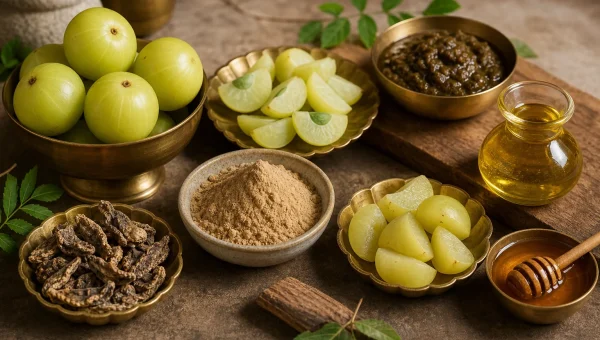
Triphala is the well-known three-fruit combination of Amalaki, Bibhitaki, and Haritaki. It is traditionally used in Ayurveda as a Rasayana and digestive tonic. In honey, it becomes a compact preparation for people who prefer a small spoonful over a larger decoction or tea.
Preparation
Use a fine, clean, dry Triphala powder. The powder will not dissolve completely; it remains suspended in the honey and should be stirred before use.
- 100 g raw, unheated honey
- 10 g Triphala powder, prepared from Amalaki, Bibhitaki, and Haritaki
- Mix thoroughly until evenly incorporated. Let it stand for 3 days, then stir again before each use.
Uses and Dosage
Triphala honey is best used as a gentle digestive and Rasayana-style support, especially when Kapha-type heaviness and irregular bowel habits are present. Homemade Triphala honey should not be used as an eye wash; any eye preparation must be sterile and prescribed by a qualified practitioner.
- Digestive support: 1/2 teaspoon after dinner or at bedtime with lukewarm water.
- Kapha-type weight-management support: 1/2 teaspoon in lukewarm water in the morning, alongside diet and activity changes.
- General Rasayana-style use: 1/2 teaspoon daily for a limited period when digestion is comfortable.
- Reduce or stop if loose stools, cramping, dehydration, or weakness occurs.
Formula 4: Ashwagandha-Saffron Honey (Ashwagandha Kesar Madhu)
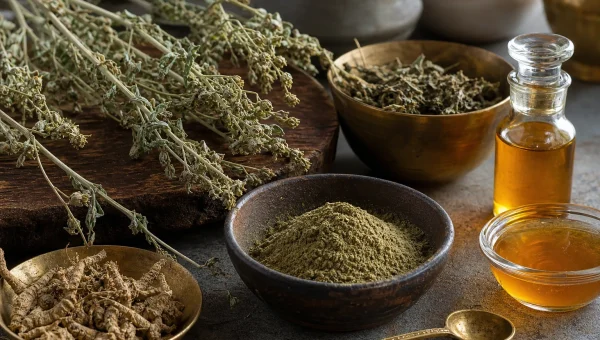
Ashwagandha (Withania somnifera) root is described in the Ayurvedic Pharmacopoeia of India as a Rasayana, Balya, Vajikarana, and Vata-Kapha-pacifying herb, with classical use in weakness, wasting, swelling, Vata disorders, and debility. In this honey, the herb is paired with saffron and cardamom for a warming, aromatic, bedtime-style preparation.
Preparation
Because ashwagandha is a strong herb, keep the powder quantity moderate and avoid taking it continuously without guidance. This formula is better suited for adults than for children.
- 100 g raw, unheated honey
- 6 g ashwagandha root powder (Withania somnifera)
- 10 to 15 saffron strands, gently crushed
- 1/2 teaspoon cardamom powder
- Mix all ingredients into honey at room temperature. Let it stand for 5 days, then stir before use.
Uses and Dosage
This is a Vata-supporting, strength-supporting household preparation for adults who tolerate ashwagandha well. It is not appropriate during pregnancy, breastfeeding, before surgery, or when there are thyroid disorders, autoimmune disorders, liver disease, sedative use, or medication interactions unless a healthcare provider approves it.
- Bedtime support: 1/2 teaspoon in lukewarm milk or lukewarm water.
- Convalescence support: 1/2 teaspoon once daily with suitable food, under practitioner guidance.
- Vata-type fatigue and depletion: use only when digestion is stable and there is no excess heat or heaviness.
- Stop if nausea, drowsiness, abdominal discomfort, allergic symptoms, or unusual fatigue occurs.
Formula 5: Neem-Honey Paste (Nimba Madhu)
Nimba (Azadirachta indica) leaf is intensely bitter, dry, cooling, and classically used in conditions such as skin disorders, wounds, worms, fever, eye disorders, metabolic disturbance, and inflammatory swelling. Because neem is strong, bitter, and Vata-increasing, this honey should be used in the smallest quantity and only for short periods.
Preparation
Use neem leaf powder only, not neem oil. Neem oil is much stronger and is not appropriate for this household honey preparation.
- 100 g raw, unheated honey
- 3 g neem leaf powder (Nimba, Azadirachta indica)
- 1 g dry ginger powder, optional, for warmth
- Mix thoroughly at room temperature. Let it stand for 5 to 7 days and stir before use.
Uses and Dosage
Nimba Madhu is the most medicinal-tasting formula in this set. It is best reserved for short-term Kapha-Pitta type skin and metabolic support under guidance, not as a daily tonic.
- Skin-support use: 1/4 to 1/2 teaspoon once daily for a short period, when appropriate.
- Kapha-Pitta heaviness with skin irritation: use only with practitioner guidance, especially if there is diabetes, pregnancy, fertility treatment, or medication use.
- External use: patch test on intact skin only; do not apply to deep wounds, infected wounds, eyes, genitals, or large skin areas.
- Avoid in pregnancy, breastfeeding, young children, and people trying to conceive unless a qualified practitioner specifically advises otherwise.
Medicated Honey Reference Table
The table below keeps the five household preparations easy to compare. The doses are intentionally conservative because honey is concentrated and the herbs are being taken in a compact form.
| Formula | Key Herbs | Dosha Emphasis | Primary Household Use | Conservative Daily Dose | Settling Time |
|---|---|---|---|---|---|
| Haridra Madhu | Turmeric, black pepper, dry ginger | Kapha-Pitta support | Throat, skin, seasonal heaviness | 1/2 to 1 tsp once or twice daily | 3 to 7 days |
| Tulsadi Madhu | Tulsi, ginger, optional black pepper | Kapha-Vata support | Throat and cold-season support | 1/2 to 1 tsp once or twice daily | 5 to 7 days with dried herbs |
| Triphala Madhu | Amalaki, Bibhitaki, Haritaki | Tridosha support, often Kapha-focused with honey | Digestion, bowel regularity, Rasayana-style support | 1/2 tsp daily | 3 days |
| Ashwagandha Kesar Madhu | Ashwagandha, saffron, cardamom | Vata-Kapha support | Strength, convalescence, bedtime support | 1/2 tsp daily | 5 days |
| Nimba Madhu | Neem leaf, optional dry ginger | Kapha-Pitta clearing; may increase Vata | Short-term skin and metabolic support | 1/4 to 1/2 tsp daily for short periods | 5 to 7 days |
Sourcing the Right Honey
Classical descriptions of honey vary by text. Charaka names Makshika, Bhramara, Kshaudra, and Pauttika, and describes Makshika as the best among them. For practical home use, choose clean, genuine, unheated honey from a trusted source and avoid honey that has been boiled, cooked, or repeatedly warmed.
- Choose raw, unheated honey: heat processing can reduce enzyme activity and affect quality markers.
- Prefer reliable sourcing over marketing terms: local, forest, wild, or single-origin labels are useful only when the supplier is trustworthy.
- Avoid wet spoons: water introduced into the jar can disturb stability.
- Make small batches: 100 g batches are easier to finish while fresh and easier to adjust for taste and tolerance.
Safety Note
Important safety information: never give honey in any form to infants under 12 months of age because of infant botulism risk. Never heat honey or add it to boiling liquids; use lukewarm or room-temperature preparations only. People with diabetes, insulin resistance, or blood sugar concerns should treat honey as a concentrated sugar source and use it only with appropriate monitoring and professional guidance. Those with known allergy to honey, bee products, pollen, or any listed herb should avoid the relevant preparation. Neem should be avoided during pregnancy, breastfeeding, attempts to conceive, and in young children unless supervised by a qualified practitioner. Ashwagandha should be avoided during pregnancy and breastfeeding and used cautiously with thyroid disorders, autoimmune disorders, liver disease, sedatives, diabetes medicines, blood pressure medicines, immunosuppressants, and before surgery. These medicated Ayurvedic honeys are household supports, not medical treatments; consult a qualified Ayurvedic practitioner or healthcare provider before using them for diagnosed disease, chronic symptoms, pregnancy, children, older adults, or medication use.
Actionable tip: start with a small jar of Haridra Madhu. Mix 100 g unheated honey with 10 g turmeric and a pinch each of black pepper and dry ginger, label it with the date, and keep it visible in the kitchen. Take only 1/2 teaspoon once daily at first, observe taste, digestion, heat, skin tolerance, and blood sugar suitability where relevant, and stop if it does not suit you.
References
- Charaka Samhita — Annapanavidhi Adhyaya
- The antibacterial activities of honey (2021), PubMed Central
- Biochemical Reactions and Their Biological Contributions in Honey (2022), PubMed Central
- Studies on the physicochemical characteristics of heated honey, honey mixed with ghee and their food consumption pattern by rats (2010), PubMed Central
- Ayurvedic Pharmacopoeia of India
- Influence of piperine on the pharmacokinetics of curcumin in animals and human volunteers (1998), PubMed
- Ayurvedic Pharmacopoeia of India
- Webprod (webprod.hc-sc.gc.ca)
- CDC
- FDA
- Drugs (drugs.com)
- NCCIH
The grandmother’s clay pot with turmeric honey is such a precise image. Mine had the same preparation and called it the same thing, golden medicine. I thought it was purely that family’s practice. Finding out it maps to a classical Ayurvedic preparation principle is both validating and moving.
Made the ginger-black pepper honey described in the recipe. It is extremely potent even in small amounts. The warming and circulatory effect is almost immediate. I take a quarter teaspoon before meals for digestion and the improvement in post-meal comfort has been significant.
The Yogavahi property of honey as a carrier is the most practically useful concept in Ayurvedic pharmacology for home applications. The ability of honey to carry herbs into deeper tissues means that very small amounts of medicated honey can have effects that the herb alone in larger doses might not produce.
The clay pot detail strikes me as important — I wonder how much the vessel itself contributes. My grandmother insisted that ceramic stored preparations differently than glass, and there’s probably something to the slow temperature exchange. These recipes look very approachable for a first attempt. Can raw, unfiltered local honey be used as-is, or does it need to be processed first before adding the herbs?
Regional variation in Ayurvedic practice is real and underappreciated. In Tamil Nadu the honey preparations I’ve seen lean heavily on dried ginger and pepper, whereas what you’re describing with the turmeric infusion feels more like what I’ve encountered in Rajasthan. Does the infusion period change depending on the herb? Turmeric seems straightforward, but I’d imagine something like neem needs different handling.
The cough and respiratory honey made with tulsi, pippali, and honey has been my family’s cold season staple for 2 years. Better than any commercial cough preparation I have tried and it is what I offer guests who arrive with a cough. The pippali component is the key and it is underused in most home preparations.
The botulism risk with honey for infants should probably be mentioned here. The article does not seem to specify age restrictions and some of these preparations might be given to children. Honey should not be given to children under 1 year regardless of how it is prepared.
The explanation of honey’s Yogavahi property makes sense for why it’s used as a carrier.
Made the brahmi honey for cognitive support two months ago. I take it 20 minutes before mentally demanding work. The focus improvement is subtle but consistent. Not a dramatic drug-like effect but a quieter, more available attention. My partner noticed I seem less scattered on days I take it.
Perhaps trying the tulsi-ginger honey during winter could help with seasonal coughs.
The part about How to Make 5 Medicated Ayurvedic Honeys feels realistic. A few more examples would still help.
Personally, I find the neem honey too bitter for regular consumption, but it works well as a topical paste.
A practical tip: label each jar with the preparation date so you know when it’s ready to use.
Curious if the saffron in the ashwagandha honey really changes the flavor noticeably.
The research cited here is from the 2015-2020 period. Is there more recent work that confirms or updates these findings?
I gave the tulsi-pepper-honey preparation to my 9-year-old during a cough and cold. He was fine but I realized afterward I had no idea whether the doses and herbs described were appropriate for children. Pediatric dosing should be specified or contraindicated clearly.
My practitioner wants to use ashtanga alongside turmeric. Is this a common combination or is the article’s protocol more commonly used in isolation?
Just found this searching for alternatives to long-term medication. How does one find a qualified Ayurvedic practitioner to supervise this?
I have a question about the duration. Is the 30-day protocol meant to be repeated or is one cycle sufficient for chronic cases?
how long do these medicated honeys keep? the article says months but home conditions vary a lot