
Cheese can create two honest reactions at an Ayurvedic table. One person sees fermented dairy as heavy, sour, and Kapha-building; another sees its unctuous, nourishing quality as useful for a dry, cold Vata pattern. A dosha-intelligent cheese board begins by accepting both points: cheese is not automatically “bad,” and it is not automatically suitable. Its place depends on the person, season, preparation, portion, and digestive fire.
Classical Ayurvedic texts do not name cheddar, camembert, parmesan, or gouda. They give a framework for understanding foods through rasa (taste), guna (qualities), virya (potency), vipaka (post-digestive effect), dosha impact, and the condition of agni. Applied carefully, that framework becomes a practical guide for choosing fermented dairy and cheese without ignoring classical cautions.
What Ayurveda Says About Fermented Dairy
Ayurveda speaks most directly about dadhi, commonly understood as curd or yogurt-like cultured milk. Dadhi is described as sour, heavy, heating, channel-coating, Kapha- and Pitta-increasing, and Vata-pacifying when used properly. This makes it nourishing and grounding in some contexts, but unsuitable in others, especially when digestion is weak, Kapha is high, or Pitta is already aggravated.
Takra, or properly prepared buttermilk, is treated differently from dadhi. It is traditionally valued as more digestive and lighter in use than thick curd, especially when churned, diluted, and combined with suitable spices. This distinction matters for cheese: a fresh, lightly prepared dairy food is not the same as a dense, salty, aged, fermented cheese.
Modern nutrition uses the language of live cultures, microbiome activity, and fermented foods. Ayurveda adds another question before recommending any fermented dairy: can this person digest this food today, in this season, in this quantity?
The Five Ayurvedic Lenses for Cheese Compatibility
When evaluating any cheese or fermented dairy product, an Ayurvedic approach looks beyond “dairy equals good” or “dairy equals bad.” The same food can nourish one person and burden another depending on its qualities and the state of digestion.
- Rasa (taste): Many cheeses express sour and salty tastes, especially aged varieties. Sourness and saltiness tend to aggravate Pitta and Kapha when used excessively, while they may temporarily ground Vata.
- Virya (potency): Sour fermented milk products are generally read as heating in Ayurvedic dietetics. A refrigerator-cold cheese board may feel cooling on the tongue, but cold, heavy food can still weaken digestion.
- Vipaka and long-term effect: Rather than assigning one exact post-digestive effect to every modern cheese, Ayurveda asks whether repeated use increases heaviness, acidity, mucus, sluggishness, or heat in the body.
- Guru and snigdha qualities: Cheese is typically heavy and unctuous. These qualities can nourish dry Vata but can burden Kapha and overwhelm weak agni.
- Samskara, age, moisture, and salt: Fresh paneer, ricotta, and cottage cheese differ from blue cheese, sharp cheddar, and parmesan. Aging, salt, fermentation, dryness, spices, and cooking all change how the food behaves.
Dosha-by-Dosha Cheese Guide
A dosha guide is not a license to eat any cheese in any amount. It is a way to choose the least aggravating form, portion, and accompaniment for a given constitution or current imbalance.
Vata Dosha: The Most Cheese-Compatible Pattern
Vata is classically associated with dryness, lightness, mobility, and coldness. The heavy, soft, unctuous, and grounding qualities of fresh dairy can be useful when Vata is high, especially in cold, dry weather and when agni is steady.
Best choices for Vata: fresh paneer, ricotta, cottage cheese, fresh mozzarella, mild farmer’s cheese, or a small portion of soft mild cheese served at room temperature. Warm cooked paneer with cumin, ginger, coriander, or black pepper is usually more Vata-friendly than a cold platter.
Vata cautions: very aged, dry, salty, sharp cheeses may increase thirst, dryness, acidity, or constipation in some Vata-dominant people. Vata digestion is often irregular, so portion size matters more than enthusiasm.
Pitta Dosha: Choose Mild, Fresh, and Low-Salt
Pitta is associated with heat, sharpness, and intensity. Sour, salty, pungent, and strongly fermented cheeses can aggravate Pitta, especially in summer, during inflammatory flare-ups, after alcohol, or when reflux and acidity are present.
Best choices for Pitta: small portions of fresh, mild, low-salt cheese such as fresh paneer, ricotta, cottage cheese, or fresh mozzarella. Serve with cucumber, mint, coriander leaf, fennel, or a small amount of rose petal preserve for a cooling board.
Pitta cautions: avoid sharp cheddar, blue cheese, heavily salted aged cheese, chili-spiked cheese, mustard-heavy pairings, and cheese served with alcohol when Pitta symptoms are active.
Kapha Dosha: Minimum Quantity, Maximum Digestive Support
Kapha is associated with heaviness, coldness, stability, oiliness, and moisture. Cheese shares several of these qualities, so it can easily increase sluggishness, mucus, congestion, heaviness, and dull digestion when used often or in large portions.
Best choices for Kapha: use cheese as an accent rather than a main food. A few shavings of parmesan, pecorino, or another dry, strong-flavored aged cheese can satisfy the palate with a smaller quantity. The goal is not to make aged cheese “light,” but to keep the total load small.
Kapha support: pair tiny portions with ginger tea, black pepper, toasted cumin, mustard seed, bitter greens, or lightly cooked vegetables. Avoid creamy cheese, large cheese platters, cold cheese at night, and cheese after a heavy meal.
The Ayurvedic Cheese Board by Season
Season changes the digestive context. A cheese board that feels comfortable in cold weather may feel heavy in spring or heating in summer. Use the table as a practical seasonal starting point, then adjust according to appetite, bowel habits, mucus, reflux, skin heat, and energy after eating.
| Season | Seasonal Emphasis | Better Cheese Choices | Herbs and Accompaniments | Portion Guidance |
|---|---|---|---|---|
| Late Autumn / Winter | Vata support; agni may be stronger in cold weather | Fresh paneer, ricotta, fresh mozzarella, mild soft cheese | Warm spiced chutney, toasted cumin, ginger, stewed figs | Small to moderate, about 45 to 75 g when digestion is strong |
| Spring | Kapha reduction | Very small shavings of dry aged cheese, or skip cheese | Ginger tea, black pepper, mustard seed, bitter greens | Small accent, about 15 to 25 g |
| Summer | Pitta care | Fresh paneer, ricotta, cottage cheese, fresh mozzarella | Cucumber, mint, coriander leaf, fennel, rose | Light portion, about 20 to 40 g |
| Rainy Season / Early Autumn | Variable agni; Vata may rise | Warm cooked paneer rather than a cold cheese board | Cumin, ginger, coriander, black pepper in moderation | Conservative, about 30 to 60 g if no bloating occurs |
Paneer: The Fresh Alternative
Fresh paneer is often the most practical Ayurvedic choice for people who want a cheese-like food without the strong sourness, saltiness, and fermentation of aged cheese. It is usually made by curdling hot milk with an acid such as lemon juice or vinegar, then draining and pressing the curds. It remains heavy and nourishing, but it is simpler and fresher than a mixed platter of aged cheeses.
Paneer becomes easier to place in an Ayurvedic meal when cooked with spices and vegetables rather than eaten cold in large blocks. Cumin, coriander, turmeric, ginger, and black pepper can help the meal feel lighter and more digestive. For Kapha, use smaller portions with leafy greens. For Pitta, keep the spices gentler and emphasize coriander, fennel, and cooling vegetables. For Vata, serve warm with ghee or a moist vegetable preparation when digestion is steady.
The Four Rules of Ayurvedic Dairy Consumption
These rules keep the cheese board aligned with classical dietetics while still allowing thoughtful enjoyment of fermented dairy.
- Do not eat cheese ice-cold: Let cheese come to room temperature, or choose warm cooked paneer. Cold, heavy dairy can suppress digestive comfort even when the ingredients are otherwise suitable.
- Pair with digestive spices: Ginger, cumin, black pepper, coriander, fennel, and mustard seed can be used as culinary supports according to dosha. Strong heating spices suit Kapha and Vata better than active Pitta.
- Keep combinations clean: Strict Ayurvedic food-combination rules caution against sour substances with milk and against fish with milk. For a cheese board, avoid piling cheese with sour fruits, fish, or very heavy meats, especially when digestion is weak.
- Assess agni honestly: Bloating, coated tongue, mucus, heaviness, reflux, loose stools, constipation, skin heat, or sleepiness after dairy are signs to reduce, pause, or simplify. Dosha theory does not override the body’s response.
Probiotic Potential Without Losing the Ayurvedic Lens
Live-culture foods such as yogurt, kefir, fermented cottage cheese, and some traditionally fermented dairy foods are part of the modern fermented-food conversation. Ayurveda does not treat all fermented foods as equal. Dadhi, takra, fresh cheese, aged salty cheese, pasteurized cheese, and raw-milk cheese differ in quality, preparation, heaviness, and safety.
When probiotic value is the goal, choose fresh live-culture products from safe sources and keep portions compatible with agni. When digestive comfort is the goal, properly prepared takra or warm spiced paneer may be more Ayurvedically sensible than a large plate of aged cheese.
Digestive Spices and Herbs for a Cheese Board
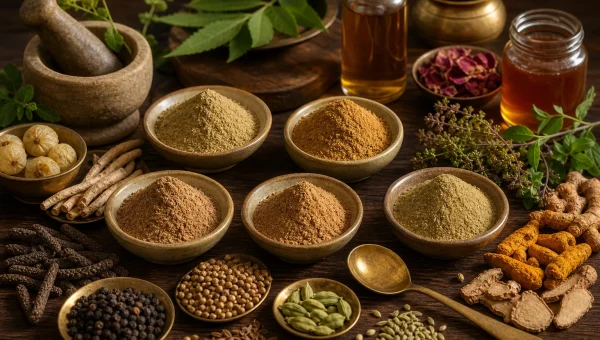
For everyday food use, favor culinary spices over strong medicinal herbs. Classical herbs such as chitrak and haritaki have legitimate Ayurvedic uses, but they are not routine cheese-board condiments and should be used with guidance when taken therapeutically.
| Support | Sanskrit Name | Ayurvedic Fit | Practical Use |
|---|---|---|---|
| Dry ginger | Shunthi (Zingiber officinale) | Digestive, warming, Vata-Kapha supporting | Use as ginger tea or a pinch in chutney |
| Black pepper | Maricha (Piper nigrum) | Pungent, warming, Kapha-reducing | Grind lightly over cheese; avoid excess in Pitta |
| Long pepper | Pippali (Piper longum) | Traditionally used for digestion and Kapha support | Use only in small amounts or practitioner-guided formulas |
| Cumin | Jiraka (Cuminum cyminum) | Digestive, carminative, Vata-Kapha supporting | Toast seeds for crackers, chutney, or cooked paneer |
| Coriander | Dhanyaka (Coriandrum sativum) | Digestive and gentler for Pitta-style boards | Use fresh leaves or crushed seeds with mild cheese |
| Trikatu | Shunthi, Maricha, and Pippali | Classical three-pungent blend for kindling digestion | Use cautiously; avoid self-dosing in pregnancy, ulcers, reflux, or active Pitta |
Safety and Disclaimer
Cheese is not suitable for everyone. People with dairy allergy, casein sensitivity, or lactose intolerance should avoid or strictly limit dairy according to medical advice. Pregnant people, older adults, young children, and immunocompromised individuals should avoid raw-milk cheeses and be especially careful with soft cheeses because of foodborne illness risk. People with elevated LDL cholesterol, cardiovascular disease, or medically restricted saturated-fat intake should consult a healthcare provider before increasing cheese. Ayurvedic herbs and dietary protocols should be personalized by a qualified Ayurvedic practitioner or clinician, especially during pregnancy, while taking medication, or when managing a diagnosed condition.
Further Reading
For deeper study, compare classical Ayurvedic dietetics with modern food-safety and fermented-food guidance rather than relying on one lens alone.
- Charaka Samhita Online: Agni, Ahara Vidhi, and Viruddha Ahara
- Ayurvedic Pharmacopoeia of India: official single-drug standards for herbs and spices
- Stanford Medicine summary of the 2021 fermented-food diet trial
- FDA and CDC guidance on raw milk, soft cheese, and Listeria risk
One actionable tip: Build the board around one cheese, not five. For Vata, choose warm spiced paneer or a mild fresh cheese at room temperature. For Pitta, keep it fresh, mild, low-salt, and cooling. For Kapha, use a tiny shaving of strong cheese as a garnish with ginger, pepper, and bitter greens. Stop before heaviness appears; in Ayurveda, the right portion is the portion your agni can finish cleanly.
This article is educational and does not diagnose, treat, or replace individualized medical care. Consult a qualified Ayurvedic practitioner or healthcare provider before starting herbs, supplements, detoxes, or therapeutic dietary protocols.
References
- Ijcrt (ijcrt.org)
- Easyayurveda (easyayurveda.com)
- Charaka Samhita — Agni
- Charaka Samhita — Ahara vidhi
- Charaka Samhita — Viruddha Ahara
- Ayurvedic Pharmacopoeia of India
- Ayurvedic Pharmacopoeia of India
- Ayurvedic Pharmacopoeia of India
- Ijrap (ijrap.net)
- Med (med.stanford.edu)
- Prakriti phenotypes as a stratifier of gut microbiome: A new frontier in personalized medicine? (2020), PubMed Central
- FDA
- CDC
- Heart (heart.org)
The argument at the food festival between the two practitioners captures something real about how classical Ayurvedic dietary advice is often presented as universal rules rather than individualized guidance. I have a Vata constitution and my practitioner has always said that aged cheese in small amounts in winter is appropriate for me. The blanket ‘dairy is bad’ message misses this nuance.
I want to understand the Kapha argument more precisely. The article says curd increases Kapha and cheese is even stronger. But is this quantified anywhere? Does a 30g serving of aged cheddar have a meaningfully greater Kapha-aggravating effect than an equivalent amount of fresh curd? Or is this a qualitative distinction that cannot be measured?
found this post helpful. will try the suggested approach. (ref 1870-81)
The seasonal framing changes everything for me. I always assumed cheese was off the table because Kapha, full stop. The idea that a Vata-dominant person in peak winter might actually benefit from aged, heavier dairy is the kind of nuance that gets flattened in most simplified dosha guides. I’m curious whether the post covers anything about combining cheese with specific spices to offset the heaviness — that seems like it would be the practical piece.
The Pitta and cheese interaction is something I have noticed in my own body for years without having a framework for it. Aged cheddar or any high-tyramine cheese gives me migraines. My neurologist attributes it to tyramine. My Ayurvedic practitioner calls it Pitta aggravation. Both descriptions seem to be pointing at the same phenomenon from different angles.
found this post helpful. will try the suggested approach. (ref 1870-52)
honey with cheese for Kapha types is this about the anti-Ama properties specifically or just the Kapha-reducing effect of honey in general? 💯
does the Ayurvedic recommendation for fresh versus aged cheese change with season? the article discusses constitution but I am wondering whether the seasonal doshic accumulation matters more than individual Prakriti for cheese choices. in summer a Vata person might still need to be more careful with cheese due to seasonal Pitta accumulation?
I am a cheesemaker and the distinction between fresh and aged cheese from an Ayurvedic standpoint makes sense through the fermentation lens. Fresh cheese has active live cultures, aged cheese has more protein breakdown products and less live microbial activity. These are genuinely different foods with different metabolic effects even from a conventional standpoint.
the argument at the food festival captures something real. Ayurvedic dietary advice is often presented as universal when it’s meant to be individualized
honey with cheese for Kapha types is this about the anti-Ama properties specifically or just the Kapha-reducing effect of honey in general?
Goat cheese vs cow milk for Pitta types is there a classical Ayurvedic distinction between goat and cow milk doshic impact? नमस्ते
I tried the paneer-in-winter experiment after reading this a year ago. I was skeptical as a Kapha type that any dairy would benefit me. But fresh homemade paneer in small amounts with my winter meals did not produce the congestion and heaviness I expected. I think the fresh preparation is genuinely different from the commercial block.
The connection between fermentation duration and the resulting food’s properties is an area where food science and Ayurveda seem to converge. Short fermentation versus long fermentation produces genuinely different compounds, different organic acids, peptides, and secondary metabolites that affect physiology differently. The Ayurvedic practitioners were observing a real phenomenon.
The story about the heated debate at the Pune food festival really shows how Ayurvedic views on cheese can differ even among experts.
The goat cheese recommendation for Pitta types is interesting. I notice I do much better with goat milk products than cow milk products in general. Goat milk is often described as naturally more Pitta-compatible. Is there a classical Ayurvedic distinction between goat and cow milk in terms of doshic impact?
✨ honey with cheese for Kapha types is this about the anti-Ama properties specifically or just the Kapha-reducing effect of honey in general?
This article would be improved by a simple table showing cheese types, their approximate Ayurvedic properties, and which constitutions should use them carefully. The information is here but requires the reader to synthesize it. A reference table would make this much more practically useful.
I wonder if the practitioner who avoided cheese was thinking mainly about its effect on the heaviness promoting dosha when he called it worse than curd.
I am confused by the advice to combine honey with cheese for Kapha types. Honey is generally described as drying and Kapha-reducing. If that is the mechanism, any sweet condiment that reduces the overall Kapha impact should work. Or is the honey in this context specifically about the anti-Ama properties of honey rather than the sweetness?
goat cheese vs cow milk for Pitta types is there a classical Ayurvedic distinction between goat and cow milk doshic impact?
Does the seasonal doshic accumulation matter more than Prakriti for cheese choices? Vata person in summer may still need to be careful due to seasonal Pitta
I’m a cheesemaker. fresh vs aged from an Ayurvedic standpoint makes sense through the fermentation lens. they’re genuinely different foods even by conventional standards
homemade fresh paneer in small amounts in winter did not produce the congestion and heaviness I expected as a Kapha type. fresh preparation is genuinely different
I grew up in a family of cheese lovers and switched to Ayurvedic eating 8 years ago being told to eliminate all dairy. Eventually I found a better-trained practitioner who helped me reintegrate small amounts of specific dairy. The quality of life improvement from that reintegration was significant. Blanket food elimination without doshic reasoning is too blunt an instrument.
A simple reference table showing cheese types, approximate Ayurvedic properties, and which constitutions should use them carefully would make this much more practically useful नमस्ते
❤️ The Pitta-cheese-migraine connection. my neurologist calls it tyramine. my practitioner calls it Pitta aggravation. both pointing at the same phenomenon
A person with a light, cold constitution in winter might actually benefit from a small slice of aged cheddar, as the article suggests.
Honey with cheese for Kapha types is this about the anti-Ama properties specifically or just the Kapha-reducing effect of honey in general? 🌿
A simple reference table showing cheese types, approximate Ayurvedic properties, and which constitutions should use them carefully would make this much more practically useful
💯 Blanket dairy elimination without doshic reasoning is too blunt an instrument. I found a practitioner who helped me reintegrate small specific amounts and quality of life improved
the Pitta-cheese-migraine connection. my neurologist calls it tyramine. my practitioner calls it Pitta aggravation. both pointing at the same phenomenon
a simple reference table showing cheese types, approximate Ayurvedic properties, and which constitutions should use them carefully would make this much more practically useful ❤️
Blanket dairy elimination without doshic reasoning is too blunt an instrument. I found a practitioner who helped me reintegrate small specific amounts and quality of life improved
goat cheese vs cow milk for Pitta types is there a classical Ayurvedic distinction between goat and cow milk doshic impact? 💯 नमस्ते
found this post helpful. will try the suggested approach. (ref 1870-15)
Honey with cheese for Kapha types is this about the anti-Ama properties specifically or just the Kapha-reducing effect of honey in general? ✨
🙌 Goat cheese vs cow milk for Pitta types is there a classical Ayurvedic distinction between goat and cow milk doshic impact?
found this post helpful. will try the suggested approach. (ref 1870-41)
🌿 blanket dairy elimination without doshic reasoning is too blunt an instrument. I found a practitioner who helped me reintegrate small specific amounts and quality of life improved
found this post helpful. will try the suggested approach. (ref 1870-89)
Does the seasonal doshic accumulation matter more than Prakriti for cheese choices? Vata person in summer may still need to be careful due to seasonal Pitta 💯
goat cheese vs cow milk for Pitta types is there a classical Ayurvedic distinction between goat and cow milk doshic impact? 🌿
found this post helpful. will try the suggested approach. (ref 1870-49)
found this post helpful. will try the suggested approach. (ref 1870-22)
found this post helpful. will try the suggested approach. (ref 1870-20)
Noted!
🙏 blanket dairy elimination without doshic reasoning is too blunt an instrument. I found a practitioner who helped me reintegrate small specific amounts and quality of life improved
Blanket dairy elimination without doshic reasoning is too blunt an instrument. I found a practitioner who helped me reintegrate small specific amounts and quality of life improved नमस्ते
The Charaka Samhita’s description of curd as heavy, sour, binding and warming helps explain why some see it as increasing the heaviness promoting dosha.
✨ Goat cheese vs cow milk for Pitta types is there a classical Ayurvedic distinction between goat and cow milk doshic impact?
A simple reference table showing cheese types, approximate Ayurvedic properties, and which constitutions should use them carefully would make this much more practically useful ✨
found this post helpful. will try the suggested approach. (ref 1870-54)
💯 honey with cheese for Kapha types is this about the anti-Ama properties specifically or just the Kapha-reducing effect of honey in general?
found this post helpful. will try the suggested approach. (ref 1870-27)
Blanket dairy elimination without doshic reasoning is too blunt an instrument. I found a practitioner who helped me reintegrate small specific amounts and quality of life improved 🙌
found this post helpful. will try the suggested approach. (ref 1870-31)
does the seasonal doshic accumulation matter more than Prakriti for cheese choices? Vata person in summer may still need to be careful due to seasonal Pitta 🌿
✨ does the seasonal doshic accumulation matter more than Prakriti for cheese choices? Vata person in summer may still need to be careful due to seasonal Pitta ठीक है
The Pune food festival scene is a perfect way to open this. I’ve had almost exactly that argument at my own dining table. My question is about paneer specifically — it’s fermented but mild and used even in light meals. Does it behave more like fresh cheese (less Kapha-aggravating) or does the cooking process push it toward the heavier end of the spectrum?
Same here!
blanket dairy elimination without doshic reasoning is too blunt an instrument. I found a practitioner who helped me reintegrate small specific amounts and quality of life improved 💯
✨ Does the seasonal doshic accumulation matter more than Prakriti for cheese choices? Vata person in summer may still need to be careful due to seasonal Pitta
💯 a simple reference table showing cheese types, approximate Ayurvedic properties, and which constitutions should use them carefully would make this much more practically useful
found this post helpful. will try the suggested approach. (ref 1870-35)
✨ a simple reference table showing cheese types, approximate Ayurvedic properties, and which constitutions should use them carefully would make this much more practically useful
found this post helpful. will try the suggested approach. (ref 1870-42)
found this post helpful. will try the suggested approach. (ref 1870-43)
I came for Cheese Board and this answered the main question. A few more examples would still help.
found this post helpful. will try the suggested approach. (ref 1870-45)
For those with a fiery constitution, choosing fresh mozzarella di bufala and serving it cool seems like a smart way to enjoy dairy without aggravating heat.
Honey with cheese for Kapha types is this about the anti-Ama properties specifically or just the Kapha-reducing effect of honey in general? नमस्ते
found this post helpful. will try the suggested approach. (ref 1870-57)
Blanket dairy elimination without doshic reasoning is too blunt an instrument. I found a practitioner who helped me reintegrate small specific amounts and quality of life improved ❤️
goat cheese vs cow milk for Pitta types is there a classical Ayurvedic distinction between goat and cow milk doshic impact? धन्यवाद
It’s interesting that the guide recommends pairing cheese with the spice blend of dry ginger, black pepper and long pepper before a meal to support digestion for all body types.
a simple reference table showing cheese types, approximate Ayurvedic properties, and which constitutions should use them carefully would make this much more practically useful 💯
a simple reference table showing cheese types, approximate Ayurvedic properties, and which constitutions should use them carefully would make this much more practically useful ठीक है
🙏 A simple reference table showing cheese types, approximate Ayurvedic properties, and which constitutions should use them carefully would make this much more practically useful
Will try this.
Having read about the seasonal cheese board, I’m tempted to try a small shaving of parmesan with black pepper in early spring.
Useful.
🌿 goat cheese vs cow milk for Pitta types is there a classical Ayurvedic distinction between goat and cow milk doshic impact?
Sorry off-topic but has anyone here used Ayurveda for hair loss?
found this post helpful. will try the suggested approach. (ref 1870-59)
The point about never eating cold dairy because it suppresses digestive fire makes me rethink how I store my cheese.
Honey with cheese for Kapha types is this about the anti-Ama properties specifically or just the Kapha-reducing effect of honey in general? धन्यवाद
honey with cheese for Kapha types is this about the anti-Ama properties specifically or just the Kapha-reducing effect of honey in general? 🙌
goat cheese vs cow milk for Pitta types is there a classical Ayurvedic distinction between goat and cow milk doshic impact? 🙏
found this post helpful. will try the suggested approach. (ref 1870-63)
Maybe the real takeaway is that fermented dairy isn’t universally good or bad; it depends on one’s digestive fire and the cheese’s qualities.
I appreciate the practical tip of drinking a warm spice blend of dry ginger, black pepper and long pepper ten minutes before tasting cheese to reduce bloating.
found this post helpful. will try the suggested approach. (ref 1870-66)
found this post helpful. will try the suggested approach. (ref 1870-67)
found this post helpful. will try the suggested approach. (ref 1870-68)
🙌 blanket dairy elimination without doshic reasoning is too blunt an instrument. I found a practitioner who helped me reintegrate small specific amounts and quality of life improved
🌿 a simple reference table showing cheese types, approximate Ayurvedic properties, and which constitutions should use them carefully would make this much more practically useful
found this post helpful. will try the suggested approach. (ref 1870-71)
goat cheese vs cow milk for Pitta types is there a classical Ayurvedic distinction between goat and cow milk doshic impact? 🙌
found this post helpful. will try the suggested approach. (ref 1870-73)
goat cheese vs cow milk for Pitta types is there a classical Ayurvedic distinction between goat and cow milk doshic impact? ❤️
found this post helpful. will try the suggested approach. (ref 1870-75)
found this post helpful. will try the suggested approach. (ref 1870-76)
found this post helpful. will try the suggested approach. (ref 1870-77)
goat cheese vs cow milk for Pitta types is there a classical Ayurvedic distinction between goat and cow milk doshic impact? 🌿 नमस्ते
found this post helpful. will try the suggested approach. (ref 1870-78)
found this post helpful. will try the suggested approach. (ref 1870-79)
found this post helpful. will try the suggested approach. (ref 1870-80)
🙌 a simple reference table showing cheese types, approximate Ayurvedic properties, and which constitutions should use them carefully would make this much more practically useful
🌿 honey with cheese for Kapha types is this about the anti-Ama properties specifically or just the Kapha-reducing effect of honey in general?
Click Here For The Best Real Money Payid Casino
For a list of help topics to help you navigate the new layout, visit the Online Banking Help and Support page on the BOQ website.
You can print receipts, transaction listings and other
documents from Internet Banking using the print feature unique
to your device or browser. Our new colour scheme and fonts are
easier to read, and more accessible. You’ll still have access to the features you’re
familiar with, in a new design that’s simpler and easier to
use.
Banks recommend informing regular senders about PayID changes before deactivating your identifier to avoid payment delays or failed transactions.
Your bank will send a confirmation code to your
new mobile number or email address, which you must enter to activate the
changes. Navigate to the PayID settings section, select your existing identifier, and choose the update option to modify your contact details.
Banks typically allow you to change your
mobile number or email address linked to PayID through
their mobile banking apps. Call the business directly using phone
numbers from their official website rather than contact
details provided in suspicious payment change notifications.
Invoice redirection scams represent one of the most sophisticated PayID fraud
schemes targeting Australian businesses and individuals.
Users must verify this information matches their intended recipient, creating
an additional security checkpoint that prevents costly
payment errors.
When choosing a mobile casino, check that the cashier is fully functional on your device.
To deposit on mobile, open your casino account in your
browser or app, go to the cashier, select PayID, and switch to your banking app to complete the transfer.
Every casino on our list is fully accessible on mobile,
either through a dedicated app or a mobile-optimised browser site.
A 100% match bonus of AU$100 with a 35x wagering requirement means you need to
wager AU$3,500 before any winnings become withdrawable.
This is the number of times you must bet through the
bonus amount before you can withdraw. They can be offered as a standalone promotion or bundled with a welcome or reload bonus.
However, depending on the site policies, some casinos and banks may be able to return the
funds on request if money was sent unintentionally. However,
PayID online casinos may have their own processing timeframes,
such as up to five business days, or not process cash-outs on weekends.
Some PayID transactions can take up to 72 hours to fully complete.
The first payment you make using PayID may be
delayed by the bank while it is verified and held for
up to 24 hours as a security procedure. PayID deposits
and withdrawals are fee-free at every casino on our list.
The exact limits are set by the casino and will always be visible in the cashier before you confirm anything.
Check the cashier before you sign up to confirm which withdrawal methods are available
and what the processing times are.
A no deposit bonus does not require you to fund your account.
Each one is available at the Australian casino sites on our list.
The three PayID pokies below are popular in Australia due to RTP, volatility, and bonus features.
You can find these at the best online casinos with PayID withdrawals for Australians, where you place your
bet and try to cash out before the multiplier crashes.
Most sites carry 1,000 or more pokie titles, ranging from three-reel classics to modern video pokies with bonus buy features, cascading reels, and free spin rounds.
Skrill and Neteller are viable fiat options, though
withdrawal times are slower.
Outages exclude the inability to initiate payments due to unavailability of web or app banking channels, or a
branch. Outages exclude the inability for customers
to initiate transfers due to unavailability of web or app banking channels, or a branch.
Ability of businesses using the payment services of NAB to accept card payments, either at point-of-sale or online/in-app.
Ability to withdraw or deposit cash, and check account
balance, at a NAB-branded ATM. This table provides useful descriptions of the terms we use for our payment services and the metrics used to measure the service availability.
Each quarter, we’ll publish statistics about the availability of our payment
services like online banking and ATMs.
Updating your mobile number doesn’t automatically update your Westpac Protect™ Security Code number.
I’ve updated my mobile number, but I’m not receiving the SMS code Setting a limit, which can be changed when you need, limits daily transfers for added security.
Ensures you’re the only person that can confirm certain transactions and changes
to your account. You can still send real time payments using a BSB and account number between participating financial
institutions.
For comprehensive protection against PayID-related fraud,
read our detailed guide on spotting and avoiding PayID scams.
He answers consumers’ most burning questions, from which scams to be aware of and how to save
money, to whether new services and products are worth using and how the latest
developments in consumer news could affect them. Liam Kennedy is a Journalist with the Editorial and investigations
team. In the case of buying or selling items, this means meeting up with
the other party and conducting the PayID transfer while the
product is being exchanged. They may also claim to have
a minimum transaction limit on their account that is more than the cost of the product being exchanged and ask you to reimburse the difference.
References:
https://payidpokies1.com/payid-pokies-real-money
found this post helpful. will try the suggested approach. (ref 1870-84)
❤️ goat cheese vs cow milk for Pitta types is there a classical Ayurvedic distinction between goat and cow milk doshic impact?
found this post helpful. will try the suggested approach. (ref 1870-86)
not related to this post but does anyone know a good practitioner in Hyderabad?
@Lakshmi ❤️ a simple reference table showing cheese types, approximate Ayurvedic properties, and which constitutions should use them carefully would make this much more practically useful
a simple reference table showing cheese types, approximate Ayurvedic properties, and which constitutions should use them carefully would make this much more practically useful धन्यवाद
Does the seasonal doshic accumulation matter more than Prakriti for cheese choices? Vata person in summer may still need to be careful due to seasonal Pitta ✨
found this post helpful. will try the suggested approach. (ref 1870-93)
🙏 does the seasonal doshic accumulation matter more than Prakriti for cheese choices? Vata person in summer may still need to be careful due to seasonal Pitta
found this post helpful. will try the suggested approach. (ref 1870-96)
found this post helpful. will try the suggested approach. (ref 1870-97)
does the seasonal doshic accumulation matter more than Prakriti for cheese choices? Vata person in summer may still need to be careful due to seasonal Pitta ठीक है
blanket dairy elimination without doshic reasoning is too blunt an instrument. I found a practitioner who helped me reintegrate small specific amounts and quality of life improved धन्यवाद
found this post helpful. will try the suggested approach. (ref 1870-101)