
In Ayurveda, Katuki is not a casual “detox” herb. It is a sharp, bitter, practitioner-level medicine traditionally used when heat, bile, poor appetite, feverishness, jaundice-type presentation, and sluggish liver-digestive function are part of the picture. The liver itself is central to metabolism: it receives a large blood flow, produces bile needed for fat digestion, stores glucose as glycogen, and carries out major detoxification and drug-biotransformation work. That is why classical Ayurvedic liver care never treats Katuki as a lifestyle supplement; it is potent, useful, and best handled with respect.
What Is Katuki? The Bitter Rhizome From the Himalayas
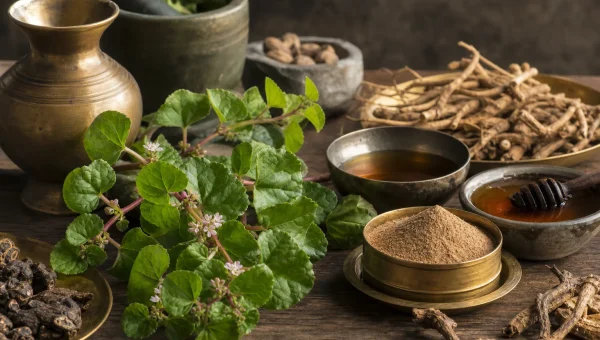
Katuki, also written as Katuka, Kutki, Tikta, and Tiktarohini, is the dried rhizome with root of Picrorhiza kurroa Royle ex Benth. The Ayurvedic Pharmacopoeia of India describes it as a perennial Himalayan herb found from Kashmir to Sikkim, with a greyish-brown rhizome and a distinctly bitter taste. In practical Ayurvedic use, the rhizome-root portion is the medicinal part, and its bitterness is one of the most recognizable features of the drug.
Classical Ayurvedic Profile of Katuki
The Ayurvedic Pharmacopoeia of India gives Katuki the following profile: rasa is katu and tikta (pungent and bitter), guna is laghu (light), virya is ushna (hot), and vipaka is katu (pungent post-digestive effect). Its listed actions include hridya, pittahara, dipani, bhedini, and jvarahara. This corrects a common oversimplification: Katuki is bitter and Pitta-reducing in action, but its classical virya is not cooling; it is ushna.
Traditional Uses: Why Katuki Is Linked With the Liver
Classically, Katuki is listed for kamala (jaundice), jvara (fever), daha (burning sensation), kushtha (skin disorders), vishamajvara (irregular or intermittent fever), arocaka (loss of taste or appetite), and shvasa (breathing difficulty). Its dipani action supports appetite and digestive fire, while its bhedini action explains why it can loosen the bowels when overused or used in sensitive people. In liver-related presentations, this makes Katuki especially relevant when Pitta, bile disturbance, poor appetite, feverishness, and skin or eye discoloration are part of the clinical pattern.
The Pitta-Liver Connection in Ayurveda
Ayurvedic physiology connects the liver and spleen with Ranjaka Pitta, the transforming principle associated with the coloration and formation of Rakta Dhatu. Classical discussions differ in the exact seat emphasized, with some traditions emphasizing yakrit and pliha and others also discussing amashaya. For clinical purposes, the important point is that heat, bile, blood coloration, appetite, and liver-spleen function are traditionally understood as closely linked, which is why bitter and Pitta-regulating herbs such as Katuki are used with care in these patterns.
Bioactive Compounds in Katuki
Modern phytochemical descriptions identify iridoid glycosides as important constituents of Picrorhiza kurroa, especially picroside I, picroside II, kutkoside, and the mixture often called kutkin or picroliv. Other constituents reported from the plant include apocynin and cucurbitacin glycosides. These compounds help explain why Katuki has attracted attention for liver protection, antioxidant activity, bile-flow support, and inflammation-modulating effects in preclinical models.
What Has Been Documented for Liver Support
Human clinical work on Katuki is limited but notable. In a small randomized, double-blind, placebo-controlled trial in acute viral hepatitis, Picrorhiza kurroa root powder was given at 375 mg three times daily for two weeks; bilirubin, SGOT, and SGPT values improved more favorably in the Katuki group than in the placebo group. This is encouraging, but it does not make Katuki a replacement for diagnosis, monitoring, antiviral care when needed, or emergency treatment in severe liver disease.
Acute Hepatitis and Jaundice-Type Presentations
Katuki’s classical listing for kamala aligns with its use in jaundice-type presentations under medical supervision. In such cases, it should not be taken casually at home, because jaundice can arise from viral hepatitis, bile obstruction, hemolysis, drug injury, gallstones, autoimmune disease, or other causes that require medical evaluation.
Fatty Liver and Metabolic Liver Stress
Fatty liver disease is now a major global health issue, with recent estimates placing global NAFLD prevalence near one-third of adults. In experimental NAFLD models, standardized Picrorhiza kurroa extracts have been used to reduce liver fat accumulation and improve liver-related biochemical markers in animals. In Ayurveda, this fits a pattern where Kapha-Meda accumulation and Pitta disturbance both need attention: Katuki may be one part of care, but diet, weight management, movement, blood sugar control, and professional monitoring remain central.
Drug- and Toxin-Related Liver Stress
Preclinical work has examined Picrorhiza kurroa and picroliv in models of paracetamol or acetaminophen-related liver injury, alcohol-related oxidative stress, antitubercular-drug-related liver stress, and chemically induced cholestasis. These findings support Katuki’s traditional reputation as a liver-support herb, but they do not justify self-treating overdose, poisoning, medication-related liver injury, or abnormal liver enzymes without urgent medical care.
Bile Flow and Digestive Fire
Katuki’s Ayurvedic profile as dipani and bhedini matches its traditional use when appetite is low, bile movement is sluggish, and the stool needs downward regulation. Picroliv has also demonstrated choleretic action in animal models, which helps explain why Katuki is often chosen when bile flow and Pitta-liver patterns are clinically relevant. This same sharpness is why excessive or unsuitable use can lead to loose stools, cramping, nausea, or depletion.
Ayurvedic Formulations Containing Katuki
Katuki appears in several classical formulations rather than only as a single herb. This is important because formulations can moderate, direct, or broaden the action of a strong drug. The Ayurvedic Pharmacopoeia of India lists Katuki in preparations such as Arogyavardhini Gutika, Tiktaka Ghrita, Sarvajvarahara Lauha, and Mahatiktaka Ghrita.
| Formulation | Why Katuki Is Relevant | Typical Clinical Context | Important Caution |
|---|---|---|---|
| Arogyavardhini Gutika | Uses Katuki in a broader liver-digestive formulation | Practitioner-directed liver, skin, digestion, and metabolic patterns | Do not self-prescribe, especially because classical versions may be herbo-mineral |
| Tiktaka Ghrita | Places Katuki within a bitter medicated ghee framework | Pitta-related skin and internal heat patterns | Use depends on digestion, strength, and suitability for ghee |
| Mahatiktaka Ghrita | Uses bitter herbs in a stronger ghee preparation | More intense Pitta-skin and heat patterns under supervision | Not suitable for every fatty liver or Kapha-heavy case |
| Sarvajvarahara Lauha | Includes Katuki in a fever-oriented formulation | Practitioner-selected fever and systemic patterns | Requires professional selection and dose control |
How Katuki Is Traditionally Taken
The Ayurvedic Pharmacopoeia of India lists the powder dose of Katuki as 1-3 g. In real practice, dose, timing, vehicle, and duration are chosen according to constitution, bowel tendency, appetite, liver markers, diagnosis, age, strength, pregnancy status, and medications. Because Katuki is bhedini and intensely bitter, many practitioners begin conservatively and adjust only after assessing tolerance.
Diet During Katuki-Based Liver Care
Katuki works best when the diet does not keep provoking the same liver-digestive pattern. During practitioner-guided Katuki therapy, the usual Ayurvedic direction is to simplify food: avoid alcohol, heavy fried foods, excess oil, overeating, and very spicy meals; emphasize warm cooked food, mung dal, simple grains, cooked bitter vegetables, adequate hydration, and regular meal timing. When fatty liver, diabetes, high triglycerides, or obesity are present, the plan should also address weight, blood sugar, sleep, and movement.
Conservation and Ethical Sourcing
Picrorhiza kurroa is a threatened Himalayan medicinal plant, and recent conservation listings treat it as endangered. It is also listed in CITES Appendix II, meaning international trade is controlled to reduce pressure on wild populations. Responsible use means buying from suppliers who can document legal, cultivated, or sustainably managed sourcing, and avoiding casual overuse of a slow-growing alpine herb.
Safety and Contraindications
Katuki is powerful, bitter, and bowel-moving. It should be used carefully in thin, depleted, very dry, weak, elderly, or diarrhea-prone people. Reported adverse effects of picrorhiza products include digestive upset such as vomiting, anorexia, diarrhea, and itching or rash in some people. Avoid use during pregnancy and breastfeeding unless a qualified clinician specifically supervises it, because reliable safety data are insufficient.
- Do not use Katuki to self-treat jaundice, hepatitis, severe abdominal pain, pale stools, dark urine, unexplained itching, or high liver enzymes.
- Seek medical care urgently for suspected paracetamol/acetaminophen overdose or drug-induced liver injury.
- Use caution with diabetes medications, as picrorhiza may affect blood sugar in some people.
- Use caution in autoimmune conditions or while taking immunosuppressant drugs, because immune effects have been described.
- Stop before surgery only under medical guidance, and tell your healthcare provider about all herbs and supplements.
- Use only quality-tested products, especially when taking classical herbo-mineral formulations.
Practical takeaway: Katuki is one of Ayurveda’s strongest liver-digestive bitters, especially suited to selected Pitta-Kapha liver patterns involving poor appetite, heat, bile disturbance, jaundice-type presentation, skin involvement, and metabolic congestion. Used correctly, it can be a valuable part of Ayurvedic liver care. Used casually, in the wrong person, at the wrong dose, or without diagnosis, it can create problems or delay needed treatment.
This article is educational and does not constitute medical advice. Liver conditions require diagnosis and monitoring by qualified healthcare providers. Consult a qualified Ayurvedic practitioner and a licensed healthcare provider before using Katuki, especially if you have liver disease, abnormal liver tests, pregnancy, breastfeeding, diabetes, autoimmune disease, or take prescription medication. Never discontinue prescribed medication without medical guidance.
References
- NCBI
- NCBI
- Ayurvedic Pharmacopoeia of India
- Sciensage (sciensage.info)
- Mdpi (mdpi.com)
- Picrorhiza kurroa (Kutaki) Royle ex Benth as a hepatoprotective agent–experimental & clinical studies (1996), PubMed
- Researchgate (researchgate.net)
- Global incidence and prevalence of nonalcoholic fatty liver disease (2023), PubMed Central
- Semanticscholar (semanticscholar.org)
- Synergistic protective effect of picrorhiza with honey in acetaminophen induced hepatic injury (2016), PubMed
- Choleretic effect of picroliv, the hepatoprotective principle of Picrorhiza kurroa (1991), PubMed
- Researchgate (researchgate.net)
- Expresspharma (expresspharma.in)
- Rxlist (rxlist.com)
- Webmd (webmd.com)

The uncle’s saying about a sick liver making the whole house sick is something my grandmother’s version of in Tamil. She said if your liver is working your blood is working and if your blood is working everything is working. Same concept, different translation.
I’m a hepatologist and Katuki deserves more attention in integrative liver medicine. The picrosides documented in it have hepatoprotective properties that compare favorably with silymarin in some parameters. The clinical evidence is still limited but the mechanisms are credible.
Good reminder on Katuki (Picrorhiza kurroa). The examples make the advice less abstract.
The endangered status concern is one I hadn’t heard about for Katuki. Thank you for flagging the sourcing issue. The demand from herbal supplement markets without sustainable cultivation programs creates exactly the kind of supply chain problem that compromises quality and ethics simultaneously.
My vaidya prescribed Katuki for sluggish liver function after my ultrasound showed mild fatty liver changes. Six months later the repeat scan showed improvement my gastroenterologist called significant. He asked what I had changed.
The dose-dependence of Katuki effects is important to mention clearly. At therapeutic doses it’s potent. At higher doses the same bitter compounds become genuinely irritating to the GI tract. The article mentions this but could make the dosing ceiling clearer.
The jaundice management application of Katuki is something classical Ayurvedic texts are very specific about. My teacher showed us the relevant sutras from Charaka specifically for Kamala (jaundice) treatment. The modern mechanism of action (bile duct stimulation, bilirubin transport) aligns.
The bitterness of Katuki really stands out as the key to its liver action.
The comparison to silymarin from milk thistle is useful context for Western readers. Silymarin is the most studied hepatoprotective botanical in conventional literature. If Katuki has comparable or superior mechanisms, the research gap is a genuine deficit worth noting.
The regeneration of damaged liver cells versus protection against further damage is an important distinction. Most hepatoprotectives primarily do the latter. The regenerative capacity claimed for Katuki, if supported by clinical data, would be meaningful.
I’ve had elevated ALT for two years without a clear cause. My hepatologist monitors but doesn’t treat. Started Katuki three months ago based on this article and practitioner guidance. Two recent blood tests show ALT trending toward normal for the first time.
Has anyone tried the decoction method and noticed a change in digestion?
The article would be stronger with a table comparing hepatoprotective actions of Katuki to other herbs in the same category (Bhumi Amla, Punarnava, Bhumyamalaki) and to silymarin. Practitioners need to know why Katuki specifically rather than the whole category.
What dosage form is most effective? The article mentions powder, decoction, and tablet. Classical texts describe specific preparations for different liver conditions. Is there a meaningful difference in clinical outcome between formulations?
I wonder how the cultivated Himalayan sources compare to wild harvested rhizomes in potency.
The article makes a strong case for using Katuki in fatty liver, but I’d like to see more human trial data.
Taking a small dose before meals with honey helped ease the intense taste for me.
It’s interesting that Katuki also modulates Th1/Th2 balance, suggesting broader immune effects.
The conservation note is important; choosing cultivated Katuki seems like a responsible option.
I’m curious whether the standardized extract at 200 mg twice daily matches the traditional churna dose.
For liver support, combining Katuki with Guduchi might enhance protection without overheating Pitta.
For Katuki (Picrorhiza kurroa), consistency seems like the hard part. The article avoids making it sound like a quick fix.
some of the herb names in english vs sanskrit are confusing, i ended up buying the wrong thing
is it safe to take alongside pharmaceutical liver medications like silymarin? any interactions known?
The scientific citations are helpful. Are there any RCTs specifically for the combination therapy mentioned?
I’m skeptical of the causal claims here. Symptom improvement after starting a protocol can easily be a placebo response or regression to the mean.
My Ayurvedic practitioner recommended the same protocol. Good to see it written out clearly with timings.
The timeline expectations seem unrealistic for a chronic condition. Most patients I’ve spoken to report much longer recovery arcs.
finding the herbs in my city is nearly impossible, the ones available are often low quality
shared this with my mom, she has been struggling with this for years and finally has a proper plan
very strong herb, had loose stools the first week. dosage needs to be very conservative to start
tried it, didnt work for me. maybe need proper vaidya supervision
Is this protocol safe to follow alongside standard allopathic treatment, or does it need to be spaced out?
honestly i’ve been doing this for 2 months and the results are underwhelming. might just be my body type
what brand of ashwagandha do you recommend? KSM-66 or Sensoril or just regular churna?
The geographical sourcing issue is underplayed. Quality Himalayan Katuki is increasingly scarce and substitution with cheaper herbs is widespread.
does anyone know if this works the same way for Kapha types? feels like the article is more Vata focused
Without knowing a patient’s Prakriti and Agni status, applying a generic protocol seems premature. This kind of generalized advice can actually cause harm.
what’s the recommended dose for someone with a Pitta constitution? the article mentions general ranges but i want to confirm
Reading this later and the Katuki (Picrorhiza kurroa) advice still feels relevant. This is the kind of detail readers can test slowly.
I have a question about the duration. Is the 30-day protocol meant to be repeated or is one cycle sufficient for chronic cases?
where to find authentic Katuki? most available is adulterated
I started this protocol last month. Would it be acceptable to continue Triphala alongside it or would that be too much?
Reading this later and the Katuki (Picrorhiza kurroa) advice still feels relevant. The safety notes could be expanded a little.
tried this last month, honestly surprised how well it worked for me
finally something that explains the dosage properly instead of just saying ‘take as needed’
The bitterness of Katuki makes adherence difficult. Is there a formulation that preserves efficacy while reducing the intense taste?
can kids take this? what age is safe
the dose ranges seem very broad, like 1 to 3 grams is quite a big difference. would be more helpful with narrower guidance ठीक है
the digestive angle makes sense to me but i’m curious about the topical applications mentioned briefly at the end ✨
wen to take, before or after food? confused by diff sources
the dose range given is 250 to 500mg. for fatty liver specifically, should we be at the higher or lower end of that range?
Started Katuki as part of a liver support protocol after my SGPT was elevated. Three months later, values normalized. Protocol included diet changes too. धन्यवाद
I appreciate the distinction between the acute and chronic management approaches. That nuance matters a lot.
The article would benefit from more rigorous sourcing. The studies referenced are mostly observational, not randomized controlled.
where do u buy quality herbs in India? the market stuff seems adulterated नमस्ते
The Katuki (Picrorhiza kurroa) explanation is clearer than most short posts. This would be easier to follow with a one-week sample plan.
2 weeks in n no change yet. maybe giving up soon