Fall Prevention Elderly Ayurveda: Strengthening Asthivaha Srotas for Safe Aging
Fall prevention elderly ayurveda is preventive care for preserving steadiness, bone strength, and independence in later life. Falls are the leading cause of injury in adults aged 65 and older; more than one in four older adults reports a fall each year; falls are the most common cause of traumatic brain injury; and falls account for most hip-fracture emergency visits, hospitalizations, and deaths recorded by CDC. A major fall is rarely “just a fall” in old age: injury, fear of falling, reduced activity, weakness, and loss of confidence can reinforce one another unless prevention begins early.
Ayurveda frames this risk through vata-dominant aging and asthivaha srotas, the channel system related to asthi dhatu. Classical teaching places the later stage of life under vata’s influence, while Charaka’s srotas doctrine places the roots of asthivaha srotas in meda and jaghana, the fat-tissue and hip-pelvic region. In practical terms, safe aging needs well-nourished bone tissue, stable hips, adequate muscle, clear sensory input, and a daily routine that reduces excess dryness, irregularity, and instability.
Fall risk usually builds quietly over years. The Ayurvedic goal is not only to respond after a fracture, but to maintain the strength, lubrication, steadiness, and confidence that make a fall less likely and make the body more resilient if one occurs.
The Four Pillars of Fall Prevention
Effective fall prevention works best when skeletal strength, muscle and coordination, sensory clarity, and the home environment are addressed together. Each pillar supports the others: strong bones reduce fracture severity, strong legs improve balance recovery, clear vision and foot sensation improve navigation, and a safer home removes unnecessary triggers for slips and trips.
Pillar 1: Bone density and skeletal integrity. Asthivaha srotas support is a long-term practice, not a last-minute remedy after a fracture. In modern care, this means appropriate bone-density screening, adequate calcium and vitamin D, sufficient protein, safe weight-bearing activity, and medical treatment when osteoporosis is diagnosed. In Ayurvedic terms, it also means nourishing asthi dhatu without aggravating vata through chronic under-eating, excessive dryness, irregular routine, or depletion.
Pillar 2: Muscle strength and neuromuscular coordination. Age-related muscle loss begins gradually in adulthood and accelerates later in life. The muscle groups most important for fall prevention are the hip stabilizers, quadriceps, calf muscles, and ankle dorsiflexors that help the foot clear the ground. Resistance training, chair-based strength practice, and balance training belong at the center of a fall-prevention routine because they directly train the body to recover from small stumbles before they become falls.
Pillar 3: Sensory and neurological function. Vision, vestibular function, proprioception, blood-pressure stability, foot comfort, and medication effects all influence balance. Annual vision checks, review of sedating or blood-pressure-lowering medicines, attention to footwear and foot pain, and assessment of dizziness are practical steps that support the Ayurvedic goal of steadiness and clear sensory guidance.
Pillar 4: Environmental safety. Many falls begin with preventable home hazards: loose rugs, poor lighting, cluttered pathways, trailing cords, slippery bathroom surfaces, uneven steps, and missing hand support. A structured home-safety review should include bright night lighting, clear walking paths, non-slip bath surfaces, secure handrails, grab bars where needed, and removal of loose trip hazards. This pillar works even before herbs, exercise, or nutrition have had time to build strength.
Asthivaha Srotas Support: Food, Herbs, and Daily Rhythm
Ayurvedic support for asthivaha srotas should be built around nourishment, steadiness, digestion, and vata regulation. Herbs and foods may support strength and resilience, but they do not replace bone-density testing, medical osteoporosis care, supervised physiotherapy when indicated, or home-hazard modification.
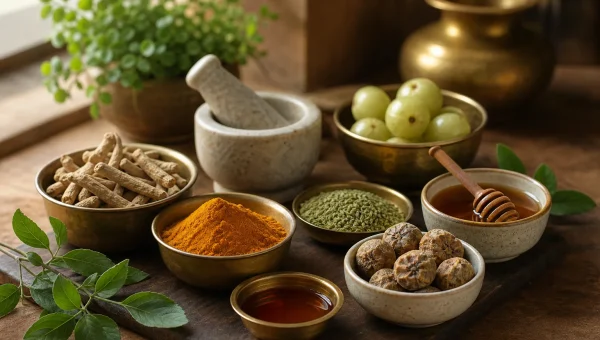
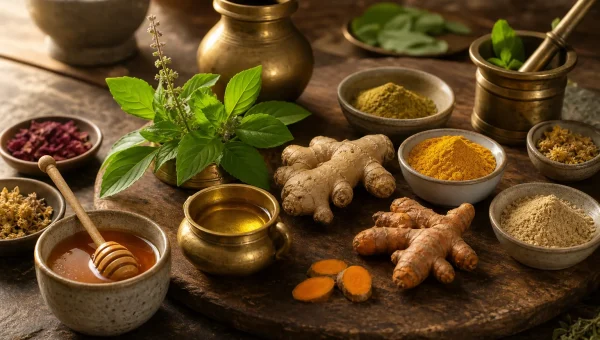
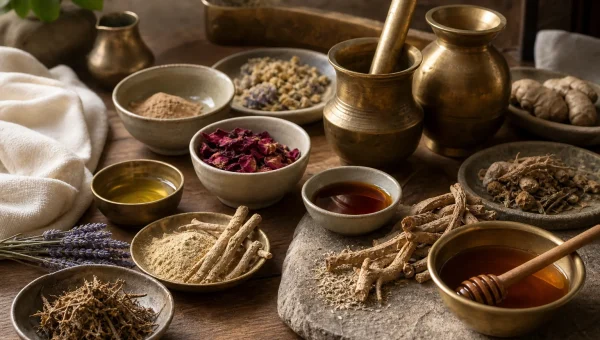
Ashwagandha: The Ayurvedic Pharmacopoeia of India describes ashwagandha root as tikta and kashaya in rasa, laghu in guna, ushna in virya, madhura in vipaka, and balya, rasayana, and vatakaphapaha in karma. This makes it a classical strength-supporting herb for patterns of vata-related depletion, weakness, poor recovery, and loss of tissue resilience. The API adult powder dose is 3–6 g daily; concentrated extracts vary and should be individualized by a qualified practitioner, especially in older adults taking regular medication.
Shatavari: The Ayurvedic Pharmacopoeia of India describes shatavari root as madhura and tikta in rasa, guru and snigdha in guna, shita in virya, madhura in vipaka, and balya, rasayana, vatahara, pittahara, and stanyakara in karma. In elderly and postmenopausal care, its relevance is not as an isolated “bone drug,” but as a nourishing, unctuous, cooling rasayana for depletion, dryness, and pitta-vata strain when digestion can support it. The API adult powder dose is 3–6 g daily; it should be individualized in people with heaviness, sluggish digestion, kapha predominance, or complex medical conditions.
Sesame (til) as bone-supportive food: The Ayurvedic Pharmacopoeia of India describes tila as snigdha, guru, ushna, balya, rasayana, vataghna, and snehana. Nutritionally, whole dried sesame seeds provide about 87.8 mg calcium per tablespoon, along with magnesium, phosphorus, zinc, copper, and iron. One to two tablespoons daily, as tolerated, can be used as sesame chutney, tahini, lightly roasted seed powder, or til laddu in colder seasons. Sesame should be avoided in sesame allergy and adjusted for digestion, total calories, and individual constitution. The sesame winter superfood guide provides preparation ideas.
Calcium, vitamin D, and protein: Sesame can contribute minerals, but it does not replace the total daily calcium, vitamin D, and protein needs of older adults. Calcium is required to build and maintain bones, vitamin D helps the body absorb calcium and supports muscle and nerve function, and adequate protein helps preserve the muscle tissue that prevents falls. Frail or vata-predominant elders generally do better with regular warm meals, enough nourishment, and digestible protein rather than long fasts, very dry foods, or irregular eating.
| Intervention | Practical Amount | Primary Target | Verified Support |
|---|---|---|---|
| Balance and functional training | 15–30 minutes, most days or structured weekly sessions | Falls, steadiness, confidence | Cochrane fall-prevention review |
| Resistance training and sit-to-stand practice | 2+ days weekly, with daily gentle chair practice if safe | Leg strength, hip stability, transfers | Older-adult activity guidance |
| Home hazard reduction | One-time setup plus seasonal review | Slips, trips, bathroom falls | Cochrane home-hazard review |
| Sesame (til) | 1–2 tbsp daily as tolerated; API powder dose 5–10 g/day | Calcium intake, unctuous vata support | API monograph and USDA nutrient data |
| Ashwagandha or shatavari | Individualized; API powder dose 3–6 g/day | Balya and rasayana support | API monographs; practitioner-guided use |
Balance Exercises: The Daily Practice
Exercise programs for community-dwelling older adults reduce falls, with balance and functional training as a central component. The practice below is suitable for many elders, but it should be adapted to the person’s health status, confidence, vision, blood pressure, pain, and prior fall history. Use a sturdy chair, counter, or wall for support, and stop if dizziness, chest pain, unusual shortness of breath, or sharp pain appears.
Single-leg stance near a sturdy chair: Stand close to a chair or counter, lift one foot slightly, and hold for 10 seconds on each side. Gradually work toward 30 seconds as steadiness improves. Inability to stand on one leg for at least 5 seconds is a useful sign that fall risk needs closer attention. Eyes-closed practice should only be attempted when safety is assured or under supervision.
Heel-to-toe walking: Walk 10 slow steps in a straight line, placing the heel of one foot directly in front of the toes of the other foot. Repeat twice, using a wall, counter, or companion nearby. This trains the vestibular-proprioceptive coordination needed to correct small wobbles before they become falls.
Chair sit-to-stand: Sit toward the front of a stable chair, place the feet flat, lean forward slightly, and stand up with as little arm support as is safely possible. Start with 5 repetitions and gradually build to 8–10. This strengthens the quadriceps, hips, and transfer ability needed for rising from chairs, toilets, and beds.
Foot and ankle awareness: Practice slow heel raises and gentle toe lifts while holding a chair. This supports calf strength and ankle control, both of which help the foot clear the ground and recover from small changes in surface.
Padabhyanga for vata grounding: Warm sesame oil massage to the soles, ankles, and lower legs can be used as a daily vata-calming practice, especially in dry, cold, or anxious constitutions. Apply while seated, massage slowly, and wipe the soles thoroughly before standing so the oil does not create a slip hazard. The vata and aging longevity protocol provides the broader context for supporting healthy aging through routine, nourishment, warmth, and steadiness.
When to Seek Formal Assessment
Older adults should seek a physician, physiotherapist, or qualified healthcare provider assessment after any fall, near-fall, dizziness episode, fainting episode, fracture, new vision change, new walking difficulty, or medication change that causes sleepiness or lightheadedness. Formal review is especially important with osteoporosis, Parkinson’s disease, stroke history, neuropathy, severe arthritis, low blood pressure, poor footwear, foot pain, or inability to stand on one leg for 5 seconds. A complete plan may include medication review, blood-pressure assessment, vision care, foot and footwear correction, vitamin D and calcium guidance, bone-density screening when indicated, supervised strength and balance training, and home-safety modification.
Medical Disclaimer: This content is for educational purposes only and does not constitute medical advice. Elderly individuals with osteoporosis, previous fractures, significant balance impairment, dizziness, neurological conditions, frailty, or recurrent falls should have a formal fall-risk assessment by a physician and, where possible, a physiotherapist before beginning a home balance program. Bone-density screening is recommended for women aged 65 and older and for postmenopausal women under 65 who are at increased fracture risk; men and special cases should follow clinician and local guideline advice. Herbal supplements including ashwagandha and shatavari can interact with medications and may be unsuitable in some conditions, including pregnancy, thyroid disease, autoimmune disease, liver disease, upcoming surgery, or complex chronic illness. Consult a qualified Ayurvedic practitioner and healthcare provider before beginning supplementation.
References
- CDC
- CDC
- CDC
- Easyayurveda (easyayurveda.com)
- Easyayurveda (easyayurveda.com)
- Muscle tissue changes with aging (2004), PubMed Central
- Cochrane (cochrane.org)
- Cochrane (cochrane.org)
- Cochrane (cochrane.org)
- Uspreventiveservicestaskforce (uspreventiveservicestaskforce.org)
- NIH Office of Dietary Supplements
- NIH Office of Dietary Supplements
- Ayurvedic Pharmacopoeia of India
- Ayurvedic Pharmacopoeia of India
- Tools (tools.myfooddata.com)
- CDC
- Sralab (sralab.org)
- Hopkinsmedicine (hopkinsmedicine.org)
- Sralab (sralab.org)
- NCCIH