
ADHD Children Ayurvedic Support: The Manovaha Srotas Framework
ADHD children ayurvedic support begins with a proper medical diagnosis and then uses Ayurveda as a supportive framework for diet, routine, sleep, sensory regulation and carefully selected medhya rasayana herbs. ADHD is a neurodevelopmental condition marked by patterns of inattention, impulsivity and hyperactivity; Ayurveda does not present it as a one-to-one classical disease name. A practical Ayurvedic map can still be built through manas, manovaha srotas, vata dosha, rajas and tamas, while keeping the child’s pediatric, psychological and educational care in place.
Manovaha srotas refers to the channels through which mind, body, senses and mental factors interact. In a child with restlessness, irregular sleep, quick shifts of attention, emotional reactivity or difficulty settling into structure, the Ayurvedic emphasis is often on vata regulation and reduction of excessive rajasic stimulation. Vata is associated with movement, sensory and motor activity, speech, cognition and the guiding function of the mind; when its mobile, quick and irregular qualities dominate daily life, the child benefits from warmth, rhythm, nourishment, predictable routines and sensory grounding. This language is not a moral judgment on the child. It is a functional way to organize support.
Brahmi and Shankhpushpi: Medhya Rasayana Support
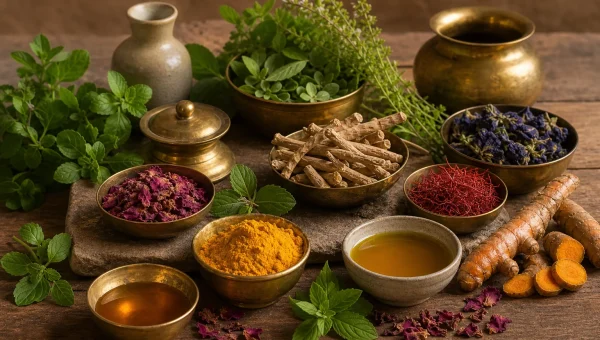
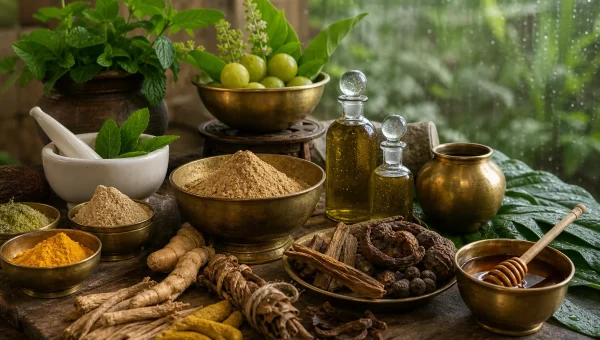
Brahmi and Shankhpushpi are two traditional medhya herbs used in Ayurveda for support of memory, learning, mental steadiness and nervous-system balance. Their use in children should always be individualized by a qualified Ayurvedic practitioner or healthcare professional because the correct form and dose depend on age, weight, digestion, sleep pattern, medications and the child’s overall constitution.
Brahmi (Bacopa monnieri): The Ayurvedic Pharmacopoeia of India identifies Brahmi as the dried whole plant of Bacopa monnieri and lists it as medhya, rasayana, vatahara, kaphahara, matiprada and useful in manasavikara. Its classical profile is madhura, tikta and kashaya in rasa; laghu and sara in guna; shita in virya; and madhura in vipaka. In modern pediatric ADHD literature, one small open-label clinical study used a standardized Bacopa monnieri extract in children aged 6-12 years for six months and reported improvement in several ADHD symptom domains with good tolerability. A later placebo-controlled pediatric trial of a Bacopa extract in boys with inattention and hyperactivity described cognitive, mood and sleep-related signals, while behavioral effects were not uniformly clear. For this reason, Brahmi is best understood as a supportive medhya rasayana rather than a stimulant-like or stand-alone ADHD treatment.
Shankhpushpi (Convolvulus pluricaulis): The Ayurvedic Pharmacopoeia of India identifies Shankhpushpi as the whole plant of Convolvulus pluricaulis and lists it as medhya, rasayana, balya, ayushya, pittahara, kaphahara and mohanashaka, with uses that include manasaroga and apasmara. Its classical profile is katu, tikta and kashaya in rasa; sara in guna; shita in virya; and katu in vipaka. The same pharmacopoeial monograph notes that in parts of India, Clitoria ternatea and Evolvulus alsinoides are also used under the name Shankhpushpi, so botanical identity matters. Syrups, powders, ghrita preparations and compound formulations can differ substantially; practitioner guidance is essential before giving Shankhpushpi to a child.
Dietary Strategy for Vata-Pattern ADHD Support
The dietary strategy for a vata-pattern child is built around warmth, regularity, digestibility and steadiness. Cold, dry, irregular, highly processed and stimulant-like eating patterns tend to increase the same qualities that Ayurveda tries to calm. A supportive plate emphasizes freshly cooked meals, adequate healthy fats, gentle spices, planned snacks and a predictable meal rhythm.
- Breakfast: Choose a warm, nourishing breakfast such as soft khichdi, oatmeal, rice porridge or wheat porridge with a small amount of ghee and mild spices such as cardamom or cinnamon. This is more vata-pacifying than cold cereal, skipped breakfast or a sugar-heavy packaged meal.
- School snack: Use simple, stable snacks such as soaked peeled almonds if there is no nut allergy, dates, fruit with a protein or fat source, roasted makhana, sesame laddoo in moderation, or a small container of warm dal-rice or khichdi when practical.
- Ghee: A small culinary amount of ghee can add the unctuous quality traditionally used to pacify vata. Classical medhya preparations such as Brahmi Ghrita also show the Ayurvedic use of ghee as a carrier for mind-supporting herbs. Avoid excess ghee in children with medical restrictions, obesity, gallbladder concerns or lipid disorders unless supervised.
- Artificial colors and ultra-processed snacks: Synthetic food colors can worsen behavior in some children. Removing brightly colored candies, drinks and packaged snacks is a reasonable supervised trial, especially when symptoms appear to flare after these foods.
- Meal rhythm: Serve three predictable meals and one or two planned snacks rather than allowing constant grazing. Vata responds well to timing, repetition and regular digestive cues.
| Intervention | Age Group | Use | Target |
|---|---|---|---|
| Brahmi | School-age children and adolescents | Practitioner-selected extract, powder, ghrita or compound formula | Medhya support, learning, memory, sleep steadiness |
| Shankhpushpi | Children and adolescents | Practitioner-selected syrup, powder, ghrita or formulation | Calm attention, emotional steadiness, medhya rasayana support |
| Warm regular meals | All ages | Three meals at predictable times with planned snacks | Vata regulation, digestion, steadier daily rhythm |
| Small culinary ghee | When medically suitable | Added to warm meals in modest amounts | Unctuousness, vata pacification, herb-carrier tradition |
| Foot oil massage | All ages, if tolerated | 3-5 minutes before bed with a child-safe oil | Sensory calming, sleep transition, grounding |
Sleep Protocol: The Upstream Intervention
Sleep is a major upstream target in children with attention and hyperactivity concerns. Difficulty falling asleep, night waking, delayed sleep timing and restless sleep are common in children with ADHD, and a tired child often has less capacity for impulse control, frustration tolerance and classroom focus. In Ayurvedic terms, late nights, screen stimulation, irregular bedtimes and overstimulating evening activity increase vata and rajas when the system should be settling toward rest.
A practical sleep protocol begins with a fixed wake time and bedtime, ideally kept within the same 30-minute window daily. The last hour before bed should be predictable: screens off, lights lower, homework and arguments finished earlier, a warm bath or warm foot wash, gentle foot massage with sesame or coconut oil according to constitution and climate, and quiet reading or a guided relaxation. Warm milk may be used if the child digests dairy well; herbal sedatives, nutmeg preparations or ashwagandha should not be added routinely without practitioner guidance. Snoring, mouth breathing, restless legs, frequent nightmares, bedwetting, daytime sleepiness or severe insomnia should be assessed by a pediatric clinician.
Sensory and Movement Integration
Vata excess in children requires grounding through the body, not only instructions directed at the mind. Structured movement gives proprioceptive input and helps the child discharge restlessness in a regulated way. Swimming, martial arts, yoga postures, cycling, walking, dance with repetition and non-competitive strength play can be more stabilizing than chaotic or highly unpredictable activity. The best choice is the one the child can repeat consistently without becoming overstimulated.
Yoga-based practice should be simple, rhythmic and age-appropriate: a few stable postures, slow breathing, brief guided body awareness and a calm closing routine. Yoga nidra or guided relaxation can be introduced in short child-friendly sessions rather than forced as a long stillness practice. This fits the Ayurvedic principle of sattvavajaya, which trains the mind away from harmful sensory overload and toward steadier attention, confidence, patience and self-regulation. For children, sattvavajaya also includes parent coaching, predictable limits, fewer abrupt transitions, compassionate language and an environment that reduces unnecessary stimulation.
When to Use Herbs and When to Pause
Herbs are not the first step when a child has undiagnosed attention, learning or behavioral concerns. The first step is assessment by qualified clinicians, with attention to hearing, vision, sleep, anxiety, trauma, learning differences, nutrition and school context. If herbs are used, they should come from reputable sources with proper botanical identification and quality testing. This is especially important for Shankhpushpi because more than one plant may be sold under the same common name.
Pause herbal use and seek professional guidance if the child develops rash, digestive upset, unusual sleepiness, agitation, headache, worsening behavior, allergy symptoms or any new concerning change. Use extra caution when the child takes stimulant medication, non-stimulant ADHD medication, antidepressants, anti-seizure medication, sedatives or other supplements. Ayurvedic support works best as part of an integrated plan that includes pediatric care, behavioral strategies, school accommodations, sleep correction, diet, movement and family support.
Medical disclaimer: ADHD is a neurodevelopmental disorder that requires formal diagnosis and ongoing management by qualified clinicians, including pediatricians, psychiatrists, psychologists and educational specialists. The Ayurvedic approaches described here are supportive educational measures and should not replace professional medical evaluation, prescribed treatment, behavioral therapy or school-based support. Always consult your child’s healthcare team and a qualified Ayurvedic practitioner before starting herbs, supplements, medicated ghee or therapeutic protocols.
References
- CDC
- CDC
- CDC
- Charaka Samhita — Manovaha srotas
- Charaka Samhita — Vata dosha
- Charaka Samhita — Talk%3ADosha
- Charaka Samhita — Sattvavajaya
- Ayurvedic Pharmacopoeia of India
- An open-label study to elucidate the effects of standardized Bacopa monnieri extract in the management of symptoms of attention-deficit hyperactivity disorder in children (2014), PubMed
- Effects of Bacopa monnieri (CDRI 08®) in a population of males exhibiting inattention and hyperactivity aged 6 to 14 years: A randomized, double-blind, placebo-controlled trial (2022), PubMed
- NCBI
- Phytochemical Profile, Pharmacological Attributes and Medicinal Properties of Convolvulus prostratus – A Cognitive Enhancer Herb for the Management of Neurodegenerative Etiologies (2020), PubMed Central
- Banyanbotanicals (banyanbotanicals.com)
- Artificial food colors and attention-deficit/hyperactivity symptoms: conclusions to dye for (2012), PubMed Central
- Meta-analysis of attention-deficit/hyperactivity disorder or attention-deficit/hyperactivity disorder symptoms, restriction diet, and synthetic food color additives (2012), PubMed Central
- Sleep disorders in patients with ADHD: impact and management challenges (2018), PubMed Central
- Bmj (bmj.com)
- A Systematic Review of Yoga and Meditation for Attention-Deficit/Hyperactivity Disorder in Children (2023), PubMed Central
- Frontiersin (frontiersin.org)
- Frontiersin (frontiersin.org)

aDHD is a neurodevelopmental condition. Herbs cannot replace appropriate medical management and behavioral therapy.
my son has ADHD and we tried herbal support for a full year. limited effect. medication remains essential for our family.