Male Fertility Diet Ayurveda: Building Shukra from the Kitchen Up
Male fertility diet ayurveda works best as a steady 90-day practice rather than a short preparation before a semen test. Human spermatogenesis is commonly described as taking about 74 days, so semen analysis reflects habits carried across the preceding months. Ayurveda calls the reproductive tissue shukra dhatu, and classical dhatu theory places shukra at the end of the nourishment sequence: rasa, rakta, mamsa, meda, asthi, majja and shukra. This makes the fertility diet a whole-tissue-building diet, not only a list of “sperm foods.”
The first priority is agni, the digestive and metabolic capacity that allows food to become usable nourishment. If appetite is weak, meals are irregular, or food leaves heaviness, bloating or coating on the tongue, the plan should begin with warm, digestible meals, regular timing and suitable fats before heavy vajikarana foods are increased. A good shukra-building diet is nourishing, steady and compatible with the man’s digestion.
Start with Agni, Then Feed the Dhatu Chain
Because shukra is understood as the most refined dhatu, Ayurveda does not treat fertility as isolated from digestion, sleep, strength and tissue quality. A man trying to improve fertility should first establish regular meals, avoid skipping breakfast or lunch when depleted, and eat freshly prepared warm food as often as possible. This supports rasa and rakta first, then the deeper tissues that culminate in shukra.
A practical plate can include cooked grains, well-cooked legumes, seasonal vegetables, fruit, nuts, seeds, appropriate dairy if tolerated, and enough protein for the man’s body size and activity. Heavy vajikarana foods such as milk, ghee, urad dal and sesame work best when the digestive fire is steady; when digestion is weak, begin with lighter meals such as rice, mung dal, vegetable soups, cumin, ginger and small amounts of ghee.
Foundation Foods for Shukra Dhatu
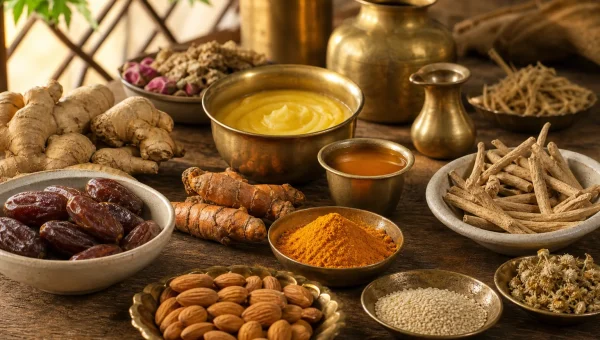
The classical vajikarana approach favors foods with nourishing, unctuous and strength-building qualities. In kitchen practice, this means warm milk preparations where tolerated, ghee in moderate amounts, sesame, urad dal, dates, almonds and a stable meal rhythm. The goal is not to overload the body with rich foods, but to build shukra through foods that the man can digest cleanly every day.
Warm milk: Milk is widely used as a nourishing vehicle in vajikarana preparations. Use a small cup of warm cow’s milk if it is digested well, especially with practitioner-guided herbs such as ashwagandha or kapikacchu. Men who feel congestion, heaviness, acne flare-ups, loose stools or lactose intolerance should not force milk; the fertility plan must match digestion.
Sesame seeds: Tila is described in the Ayurvedic Pharmacopoeia of India as heavy, unctuous, subtle, warm in potency and vajikara in action. A practical amount is about 5-10 g of sesame seed powder or toasted sesame daily, used in chutney, porridge or warm rice. Because sesame is heavy and heating, reduce it during strong pitta symptoms, loose stools or active acidity.
Dates with ghee: Two or three dates warmed with a teaspoon of ghee make a simple sweet-fat nourishment when appetite is good. This is useful as a morning or mid-day support for men who are dry, depleted or underweight. Men with diabetes, insulin resistance or strong sugar cravings should use dates only with professional dietary guidance.
White urad dal: Masha, or black gram/urad, is traditionally considered heavy, strengthening, nourishing and shukrala. Use white urad dal once or twice weekly, cooked very soft with ghee, cumin and digestive spices. Avoid increasing urad when there is gas, heaviness, coating on the tongue or sluggish digestion.
Soaked almonds: Five to ten soaked, peeled almonds can be used in the morning or blended into warm milk if digestion allows. Almonds contribute nourishing fats and micronutrients while fitting the Ayurvedic pattern of steady, tissue-building food rather than sharp stimulants.
| Food | Practical Amount | Ayurvedic Role | Best Preparation |
|---|---|---|---|
| Warm milk | 1 small cup, if tolerated | Nourishing vajikarana vehicle | Warm, plain, or with practitioner-guided herbs |
| Sesame seeds | 5-10 g | Snigdha, guru, vajikara | Toasted, powdered, chutney or porridge |
| Dates with ghee | 2-3 dates with 1 tsp ghee | Sweet, unctuous nourishment | Warmed and eaten in the morning or mid-day |
| White urad dal | 1 serving, 1-2 times weekly | Balya, brimhana, shukrala | Cooked soft with ghee, cumin and ginger |
| Soaked almonds | 5-10 pieces | Nourishing fat and strength support | Soaked overnight, peeled and eaten in the morning |
A Practical 90-Day Kitchen Plan
The simplest way to apply a male fertility diet in Ayurveda is to keep the same core pattern for three months. Eat at regular times, make lunch the strongest meal, use warm cooked food more often than cold dry snacks, and include one shukra-supportive item daily rather than adding everything at once. Consistency matters more than intensity.
A sample day may begin with soaked almonds and a warm breakfast, continue with rice or wheat, dal, vegetables and ghee at lunch, and end with a lighter cooked dinner. Sesame chutney can be used on some days, urad dal once or twice weekly, and warm milk only when well tolerated. Men with high kapha, obesity, insulin resistance, acne, acidity or sluggish digestion should use the heavier foods more cautiously and with practitioner guidance.
Herb Stack: What to Take and When
Herbs are secondary to food, sleep and digestion. The core practitioner-supervised vajikarana stack often centers on ashwagandha, kapikacchu and purified shilajit, but they are not mandatory for every man. Select herbs according to prakriti, agni, semen analysis pattern, medication use and overall health rather than copying a fixed stack.
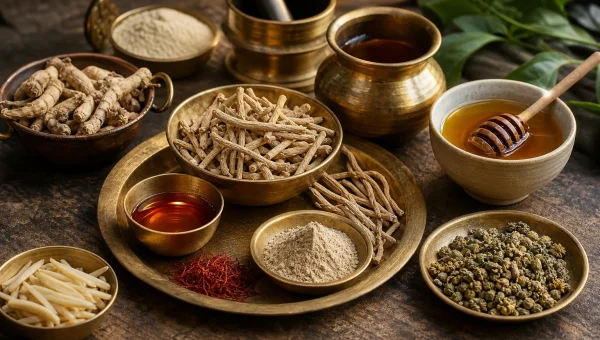
Ashwagandha: The Ayurvedic Pharmacopoeia of India describes ashwagandha root as rasayana, balya and vajikarana, with tikta-kashaya rasa, laghu guna, ushna virya and madhura vipaka. Traditional root powder dosing is 3-6 g daily, while standardized extracts follow product-specific and practitioner-specific dosing. It is often used in the evening when stress, poor sleep and vata depletion are prominent, but men with heat, liver concerns, thyroid medication, sedative medication or complex medical conditions should not self-prescribe it.
Kapikacchu: Kapikacchu, or Mucuna pruriens, is used in male fertility practice as a vajikarana herb, especially when depletion, low vitality and stress are prominent. Human male-infertility protocols have used seed powder for a three-month period, but the seed naturally contains L-DOPA, so it belongs in a supervised plan. Avoid unsupervised use with Parkinson’s medication, dopamine-active drugs, psychiatric medication or significant cardiovascular concerns.
Purified shilajit: Shilajit should be used only in purified, tested form. Clinical schedules have used purified shilajit for 90 days, but raw or unverified products should be avoided because quality and contamination are major safety concerns. It is best taken with warm water or milk according to the practitioner’s direction and should not be combined casually with multiple stimulant or hormone-targeting supplements.
For the full shukra dhatu-enhancement protocol including additional herb combinations, see our article on shukra dhatu enhancement.
What Weakens Shukra: The Avoidance List
The diet is only half of the strategy. Ayurveda protects shukra by reducing habits that deplete, overheat, dry out or destabilize the body. Heavy alcohol, tobacco, recreational drugs, repeated late nights, skipped meals, chronic stress, overtraining and excessive heat around the testes all work against the purpose of a fertility diet.
From the kitchen side, reduce deep-fried foods, ultra-processed snacks, trans-fat-rich foods, sugar-sweetened drinks, excessive cheese and heavy desserts. Favor cooked meals, fruit, vegetables, nuts, seeds, whole grains, legumes, adequate protein and suitable fats. Men using intermittent fasting should avoid aggressive fasting when there is low weight, poor sleep, low libido, anxiety, high vata or weak digestion; for timing guidance, see the intermittent fasting dosha protocol.
Heat discipline is especially important during the 90-day window. Avoid hot tubs, frequent sauna exposure, very hot baths and placing a laptop directly on the lap. Choose breathable clothing, take movement breaks from long sitting, and keep exercise strong but recoverable. The goal is to build vitality, not exhaust it.
Safety and When to Get Tested
Male fertility concerns require proper evaluation, not only diet and herbs. A semen analysis, medical history, medication review and assessment by a urologist or reproductive specialist are appropriate when conception is delayed, sperm count is low, there is erectile or ejaculation difficulty, there has been genital surgery or infection, or there are hormonal symptoms such as low libido, fatigue or reduced morning erections.
Medical disclaimer: This article provides general educational information on Ayurvedic dietary approaches to male fertility. It does not diagnose, treat or replace medical care. Consult a qualified urologist, reproductive specialist, physician and Ayurvedic practitioner before starting herbs, supplements or fertility protocols, especially if you take medication, have a medical condition, have abnormal semen analysis, or are trying to conceive with a partner under active fertility care.
References
- Spermatogenesis: The Commitment to Meiosis (2016), PubMed Central
- Results of lifestyle modification promotion and reproductive/general health check for male partners of couples seeking conception (2023), PubMed Central
- Concepts of Dhatu Siddhanta (theory of tissues formation and differentiation) and Rasayana; probable predecessor of stem cell therapy (2014), PubMed Central
- Charaka Samhita — Vajikarana
- Dairy intake and semen quality among men attending a fertility clinic (2014), PubMed Central
- Ayurvedic Pharmacopoeia of India
- Sesame (Sesamum indicum L.): A Comprehensive Review of Nutritional Value, Phytochemical Composition, Health Benefits, Development of Food, and Industrial Applications (2022), PubMed Central
- Nutritional and functional properties of dates: a review (2008), PubMed
- Davpharmacy (davpharmacy.com)
- Fdc (fdc.nal.usda.gov)
- Ayurvedic Pharmacopoeia of India
- Clinical Evaluation of the Spermatogenic Activity of the Root Extract of Ashwagandha (Withania somnifera) in Oligospermic Males: A Pilot Study (2013), PubMed Central
- Mucuna pruriens Reduces Stress and Improves the Quality of Semen in Infertile Men (2010), PubMed Central
- Mucuna pruriens improves male fertility by its action on the hypothalamus-pituitary-gonadal axis (2009), PubMed
- Clinical evaluation of spermatogenic activity of processed Shilajit in oligospermia (2010), PubMed
- Clinical evaluation of purified Shilajit on testosterone levels in healthy volunteers (2016), PubMed
- NCCIH
- NIH Office of Dietary Supplements
- Diet and Nutritional Factors in Male (In)fertility-Underestimated Factors (2020), PubMed Central
- Mayoclinic (mayoclinic.org)
- Auanet (auanet.org)