
Tinnitus Through the Karnanada Framework
Tinnitus is the perception of sound without a matching external sound source. In Ayurveda, similar presentations are discussed under karnanada, literally “sound in the ear,” and are also related to karnakshweda in some clinical explanations. Classical Shalakya Tantra places ear disorders within the diseases of the head and sense organs, and the Ayurvedic starting point is not simply “ear ringing” but the whole pattern: the sound quality, whether it is one-sided or both-sided, whether it is pulsatile, whether hearing is reduced, and whether there are signs such as pain, discharge, fullness, vertigo, anxiety, poor sleep, dryness, burning, mucus, or heaviness.
The Ayurvedic approach does not promise a universal cure for tinnitus. It offers a structured support framework for suitable cases after proper medical assessment: local ear therapies where safe, nasal therapies, vata-pacifying routines, nervous-system support, and attention to sleep, noise exposure, digestion, and head-neck tension. This is especially relevant when the presentation resembles a vata-predominant pattern: variable ringing or buzzing, dryness, nervous agitation, disturbed sleep, constipation, depletion, or symptoms aggravated by stress, travel, cold, fasting, or irregular routine.
Karnanada Classification by Dosha
Classical sources emphasize vata in the auditory channels, while pitta, kapha, rakta, and mixed patterns modify the presentation. The following table is best read as a clinical patterning guide, not as a substitute for otoscopy, audiology, or diagnosis by an ENT physician and qualified Ayurvedic practitioner.
| Pattern | Sound and Ear Clues | Associated Features | Ayurvedic Direction |
|---|---|---|---|
| Vata-predominant karnanada | Ringing, buzzing, variable or intermittent sound; often worse in quiet or at night | Dryness, anxiety, insomnia, constipation, depletion, cold sensitivity, irregular routine | Warm, unctuous vata-shamana; karna purana and nasya only after ear assessment |
| Pitta or rakta-associated pattern | Sharp, hot, irritating, hissing or flute-like quality with burning or inflammation | Heat sensation, redness, burning, irritability, inflammatory triggers, pain or discharge | Avoid heating self-treatment; use cooling, pitta-soothing measures under supervision; medical evaluation if pain or discharge is present |
| Kapha-associated pattern | Dull, heavy, low, muffled, thunder-like or blocked-ear sensation | Mucus, sinus congestion, heaviness, itching, wax tendency, aural fullness, sluggishness | Kapha-clearing nasya, gargle, mild fomentation, and management of wax, sinus, or middle-ear contributors |
| Mixed or red-flag presentation | Pulsatile sound, sudden onset, one-sided tinnitus, rapidly changing sound, tinnitus with hearing loss or vertigo | Neurological symptoms, head injury, severe distress, persistent ear pain, ear discharge, sudden hearing change | ENT-led evaluation first; Ayurvedic care only as coordinated supportive care after diagnosis |
Karna Purana: Local Ear Oil Therapy
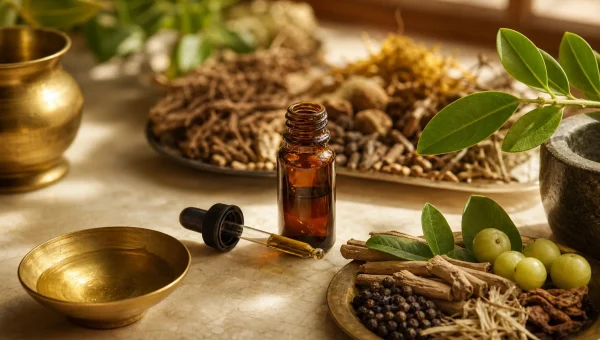
Karna purana means filling or bathing the ear with suitable warm medicated oil or other classical liquids. In the karnanada section of Ashtanga Hridaya Uttara Sthana, treatment for ear sound and deafness is directed toward vata-type ear treatment, and specific oils are described for nasal drops, anointing, and ear filling. In practical care, karna purana is used most cautiously for dry, vata-type ear discomfort where the eardrum is intact and there is no active infection, discharge, injury, or significant wax blockage.
Conservative home-care version, only after an ear examination confirms it is safe:
- Use only a clean, high-quality sesame-based or practitioner-prescribed ear oil. Do not put essential oils directly into the ear canal.
- Warm the oil indirectly in a water bath until it is comfortably lukewarm. Test one drop on the inner wrist; it should never feel hot.
- Lie on the side with the affected ear facing upward. Gently place a few drops into the ear canal without force or pressure.
- Remain still for 5-10 minutes, then turn the head and allow excess oil to drain naturally onto a towel or tissue.
- Wipe only the outer ear. Do not insert cotton buds, fingers, or instruments into the canal.
- Stop immediately if there is pain, dizziness, burning, worsening blockage, discharge, or hearing change.
Do not use karna purana when there is a perforated or damaged eardrum, active ear infection, pus or fluid discharge, ear swelling, severe unexplained ear pain, recent ear surgery, bleeding, foreign body, or significant wax blockage. These situations require medical evaluation before any oil is used in the ear.
Nasya and the Ear-Nose-Throat Connection
Nasya is the Ayurvedic administration of medicine through the nasal route. It is relevant in karnanada because Ayurveda treats the ear, nose, throat, head, and sense organs as functionally connected. Ashtanga Hridaya describes nasal drops, anointing, and ear filling in the karnanada-badhirya context, and Anu Taila is a classical nasal oil used in nasya practice. The specific connection between nasal therapy and head-sense-organ care is discussed further at nasya therapy Ayurvedic nasal treatment.
For a vata-predominant presentation, the practitioner may select mild, lubricating nasal oil in small doses after face and neck preparation. For kapha-associated fullness, sinus heaviness, or mucus tendency, a stronger kapha-clearing nasal approach may be selected, but only after assessing the patient’s strength, season, digestion, congestion, and ear status. Nasya should not be forced during acute cold, fever, active infection, immediately after food, or when the patient cannot tolerate nasal oil.
Shirodhara for Chronic Stress-Linked Tinnitus
Shirodhara is the continuous pouring of warm medicated liquid, usually oil, over the forehead and head. It is traditionally placed under murdhni taila, the group of oil procedures applied to the head, and is used as a supportive therapy for vata-related disorders affecting the head, sense organs, sleep, and mind. For tinnitus, its role is supportive rather than curative: it is most appropriate when the sound is amplified by stress, poor sleep, nervous system agitation, headache tendency, or chronic vata aggravation.
Shirodhara should be performed by a trained Ayurvedic practitioner. A typical session may last about 45-60 minutes, and a course may run for 7-14 days or according to the physician’s plan. The oil or liquid is chosen according to the dosha pattern; ksheerabala-type, brahmi-type, sesame-based, or other medicated oils may be selected depending on dryness, heat, kapha heaviness, sleep disturbance, and overall strength. Shirodhara is not a stand-alone treatment for tinnitus and should be combined with proper ear evaluation, lifestyle correction, and individualized internal support where appropriate.
Internal Ayurvedic Support for Karnanada
Internal herbs and formulations are chosen according to constitution, digestion, sleep, strength, age, medications, and the specific tinnitus pattern. They should not be used as a fixed “tinnitus formula” for everyone. A vata-depleted patient with insomnia and weakness needs a different approach from a kapha-heavy patient with sinus congestion, or a pitta-rakta patient with heat, inflammation, and discharge.
In vata-depletion patterns, practitioners may consider nourishing rasayana and balya support such as ashwagandha when suitable. Ashwagandha is classically listed as rasayana, balya, vata-kapha-pacifying, and useful in vata disorders and weakness, but it is not appropriate for every patient and may be avoided or modified in high-pitta states, pregnancy, certain autoimmune or thyroid contexts, or when interacting medicines are present. For mental restlessness, sleep disturbance, and cognitive strain, brahmi may be selected as a medhya rasayana; it is used traditionally for memory, sleep, anxiety-type presentations, and mental support, not as a direct mechanical ear cure.
For kapha-associated cases, the internal focus may be on digestion, mucus regulation, and clearing heaviness rather than adding heavy tonics. For pitta or rakta-associated cases, heating oils and pungent self-remedies are usually avoided, and the care plan may emphasize pitta-soothing diet, cooling medicines, and careful assessment of infection or inflammation. In all patterns, the practitioner first assesses agni, bowel regularity, sleep, stress load, and head-neck tension, because untreated systemic vata aggravation can keep the auditory symptom more intrusive.
Lifestyle Modifications That Support Recovery
Daily routine is central in vata-predominant karnanada. Regular meals, warm cooked food, adequate hydration, early sleep, reduced late-night screen exposure, gentle oil massage, and protection from cold wind all support a calmer vata environment. Avoid excessive fasting, irregular travel, overstimulation, and very dry, cold, or light diets when tinnitus worsens with depletion or insomnia.
- Noise care: Avoid loud sound exposure and keep headphone volume low. Use hearing protection in concerts, workshops, traffic-heavy work, or industrial settings.
- Sleep support: A quiet room can make tinnitus more noticeable, so soft neutral background sound may help some people sleep while deeper vata correction is underway.
- Trigger diary: Track whether caffeine, alcohol, very spicy food, fasting, stress, poor sleep, or long screen hours worsen the sound.
- Jaw and neck care: Temporomandibular joint pain, cervical tension, and head-neck strain can accompany tinnitus in some patients. For neck-tension dominant cases, see cervicogenic headaches greeva marma.
- Digestive regularity: Constipation, gas, and irregular appetite are common vata clues; correcting them often improves the overall treatment response.
When to Seek Medical Care Before Ayurvedic Treatment
New, sudden, unilateral, pulsatile, or rapidly worsening tinnitus requires medical assessment. Seek urgent care if tinnitus follows head or neck injury, appears with sudden hearing loss, severe vertigo, neurological symptoms, persistent ear pain, ear discharge, suicidal thoughts, or severe distress. Pulsatile tinnitus should be evaluated for vascular causes. Do not begin ear oil therapy unless an ENT clinician or qualified healthcare provider has confirmed that the eardrum is intact and there is no active infection, discharge, obstructing wax, or other contraindication. This article is educational and does not replace diagnosis or care from a qualified Ayurvedic practitioner, ENT specialist, or healthcare provider.
References
- Ayushdhara (ayushdhara.in)
- Easyayurveda (easyayurveda.com)
- Jaims (jaims.in)
- Tinnitus: systematic approach to primary care assessment and management (2022), PubMed Central
- Www1 (www1.racgp.org.au)
- Artoflivingretreatcenter (artoflivingretreatcenter.org)
- Ask-ayurveda (ask-ayurveda.com)
- Easyayurveda (easyayurveda.com)
- Easyayurveda (easyayurveda.com)
- Ayurvedic Pharmacopoeia of India
- NCBI

tinnitus from acoustic neuroma or Menieres needs specialist evaluation first. The article should emphasize this. ❤️