
When I Noticed Time Was Writing Its Story Around My Eyes
I was thirty-six when I first noticed them: tiny lines fanning out from the corners of my eyes, visible even when I was not smiling. I had spent my twenties blissfully ignoring sunscreen, staying up late, and assuming my skin would always cooperate. Suddenly, the consequences were staring back at me in the bathroom mirror. Along with the crow’s feet came hollowness under my eyes that made me look perpetually tired, and a deepening darkness in the inner corners that no concealer could fully hide.
I could have reached for a retinol cream or booked a consultation for fillers. Instead, I reached for the classical logic of Ayurveda and the practical wisdom I had seen in my grandmother’s daily routines. What I found was not a single miracle remedy, but a complete eye-care approach built around snehana (unctuous nourishment), rasayana (rejuvenative support), cooling Pitta care, protection from strain and sun, and respect for the delicacy of the eye area.
Ayurvedic physiology places Alochaka Pitta in the eyes and links it with visual perception. The eyelids and periorbital skin are anatomically delicate, with very thin skin and constant movement from blinking, expression, screen use, and squinting. From an Ayurvedic perspective, this is exactly the kind of area where increased dryness, depletion, heat, and poor daily rhythm can show early: crow’s feet as Vata-type dryness and creasing, hollowing as local tissue depletion, dark circles as a mixture of Pitta-type discoloration and Vata-type thinness or shadowing, and puffiness as Kapha-type stagnation or fluid accumulation.
Understanding What Causes Each Problem
Ayurveda does not treat the under-eye area as a separate cosmetic surface. It reads the area as a meeting place of skin, blood quality, sleep, digestion, hydration, eye strain, stress, and age-related tissue change. The same person may have more than one pattern at once, which is why a useful routine must be more specific than simply applying one oil to every concern.
| Eye Concern | Ayurvedic Understanding | Main Dosha Pattern | Common Contributing Factors |
|---|---|---|---|
| Crow’s feet and fine lines | Dryness, loss of softness, and repeated movement creating Vata-type creasing of the skin | Vata, often aggravated by sun, stress, insufficient sleep, and dryness | UV exposure, squinting, repeated facial expression, collagen and elastin changes, thin eyelid skin |
| Hollow under-eyes | A depletion pattern resembling local loss of fullness, where the area needs gentle nourishing rather than harsh stimulation | Vata with tissue depletion | Genetics, tear-trough anatomy, age-related volume change, poor sleep, weight loss, chronic stress |
| Dark circles | A mixed pattern of Pitta-type discoloration, Vata-type thinness, and shadowing from local structure | Pitta-Vata, sometimes with Rakta involvement | Hyperpigmentation, visible vessels through thin skin, allergic rubbing, tear-trough shadow, sun exposure, inadequate sleep |
| Puffiness | A swelling or heaviness pattern that resembles Kapha accumulation and sluggish fluid movement | Kapha, sometimes with poor sleep or excess salt | Fluid retention, high sodium intake, allergies, lack of sleep, aging, smoking, genetics, some medical conditions |
| Dryness and irritation | Ruksha Vata affecting the surrounding tissues, often combined with strained or overheated Pitta in the eyes | Vata-Pitta | Screen exposure, dry air, reduced blinking, contact-lens irritation, aging, inadequate lubrication |
The Internal Foundation: Rasayana for Eye-Area Skin
In Ayurveda, external beauty is supported through internal nourishment. The under-eye area is especially unforgiving because it reflects sleep, stress, hydration, digestion, eye strain, and the quality of tissue replenishment. Topical care can soften and protect the area, but the deeper work is to reduce Vata dryness, calm excess Pitta, support healthy elimination, and feed the tissues with appropriate rasayana and diet.
Triphala: The Eye-Supporting Rasayana
Triphala, the three-fruit combination of Amalaki, Haritaki, and Bibhitaki, has a long place in Ayurvedic eye care and rasayana practice. It is used internally to support digestion, elimination, and tissue clarity, and in practitioner-led eye therapies it appears in preparations such as Triphala Ghrita. For home use, the safest internal approach is simple: Triphala Churna at bedtime in a dose suited to the person, usually taken with warm water when appropriate.
I no longer recommend casual home eye washes made from powdered herbs. The eye surface is too delicate for particles, non-sterile liquids, or poorly filtered decoctions. If Triphala is used directly for the eyes, it should be prescribed and prepared under the guidance of a qualified Ayurvedic practitioner or eye-care professional. For daily home care, a clean cool-water splash over closed eyes or a sterile preservative-free lubricating drop recommended by an eye-care provider is safer than improvising herbal liquids inside the eye.
Shatavari and Ashwagandha: Nourishing Depleted Vata
Shatavari and Ashwagandha are both rasayana herbs, but they are not interchangeable. Shatavari is more cooling, moistening, and nourishing, making it useful in Vata-Pitta patterns where dryness and depletion are prominent. Ashwagandha is warmer and more strengthening, making it more suitable when stress, poor sleep, weakness, and Vata exhaustion are central. Around the eyes, I think of them not as “wrinkle herbs,” but as deeper constitutional supports when the face is showing fatigue and tissue depletion.
These herbs should be chosen according to constitution, digestion, medications, pregnancy status, and health history. A person with heat, acidity, heavy congestion, autoimmune medication, thyroid medication, pregnancy, or complex medical conditions should not self-prescribe them simply because they are popular.
Dietary Essentials for a Softer Eye Area
The simplest dietary support for the eye area is a Vata-calming, tissue-nourishing pattern: warm cooked meals, enough healthy fat, adequate protein, regular mealtimes, good hydration, and fewer habits that dry the body out. This is not glamorous, but it is the foundation that makes topical care work better.
- Ghee or other suitable unctuous fats: A small daily amount of ghee can be helpful for those who digest it well, especially in dry Vata constitutions. It should be adjusted or avoided in people with medical restrictions, poor fat digestion, or practitioner advice to limit saturated fat.
- Amalaki: Amalaki is one of Ayurveda’s classic rasayana fruits and is naturally rich in vitamin C, which is needed for collagen formation. It may be used as fresh fruit, powder, or part of Triphala, depending on digestion and tolerance.
- Soaked almonds: A few soaked, peeled almonds are a traditional nourishing food for people who tolerate nuts well. They are best taken as part of a balanced diet, not as a stand-alone cure for dark circles.
- Saffron milk: One or two strands of saffron in warm milk, or a suitable plant milk, can be used as a gentle nighttime drink for those who tolerate it. Saffron is traditionally valued for complexion and calmness, but it should be used sparingly.
- Salt and late-night heaviness: Puffiness often worsens when dinner is heavy, salty, very late, or followed by poor sleep. A lighter, earlier dinner is often more useful than another under-eye product.
External Treatments: The Topical Protocol
The skin around the eyes needs less force and more patience. Harsh scrubs, strong acids, essential oils, heavy fragrance, and vigorous massage can irritate the area and worsen darkness, redness, or creasing. Ayurvedic external care works best when it is gentle, regular, and kept outside the lash line unless performed clinically.
Treatment 1: Netra Tarpana
Netra Tarpana is one of the best-known Ayurvedic eye-nourishing therapies. In the traditional procedure, a dough ring is placed around the eye and medicated ghee, often a preparation such as Triphala Ghrita or plain cow ghee depending on the indication, is retained over the eyes for a prescribed period. The purpose is not cosmetic in the modern spa sense; it is a therapeutic eye procedure used for dryness, strain, and Vata-Pitta disturbance of the eyes when properly indicated.
Because this therapy places ghee directly over the eyes, it should be performed only by a trained practitioner with appropriate hygiene, screening, temperature control, and case selection. It is not suitable during active eye infection, acute inflammation, recent eye surgery, severe irritation, or unexplained visual symptoms unless cleared by an ophthalmologist. For home care, a safer simplified practice is a clean warm compress over closed eyes for a few minutes, followed by gentle application of oil only around the orbital bone, not into the eye.
Treatment 2: Kumkumadi Taila Application
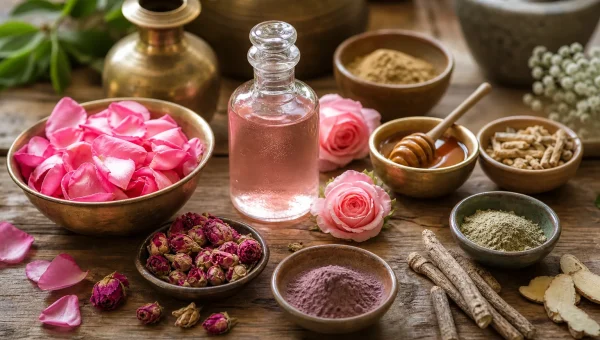
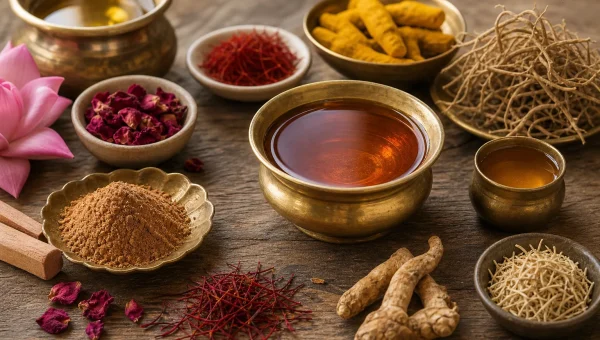
Kumkumadi Taila is a traditional saffron-led facial oil used for complexion support, dullness, uneven tone, and dry-looking skin. Around the eye area it must be used with restraint. I apply only one small drop to the ring finger, warm it between both ring fingers, and pat it around the orbital bone. I do not drag the skin, apply it on the eyelids, place it near the lash line, or let it enter the eyes.
Formulas vary by manufacturer, so the quality of the oil matters. A good preparation should list its ingredients clearly, avoid synthetic fragrance, and be patch-tested on the inner arm or behind the ear before it is used near the eyes. People prone to milia, dermatitis, acne around the eyes, or fragrance sensitivity should begin with very small amounts or avoid it.
| Ingredient | Ayurvedic Role | Practical Use Around the Eye Area |
|---|---|---|
| Saffron (Kumkuma) | Varnya, complexion-supporting, traditionally used in small quantities | Used for dullness and uneven-looking tone when tolerated |
| Licorice (Yashtimadhu) | Soothing, complexion-supporting, Pitta-calming | Useful in formulas intended for pigmentation-prone or irritated-looking skin |
| Manjishtha | Traditionally associated with Rakta support and complexion clarity | Chosen in facial oils for dullness, uneven tone, and heat-prone complexions |
| Sandalwood (Chandana) | Cooling, Pitta-soothing, calming to heat and redness | Helpful in formulas for hot, flushed, or sensitive-looking skin when the preparation is well tolerated |
| Sesame oil or other oil base | Snehana, Vata-pacifying, softening | Supports dryness and fine creasing when applied gently and sparingly |
Treatment 3: Weekly Under-Eye Masks
A weekly mask can be useful, but the under-eye area should never be treated like the cheeks or forehead. Keep all masks below the orbital rim, away from the lash line, and remove them immediately if there is burning, watering, itching, or redness. A thin layer is better than a thick paste.
For dark circles: Mix a few drops of almond oil with rose water and the tiniest pinch of turmeric. Apply only to the under-eye shadowed area, leave for 5-10 minutes, and wipe away gently with a damp cotton pad. Turmeric stains easily and can irritate sensitive skin, so this is not for daily use and not for people with reactive eyelids.
For fine lines: Mix fresh Aloe vera gel with one drop of Kumkumadi Taila or plain almond oil. Pat lightly around the orbital bone and leave for 10-15 minutes before rinsing. This gives hydration and softness without pulling the skin.
For puffiness: Use a cool compress, chilled cotton pads soaked in plain water, or grated raw potato wrapped in clean muslin and placed over closed eyes for 5-10 minutes. The benefit here is cooling and gentle compression, not aggressive rubbing or strong active ingredients.
Lifestyle Practices for Lasting Results
No topical treatment can fully compensate for the habits that repeatedly strain, heat, dry, or congest the eye area. The most reliable routine combines gentle Ayurvedic care with basic protection: rest the eyes, protect them from UV exposure, sleep consistently, reduce fluid-retaining habits, and stop treating the eyelids as if they were ordinary facial skin.
- Screen management: Follow the 20-20-20 rule: every 20 minutes, look at something about 20 feet away for 20 seconds. This reduces strain and helps interrupt the squinting and staring that deepen expression lines.
- Sun protection: Wear sunglasses labeled for 100% UV protection when outdoors, and use a sunscreen suitable for the eye area without letting it migrate into the eyes. UV exposure is a major driver of premature wrinkling and pigmentation.
- Sleep rhythm: Aim for at least seven hours of sleep as a baseline. Dark circles and puffiness often worsen when sleep is short, irregular, or paired with late-night salty food.
- Salt and fluid timing: If puffiness is the main concern, reduce very salty dinners and avoid excess fluids right before bed, unless a clinician has advised otherwise.
- Gentle cleansing: Remove makeup with minimal rubbing. Press and lift rather than dragging cotton back and forth over the same thin skin.
- Pada Abhyanga: A light foot massage with warm sesame oil or ghee before bed is a simple Vata-calming practice. For me, it supports better sleep, and better sleep shows quickly around the eyes.
My Personal Routine at 44
Eight years after I first noticed those crow’s feet, my routine has become simpler and more consistent. I no longer chase every new eye cream. I focus on protecting the area, keeping Vata dryness down, sleeping better, and using Ayurvedic preparations carefully rather than aggressively.
- Morning: Splash the face and closed eyes with clean cool water, apply sunscreen suitable for the eye area, and wear UV-protective sunglasses outdoors.
- Throughout the day: Follow the 20-20-20 rule at the computer, blink consciously during long screen sessions, drink water, and avoid turning lunch or dinner into a salty, dehydrating meal.
- Evening: Remove sunscreen or makeup gently, then pat a tiny amount of Kumkumadi Taila around the orbital bone if the skin is not irritated.
- Bedtime: Use warm foot massage when Vata feels high, take Triphala only when digestion and constitution suit it, and choose saffron milk or a simple warm drink when sleep needs support.
- Weekly: Use one under-eye mask according to the main concern that week: cooling for puffiness, softening for fine lines, or a very mild turmeric-almond application for darkness.
- Seasonally: Consider practitioner-guided Netra Tarpana or other eye therapies when there is dryness, screen strain, or Vata-Pitta aggravation, not as a casual do-it-yourself beauty trend.
Have the crow’s feet disappeared? No. Ayurveda is not an eraser. What changed is the texture, comfort, and brightness of the area. The skin around my eyes feels less dry, my dark circles are less pronounced when I keep my sleep and salt in check, and the routine itself has become a daily act of steadiness. I no longer look at the mirror as if time is attacking me. I see the lines, and I also see the care I now give to the person who earned them.
Medical Disclaimer: This article is for educational purposes only and does not constitute medical advice. Sudden or one-sided swelling, persistent dark circles with fatigue, eye pain, redness, discharge, vision changes, new light sensitivity, or rapid changes in eye appearance should be evaluated by an ophthalmologist or qualified healthcare provider. Do not put oils, ghee, rose water, herbal decoctions, powders, or homemade preparations inside the eyes unless specifically prescribed and supervised by a qualified practitioner. Patch-test all topical preparations before using them near the eyes, and consult a qualified Ayurvedic practitioner or physician before starting herbs, supplements, detoxes, or therapeutic protocols, especially if pregnant, nursing, managing a medical condition, or taking medication.
References
- LWW Journals
- Easyayurveda (easyayurveda.com)
- Theories and management of aging: modern and ayurveda perspectives (2011), PubMed Central
- Surgical anatomy of the upper eyelid relating to upper blepharoplasty or blepharoptosis surgery (2013), PubMed Central
- NCBI
- My (my.clevelandclinic.org)
- Aad (aad.org)
- My (my.clevelandclinic.org)
- Infraorbital Dark Circles: A Review of the Pathogenesis, Evaluation and Treatment (2016), PubMed Central
- Periorbital Hyperpigmentation: A Comprehensive Review (2016), PubMed Central
- Mayoclinic (mayoclinic.org)
- Mayoclinic (mayoclinic.org)
- Aoa (aoa.org)
- Aao (aao.org)
- CDC
- Therapeutic Uses of Triphala in Ayurvedic Medicine (2017), PubMed Central
- Efficacy of Triphala Ghrita and Goghrita Manda Tarpana in the management of Shushkakshipaka w.s.r. to dry eye syndrome: An open labelled randomized comparative clinical trial (2020), PubMed Central
- Clinical efficacy of Ayurvedic management in computer vision syndrome: A pilot study (2012), PubMed Central
- Functional and Nutraceutical Significance of Amla (Phyllanthus emblica L.): A Review (2022), PubMed Central
- NIH Office of Dietary Supplements
- An overview on ashwagandha: a Rasayana (rejuvenator) of Ayurveda (2011), PubMed Central
- Adaptogenic and Anxiolytic Effects of Ashwagandha Root Extract in Healthy Adults: A Double-blind, Randomized, Placebo-controlled Clinical Study (2019), PubMed Central
- Plant profile, phytochemistry and pharmacology of Asparagus racemosus (Shatavari): A review (2013), PubMed Central
- Saffron (Crocus sativus L.): A Source of Nutrients for Health and for the Treatment of Neuropsychiatric and Age-Related Diseases (2022), PubMed Central
- ROS-scavenging and Anti-tyrosinase Properties of Crocetin on B16F10 Murine Melanoma Cells (2018), PubMed
- The inhibitory effect of glabridin from licorice extracts on melanogenesis and inflammation (1998), PubMed
- Hero (hero.epa.gov)
- Ayurvedahub (ayurvedahub.in)

these ayurvedic treatments take so long to work. western medicine might be faster for acute issues
That is a fair critique, but for something like crow’s feet the Ayurvedic argument is that you are working at the tissue level rather than just the surface, so you need to factor in more time. Western injectables get faster cosmetic results but the underlying skin health may not improve the same way.
how long do u need to take ghee before results show? been 3 weeks, nothing yet
@Karen My practitioner said the same thing about dark circles. Results vary by individual constitution.
I asked my vaidya the same question about dark circles. He said constitution matters more than standard dose.
The section on dark circles dosage timing was something I had not seen explained this clearly before. Taking it 30 minutes before meals has made a real difference.
Where is the evidence for the almond oil dosage recommended here? I could not find any peer-reviewed backing in the Indian Journal of Ayurveda for these specific numbers.
the decoction method for ghee is a bit confusing, is there a simpler version
anyone here tried ghee for the specific issue in the article? what was your experience ठीक है
does brand matter for dark circles or is generic fine ❤️
Does the quality of dark circles source matter significantly? Organic vs non-organic makes a big cost difference where I live.
the decoction method for potato is a bit confusing, is there a simpler version
the decoction method for dark circles is a bit confusing, is there a simpler version
My doctor actually recommended triphala last month, so finding this detailed explanation of the dosing schedule is exactly what I needed.
That is reassuring to hear a doctor recommended it — triphala feels so old-fashioned to some people that they dismiss it before trying. Did they specify powder or tablet? The post says the decoction method is stronger but I am finding the powder easier to stick with.
hw mny wks 4 triphala 2 work
the decoction method for almond oil is a bit confusing, is there a simpler version
crow feet and dark circles after 35 need sleep advice first imo. creams and eye oil wont fix late nights
Totally agree on sleep being foundational. Though I do think the nasya routine they mention for puffiness can help even when you are sleep-deprived — it is not a substitute but it does make a visible difference in the morning.
where r the studies for potato tho
For the under-eye mask preparation described, does the water temperature affect the active compounds during the decoction process?
first time trying under-eye mask properly after reading this. fingers crossed it helps with the fatigue
@Neha Good point about dark circles. The quality of the herb makes a huge difference in my experience.
dosw for kids same or diff
i have high pitta, would the cucumber protocol here work or make things worse
about 8 weeks for me with almond oil before any visible change
Does anyone know whether the kansa wand technique described here works on hooded eyelids too, or is it mainly for the under-eye hollows? The article focuses on dark circles but does not say much about upper lid area.
the studies quoted for almond oil are like 10 years old, anything more recent?
the studies quoted for dry eyes are like 10 years old, anything more recent?
r side effects of triphala real
the studies quoted for triphala are like 10 years old, anything more recent?
Three weeks into using the triphala eye wash from this post and I am curious how others managed expectations too. The crow’s feet feel slightly less pronounced but it is hard to tell if that is real or wishful thinking at this stage.
anyone here tried triphala for the specific issue in the article? what was your experience
Where is the evidence for the potato dosage recommended here? I could not find any peer-reviewed backing in the Indian Journal of Ayurveda for these specific numbers.
@Tom same here, almond oil helped me but took longer than the article suggests
The article mentions starting almond oil on an empty stomach. Does this apply even when taking it in ghee form?
the decoction method for under-eye mask is a bit confusing, is there a simpler version
the dosage chart for almond oil is really helpful. been overdoing it apparently
Yes! I was applying almond oil way too generously and it was just sitting on the skin. Once I switched to a tiny amount with the tapping technique the article describes, it actually absorbed properly.
the decoction method for triphala is a bit confusing, is there a simpler version
I just steep a half teaspoon in warm water overnight and drink it in the morning instead of boiling it. Loses a little potency maybe but it is much easier to keep up daily. The article’s full decoction method is probably better for therapeutic use though.
The claim about dry eyes reducing inflammation in two weeks seems optimistic. My experience was more like four months before any noticeable change.
The idea of using Triphala as an eye wash sounds interesting, have you tried it yourself?
my vaidya suggested dry eyes but never explained the why. this article fills that gap 🙏 ठीक है
anyone here tried potato for the specific issue in the article? what was your experience
how long do u need to take triphala before results show? been 3 weeks, nothing yet
about 8 weeks for me with ghee before any visible change 💯
where r the studies for ghee tho
how long do u need to take cucumber before results show? been 3 weeks, nothing yet धन्यवाद
Where is the evidence for the triphala dosage recommended here? I could not find any peer-reviewed backing in the Indian Journal of Ayurveda for these specific numbers.
r side effects of dry eyes real नमस्ते
the decoction method for cucumber is a bit confusing, is there a simpler version
Yeah the almond oil timing thing confused me too. I do it before meals now based on another source. ✨
same here, cucumber helped me but took longer than the article suggests
Is there a seasonal consideration for triphala? I read elsewhere that some adaptogens should be paused in summer.
i have high pitta, would the dark circles protocol here work or make things worse
High Pitta here too. I would be cautious with anything heating — the article’s rose water and sandalwood suggestions seem safe for us, but I would skip the sesame-heavy options. My vaidya suggested coconut-based eye packs instead, much more cooling.
This is probably not the right post for this but I’ve been meaning to ask — does the article’s approach to Vata imbalance apply to skin concerns beyond eye area? My cheeks and jawline have been losing firmness and wondering if it connects.
Same experience with almond oil here. Took me about 6 weeks to notice real change.
Same experience with triphala here. Took me about 6 weeks to notice real change.
same here, dark circles helped me but took longer than the article suggests
finally something practical. been reading about cucumber for months and this is the first clear how-to
honestly try cucumber for at least 3 months before deciding it doesnt work
I asked my vaidya the same question about almond oil. He said constitution matters more than standard dose.
can you combine dry eyes with cucumber or is that too much at once
the studies quoted for dark circles are like 10 years old, anything more recent?
this helped. been confused about under-eye mask timing for weeks now
Not sure I agree on under-eye mask being suitable for Vata-Pitta. My experience was different.
honestly try potato for at least 3 months before deciding it doesnt work
Three months is the right timeframe, I think. I was close to giving up on the under-eye routine at two months and then week 10 or 11 there was a noticeable shift in puffiness. Patience is genuinely part of the protocol here.
dosw for kids same or diff 🌿
is triphala ok during pregnancy? asking for my wife who is in second trimester 💯
Triphala is generally considered a strong herb during pregnancy and most practitioners advise against it, especially in the first two trimesters. Definitely worth asking her OB or an Ayurvedic practitioner who works with prenatal care before she tries it. 💯
I appreciate the reminder about sunglasses and the 20 20 20 rule for screen time.
I asked my rheumatologist about dry eyes and he was dismissive, citing no RCT data. Would love to know which studies this article draws from.
The article mentions starting ghee on an empty stomach. Does this apply even when taking it in ghee form?
I had the same question and tried it both ways. On an empty stomach the effects felt stronger but my digestion was not happy. Taking it about 30 minutes before a light meal seemed to be the middle ground that worked for me.
For the triphala preparation described, does the water temperature affect the active compounds during the decoction process?
@Ryan Same experience with dry eyes here. Took me about 6 weeks to notice real change.
Does the quality of almond oil source matter significantly? Organic vs non-organic makes a big cost difference where I live.
Started following the diet guidelines mentioned for dark circles about a month ago. The bloating that had bothered me for years is now very manageable.
Is almond oil safe to use alongside SSRIs? My psychiatrist has not cleared any supplements and I want to go in informed.
That’s a really important question to bring up with your psychiatrist. Topical almond oil around the eye area is generally different from an ingestible supplement, so it may be worth framing it that way when you ask — but definitely get their input before trying anything.
Six weeks sounds about right from what I read too. Did you notice the dark circles improve first or the puffiness? With me the puffiness responded faster but the hollowing took much longer.
I tried the kasturi haldi under-eye paste from this article for about two months and honestly saw very little change. Wondering if the ratio of ingredients makes a difference or if I needed to be more consistent with the nighttime application.
My doctor actually recommended almond oil last month, so finding this detailed explanation of the dosing schedule is exactly what I needed.
the timing guide for the under-eye treatments is really helpful. turns out I was applying the almond oil right before washing my face, which probably cancelled everything out
bought potato from a random brand and got no results. does quality vary that much between suppliers?
my practitioner told me something different about almond oil. this article contradicts what i was told
is under-eye mask ok during pregnancy? asking for my wife who is in second trimester
The explanation connecting cucumber with cucumber in Ayurvedic theory here is cleaner than anything I found in the textbooks I have.
The formulation type matters a lot for dry eyes. Churna vs capsule vs kashayam gave me different results.
about 8 weeks for me with cucumber before any visible change
That actually matches what I found too — the way it ties the cooling quality of cucumber to pitta-related puffiness is much more coherent than most explanations I have come across. Made the whole thing feel more grounded in actual theory.
way too vague about dosage for potato. ‘2 to 3 capsules’ covers a huge range depending on body weight
been taking cucumber for like 6 weeks and honestly sleep is better. never expected it to work this fast tbh
my practitioner told me something different about dry eyes. this article contradicts what i was told 🌿
The formulation type matters a lot for almond oil. Churna vs capsule vs kashayam gave me different results.
The article glosses over contraindications for triphala. People on blood thinners really need to know this before starting.
That’s a fair point and worth raising in the comments section directly. Some of the triphala notes here do gloss over that. I was already on a mild anticoagulant when I started and my doctor flagged the same concern — glad I checked first.
tried triphala for months, did nothing for me honestly. maybe doesnt work for everyone
Kumkumadi Taila seems like a lovely nightly treat, does it feel heavy on the skin?
The article mentions starting under-eye mask on an empty stomach. Does this apply even when taking it in ghee form?
I am Vata-Pitta constitution. Would the ghee protocol here need modification or is it generally dosha-agnostic?
the breakdown of which ingredients address crow’s feet versus hollow eyes versus dark circles is really useful. I was using everything the same way and probably getting half the benefit 🌿
honestly try almond oil for at least 3 months before deciding it doesnt work
can you combine triphala with potato or is that too much at once
Does the quality of dry eyes source matter significantly? Organic vs non-organic makes a big cost difference where I live.
does brand matter for dry eyes or is generic fine
From my experience quality does seem to matter even for topical stuff. I switched from a generic almond oil to cold-pressed and noticed a difference in how it absorbed under the eye area. Probably worth looking at that before changing anything else.
the studies quoted for ghee are like 10 years old, anything more recent?
Just started the almond oil protocol this week. A bit early to report results but the article gave me enough confidence to try it properly.
Quick question: is the under-eye mask dose mentioned here for KSM-66 extract or full-spectrum powder? The potency difference is significant.
can you combine almond oil with dark circles or is that too much at once