
At a glance
| Type (internal/external/Panchakarma) | Panchakarma therapy; local internal administration through the nasal route. Gentle pratimarsha nasya is also used as a daily supportive practice in selected people. |
| Typical duration | About 15–45 minutes per session including preparation and after-care; a therapeutic course is commonly planned for up to 7 days, while the number of sessions is individualized. |
| Main indications | Diseases of the head and region above the clavicle, especially chronic nasal congestion, heaviness of the head, sinus-type complaints, headache patterns, neck stiffness, dryness of nose and throat, voice strain, and selected Vata-Kapha disorders under medical supervision. |
| Oils/herbs used | Anu Taila, sesame oil-based medicated oils, ghee-based preparations, Shadbindu Taila in selected Kapha-Vata conditions, and physician-selected herbal juices, powders, decoctions, or ghrita according to dosha and strength. |
| Primary dosha | Mainly Vata and Kapha in the head, nose, sinuses, throat, neck, and sensory channels; Pitta-sensitive cases require cooling, gentle, palliative selection. |
What is it?
Nasya is the Ayurvedic administration of medicine through the nostrils. In classical Ayurveda, the nose is described as the doorway to the head, so nasal therapy is used especially for disorders of the head, sense organs, nose, sinuses, throat, jaw, neck, and shoulders. Nasya may be nourishing, cleansing, or palliative depending on the medicine and dose. Classical texts describe several forms, including navana nasya with oils or ghee, avapida using expressed herbal juice or paste, dhmapana or pradhamana using fine powders, dhuma through medicated smoke in appropriate cases, and pratimarsha nasya, a very small-dose oil application used more gently. Strong therapeutic nasya should be prescribed and performed by a trained Ayurvedic physician, because the same route can either soothe, cleanse, or irritate depending on timing, dose, patient strength, and dosha.
How it is done
- The physician first assesses prakriti, vikriti, dosha dominance, age, strength, digestion, season, nasal condition, and contraindications.
- The patient is advised to come neither hungry nor immediately after a heavy meal, and to empty natural urges before the procedure.
- Gentle oil massage is usually applied to the face, forehead, neck, shoulders, palms, and soles to soften Vata and prepare the upper channels.
- Mild fomentation or steam is given to the face and upper chest so that Kapha in the head region becomes loosened and ready to move.
- The patient lies on the back in a draught-free room, with the head slightly extended and the feet slightly raised, avoiding an extreme head-back position.
- The medicated oil, ghee, juice, or other preparation is warmed mildly if appropriate and instilled into each nostril in the prescribed dose.
- After instillation, the practitioner gently massages the nose, cheeks, forehead, palms, soles, ears, and neck while the patient breathes calmly.
- The patient allows the medicine and loosened Kapha to move toward the throat and spits it out; it should not be swallowed deliberately.
- Warm water gargling or kavala may be advised to clear the throat and mouth after the medicine has drained.
- The patient rests quietly, avoids wind, dust, cold exposure, loud speech, anger, exertion, sleep immediately after the procedure, and heavy food for the advised period.
Indications
Classically, nasya is indicated for urdhvajatrugata vikara, meaning disorders above the clavicle. It is especially considered when Vata or Kapha affects the head, nose, sinuses, throat, jaw, voice, sense organs, neck, and shoulder region. Practical indications may include chronic nasal blockage, recurrent heaviness of the head, thick Kapha-type discharge, dryness of the nasal passages, headache patterns such as suryavarta or ardhavabhedaka under proper diagnosis, stiffness of the neck, facial weakness or Ardita as part of a broader protocol, hoarseness, jaw tightness, and selected conditions involving the eyes, ears, hair, and scalp. In Kapha-dominant conditions, cleansing nasya may be chosen; in Vata-dominant dryness, tremor, facial weakness, or depletion, nourishing nasya is preferred; in Pitta or bleeding tendency, only gentle palliative approaches are considered, if appropriate at all.
Benefits
When correctly selected and administered, nasya is traditionally used to reduce heaviness and obstruction in the head, support clearer nasal breathing, lubricate dry nasal passages, calm aggravated Vata in the head and neck, and help mobilize Kapha from the upper channels. Properly administered sneha nasya is described as producing comfortable breathing, better sleep and waking, and improved clarity of the sense organs. In clinical practice, patients may experience lightness of the head, easier expectoration of mucus from the throat, reduced facial tightness, and better comfort in the nose and sinuses. These benefits depend strongly on proper diagnosis; forceful or unsuitable nasya can worsen irritation, congestion, headache, coughing, or heaviness.
Oils & herbs used
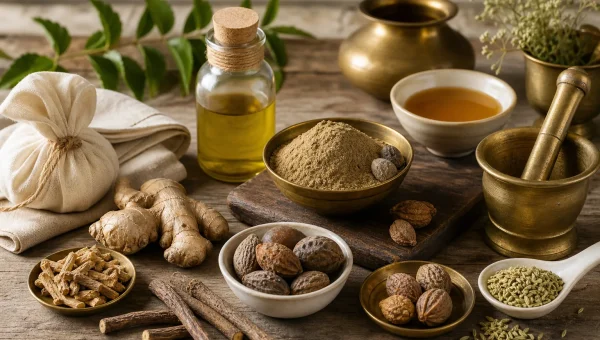
The medicine is chosen according to the purpose of treatment. For Vata-Kapha disorders of the head, sesame oil-based formulations such as Anu Taila are commonly used, especially for marsha or pratimarsha nasya. Shadbindu Taila may be selected in some Kapha-Vata head, sinus, or hair-related conditions, but it is stronger and not suitable for everyone. For dryness, Vata aggravation, facial weakness, or depletion, the physician may use medicated ghee, mild oil, or nourishing preparations. For Kapha obstruction, thick discharge, heaviness, or chronic sinus-type complaints, sharper cleansing preparations may be used in carefully controlled doses. For Pitta-sensitive or bleeding-prone patients, cooling and palliative substances are preferred, and strong nasya is usually avoided. Household use should be limited to physician-approved gentle oil application; herbal powders, irritant juices, and strong medicated oils should not be self-administered.
Contraindications
Nasya should not be done immediately after food, alcohol, large water intake, head bath, sexual activity, heavy exertion, or when natural urges are being suppressed. Classical texts also caution against nasya in acute rhinitis, active cough or breathlessness, immediately after purification therapies, soon after basti, after bloodletting or active bleeding, in unsuitable weather, and in women who have recently delivered, except where a physician judges an urgent indication. It should also be avoided or postponed in fever, acute nasal infection, active nosebleed, recent nasal surgery or trauma, severe throat irritation, uncontrolled asthma, severe hypertension, marked weakness, intoxication, or allergy to the chosen oil or herb. Children, older adults, pregnant or breastfeeding women, and people with neurological, respiratory, or bleeding disorders need individual medical assessment before any nasal therapy.
What to expect & after-care
During nasya, a mild oily taste or herbal taste may come into the throat, and there may be watering of the eyes, sneezing, mucus discharge, or a feeling of warmth or lightness in the face and head. These can be normal when mild and brief. After the procedure, spit out the draining medicine and mucus rather than swallowing it, rinse or gargle with warm water if advised, and rest in a warm, calm environment. Avoid cold wind, air conditioning, dust, smoke, loud talking, sleeping immediately, heavy meals, strenuous exercise, screen strain, and washing the head for a few hours or as instructed. Seek medical advice if there is severe burning, persistent headache, breathlessness, wheezing, nosebleed, dizziness, vomiting, fever, or worsening congestion.
What the research says
Modern clinical evidence for classical nasya is still limited. A systematic review on oil-based nasya for facial paralysis found only two small experimental studies and concluded that the evidence was too limited and low-quality to draw strong conclusions. A randomized, double-blind, placebo-controlled study of a commercial nasal barrier product called Nasya/Prevalin for allergic rhinitis reported short-term symptom reduction after allergen challenge, but this product should not be treated as proof for all classical Ayurvedic medicated oils. Small Ayurvedic clinical studies and recent protocols in allergic rhinitis, chronic rhinosinusitis, and related nasal conditions are suggestive, but many are open-label, small, combined with oral medicines, or methodologically limited. Therefore, nasya is best presented as a traditional physician-directed therapy with plausible local effects on lubrication, mucus clearance, and nasal comfort, not as a proven stand-alone cure for sinusitis, migraine, facial palsy, allergic rhinitis, or neurological disease.
FAQ
No. Daily gentle pratimarsha nasya usually uses a very small dose and is different from therapeutic marsha or shodhana nasya, which uses stronger doses, preparation, and after-care. Therapeutic nasya should be supervised by a qualified practitioner.
Some people use very small amounts of Anu Taila under guidance, but it is not suitable for everyone. Avoid self-use during acute cold, active sinus infection, cough, fever, nosebleed, pregnancy concerns, recent surgery, or if the oil causes burning, headache, or congestion.
Nasya may be included in Ayurvedic management of selected sinus-type and headache conditions, but it should not be described as a guaranteed cure. Recurrent sinus infection, severe headache, one-sided neurological symptoms, visual disturbance, fever, or persistent facial pain need medical evaluation.
Classical timing depends on dosha, season, and purpose. Kapha conditions are generally treated earlier in the day, Pitta around midday, and Vata later in the day, while preventive or gentle use is individualized. The safest timing is the one prescribed by the physician after assessing the person.
References
- Charaka Samhita, Siddhi Sthana, Chapter 9, Trimarmiya Siddhi: description of nasya for diseases of the head, the nose as the doorway to the head, types of nasya, indications by dosha, procedure, and after-care.
- Ashtanga Hridaya, Sutra Sthana, Chapter 20, Nasyavidhi Adhyaya: classification, indications, contraindications, dosage principles, seasonal timing, procedure, signs of proper and improper administration, and pratimarsha nasya.
- Sushruta Samhita, Chikitsa Sthana, Chapter 40, Dhuma-Nasya-Kavala-Graha Chikitsitam: classical discussion of nasal medication along with medicated smoke and mouth therapies.
- Ayurvedic Formulary of India, Government of India, Department of AYUSH: classical formulation standards for traditional Ayurvedic oils used in nasya practice where applicable.
- Vivera MJ, Gomersall JC, Lisy K. The effectiveness of ayurvedic oil-based nasal instillation (Nasya) medicines in the treatment of facial paralysis (Ardita): a systematic review. JBI Database of Systematic Reviews and Implementation Reports. 2016;14(4):198–228. PMID: 27532316. DOI: 10.11124/JBISRIR-2016-2402.
- Stoelzel K, Bothe G, Chong PW, Lenarz M. Safety and efficacy of Nasya/Prevalin in reducing symptoms of allergic rhinitis. The Clinical Respiratory Journal. 2014;8(4):382–390. PMID: 24279907. DOI: 10.1111/crj.12080.
- Mata S, et al. Ayurveda Management of Allergic Rhinitis: Protocol for a Randomized Controlled Trial. JMIR Research Protocols. 2024;13:e56063. PMID: 39321461.

The distinction between navana, avapida, and pratimarsha nasya made this finally click for me. A lot of people lump all nasal therapy together, but the dosage and purpose sound very different here.
Really appreciate the step by step procedure section. The part about not swallowing the drainage and taking care with the head position was more practical than I expected.
Interesting that the article separates Kapha cleansing from Vata nourishing approaches. That feels more thoughtful than a one size fits all nasal remedy.
The after care advice stood out, especially avoiding cold air, heavy food, and loud speech right after the session. That seems easy to overlook if someone only focuses on the oil itself.
How does a practitioner usually choose between Anu Taila, sesame based oils, and ghee for someone with dryness versus congestion? That part seems pretty individualized.
For daily pratimarsha nasya, what is considered a safe amount in real use? The article says small dose, but I was left wondering how that gets measured in practice.
I get the traditional logic here, but I would still want to see better human studies on the headache and sinus claims before thinking of it as more than supportive care.
The seven day course and the supervision requirement make sense, but it also sounds pretty involved for something some people might want to do at home. Not impossible, just not as simple as it first sounds.