
My Grandmother’s Copper Vessel and the Science I Found 30 Years Later
Every morning of my childhood, my grandmother would fill a copper vessel with water before going to bed and hand me a glass of it the next morning. “Tamra jal,” she called it: copper water. I drank it without question, the way children accept family rituals as facts of the universe. Years later, while studying Ayurvedic food habits, vessel selection, and the pharmaceutics of metals and minerals, I understood that she was not treating copper as magic. She was using a simple household practice with clear boundaries: the right vessel, plain water, a modest quantity, and regular cleaning.
Ayurveda distinguishes sharply between household vessel practices and specialized internal preparations made from metals or minerals. Copper water, clay-pot cooking, silver cups, and cast-iron cooking belong to practical kitchen use. Swarna Bhasma and other bhasma preparations belong to the physician’s domain and require purification, calcination, quality testing, and careful dosing. The value of these traditions lies not in casual metal consumption, but in disciplined use.
Copper Water (Tamra Jal): The Everyday Practice
Copper water is the most accessible metal-related practice in many Indian homes. It is best understood as a small daily vessel practice, not as a replacement for mineral supplements, clean drinking-water standards, or medical care.
The Traditional Method
My grandmother’s method was simple. She used an unlined copper vessel reserved only for plain water. Every night, she filled it with filtered water, covered it, and left it undisturbed until morning. She drank one small glass, about 150–200 ml, before tea or breakfast. The water had a faint metallic taste, but it was never sour, greenish, cloudy, or stored for days.
Use a food-grade, unlined copper vessel from a reliable maker. Avoid lacquered, copper-plated, brass, or decorative vessels for this practice. Fill it with plain drinking water and let it stand overnight. Do not use copper vessels for milk, curd, citrus juice, tamarind water, vinegar-based drinks, or other acidic liquids. Discard leftover water after the morning use, rinse the vessel, and allow it to dry.
Why the Practice Makes Sense
Laboratory testing has found that water deliberately contaminated with diarrhoeal bacteria became free of recoverable bacteria after 16 hours of storage in copper pots at room temperature. The copper level measured in that water was about 177 ± 16 ppb, which is below the World Health Organization guideline value of 2 mg/L for copper in drinking water.
Copper is also an essential trace mineral. The body uses it in enzymes involved in iron metabolism, connective-tissue formation, neurotransmitter synthesis, and antioxidant defense. The adult recommended dietary allowance is 900 micrograms per day. Copper water should still be treated as a small supplementary exposure, not as an all-day drinking habit.
Practical Tips from Our Kitchen
My mother, who learned the habit from her mother, kept a few rules that still make sense today. Clean the copper vessel regularly with lemon and salt or tamarind, but rinse it thoroughly so no acidic residue remains. Use it only for plain water. Stop using the vessel if the inside develops heavy green corrosion, a strong metallic smell, or a bitter taste that does not clear after cleaning. People with Wilson disease, known copper metabolism disorders, significant liver disease, or unexplained abdominal symptoms should avoid copper-water routines unless advised by a qualified healthcare provider.
Clay Pot Cooking (Mritika Patra): The Forgotten Kitchen Essential
Clay-pot cooking is not metal therapy, but it belongs in the same conversation because Ayurveda pays attention to the vessel, the cooking medium, the heat, and the qualities transferred to food. Before stainless steel and non-stick cookware took over Indian kitchens, my grandmother cooked rice, dal, and slow curries in unglazed clay pots. She simply said the food tasted softer and more grounded.
Why Clay Matters
Unglazed clay pots cook gently and retain moisture well when used over low heat. This suits foods such as mung dal, khichdi, rice, vegetable stews, and thin curries that benefit from slow simmering. In Ayurvedic language, this style of cooking supports softness, digestibility, and warmth without the harshness of aggressive high heat.
The safety of the pot matters more than romantic nostalgia. Use only unglazed, lead-free, food-safe clay cookware from a trusted source. Avoid decorative pottery, unknown glazes, bright painted interiors, or antique vessels for cooking. Acidic foods can draw unsafe metals out of poorly made glazed pottery, so untested decorative ceramics should never be used for daily food preparation.
Choosing and Seasoning Clay Pots
To prepare a new clay pot, soak it in water for several hours, dry it, rub the inside lightly with cooking oil, and heat it slowly over a low flame. Repeat gentle heating before cooking a full meal. Clay dislikes sudden temperature changes, so never place a cold pot directly on a high flame, never pour cold water into a hot pot, and never move it from the stove to a wet stone counter.
My Favorite Clay Pot Recipe: Grandmother’s Mung Dal
This is the simple dal my grandmother made every week. The clay pot gives it a soft texture and earthy aroma that is difficult to reproduce in a thin metal pan.
Ingredients:
- 1 cup split mung dal, washed and soaked for 30 minutes
- 3 cups water
- 1/2 teaspoon turmeric powder
- 1 teaspoon ghee
- 1/2 teaspoon cumin seeds
- 1 small piece of fresh ginger, grated
- Pinch of asafoetida
- Salt to taste
- Fresh coriander leaves for garnish
Method: Add the dal, water, and turmeric to the clay pot. Bring it to a gentle simmer over medium-low heat. Cook for 25–30 minutes, or until the dal is completely soft. In a small pan, warm the ghee, add cumin seeds, ginger, and asafoetida, then pour the tempering over the dal. Garnish with coriander and serve warm.
Gold Preparations (Swarna): The Specialized Practice
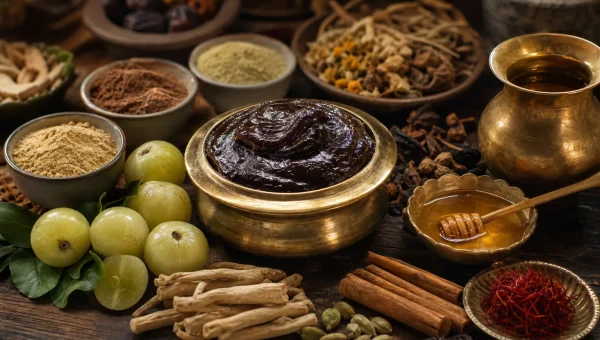
Gold occupies a respected place in Ayurvedic pharmaceutics, but it should not be treated as a casual kitchen supplement. Classical and later Rasashastra traditions describe the use of metals only after purification and processing. Swarna Bhasma is not raw gold dust; it is a processed preparation made through repeated purification, trituration, and calcination steps.
The Rasa Shastra Tradition
In Rasashastra, metals and minerals are transformed through procedures such as shodhana and marana before internal use. These processes are intended to remove unwanted qualities, reduce particle size, and make the material suitable for carefully prescribed therapeutic use. Modern characterization of Swarna Bhasma has found nanoscale gold particles or crystallites in some properly prepared samples, which helps explain why classical processing is treated as essential rather than optional.
Swarna Prashana: The Children’s Practice
Swarna Prashana is a traditional pediatric practice associated with the Kashyapa Samhita. It involves administering a minute physician-selected quantity of processed gold preparation with carriers such as honey and ghee. In the classical description, it is connected with medha, agni, bala, and ayushya: intellect, digestion, strength, and longevity.
This practice should not be improvised at home. Children should never be given raw gold powder, scraped jewelry, uncertified bhasma, or internet-purchased preparations without professional assessment. Swarna Prashana is not a substitute for vaccination, pediatric nutrition, diagnosis, or treatment. It belongs under the supervision of a qualified Ayurvedic pediatric practitioner.
A Gentler Family Ritual: Gold-Contact Water
Some families keep a simple ritual of boiling water with a clean piece of pure gold and then drinking the warm water after removing the gold. This should be understood as a traditional contact-water ritual, not as a therapeutic dose of gold. Use only plain, clean, high-purity gold without stones, solder, plating, or chemical polish. Do not use jewelry of uncertain composition, and do not treat this as a substitute for Swarna Bhasma or prescribed care.
Silver Vessels and Cast Iron: Two Useful Notes
Silver and iron have their own distinct roles in traditional kitchens. Silver is commonly associated with cooling, clean storage, and ritual serving, while iron cookware can contribute measurable dietary iron to food under the right cooking conditions.
Silver (Rajata): Silver vessels may be used for plain water or occasional serving, especially in households that follow cooling Pitta-oriented routines. Silver ions and silver nanoparticles are known for antimicrobial activity, but silver water should not be used as a treatment for infections, urinary complaints, acidity, or fever. Keep the use modest, clean the vessel properly, and avoid silver products marketed as cure-all tonics.
Iron (Loha): Cooking in cast iron can increase the iron content of foods, especially moist and acidic preparations cooked for longer periods. This can be useful for families trying to improve dietary iron intake through food habits, but it is not a complete anemia treatment. People with iron-overload disorders such as hemochromatosis should avoid intentionally increasing iron exposure through cookware unless guided by a clinician.
Safety: The Non-Negotiable Rules
The difference between a safe Ayurvedic vessel practice and unsafe metal exposure is preparation, dose, quality, indication, and supervision. Household practices should stay simple: plain water in copper or silver, slow cooking in verified food-safe clay, and ordinary cooking in cast iron. Internal bhasma preparations require a qualified practitioner and a trustworthy pharmacy.
- Never consume raw metal powder, scraped jewelry, homemade bhasma, or unlabelled rasaushadhi.
- Buy bhasma preparations only from licensed, quality-controlled Ayurvedic pharmacies that can provide testing for lead, mercury, arsenic, and other contaminants.
- Do not use decorative, glazed, painted, or antique pottery for cooking unless it is certified food-safe and lead-safe.
- Use copper and silver vessels only for plain water, not acidic liquids, fermented drinks, milk, or long storage.
- Pregnant and breastfeeding women, children, older adults, and people with liver disease, kidney disease, Wilson disease, iron-overload disorders, or chronic medication use should consult a qualified practitioner or healthcare provider before using metal or mineral preparations.
My grandmother did not speak in the language of trace minerals, copper ions, or nanoscale particles. She spoke in the language of habit: use the right vessel, keep it clean, do not overdo it, and respect what is potent. That is still the best way to understand Ayurvedic metal practices today.
Disclaimer: This article describes traditional Ayurvedic vessel practices and specialized metal/mineral preparations for educational purposes. Copper water, clay-pot cooking, silver vessels, and cast-iron cooking can be safe when used appropriately, but bhasma and other internal metal/mineral preparations should be used only under the guidance of a qualified Ayurvedic practitioner or healthcare provider. This content does not replace medical advice, diagnosis, or treatment.
Rohan Kapoor is an Ayurvedic nutrition writer based in Chandigarh. This article is for educational purposes only. Consult a qualified nutritionist, Ayurvedic practitioner, or healthcare provider before making significant dietary changes, especially if you have existing health conditions.
References
- Storing drinking-water in copper pots kills contaminating diarrhoeagenic bacteria (2012), PubMed
- Storing drinking-water in copper pots kills contaminating diarrhoeagenic bacteria (2012), PubMed Central
- Cdn (cdn.who.int)
- NIH Office of Dietary Supplements
- FDA
- Introduction to ‘Rasashaastra’ the Iatrochemistry of Ayurveda (2011), PubMed Central
- Bhasma : The ancient Indian nanomedicine (2014), PubMed Central
- Blood compatibility studies of Swarna bhasma (gold bhasma), an Ayurvedic drug (2011), PubMed
- Link (link.springer.com)
- A critical appraisal on Swarnaprashana in children (2014), PubMed Central
- Swarna Bindu Prashana-an Ancient Approach to Improve the Infant’s Immunity (2021), PubMed Central
- Silver nanoparticles as an effective disinfectant: A review (2019), PubMed Central
- Iron content of food cooked in iron utensils (1986), PubMed
- Lead, mercury, and arsenic in US- and Indian-manufactured Ayurvedic medicines sold via the Internet (2008), PubMed
- CDC
- Natural Ingredient Resource Center
The Shirodhara case study for treatment-resistant anxiety is the one that convinced me to try it. My anxiety had not responded to three years of conventional treatment and the shift after a series of five Shirodhara sessions was more significant than any pharmaceutical intervention I’d had.
Good reminder on Copper Water, Clay Pots, and Gold-Infused Ghee. The main idea is clear even if someone is new to Ayurveda.
Good reminder on Copper Water, Clay Pots, and Gold-Infused Ghee. This feels more usable than a long list of herbs.
The gold-infused ghee section surprised me the most. I assumed it was purely symbolic or ceremonial, the way a lot of these old practices get explained away. The part about bhasma preparation requiring months of processing made me reconsider. Has anyone here actually sourced genuine swarna bhasma, and how do you even verify what you’re getting is the real thing?
I was looking for a plain explanation of Copper Water, Clay Pots, and Gold-Infused Ghee. This feels more usable than a long list of herbs.
My nani did the exact same thing — copper vessel filled the night before, water handed to us first thing in the morning before we even brushed our teeth. I had no idea until now that this was Rasa Shastra in practice. How long would you say it takes before the antimicrobial effects of tamra jal become noticeable?
Started this about six weeks ago. First two weeks I noticed nothing, then around week three something shifted. Digestion is smoother, less brain fog in the mornings. Cautiously optimistic.
I was looking for a plain explanation of Copper Water, Clay Pots, and Gold-Infused Ghee. The article avoids making it sound like a quick fix.
Your persistence through the adjustment period is inspiring. I’m currently in it and your comment helps.
I’m a naturopath and I share quality Ayurvedic content with my clients. This one is going straight into my resources folder. The contraindications section is thorough and honest
My Ayurvedic practitioner recommended this to me last year and I wasn’t sure at first, but after reading your breakdown of the clinical evidence I feel much more confident. Really well-written article.
Been lurking on this site for a while. This is the post that finally made me create an account to comment. Such thorough research. Keep doing what you’re doing.
The Rasa Shastra tradition is the part of Ayurveda I find hardest to evaluate because the preparation methods are so specialized and quality-dependent. The copper water science is relatively straightforward to verify. The gold ghee claim requires a much higher burden of evidence and I would be curious what markers you would consider sufficient.
Ive been researching Ayurvedic herbs for my mother who has kidney issues and this is the most thorough explanation Ive found online. The dosage section especially is helpful. Sharing this with her doctor.
Your comment prompted me to finally try this. Thank you for the push!
Would love a follow-up post on herb interactions, specifically with common supplements like ashwagandha and triphala. A lot of us take multiple things and it’s hard to find clear guidance.
This is so helpful to read. I’m just starting out with this and hearing positive experiences helps me stay motivated.
grew up in a household where my grandmother used herbal remedies like this and seeing the science now validate what she always believed is so satisfying. This kind of content bridges the gap so well.
Three years into my Ayurvedic journey and I still learn something new from posts like this. The nuance around Agni and herb timing is often glossed over elsewhere.
So encouraging to hear! Starting my first week and this is motivating me to stick with it
The section on preparation methods is gold. I’d been making it wrong for months. No wonder results were inconsistent. Switching to the decoction method this week.
Good information but the sourcing could be stronger. Linking to specific studies rather than just saying ‘research shows’ would add credibility
Question for anyone who’s tried this, did you notice any digestive adjustment period in the first few weeks? I’m experiencing some mild changes and wondering if it’s normal
The clay pot water section brought back memories. We switched to a refrigerator in the 1990s and I can still remember the taste difference. Is there evidence that modern clay pots made with commercial glazes retain the same mineral-exchange properties, or does it depend on using unglazed earthenware specifically?
my concern with articles like this is that people might delay proper medical treatment. A stronger disclaimer would be responsible.
We appreciate your candid feedback. You’re right that we should distinguish more clearly between traditional knowledge and clinical evidence. We’re working on adding more research citations.
My integrative medicine doctor actually mentioned this herb last month so finding this detailed write-up feels like perfect timing. The research references at the bottom are really reassuring
Your experience with the diet changes mirrors mine almost exactly. Week two is when it clicks.
Helpful for beginners but if you already know the basics, there’s not much new here. Was hoping for more advanced protocols.
That’s a very fair point. We always recommend working with a qualified practitioner alongside any self-guided protocol. We’ll add a more prominent disclaimer.
Visiting India next month and planning to consult an Ayurvedic physician there. This article is helping me prepare intelligent questions. Thank you for the depth.
I appreciate you sharing the skeptical perspective too. It keeps the conversation grounded.
Does anyone know if the quality differs significantly between brands? I’ve tried two and noticed what seemed like a difference in potency but wasn’t sure if I was imagining it.
I’ve been taking this herb for about three months now and the difference is genuinely noticeable. My energy levels have improved and the chronic bloating I used to struggle with has reduced significantly. Thank you for putting this together so clearly.
your grandmother sounds like an amazing woman! Traditional knowledge passed through families is so precious
The traditional context you provided alongside the modern research is what sets this apart. So many articles do one or the other. This does both beautifully.
Same here! The practitioner recommendation made all the difference for me. Don’t try to do this without guidance.
the part about preparations really helped me understand why the powder form I was using wasn’t working as well as the decoction my practitioner switched me to. Such an important distinction
I appreciate that the article acknowledges the copper toxicity risk with excessive use. That is the part that usually gets left out in more enthusiastic treatments of tamra jal. Overnight storage in a copper vessel is very different from storing water in copper for multiple days, and that distinction matters for daily practice.
my yoga teacher recommended this site and I’ve been reading for hours. This post in particular is incredibly helpful for understanding how to support my constitution.
I tried this on my own initially without much success. After reading this I realize I was using completely the wrong dose and form. Starting fresh with proper guidance now.
I had a very similar experience! The first few weeks are the adjustment period, it really does get better
three months in, still waiting for the promised results. I’m not giving up yet but I’m managing my expectations now
The section on Bhasma preparation is where I would love more detail. The difference between properly prepared Swarna Bhasma and improperly processed gold compounds is the part that concerns me most about sourcing. How does someone without laboratory access verify the quality of what they are purchasing from an Ayurvedic pharmacy?
The faintly sweet metallic taste described reminds me of water left overnight in a brass cup I tried once.
Appreciate you keeping us honest. We’ve noted your feedback about dosage specificity and will address it in a revised version of this article.
My grandmother also used a copper jug but she always boiled the water first.
The grandmother and copper vessel opening is exactly my experience growing up. We had one in the kitchen that nobody questioned. Finding out decades later that the antimicrobial effect is documented in peer-reviewed microbiology was a strange kind of vindication. My grandmother had no idea about oligodynamic action but she had the right answer anyway.
A simple test I ran was cooking lentils in an unglazed pot versus a stainless steel one and noticing a softer texture.
It would be helpful to see a chart comparing mineral leach rates for different clay sources.
Question: does the 12 hour max storage time change if the water is filtered through charcoal first?
The gold water method mentioned sounds intriguing but I wonder how many grams of gold are safe to reuse repeatedly.
I tried leaving filtered water in a pure copper bottle for ten hours and noticed a slight change in smell.
Some readers might be curious about cleaning the copper vessel with lemon and salt; does that affect the ion release?
When cooking acidic tomato sauce in cast iron, the increase in iron content seems promising for those with low hemoglobin.
The suggestion to take a weekly break from copper water aligns with the idea of giving the body a reset period.
A follow up question: are there any studies on long term daily consumption of copper water and liver enzyme levels?
Silver vessels are said to cool Pitta; has anyone noticed a reduction in heartburn after drinking silver stored water?
Practical tip: label your copper pot with the date filled to avoid exceeding the 16 hour limit.
I appreciate the reminder about sourcing Bhasma from certified pharmacies; it keeps the practice responsible.