
Feed Your Joints Before They Start Complaining
My father started complaining about his knees at 50. His father had the same problem at 50. I decided at 30 not to treat that family pattern as fate. Joint changes may become more common with age, but osteoarthritis is not an unavoidable aging destiny. The dietary part is one place to begin early: feed the body warm, moist, digestible, tissue-supportive meals before stiffness, creaking, and pain become the signal.
Ayurveda discusses the dry, creaky, painful joint pattern as Sandhigata Vata. In Charaka’s Chikitsa Sthana, vata lodged in the joints is described with swelling, a feeling of air-filled space or crepitus, and pain during flexion and extension. The related idea of Shleshaka Kapha, located in the joints, explains the Ayurvedic emphasis on lubrication, cohesion, and smooth movement through proper nourishment and sneha, the unctuous quality supplied by foods such as ghee, sesame, and warm soups.
The dietary strategy is simple: calm excess vata with warm cooked food, provide enough healthy fat to counter dryness, include mineral-rich seeds and greens for structural support, and use digestion-kindling spices so nourishment is actually assimilated. These recipes are not a cure for arthritis and they do not replace medical care; they are a practical kitchen routine for long-term joint comfort and vata-calming nourishment.
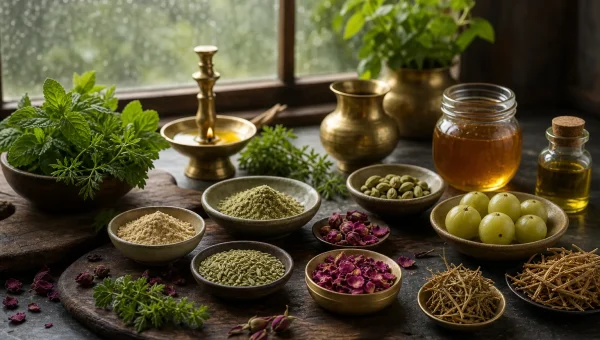
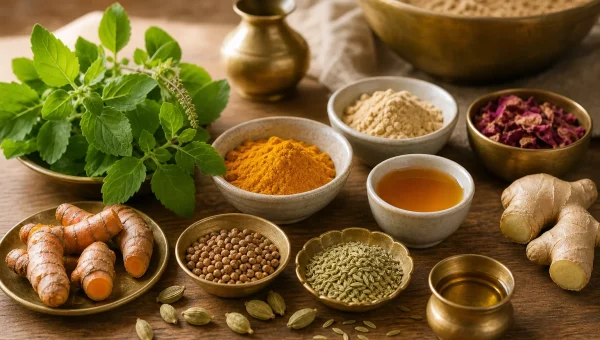
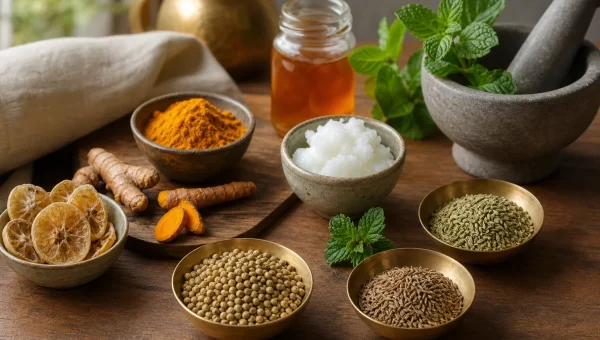
The Joint-Health Spice Arsenal
These spices are best treated as daily culinary allies rather than aggressive medicinal dosing. The goal is steady support: better digestion, warmth, flavor, and a food matrix that makes the meal more suitable for vata-prone joints.
| Spice | Verified Ayurvedic Profile | What It Contributes | Practical Culinary Use |
|---|---|---|---|
| Turmeric (Haridra) | Katu-tikta rasa, ruksha guna, ushna virya, katu vipaka; contains curcumin and volatile oil | Bitter, warming support for agni and kapha-pitta balance; useful in ghee-based soups and milk preparations | 1/2-1 teaspoon in cooked food, paired with ghee or oil and a pinch of black pepper |
| Ginger (fresh in recipes; Shunthi as the dry reference form) | Dry ginger is katu rasa, laghu-snigdha guna, ushna virya, madhura vipaka; dipana, pachana, anulomana, and vata-kapha pacifying | Digestive warmth for soups, teas, and dal; ginger’s active compounds include gingerols and shogaols | 1/2-1 teaspoon fresh grated ginger in cooking, or about 1/4 teaspoon dry ginger where suitable |
| Fenugreek (Methi) | Tikta rasa, snigdha guna, ushna virya, katu vipaka; dipana, rucya, and vatahara | Bitter and unctuous warmth; especially useful in chutneys, tempering, and soaked-seed preparations | About 1 teaspoon soaked or lightly roasted seeds; use smaller amounts if the bitterness feels heavy |
| Black Pepper (Maricha) | Katu-tikta rasa, laghu-ruksha-tikshna guna, ushna virya, katu vipaka; contains piperine | Sharpens the formula and helps turmeric travel better in the body | A pinch to 1/4 teaspoon, especially with turmeric; avoid excess if heat or acidity is aggravated |
| Cumin (Jeeraka / Svetajiraka) | Katu rasa, laghu-ruksha-tikshna guna, ushna virya, katu vipaka; dipana, pachana, rucya, and kaphavatahara | Digestive tempering spice for soups, dal, khichadi, and vegetable dishes | 1/2-1 teaspoon, dry-roasted or bloomed in ghee |
| Cinnamon (Twak) | Madhura-katu-tikta rasa, laghu-ruksha-tikshna guna, ushna virya, katu vipaka; kaphavatahara and rucya | Warmth and pleasant taste in milk, porridges, and rice preparations | 1/8-1/4 teaspoon in warm drinks or cooked cereals |
The Recipes
Each recipe combines three Ayurvedic principles: sneha for lubrication, warm cooked food for vata balance, and spices that support digestion. Use these as food, not as a substitute for diagnosis or treatment if you already have joint pain.
1. Golden Joint-Support Soup (Haldi Shorba)
This is a warm, moist, vata-calming soup for cold or dry seasons, when stiffness and cracking sensations often feel more noticeable.
Ingredients:
- Ghee: 1 tablespoon
- Fresh turmeric root, grated: 1 inch, or turmeric powder: 1 teaspoon
- Fresh ginger, grated: 1 inch
- Garlic cloves, crushed: 2
- Onion, chopped: 1 small
- Carrots, diced: 1 cup
- Sweet potato, diced: 1 cup
- Water or vegetable broth: 4 cups
- Coconut milk: 1/2 cup
- Black pepper: 1/4 teaspoon
- Cumin powder: 1/2 teaspoon
- Salt: to taste
- Fresh coriander: for garnish
Warm the ghee and saute the onion until soft. Add garlic, ginger, and turmeric, and cook for about 1 minute. Add carrots, sweet potato, and water or broth. Simmer for about 20 minutes until the vegetables are soft. Blend until smooth, then add coconut milk, black pepper, cumin, and salt. Heat gently and garnish with coriander.
Because curcumin is poorly water-soluble, this soup keeps turmeric in a warm preparation with ghee or coconut milk and includes black pepper. Instead of taking turmeric as a dry powder, the spice is carried in cooked food, which is the more natural Ayurvedic kitchen method.
2. Sesame-Fenugreek Joint-Nourishing Chutney
Sesame is one of Ayurveda’s classic unctuous seeds, and fenugreek adds bitter, warming support. This chutney is small in serving size but dense in flavor, fat, and minerals.
Ingredients:
- White sesame seeds: 4 tablespoons, dry-roasted
- Fenugreek seeds: 1 tablespoon, dry-roasted on low heat until fragrant
- Dry coconut: 2 tablespoons
- Garlic cloves: 3
- Dried red chili: 1-2, according to tolerance
- Tamarind paste: 1/2 teaspoon
- Jaggery: 1 teaspoon
- Salt: to taste
Grind all ingredients into a coarse powder or thick paste. Store in an airtight jar and use 1-2 teaspoons with warm meals such as dal, khichadi, rice, or vegetable soup.
Tila is described with guru, snigdha, sukshma, and ushna qualities, with snehana and vataghna actions. Whole sesame seeds are also calcium-dense, so a small spoon of this chutney adds both unctuousness and mineral value without turning the meal heavy.
3. Ashwagandha-Milk Bedtime Rasayana Drink
This is a heavier, restorative option for people who digest milk well and for whom ashwagandha is appropriate. Ashwagandha is listed as rasayana, balya, and vata-kapha pacifying, so it belongs in the category of guided herbal support rather than casual spice use.
Ingredients:
- Milk: 1 cup, or 1/2 cup milk plus 1/2 cup water
- Ashwagandha churna: 1/4-1/2 teaspoon
- Turmeric powder: 1/4 teaspoon
- Black pepper: a pinch
- Ghee: 1/2 teaspoon
- Cinnamon powder: 1/8-1/4 teaspoon
- Mishri or jaggery: to taste, optional
Warm the milk with turmeric, black pepper, ghee, and cinnamon. Keep the heat gentle and avoid boiling aggressively. Turn off the heat, let it become pleasantly warm, then whisk in the ashwagandha churna and optional sweetener. Drink at bedtime when it suits your digestion.
Use this drink occasionally or under guidance if you are using ashwagandha regularly. Avoid ashwagandha during pregnancy or breastfeeding, and consult a qualified practitioner if you have thyroid disease, autoimmune disease, liver concerns, upcoming surgery, or prescription medicines.
4. Bone-Nourishing Green Soup (Asthi Poshak Yusha)
Asthi support in daily cooking is not about one magic food; it is the steady inclusion of warm dal, greens, minerals, spices, and a little ghee. This soup keeps the meal light enough for digestion while still giving the body substance.
Ingredients:
- Moong dal: 1/4 cup, washed and soaked 30 minutes if possible
- Moringa leaves: 1 cup, or drumstick pods: 2, cut into 3-inch pieces
- Spinach, chopped: 2 cups
- Methi leaves: 1 cup
- Ghee: 1 tablespoon
- Cumin seeds: 1/2 teaspoon
- Turmeric powder: 1/2 teaspoon
- Garlic cloves, crushed: 3
- Fresh ginger, grated: 1 inch
- Water: 4 cups
- Black pepper and salt: to taste
- Lemon juice: 1 tablespoon, added at the end
Cook the moong dal with turmeric and water until soft. If using drumstick pods, cook them with the dal. In a separate pan, warm ghee, add cumin, garlic, and ginger, then add spinach, methi leaves, and moringa leaves if using. Saute until wilted. Combine with the dal, simmer briefly, season with salt and black pepper, and finish with lemon juice.
Serve this soup with rice, ghee, and a spoon of sesame-fenugreek chutney for a more complete meal. The combination gives warmth, digestibility, unctuousness, greens, and mineral-rich seeds in one simple weekly bowl.
Foods That Make Vata-Type Joint Stiffness Worse
Ayurveda does not need to label every food as “good” or “bad.” For vata-prone joint stiffness, the main issue is repeated exposure to dry, cold, light, irregular, and depleting food patterns. These are the patterns to moderate, especially in cold weather, after overexertion, or when the joints already feel dry and creaky.
| Food Pattern | Why to Moderate | Ayurvedic Explanation | Better Alternative |
|---|---|---|---|
| Iced drinks, cold smoothies, and refrigerator-cold meals | They bring coldness into the digestive process and can make a stiff body feel colder and tighter | Cold quality increases vata and weakens the warmth needed for agni | Warm water, ginger-cumin tea, soups, stews, and freshly cooked meals |
| Dry raw meals as the main meal | Large salads, crackers, puffed grains, and dry snacks lack warmth and unctuousness | Ruksha and laghu qualities increase the same dry, light qualities of vata | Cooked vegetables with ghee or sesame oil, khichadi, dal, and warm grain bowls |
| Skipping meals or repeated fasting when the body is depleted | Irregular nourishment can leave tissues underfed and vata unsettled | Deficient intake and fasting are classical vata-aggravating factors | Regular warm meals, especially breakfast or lunch with dal, rice, ghee, and cooked vegetables |
| Very light eating during heavy activity | Overexertion without adequate food can increase dryness, fatigue, and stiffness | Vata rises with overexertion and tissue depletion | Moong dal soup, sesame chutney, milk preparations where suitable, and nourishing post-activity meals |
The Weekly Joint-Health Meal Plan
Use the recipes as a rhythm rather than a rigid prescription. The aim is to make joint-supportive food ordinary enough that it happens every week without needing a special protocol.
- Daily base: At least one warm cooked main meal with dal, vegetables, spices, and a little ghee or oil if suitable.
- Daily spice support: Include turmeric, cumin, or ginger in at least one cooked dish; add black pepper in small amounts when using turmeric.
- 3-4 times per week: Use sesame-rich preparations such as the chutney, sesame-dressed vegetables, or a small til ladoo after meals.
- 2-3 times per week: Prepare the green moong-dal soup with moringa, spinach, methi leaves, or other cooked greens.
- Optional bedtime support: Use plain golden milk occasionally; use ashwagandha milk only when it suits your constitution and health situation.
- Seasonal adjustment: In cold or dry weather, increase warm soups, stews, ghee, sesame, and cooked grains; in hot weather, keep the same principles but make the meals lighter.
When this food rhythm is combined with appropriate movement, rest, strength, and medical attention where needed, it becomes a steady preventive habit: nourish first, rather than waiting for the joints to complain.
References
- Arthritis (arthritis.org)
- Charaka Samhita — Vatavyadhi Chikitsa
- Easyayurveda (easyayurveda.com)
- Ayurvedic Pharmacopoeia of India
- Inhibition of prostaglandin and leukotriene biosynthesis by gingerols and diarylheptanoids (1992), PubMed
- Cyclooxygenase-2 inhibitors in ginger (Zingiber officinale) (2011), PubMed Central
- Ayurvedic Pharmacopoeia of India
- Ayurvedic Pharmacopoeia of India
- Influence of piperine on the pharmacokinetics of curcumin in animals and human volunteers (1998), PubMed
- Improving Curcumin Bioavailability: Current Strategies and Future Perspectives (2021), PubMed Central
- Ayurvedic Pharmacopoeia of India
- NIH Office of Dietary Supplements
- NCCIH
- Moringa oleifera is a Prominent Source of Nutrients with Potential Health Benefits (2021), PubMed Central
- NIH Office of Dietary Supplements
- NCCIH
- Arthritis (arthritis.org)
The Dashamoola rasam as a daily tonic idea is new to me will try adding it to my anti-inflammation routine.
Dashamoola rasam as a daily tonic is new to me too — I’ve only ever seen it prescribed for acute episodes. Did the article give a maintenance dose or just the therapeutic one? Curious whether that would be too heating long-term.
That’s actually a really relevant distinction. For Kapha-type joint issues the nightshade concern may be less about vata aggravation and more about the alkaloids and their effect on gut permeability, which could still apply. Worth asking a vaidya who can assess your specific presentation.
The boswellia dosing in the joint tonic recipe is that Shallaki extract (65% boswellic acids) or whole herb powder? Big difference in effective dose.
That matters a lot for dosing — standardized 65% boswellic acid extract is a completely different ballgame from whole herb powder. At whole herb quantities you’d need several grams to match what 300mg of extract delivers. Hope the author can clarify.
I followed the Sandhivata diet strictly for 2 months and noticed no reduction in my CRP levels. The inflammation markers didn’t budge.
joint health recipes are easier to follow than capsules, but oil quantity matters a lot
is the anti-inflammatory effect of Pippali additive with Curcumin or do they work on different pathways?
thr Dashamoola rasam as a daily tonic idea is new to me will try adding it to my anti-inflammation routine.
Joint health nutrition should be evidence-based. The nightshade elimination recommendation lacks the kind of human RCT support I’d want before making major dietary changes.
Switching from nightshade-heavy cooking to this protocol made a measurable difference for my osteoarthritis. The potato and tomato elimination alone reduced morning stiffness.
Doing this.
can these recipes be made in advance and frozen without losing therapeutic value of the spices? 🌿
The golden anti inflammatory soup sounds like a cozy lunch option for chilly days, especially with the coconut milk helping curcumin absorb.
same question here actually.
Can these recipes be made in advance and frozen without losing therapeutic value of the spices? नमस्ते
Helpful.
I wonder if swapping jaggery for a tiny bit of honey in the sesame fenugreek chutney would change its shelf life.
The Harira recipe with turmeric, ginger and black pepper is something ive been making weekly since finding a similar version years ago. Great to see the rationale.
The tip about dry roasting cumin for maximum flavor makes me want to try it in my next rice pilaf.