
Vata-Pacifying Winter Recipes: Eight Soups and Stews That Genuinely Warm
Vata-pacifying winter recipes are not merely comfort food with Ayurvedic language added on top. They are a practical way of applying the seasonal logic of ritucharya: when the weather is cold, windy, dry, or changeable, food should be warm, moist, cooked, lightly oily, aromatic, and grounding. Classical Ayurveda describes vata as dry, cold, light, subtle, mobile, clear, and rough; winter cooking for vata therefore works by bringing in the opposite qualities of warmth, softness, steadiness, unctuousness, and nourishment.
Hemanta ritu, the early winter season, is described in the Charaka Samhita as a period when agni becomes strong in healthy people because external cold contains the body’s inner heat. For that reason, the classical winter regimen does not recommend under-eating, raw salads, cold drinks, or very light meals as the seasonal foundation. It favors substantial, warm, well-cooked food with snigdha quality, especially sour, salty, and unctuous elements used appropriately for constitution, appetite, and health condition.
These soups and stews are built around six practical vata-pacifying principles: serve the food hot; cook ingredients until soft; include a moderate amount of ghee, sesame oil, or another suitable fat; use grounding foods such as roots, pulses, rice, or well-cooked grains; season with digestive spices such as cumin, ginger, coriander, turmeric, cardamom, cinnamon, and a little hing; and keep the final taste rounded rather than dry, bitter, or sharply pungent. People with high pitta, reflux, gastritis, kidney disease, food allergies, or medically restricted diets should adjust the recipes with professional guidance.
Recipe 1: Yellow Mung Winter Dal for Vata
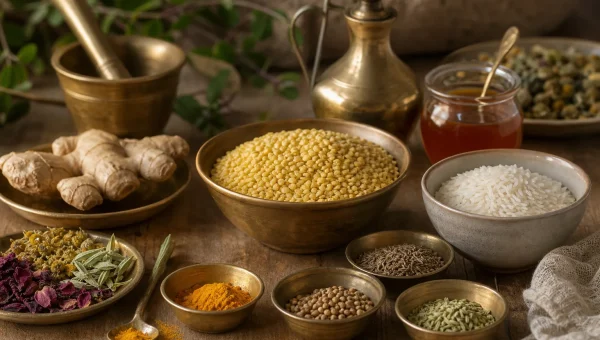
This dal is inspired by the Ayurvedic yusha idea: a soft, liquid pulse preparation made digestible by water, heat, fat, salt, and spices. Yellow split mung is one of the gentler pulses when washed, soaked, and cooked until completely soft. The aim is not to keep the dal grainy; the aim is a warm, spoonable broth that supports appetite without leaving the meal dry or rough.
Ingredients: 150 g yellow split mung dal, 1 tablespoon ghee, 1/2 teaspoon cumin seeds, 1/2 teaspoon mustard seeds, 1 cm fresh ginger grated, 1/2 teaspoon turmeric, a small pinch of asafoetida (hing), 1/2 teaspoon coriander powder, 6 curry leaves, 1 small tomato or 1 teaspoon lime juice if tolerated, 1 teaspoon rock salt or to taste, 800 ml water, fresh coriander to serve.
Method: Wash the dal until the water runs mostly clear, then soak for 30 minutes and drain. Warm the ghee in a thick-bottomed pot. Add mustard seeds and cumin; when they become aromatic, add curry leaves, ginger, hing, turmeric, and coriander powder. Add the dal and water, bring to a boil, then simmer until the dal is very soft and beginning to break down, about 25-35 minutes. Add salt near the end and add tomato only if it suits your digestion and pitta level. Serve hot with a small extra spoon of ghee and fresh coriander. For stronger vata, keep the consistency soupy and soft; for kapha tendency, reduce the finishing ghee and increase ginger slightly.
Recipe 2: Roasted Root Vegetable Soup with Ginger and Sesame
Root vegetables are useful in winter cooking because they bring sweetness, density, and a steady texture. Roasting them first gives the soup a deeper taste and makes the final bowl feel more satisfying, while sesame oil and ginger add the warmth and unctuousness that a vata-pacifying soup needs.
Ingredients: 400 g sweet potato, 200 g carrot, 2 medium parsnips or extra sweet potato, 2 tablespoons sesame oil, 1 tablespoon ghee or additional sesame oil, 2 cm fresh ginger grated, 1 teaspoon cumin, 1/2 teaspoon cinnamon, 1/4 teaspoon black pepper or less for pitta, 1 litre water or mild vegetable stock, 1-2 tablespoons sesame paste or soaked sesame blended smooth, rock salt to taste.
Method: Toss the sweet potato, carrot, and parsnip with sesame oil, cumin, and cinnamon. Roast at 200°C for 30-35 minutes until soft and lightly browned. In a pot, warm the ghee or remaining oil, add ginger and a small amount of black pepper, then add the roasted vegetables and water or stock. Simmer for 10 minutes and blend until smooth. Stir in sesame paste for body and adjust salt. Serve hot. For pitta-dominant people, reduce black pepper and cinnamon; for kapha tendency, keep the soup thinner and use a little more ginger.
Recipe 3: Lamb or Lentil Shahi Yakhni-Style Broth
Yakhni is not a named classical Ayurvedic formulation, but a slow broth can be arranged according to Ayurvedic winter principles. The non-vegetarian version fits the classical hemanta allowance for nourishing, heavier foods in suitable people with strong digestion, while the lentil version gives a vegetarian bowl with similar warmth and depth.
For the spice bouquet: 5 cm cinnamon stick, 3 green cardamom pods, 1 black cardamom pod, 3 cloves, 1 bay leaf, 1 teaspoon fennel seeds, 1/2 teaspoon black peppercorns. For the soup: 200 g masoor dal or toor dal, or 300 g bone-in lamb pieces for the meat version, 1 medium onion sliced, 2 tablespoons ghee, 1 litre water, 1/2 cup plain yogurt whisked smooth or coconut yogurt for a dairy-free version, rock salt to taste, 1 teaspoon rose water optional.
Method: Warm the ghee in a heavy pot. Add the spice bouquet and cook gently until aromatic. Add the onion and cook slowly until golden and sweet. Add dal or lamb, water, and salt. Simmer until fully tender: about 45 minutes for lentils and about 90 minutes or longer for lamb. Remove the whole spices. Whisk the yogurt separately, mix a few spoons of hot broth into it, then stir it back into the pot on low heat so it does not split. Add rose water only at the end. Serve hot. This is a rich preparation; people with weak digestion should begin with a smaller portion and more broth than solids.
Table: Winter Soup Spice Guide by Dosha
The following guide keeps the spices within verified Ayurvedic properties while translating them into kitchen use. The amounts in soups should remain culinary, not medicinal; stronger use of spices should be individualized by a qualified practitioner.
| Spice | Vata Use | Pitta Note | Kapha Use |
|---|---|---|---|
| Cumin (shveta jiraka) | Deepana and pachana; useful in dal and vegetable soups | Generally gentle, but still warming; use moderate amounts | Supports lightness and digestion in heavier soups |
| Dry ginger (shunthi) | Warming, deepana, pachana, and vata-kapha pacifying | Heating; reduce in acidity, burning, or high pitta | Very useful where coldness, heaviness, and mucus dominate |
| Cinnamon (tvak) | Sweet-pungent warmth; good in root soups and winter broths | Heating and sharp; use lightly | Helps brighten heavy, sweet, or creamy preparations |
| Asafoetida (hing) | Anulomana, deepana, pachana; traditionally valued with pulses | Sharp and heating; use only a pinch | Useful in bean and lentil dishes that otherwise feel heavy |
| Cardamom (sukshmaila) | Aromatic, deepana, and rochana; pleasant in creamy soups | Classically shita virya; often easier for pitta than hotter spices | Helps sweet or milk-based preparations feel lighter |
Recipe 4: Beet and Black Lentil Soup with Mustard Tadka
This is the heaviest soup in the collection, so it should be cooked carefully. Black gram-style preparations are dense and strengthening, but they can become too heavy for weak agni if undercooked. Soaking, long simmering, ghee, ginger, cumin, hing, and a bright finish make the bowl more suitable for a winter meal.
Ingredients: 150 g whole black lentils or split urad dal, soaked overnight, 2 medium beets roasted until tender, 2 tablespoons ghee, 1 teaspoon black mustard seeds, 1 teaspoon cumin seeds, 2 garlic cloves optional, 1 cm ginger grated, 1/2 teaspoon turmeric, a pinch of hing, 1 litre water or mild stock, rock salt to taste, 1 teaspoon lemon or lime juice if tolerated, fresh coriander or dill.
Method: Cook the soaked lentils in fresh water until completely soft, about 45-60 minutes depending on the lentil. Blend the roasted beet with a little water. In a small pan, warm ghee, add mustard seeds, then cumin, garlic if using, ginger, turmeric, and hing. Pour this tadka into the cooked lentils, add beet puree, adjust water, and simmer for 10 minutes. Add salt and finish with a little lemon or lime only if sour taste suits you. Serve hot. For pitta, reduce mustard, garlic, and sourness; for kapha, keep the ghee modest and the spices slightly sharper.
Recipe 5: Pumpkin-Coconut Milk Stew
Pumpkin gives a naturally sweet, soft, grounding base, while coconut milk gives unctuousness. Because coconut milk is rich, this stew is best at lunch or early dinner when appetite is clear, and it should be spiced enough that it does not become cold or heavy in effect.
Ingredients: 500 g pumpkin or winter squash, roasted or steamed until soft, 1 tablespoon ghee, 1 cup full-fat coconut milk, 1 cm fresh ginger, 1/2 teaspoon cumin, 1/4 teaspoon cinnamon, 2 crushed cardamom pods, a small pinch of turmeric, rock salt, warm water as needed, roasted sesame seeds to garnish.
Method: Warm ghee, add ginger, cumin, cinnamon, cardamom, and turmeric, then add pumpkin and enough warm water to loosen it. Simmer for 10 minutes and mash or blend partly smooth. Add coconut milk and keep the heat low so the stew remains creamy. Salt to taste and garnish with sesame seeds. Vata can take this as a soft, rich stew; kapha should reduce coconut milk and avoid added sweeteners; pitta should keep ginger and cinnamon mild.
Recipe 6: Sweet Potato and Chickpea Winter Curry-Soup
This recipe turns chickpeas into a softer winter meal by soaking them well, cooking them thoroughly, and pairing them with sweet potato, ghee, and digestive spices. It is more suitable when appetite is steady; for very delicate digestion, use mung dal instead of chickpeas.
Ingredients: 1 cup cooked chickpeas, 300 g sweet potato cubed, 1 tablespoon ghee, 1 teaspoon cumin, 1 teaspoon coriander powder, 1/2 teaspoon turmeric, 1 cm ginger, a pinch of hing, 1 small tomato optional, 700-900 ml water, rock salt, fresh coriander.
Method: Warm ghee and add cumin, ginger, hing, turmeric, and coriander powder. Add sweet potato, chickpeas, tomato if using, and water. Simmer until the sweet potato is soft and the chickpeas are tender enough to mash with a spoon. Mash a portion of the soup against the side of the pot to thicken it. Salt to taste and serve hot with rice or warm roti. For vata, keep it moist and add a little extra ghee; for kapha, keep it brothier and use more ginger.
Recipe 7: Soft Rice and Mushroom Rasam-Style Broth
Traditional rasam belongs to South Indian culinary practice rather than a single classical Ayurvedic prescription, but its hot, liquid, sour-pungent profile can be adapted carefully for a winter soup. For vata, this version uses soft rice and enough ghee to prevent the broth from becoming too sharp or drying.
Ingredients: 1/4 cup cooked soft rice, 1/4 cup cooked toor dal or mung dal, 150 g mushrooms sliced, 1 tablespoon ghee or sesame oil, 1 cm ginger grated, 1/2 teaspoon cumin, 1/4 teaspoon black pepper or less for pitta, a small piece of tamarind soaked in warm water or 1 teaspoon lime juice if tolerated, 800 ml water, rock salt, coriander leaves.
Method: Warm ghee or sesame oil, add cumin, ginger, and black pepper, then add mushrooms and cook until soft. Add cooked dal, soft rice, water, and tamarind water if using. Simmer for 10-15 minutes until the broth is light but not watery. Salt to taste and garnish with coriander. For pitta, reduce black pepper and tamarind; for kapha, reduce rice and make the broth more peppery; for vata, keep the rice soft and the fat adequate.
Recipe 8: Sesame Lentil Broth with a Miso-Inspired Finish
This is a contemporary adaptation, not a classical Ayurvedic recipe. Its Ayurvedic logic comes from preparation: red lentils are cooked until silky, sesame adds unctuousness, and the final bowl is kept warm, salty, soft, and easy to sip. Miso is included as a culinary fermented paste and should be used only if soy and fermentation suit the person.
Ingredients: 100 g red lentils, 1 tablespoon sesame oil, 1 teaspoon cumin, 1 cm ginger, a pinch of hing, 700 ml water, 1 tablespoon white miso or chickpea miso stirred in after cooking, rock salt only if needed, thin spring onion or coriander to garnish, toasted sesame seeds optional.
Method: Wash the red lentils and cook them with water until completely soft. In a small pan, warm sesame oil with cumin, ginger, and hing, then add it to the lentils and simmer for 5 minutes. Turn off the heat and stir in miso after the soup is no longer boiling. Taste before adding salt, because miso is already salty. Serve warm, not cold. For vata, keep the texture smooth and moist; for pitta, use less ginger and avoid very salty miso; for kapha, use less sesame oil and make the broth thinner.
The agni enhancement guide provides the broader Ayurvedic framework for understanding why warm, cooked, well-spiced winter meals are preferred over cold, dry, raw, or under-seasoned meals when vata qualities are high.
Medical Disclaimer: These recipes are for general nutritional education based on Ayurvedic dietary principles. They are not a substitute for medical diagnosis or treatment. Individual needs vary by constitution, digestive strength, age, season, medication use, pregnancy status, allergies, and medical conditions. People with kidney disease, diabetes, reflux, inflammatory bowel disease, food allergies, medically restricted diets, or active illness should consult a qualified healthcare provider, dietitian, or Ayurvedic practitioner before making major dietary changes. Use herbs, spices, and Ayurvedic recommendations under appropriate professional guidance.

For Pitta types who still feel internal heat in winter should ginger amounts be reduced or swapped for fennel?
Can these soups be batch-cooked on Sunday and safely reheated through the week?
From an Ayurvedic standpoint freshly cooked is always preferred, but practically speaking the mung dal based soups hold up well refrigerated for three or four days. The main thing is reheating gently with a little extra ghee and maybe a fresh pinch of hing rather than blasting it — keeps the digestibility intact.
The mung dal with hing and turmeric combination is now a weekly staple in my household.
fresh methi and fresh turmeric are simply not available in my region even during winter, so several recipes are inaccessible.
This feels like a food blog with Ayurveda terminology added rather than evidence-based therapeutic guidance.