Home Blood Sugar Monitoring Integrated with Ayurvedic Prameha Management
Blood sugar monitoring and Ayurvedic prameha management can be used together in a practical, clinically responsible way. A glucose meter cannot replace Ayurvedic assessment, and Ayurvedic assessment cannot replace medical diagnosis, but the two can inform each other. Home readings can show how meals, meal timing, sleep, stress, walking, and practitioner-selected herbs influence daily glucose patterns. Ayurveda adds a wider clinical frame by looking at agni, kapha accumulation, meda involvement, tissue nourishment, urine changes, appetite, strength, sleep, and lifestyle habits.
In Ayurveda, prameha is a broad group of disorders marked by abnormal and excessive urination, turbidity or abnormal qualities of urine, and disturbance of dosha and dushya. Classical descriptions connect prameha with kapha-aggravating diet, sedentary habits, excess sleep, overnourishment, meda involvement, and hereditary tendency. The condition overlaps with diabetes mellitus in many features, especially madhumeha and metabolic patterns associated with obesity and insulin resistance, but it should not be mapped one-to-one onto modern categories such as type 1 diabetes, type 2 diabetes, or prediabetes.
Charaka describes twenty types of prameha: ten kaphaja, six pittaja, and four vataja. The classical prognosis is also graded: kaphaja prameha is generally considered more manageable, pittaja prameha more difficult and often palliable, and vataja prameha the most serious, especially when tissue depletion, wasting, chronicity, or hereditary factors are present. Home glucose monitoring can support this staging by showing whether the person’s daily pattern is mainly post-meal elevation, fasting elevation, variability, or repeated low readings, while the Ayurvedic practitioner evaluates the broader dosha-dhatu picture.
Structured self-monitoring is most useful when the readings are connected to decisions. Random testing may create anxiety without changing diet, movement, sleep, or medication decisions. A useful monitoring plan records the reading, time, meal, symptoms, activity, stress, sleep, medication, and any herbs or supplements taken. This turns the glucose meter into a feedback tool rather than a judgment tool.
Reading Blood Glucose Through the Dosha Lens
The table below presents an Ayurvedic pattern-reading framework for practitioner-guided interpretation. It is not a diagnostic chart and should not be used to change medication. Repeated readings outside the target range set by a physician should be discussed with a qualified healthcare provider.
| Monitoring Pattern | When It Appears | Ayurvedic Pattern to Consider | Practical Response |
|---|---|---|---|
| Repeated high fasting readings | Morning before food | Kapha-meda involvement, heavy evening meals, poor night digestion, or medically recognized dawn-pattern elevation | Earlier and lighter dinner, improved sleep routine, physician review of fasting targets, and practitioner-guided kapha-meda management |
| Large post-meal rise | One to two hours after meals | Manda agni, kapha accumulation, meda dhatu disturbance, or excessive refined carbohydrate load | Pair carbohydrates with protein, fiber, and vegetables; reduce refined grains and sweets; walk gently after meals |
| Marked day-to-day variability | Similar meals but different readings | Vata disturbance, irregular meals, variable sleep, inconsistent activity, or stress-related fluctuation | Regular meal timing, consistent sleep-wake rhythm, calm eating, and structured tracking of sleep and stress with glucose readings |
| Stress-associated elevation | After intense work, conflict, anxiety, poor sleep, or illness | Aggravated vata-pitta with disturbed prana, sleep, and agni regulation | Breath regulation, gentle evening routine, sleep correction, and practitioner-selected medhya or rasayana support when appropriate |
| Low readings or reactive dips | Often a few hours after a high-refined-carbohydrate meal or after medication/exercise mismatch | Vata-agni instability or excessive glucose-lowering load | Medical review, avoid skipping meals, reduce refined carbohydrates, and do not combine glucose-lowering herbs with medication without supervision |
The Structured Monitoring Protocol for Prameha Management
Structured monitoring means testing at planned times, recording the context, and reviewing the pattern. The frequency should be chosen with a healthcare provider, especially for anyone using insulin, sulfonylureas, or other medicines that can cause hypoglycemia.
The baseline pattern week: A practitioner-supervised baseline can include fasting glucose and selected post-meal readings, especially after the meals that seem most relevant. Some people may use a four-point pattern for a short period: fasting, two hours after breakfast, two hours after lunch, and two hours after dinner. This helps identify whether the main problem is fasting elevation, post-breakfast elevation, post-dinner elevation, or broad variability.
The paired meal test: Test immediately before a meal and again about two hours after the first bite, then record the meal clearly. This reveals personal food responses. The same portion of rice, wheat, millet, fruit, sweets, or dal may produce different readings in different people depending on portion size, preparation, sleep, activity, gut tolerance, medication, and overall metabolic state.
The post-intervention test: When a new dietary change, walking habit, sleep routine, or practitioner-selected herb is introduced, compare similar meals before and after the change. The comparison is useful only when the meal, timing, sleep, and activity are reasonably consistent. If readings fall too low, rise sharply, or become erratic, the intervention should be reviewed with a physician.
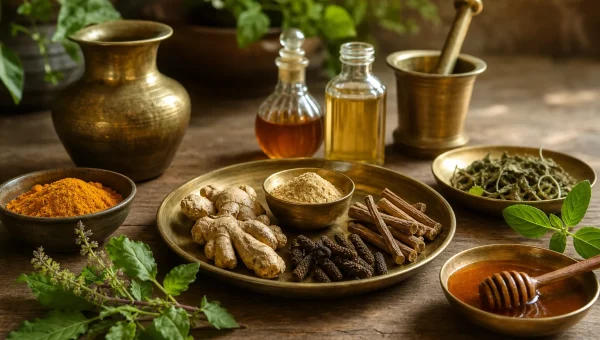
Ayurvedic Herbs and Foods Commonly Used in Prameha Support
Herbs and medicinal foods used for prameha should be selected according to constitution, disease stage, digestion, strength, medication use, and safety. They should not replace prescribed diabetes care. Culinary use is different from concentrated extracts, and concentrated extracts require more caution.
Bitter melon (Karela, Karavellaka, Momordica charantia): Bitter melon is used traditionally as a food and medicinal plant in metabolic disorders. Human trials have found modest glucose-related effects, and standardization remains variable. Juice doses around 50-100 ml daily and dried preparations have been used in clinical contexts, but there is no universal dose. It should be avoided or used only with medical guidance in pregnancy, G6PD deficiency, frequent hypoglycemia, or when taking glucose-lowering medication.
Gurmar (Meshashringi, Gymnema sylvestre): Gurmar is traditionally associated with madhumeha and the reduction of sweet taste. Extracts are usually standardized for gymnemic acids, and clinical products commonly use 200-400 mg daily or divided dosing. Because it may lower glucose and alter the taste response to sweetness, it should be used under supervision, especially in people already taking diabetes medicines.
Fenugreek (Methi, Trigonella foenum-graecum): Fenugreek seed contains soluble fiber and mucilage-like components that can slow carbohydrate absorption and support satiety. Traditional household use includes soaked seeds or methi as part of food, while clinical studies have used higher and more variable amounts. Fenugreek can cause digestive discomfort and may interact with glucose-lowering medicines or anticoagulants, so therapeutic use should be discussed with a clinician.
Cinnamon (Tvak/Dalchini, Cinnamomum species): Cinnamon is a warming digestive spice used in food. Human data suggest possible modest effects on fasting or post-meal glucose in some groups, but findings are mixed and vary by cinnamon species, dose, and preparation. Culinary amounts are generally different from supplement doses. Cassia cinnamon contains more coumarin than Ceylon cinnamon, so high-dose or long-term supplementation is not appropriate without medical guidance, particularly in liver disease or when taking anticoagulants or diabetes medicines.
Barley (Yava): Classical prameha management gives importance to barley preparations, especially for kapha-meda dominant patterns. In practical dietary planning, barley and other high-fiber whole grains may be useful when they replace refined flour, sweets, and large portions of polished rice. Portion size still matters, and paired meal testing can show whether barley is suitable for the individual.
Movement as a Glucose Management Tool
Gentle walking soon after meals is one of the simplest ways to reduce post-meal glucose excursions. Walking uses skeletal muscle and can help move glucose out of the bloodstream during the period when a meal is being absorbed. It is especially useful after carbohydrate-containing meals and after dinner, when many people otherwise sit for long periods.
The traditional Indian custom called shatapavali means walking about one hundred steps after a meal. For prameha support, this can be expanded into a practical routine: walk gently for 5-20 minutes after the main meals, adjusted for age, strength, weather, mobility, and medical condition. The walk should be light and comfortable, not intense exercise immediately after a heavy meal.
To test its value personally, compare similar meals on days with and without a gentle post-meal walk. The goal is not to chase perfect numbers but to identify which habit reliably improves the post-meal pattern without causing fatigue, dizziness, chest discomfort, or low glucose. Anyone with heart disease, neuropathy, recurrent hypoglycemia, or insulin use should follow individualized medical advice.
HbA1c as the Three-Month Report Card
Home glucose monitoring captures daily changes. HbA1c reflects average blood glucose over roughly the past two to three months and helps show whether daily patterns are improving over time. Diagnostic categories used in modern medicine define HbA1c below 5.7% as normal, 5.7-6.4% as the prediabetes range, and 6.5% or higher as consistent with diabetes when confirmed by appropriate medical testing.
In an integrated prameha plan, HbA1c should be checked at intervals recommended by a physician. Daily readings can guide meal and lifestyle choices, while HbA1c shows whether those choices are producing sustained metabolic improvement. Ayurvedic management should also track weight trend, waist circumference, appetite, energy, sleep, bowel habits, urine symptoms, cravings, strength, and signs of tissue depletion.
All home blood glucose monitoring for prameha management should proceed with physician involvement. Prediabetes and diabetes require medical diagnosis and management. Any herb, supplement, fasting plan, detoxification therapy, or major dietary change should be disclosed to the treating physician, especially when the person is taking metformin, insulin, sulfonylureas, anticoagulants, blood pressure medicines, or other long-term medication.
Medical Disclaimer: This article is for educational purposes only. Diabetes and prediabetes require diagnosis and management by qualified healthcare professionals. Do not start, stop, or change prescribed medication based on home glucose readings or Ayurvedic herbs without medical consultation. Herbs and supplements with glucose-lowering potential may contribute to hypoglycemia when combined with diabetes medicines. Consult a qualified Ayurvedic practitioner and physician before beginning therapeutic protocols, especially if pregnant, elderly, underweight, managing chronic disease, or taking medication.
References
- Charaka Samhita — Prameha Chikitsa
- Frontiersin (frontiersin.org)
- 2. Diagnosis and Classification of Diabetes: Standards of Care in Diabetes-2026 (2026), PubMed Central
- NIDDK
- Hypoglycemic effect of bitter melon compared with metformin in newly diagnosed type 2 diabetes patients (2011), PubMed
- NCBI
- Drugs (drugs.com)
- Gymnema sylvestre: A Memoir (2007), PubMed Central
- Drugs (drugs.com)
- Onlinelibrary (onlinelibrary.wiley.com)
- Effect of fenugreek (Trigonella foenum-graecum L.) intake on glycemia: a meta-analysis of clinical trials (2014), PubMed
- NCBI
- NCCIH
- Mskcc (mskcc.org)
- The effect of cinnamon supplementation on glycemic control in patients with type 2 diabetes or with polycystic ovary syndrome: an umbrella meta-analysis on interventional meta-analyses (2023), PubMed Central
- NCCIH
- Mayoclinic (mayoclinic.org)
- Webmd (webmd.com)
- Link (link.springer.com)
- Link (link.springer.com)
- Wisdomlib — classical text