
You do not need another punishing workout, a louder pre-workout supplement, or a more complicated wellness stack. If digestion feels heavy, sleep timing is irregular, and stress keeps spilling into the body, Ayurveda points to a simpler daily intervention: walk. Not randomly, not while scrolling, and not always at the same intensity. Walk at the right time, in the right dose, with the right state of attention.
In Ayurvedic terms, walking belongs to the broader discipline of measured movement. Classical discussions of vyayama describe exercise as movement that supports steadiness, strength, lightness, work capacity, and digestive fire when it is performed in moderation. The same sources also warn that excess walking or exercise can deplete the body. The goal is not to turn every walk into a workout; the goal is to use walking as a daily rhythm that supports agni, steadies vata, reduces heaviness, and trains attention.
The most useful Ayurvedic walking routine has three parts: a gentle walk after meals, a morning walk that anchors the day, and an optional evening walk that helps the body transition toward rest.
The Post-Meal Walk: Shatapavali / Shatapada-Gamana
The post-meal walk is the simplest walking protocol and the easiest place to begin. In later Ayurvedic and regional usage, this practice is commonly called Shatapavali, meaning a hundred-step walk. Related descriptions of bhojanottara vihara, conduct after eating, refer to shatapada-gamana, walking about a hundred steps after food. The practical instruction is modest: after your main meal, sit calmly for a short while, then walk gently for about 100 steps or 5 to 10 minutes.
This is not a power walk. Keep the pace easy, the abdomen relaxed, the spine upright, and the breath smooth. You should be able to speak without effort. If the meal was large, oily, or heavy, make the walk slower rather than faster. If you feel reflux, cramping, dizziness, or unusual discomfort, stop and rest.
Ayurvedically, the post-meal walk supports agni without disturbing it. Lying down immediately after eating encourages heaviness, while intense exercise after food can overstrain the body. A slow upright walk gives the meal time to settle, supports the downward movement associated with apana vayu, and helps reduce the dull, stagnant feeling that can follow a heavy lunch or dinner. In modern practical terms, light walking after meals is also a useful way to support healthier post-meal glucose handling.
The Morning Walk: Brahma Muhurta or Shortly After Sunrise
The morning walk is less about digestion and more about setting the tone of the nervous system and daily routine. Ayurvedic daily-regimen teaching praises rising in Brahma Muhurta, the quiet period before sunrise, for a healthy person. If that timing is not realistic, the practical version is to walk soon after waking or within the first hour after sunrise, before food, caffeine, email, and social media take over the mind.
Start with 15 to 30 minutes. The pace should be comfortable enough that nasal breathing remains natural. Use the breath as a built-in speed regulator: if you need to gasp, push, or breathe through the mouth, slow down. The aim is to leave the walk clearer, warmer, and more awake, not depleted.
Morning outdoor light also helps anchor the sleep-wake rhythm. A walk soon after waking combines light exposure, gentle movement, and routine. For Kapha-type heaviness, it adds warmth and mobility. For Vata-type restlessness, it gives the mind a steady rhythm. For Pitta-type intensity, it works best when kept relaxed rather than competitive.
Personalize the Pace by Dosha and Capacity
Ayurveda does not treat movement as one-size-fits-all. A walk that is balancing for one person can be too stimulating, too heating, or too depleting for another. Choose pace, terrain, and duration according to your constitution, current imbalance, season, age, strength, and medical condition.
| Condition or Tendency | Best Walking Style | Practical Guidance |
|---|---|---|
| Vata dominance or Vata aggravation | Slow, steady, warm, rhythmic | Walk on stable ground, keep a regular pace, avoid cold wind when possible, and focus on calm breathing. |
| Pitta dominance or Pitta aggravation | Moderate, relaxed, cooling | Walk early morning or evening, avoid harsh midday heat, choose shade or water-side routes, and avoid turning the walk into a competition. |
| Kapha dominance or Kapha aggravation | Brisker, longer, warming | Walk before heavy meals, include gentle inclines if appropriate, and continue until the body feels warm and light without exhaustion. |
| Low strength, recovery, older age, illness, or pain | Short, gentle, supervised if needed | Reduce duration and intensity. Stop before fatigue and seek professional guidance when symptoms are significant. |
Choose the Route by the Qualities You Need
The surface and setting change the quality of the walk. In Ayurvedic language, the guna, or qualities, of the environment influence the body and mind. A quiet shaded route feels different from a hot concrete road; soft grass feels different from an incline; a crowded street has a different effect than a tree-lined path.
| Route or Surface | Quality of the Practice | Best Use |
|---|---|---|
| Clean grass, soil, or level natural ground | Soft, steady, grounding | Useful when the mind feels scattered, restless, or overstimulated. Barefoot walking should be done only where the surface is safe and clean. |
| Sand or mild incline | Heavier effort, strengthening, warming | Useful for Kapha-type sluggishness when joints, balance, and strength allow it. |
| Smooth paved path | Consistent, predictable, moderate | Good for daily walking, post-meal walks, and anyone who needs stable footing. |
| Tree-lined or shaded route | Cooling, quieting, restorative | Helpful for Pitta-type heat, irritability, or overwork. |
| Near water | Cooling, soothing, mentally settling | Useful for emotional reset, provided the route is safe and not slippery. |
Walking Meditation: Make the Walk a Dharana Practice
Walking becomes more than exercise when attention is included. In the language of yoga, dharana is the steady fixing of the mind on one point. During a walk, that point can be the soles of the feet, the rhythm of the steps, or the breath.
- Begin walking at your chosen pace and let the body settle for the first few minutes.
- Bring attention to the soles of the feet. Notice heel contact, weight transfer, and toe release.
- Let the breath become smooth. If comfortable, lengthen the exhale slightly more than the inhale.
- When thoughts arise, notice them and return attention to the feet or breath.
- Continue for 10 to 20 minutes, or shorter if you are new to the practice.
This is especially useful for people who find seated meditation difficult. The moving body gives the mind a clear anchor, while the repeated return to the chosen focus trains steadiness without force.
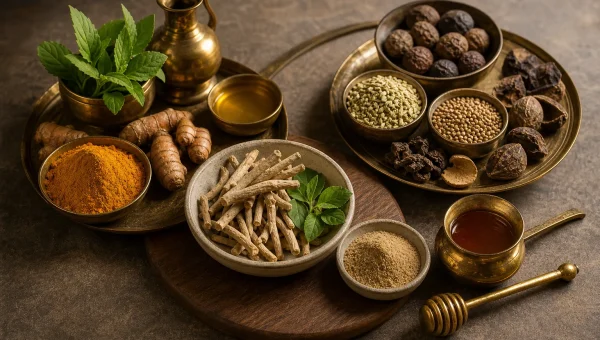
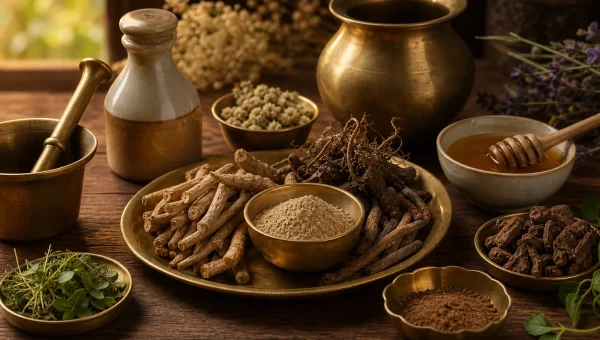
Optional Herbal Support for a Walking Routine
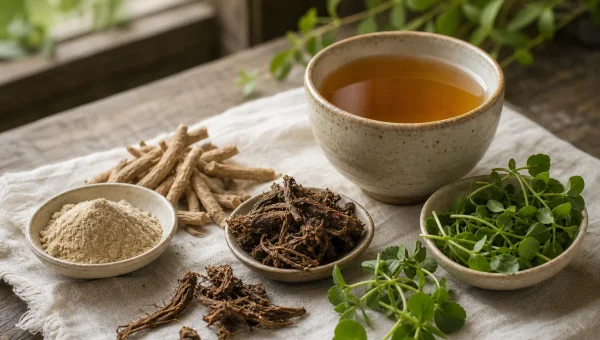
Herbs are not required for a walking practice. A walk works because it is timed, moderate, and repeated. When herbs are used, they should be selected by a qualified Ayurvedic practitioner according to constitution, digestion, medicines, pregnancy status, diagnosis, and season.
- Ashwagandha (Withania somnifera): The Ayurvedic Pharmacopoeia of India lists Ashwagandha root as rasayana, balya, and Vata-Kapha pacifying. It may be chosen when depletion, weakness, or Vata-type instability is part of the picture.
- Brahmi (Bacopa monnieri): Brahmi is listed as medhya and rasayana, with cooling qualities. It fits the mental-focus side of walking practice, especially when the walk is used as a moving meditation.
- Arjuna (Terminalia arjuna): Arjuna bark is classically described as hridya, supportive of the heart. It should be used carefully and professionally, especially by anyone with cardiovascular disease or those taking heart or blood-pressure medicines.
- Shunthi, dry ginger (Zingiber officinale): Dry ginger is listed as dipana and pachana, supporting digestive fire and processing. It may suit cold, heavy, Kapha-type mornings, but it is not ideal for everyone, especially when heat, burning, or acidity is prominent.
Common Mistakes That Undercut the Benefits
Walking is simple, but the benefit changes when the practice is done carelessly. The most common mistake is walking too fast after food. The post-meal walk should feel easy and settling, not sweaty or forceful. Save brisk walking for the morning or for a separate exercise session when digestion is not actively occupied.
- Scrolling while walking: A phone in the hand fragments attention, changes posture, and turns the practice into stimulation instead of regulation.
- Using one pace for every condition: Vata needs steadiness, Pitta needs moderation, and Kapha usually needs more stimulation. Adjust the walk rather than forcing a universal rule.
- Ignoring exhaustion: Classical guidance favors moderate exercise and warns against excess. Stop before depletion, breathlessness, dizziness, or pain.
- Walking barefoot on unsafe ground: Barefoot walking can be pleasant on clean, safe natural surfaces, but footwear is wiser on hot pavement, rough ground, public paths, or anywhere injury or infection is possible.
- Collapsing the posture: Walk upright, keep the chest open, relax the shoulders, and let the gaze rest ahead rather than down at the phone.
A Simple 30-Day Walking Template
For the first month, do not chase intensity. Build rhythm. The aim is to make walking part of daily structure so that digestion, sleep timing, mood, and energy have a predictable support system.
| Time | Walk Type | Duration | Pace | Main Aim |
|---|---|---|---|---|
| Morning | Morning walk | 15 to 30 minutes | Comfortable, nasal breathing if possible | Lightness, daily rhythm, Kapha reduction, mental steadiness |
| After lunch or main meal | Shatapavali / post-meal walk | About 100 steps or 5 to 10 minutes | Very gentle | Settling the meal, supporting agni, reducing heaviness |
| Evening | Optional transition walk | 10 to 20 minutes | Slow to moderate | Releasing work stress and preparing the mind for rest |
Track simple signs rather than dramatic promises: lighter digestion after meals, fewer episodes of post-meal heaviness, steadier bowel routine, calmer evenings, easier sleep timing, and a clearer mind during work. If these signs improve, the dose is likely appropriate. If fatigue, pain, agitation, or poor sleep increases, reduce the intensity or duration.
When to Avoid or Modify the Practice
Walking should be modified during fever, acute illness, severe pain, dizziness, chest discomfort, uncontrolled breathlessness, recent surgery, unstable blood sugar, or active injury. People with cardiovascular disease, joint disorders, pregnancy, balance problems, diabetes, or those taking prescription medicines should get individualized guidance before changing exercise habits or adding herbs.
The bottom line: walking is one of the most accessible daily practices in an Ayurvedic lifestyle. It does not require a gym, a class, or a device. It requires timing, moderation, attention, and consistency. A gentle walk after meals, a steady morning walk, and a quiet evening walk can turn ordinary movement into a daily health ritual.
Disclaimer: This content is for informational purposes only and is not a substitute for professional medical advice, diagnosis, or treatment. Consult a qualified Ayurvedic practitioner or healthcare provider before beginning a new exercise or herbal regimen, especially if you have a medical condition, are pregnant, are recovering from illness or surgery, or take prescription medications.
Related Reading
Continue exploring Ayurvedic approaches to daily food, digestion, and lifestyle through these related guides.
- Anti-Cancer Potential of Ayurvedic Herbs: What Peer-Reviewed Research Actually Shows
- Overnight Oats the Ayurvedic Way: Why Cold Prep Needs Warm Spices
- 8 Yoga Poses to Improve Digestion: An Ayurvedic Approach
References
- Charaka Samhita — Naveganadharaniya Adhyaya
- Easyayurveda (easyayurveda.com)
- Wjpr (wjpr.s3.ap-south-1.amazonaws.com)
- After Dinner Rest a While, After Supper Walk a Mile? A Systematic Review with Meta-analysis on the Acute Postprandial Glycemic Response to Exercise Before and After Meal Ingestion in Healthy Subjects and Patients with Impaired Glucose Tolerance (2023), PubMed Central
- CDC
- Wisdomlib — classical text
- Miracledrinksclinic (miracledrinksclinic.com)
- Miracledrinksclinic (miracledrinksclinic.com)
- Miracledrinksclinic (miracledrinksclinic.com)
- Ayurvedic Pharmacopoeia of India
- NCCIH

The part about not walking right after meals was new to me. I had been doing a brisk walk about 20 minutes after dinner thinking I was helping digestion, but the article makes a strong case for a gentle pace and a longer wait. Switched to a slower 15 minute walk about 45 minutes after eating this week and the bloating I usually get in the evenings has actually reduced.
The after-meal walk for digestion is what I’ve been telling people for years but without classical backing. Knowing the Charaka reference gives me something specific to cite when clients push back on this recommendation.
The phone rule is the one I’m working on. Walking while scrolling is something I do automatically and breaking that habit is harder than any dietary change. The mindful walking prescription is more than just movement, it’s the attention component that makes it therapeutic.
The timing guidance, after meals and in natural settings when possible, maps almost exactly onto what chronobiology research suggests for postprandial exercise. A gentle walk 15-30 minutes after eating improves glycemic response significantly. The 3000-year-old prescription and the 2020 paper are saying the same thing.
Curious about the regional variation in timing recommendations. Here in Bangalore the morning air is often quite cold in winter and I have been told by older relatives to wait until the sun is up before walking. Does the Ayurvedic guidance on morning walks account for climate, or is sunrise walking considered beneficial regardless of temperature?
After three months of post-dinner walking my sleep has improved significantly. The glucose regulation effect from post-meal walking is real and measurable on a continuous glucose monitor. The evening walk became the highest-leverage single change I made.
Is there guidance for walking during periods of illness or digestion distress? The general prescription seems to be walking as maintenance but I’d want to know when walking is contraindicated or should be modified.
The idea of a 100-step walk after lunch feels surprisingly simple yet specific.
The doom-scrolling avoidance during walks is the hardest behavior change in here. Walking without a phone or podcast feels like wasted time in a culture where time efficiency is the dominant value. But the attention element of walking is itself therapeutic and that gets lost entirely with headphones.
Walking barefoot on grass in the morning sounds like a nice way to wake up the senses.
The Walking as Medicine angle is useful here. The safety notes could be expanded a little.
Does the nasal breathing rule really make a difference if you’re used to mouth breathing?
The ‘no HIIT workout’ and ‘no pre-workout supplement’ opening is jarring in the best way. Starting with what not to do changes the framing for people who’ve been sold intensity as the answer to every health problem.
I tried the slow pace after my lunch break and noticed less bloating by midday.
It’s interesting how Ayurveda matches terrain types to doshas for walking.
The suggestion to walk before checking email seems hard but worth experimenting with.
Seeing the connection between walking meditation and focus training caught my attention.
I wonder if the evening walk is optional for people with night shifts.
The herb recommendations like ashwagandha before a walk add an extra layer to the routine.
Keeping the phone out of hand while walking seems like the hardest habit to break.
Following the timed walks could help reset a chaotic schedule without needing a gym.