
Three years ago I went through a business failure that erased savings I had spent a decade building. The anxiety brought broken sleep, repeated calculations, chest and shoulder tension, and a mind that kept returning to an uncertain future. Ayurvedic language helped me describe the experience, but it did not make the financial problem disappear. What helped was separating the practical problem from the stress response and addressing both.
Financial hardship is not a special biological category with one unique hormone pattern. It can nevertheless become chronic because debt, income uncertainty, housing and family needs may remain unresolved for months. Modern research associates financial hardship with psychological distress and poorer cardiovascular health, although observational associations do not establish a single cause.
An Ayurvedic Interpretation, Not a Fixed Diagnosis
Classical Ayurveda does not describe a universal sequence in which money anxiety begins as Vata, turns into Pitta and finally becomes Kapha. That progression was an unsupported modern construction. A practitioner would assess constitution, digestion, sleep, strength, age, medicines and current symptoms before deciding whether a dosha framework is useful.
| Observed Pattern | Possible Ayurvedic Interpretation | Low-Risk First Response |
|---|---|---|
| Restlessness, irregular appetite, racing thoughts, light sleep | A practitioner may consider qualities associated with aggravated Vata; symptoms alone do not prove a dosha diagnosis. | Regular meals and sleep timing, warmth and less evening stimulation. |
| Irritability, burning digestion, headaches, driven over-planning | Heat and sharpness may be discussed in relation to Pitta; medical causes still require ordinary assessment. | Pause before decisions, avoid skipped meals, and moderate alcohol and caffeine. |
| Withdrawal, heaviness, oversleeping, loss of initiative | Heaviness may be described through Kapha language, but persistent low mood may indicate depression. | Daylight, walking, social contact and mental-health support when functioning is impaired. |
This table is a reflective aid, not a diagnostic instrument. Chest pain, severe breathlessness, fainting, suicidal thoughts or inability to function require medical or mental-health evaluation rather than dosha self-treatment.
What Scarcity Research Actually Shows
A 2013 Science paper studied Indian sugarcane farmers before and after harvest. The same farmers performed worse on cognitive tasks before harvest, when money was scarcer, than after harvest. The authors argued that poverty-related concerns can consume cognitive capacity. The paper did not prove that cortisol caused the effect and should not be converted into a fixed IQ-loss claim for every person.
Ojas, Prana Vayu, manovaha srotas and srotorodha belong to a traditional explanatory system. They should not be presented as laboratory equivalents of cortisol, autonomic activity or inflammatory biomarkers. An integrative account can place the systems beside one another without claiming that one directly measures the other.
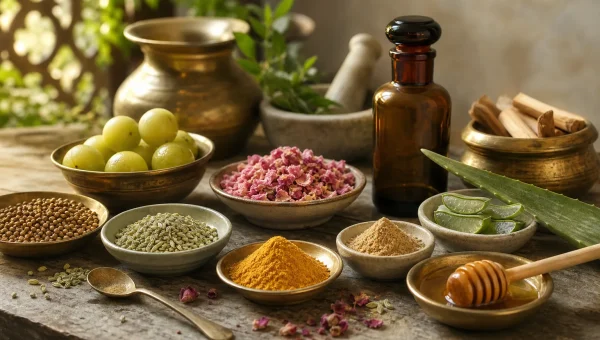
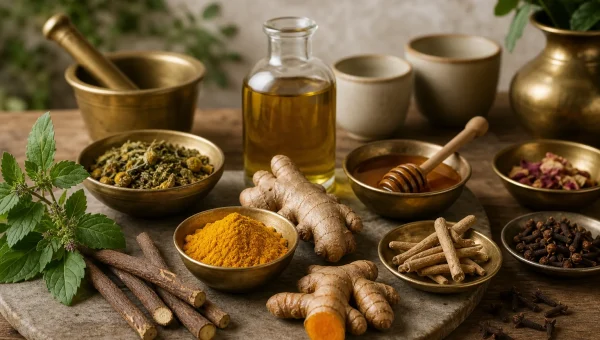
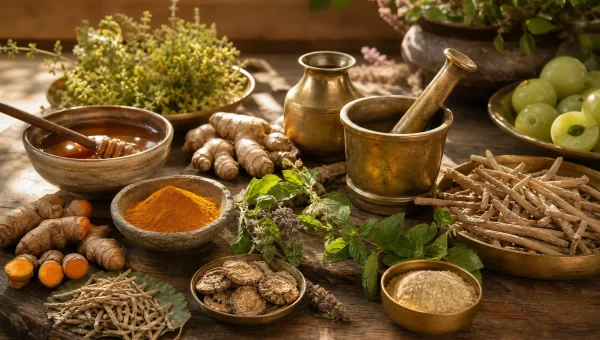
Herbs: What the Evidence Supports
The original five-herb protocol gave standardized doses as though one formula suited everyone. That is not safe or classically sound. Ayurvedic prescribing is individualized, commercial extracts differ from traditional preparations, and human evidence is uneven.
Ashwagandha (Withania somnifera): A small 2012 randomized, double-blind, placebo-controlled trial enrolled 64 adults with chronic stress and tested 300 mg of a specific high-concentration root extract twice daily for 60 days. Stress scores and serum cortisol improved more than with placebo. This does not establish a universal dose, prove benefit for financial anxiety or make all products equivalent. The Ayurvedic Pharmacopoeia of India identifies the drug as the dried mature root, and a Ministry of AYUSH advisory cautions against treating the leaves as the classical medicinal part.
Brahmi (Bacopa monnieri): Human trials have mainly examined memory and cognition, not financial stress. A systematic review found some evidence for improved memory free recall, while evidence across other cognitive domains remained limited. The original claim that one exact bacoside-standardized dose reliably improves working memory and anxiety within four to six weeks was too specific to generalize.
Jatamansi, Shankhapushpi and Guduchi: Traditional use or laboratory findings are not reliable clinical proof for anxiety-related insomnia. The claims about exact compounds, a three-week response and a classical Shankhapushpi prescription “for exactly the syndrome of financial anxiety” could not be verified. Guduchi should not be casually promoted as an immune protector during stress because clinically apparent liver injury associated with Tinospora cordifolia has been reported.
No herb should replace psychotherapy, medical treatment, sleep evaluation or practical financial advice. Product identity, substitution, contamination and interactions also matter.
Daily Structure During Financial Stress
Ayurveda’s concept of dinacharya emphasizes an orderly daily regimen. Modern stress and sleep guidance likewise supports regular sleep timing and physical activity. Routine does not solve debt; it preserves sleep, attention and energy for better decisions.
Keep a consistent wake time: Rise at approximately the same time each day rather than sleeping very late after a bad night. There is no evidence that 6:00 AM is correct for everyone, and “before sunrise” should not override shift work, illness, caregiving or adequate sleep.
Use abhyanga conservatively: Oil application and massage are included in Ayurvedic daily-regimen literature, including Ashtanga Hridaya, Sutrasthana 2. The earlier claim that ten minutes of self-abhyanga rapidly changes cortisol, blood pressure and heart-rate variability was unsupported. Gentle self-massage may be comforting when suitable, but avoid it over inflamed or infected skin, after injury, or when a clinician advises against massage.
Practise gentle breathing: Alternate-nostril breathing has been studied in small, varied trials. Reviews suggest possible autonomic and cardiopulmonary effects, but methods are not standardized and the evidence does not justify promising a parasympathetic “reset” in one session. Begin without breath retention and stop if dizzy.
Create a financial-work window: Choose one or two defined periods for bills, calls, budgeting and advice. The original 7 PM cutoff was a personal boundary, not a physiological law. Select a stopping time that leaves a quiet transition before bed, note unresolved tasks and return to them at the next session.
Food and Sleep Without Overclaiming
Financial anxiety can disturb appetite in different directions. Ayurveda may favour warm, freshly prepared and easily digested meals for someone who is cold, irregular or depleted, but there is no rule that every meal must be oily or that raw food is harmful to everyone. Aim for regular, affordable nourishment compatible with medical needs.
- Eat regularly: Include protein, fibre and adequate fluid when possible.
- Use ghee as food, not as a stress cure: Calling it the primary “Ojas food” that directly reverses stress depletion is a traditional interpretation, not a proven mechanism.
- Do not prescribe bedtime herbal milk universally: Milk, saffron and Ashwagandha may be unsuitable in allergy, intolerance, pregnancy, medication use or particular medical conditions.
- Protect sleep: Regular sleep hours, less evening caffeine, avoiding alcohol near bedtime and reducing late-night screen stimulation are supported measures.
Sattvavajaya and Productive Attention
Sattvavajaya is described in Charaka Samhita, Sutrasthana 11/54, as restraining or withdrawing the mind from unwholesome objects. It may be related to guided self-regulation, but it should not be declared identical to modern cognitive behavioural therapy or mindfulness.
Distinguish planning from repetitive worry. During a scheduled financial session, list specific actions: call a creditor, calculate essential expenses, seek benefits, obtain professional debt advice, or ask a trusted person to review the plan. Outside that period, note the thought and return attention to the present task. This is not denial; it stops the same unsolved question from occupying every hour.
For a broader routine framework, see our post on the Ayurvedic daily routine (Dinacharya). For a separate discussion of Ashwagandha products and precautions, see our Ashwagandha guide. For persistent sleep problems, see Ayurvedic sleep remedies.
This post describes supportive practices, not a treatment plan or substitute for financial counselling, psychotherapy, psychiatric care or medical evaluation. Consult a qualified Ayurvedic practitioner and your healthcare provider before taking herbs. Ashwagandha should be avoided in pregnancy and breastfeeding and may be unsuitable with thyroid or autoimmune disorders, before surgery, or with sedatives, anticonvulsants, immunosuppressants, thyroid hormone, diabetes medicines or blood-pressure medicines. Rare liver injury has been reported. Seek urgent help for suicidal thoughts, severe chest pain, fainting or difficulty breathing.
Actionable tip: Tonight, choose tomorrow’s 20- to 30-minute financial-work period. Write down the three matters that most need action, then close the notebook. Use calm breathing for a few minutes and keep the rest of the evening free from repeated account checking. Do not add Jatamansi or another sedating herb without professional review.
References
- The Relationship Between Financial Worries and Psychological Distress Among U.S. Adults (2023), PubMed Central
- Cardiovascular consequences of financial stress: A systematic review and meta-analysis (2024), PubMed
- Poverty impedes cognitive function (2013), PubMed
- Nootropic efficacy of Satvavajaya Chikitsa and Ayurvedic drug therapy: A comparative clinical exposition (2015), PubMed Central
- A prospective, randomized double-blind, placebo-controlled study of safety and efficacy of a high-concentration full-spectrum extract of ashwagandha root in reducing stress and anxiety in adults (2012), PubMed
- NCCIH
- Ministry of AYUSH
- NCBI
- NCBI
- Easyayurveda (easyayurveda.com)
- Msjonline (msjonline.org)
- CDC
Three years ago I had my own financial collapse after my husband’s business went under and I genuinely thought the chest tightness was a cardiac problem. Cardiologist found nothing. It was exactly what you describe here, that Vata-Pitta overdrive. Started doing warm sesame oil self-massage before bed and cut my caffeine to one cup. The anxiety didn’t vanish but it became manageable.
the bit about 3 AM mental calculations hit close to home. been dealing with that for 8 months since my startup ran out of runway. what specific vata-pacifying practices did you find most useful for the sleep piece? i do abhyanga already but the 3am wake-up still happens.
My integrative medicine doctor explicitly warned me against vata given my current medications. The drug interaction issue is real and needs more attention in articles like this.
This is the first time I have seen Ayurveda applied to financial stress specifically rather than just generic anxiety. The Pitta piece especially makes sense to me, that burning urgency to fix things immediately that makes you take worse decisions. Has anyone here tried the shatavari and ashwagandha combination mentioned for the adrenal component?
I went through bankruptcy in 2019 and the physical manifestations were real. Upper back tension so bad I needed weekly physio. I wish I had read something like this then. The part about Vata’s need for security resonating with financial uncertainty is actually a useful lens.
Does the Vata-Pitta protocol differ if someone is also dealing with Kapha depression alongside the anxiety? I have a client who has the chest tension and broken sleep but also the heaviness and withdrawal that looks more Kapha. Would love to know how you approach mixed presentations.
I appreciated how the piece separates the money problem from the stress reaction, it gave me a clearer way to think about my own budgeting worries.
The quality of vata supplements varies enormously. Without standardization data this is hard to act on practically. Which supplier and what specification?
The table linking symptoms to dosha qualities felt useful as a starting point, though I wonder how often those patterns actually show up in real life.
My Ayurvedic teacher in Mysore always said that financial fear is the deepest Vata disturbance because it attacks the root chakra. I never fully understood it until I lost my job during covid and felt that specific quality of ground-less-ness. This article captures that physical dimension really well.
Reading about the Vata Pitta Kapha progression made me curious, but the article rightly points out that sequence isn’t backed by classical texts.
I liked the reminder that chest pain or severe breathlessness needs medical attention first, before trying any dosha based self care.
The research cited here is from the 2015-2020 period. Is there more recent work that confirms or updates these findings?
The suggestion to set a fixed financial work window makes sense; I’ll try picking a short slot after dinner and see if it reduces my nighttime rumination.
Good read. One thing I would add from personal experience is that financial anxiety tends to worsen severely in the Vata hours, which is why 2-4am is when the spiraling happens. Switching to brahmi milk at 9pm was genuinely the most useful intervention for me, more than anything else I tried including the cognitive behavioral stuff.
I found the note about ashwagandha dose being specific to one extract helpful, it stops me from assuming any bottle will work the same.
The discussion on Ojas and prana vayu as separate from cortisol was a good caution against over simplifying traditional concepts.
i tried to implement the triphala and warm milk protocol for three weeks and honestly did not notice much difference. still waking up at 3am with the same dread. maybe i need to see a practitioner in person because the online information only goes so far for something this entrenched.
I appreciated the practical food advice: warm, easy to digest meals when feeling cold, but the article correctly says there’s no universal rule about oil.
What you wrote about the chest tension across the upper back being a physical manifestation, not just stress, really clicked for me. My physio has been treating it as a postural problem but it started exactly when our family went through a financial crisis two years ago. Might look into the Vata-Pitta angle more seriously.
The part about sattvavajaya being related to self regulation reminded me to distinguish real planning from repetitive worry during my money check ins.
I’m skeptical about claiming any herb can fix financial anxiety, especially after reading that liver injury has been linked to guduchi in some cases.
The reference to the sugarcane farmer study shows how scarcity can cloud thinking, which matches my own experience when bills pile up.
I’ll try the actionable tip tonight: pick three items for tomorrow’s short financial work block, then close the notebook and breathe calmly before bed.
The section on Pitta’s tendency to overwork to solve the problem resonated with something I’ve noticed clinically. My clients with financial anxiety tend to be the ones who cannot stop researching, calculating, planning. Which sounds productive but actually keeps the nervous system in threat mode. Whether you call that Pitta vitiation or hyperactivated amygdala, the intervention point is similar.
My Ayurvedic doctor in Hyderabad uses exactly this approach. She said the same things about vata and the results have held for two years now.
Useful post
Good info
@Jaya Does this interact with blood pressure medication? my father wants to try it but is on antihypertensives.
Where can you source authentic herbs in a tier-2 Indian city? the local shops have very inconsistent quality.
The framing of chronic money anxiety as a physiological state rather than just a mental one is useful. I do want to flag though that for people in actual financial crisis, the barrier to Ayurvedic consultations and high-quality herbs is real. It would be helpful if the protocol included more low-cost interventions.
how do i track whether results are genuine versus placebo effect? any objective markers to watch
some of these claims r very strong for what is essentially anecdote-based evidence
Just started exploring Ayurveda after years of allopathy, this is a helpful starting point but a lot to absorb.
@Kavita I’m skeptical of the dosing guidance here, I cannot find any peer-reviewed corroboration for those numbers. धन्यवाद
The seasonal adjustment chart is going into my practice journal, exactly what I was missing.
Two months in on this protocol and my practitioner noticed the improvement at the last check-in 🙏.
The part about Financial Stress feels realistic. The safety notes could be expanded a little.
my vaidya confirmed the exact dosing you described here, glad to see it written out clearly
what brand of the extract do you personally use? the market has too many adulterated products
is this suitable for pitta dominant constitution or mainly vata? i get confused about cross-dosha applications 🌿
this is helpful but the lack of citations for the more specific claims is a problem for me
The Pitta protocol specifically caused heat and skin irritation for me within two weeks.
Reading this in 2027, has the guidance here changed based on newer research or clinical reports.
what would a reasonable substitute be for someone who cannot access the herb locally or internationally धन्यवाद
This makes sense for Financial Stress. I appreciate that it does not oversell the result.
is there a hindi language resource alongside this for my parents who are not comfortable reading in english
anyone tried this alongside conventional treatment for the same condition? curious about interactions 🙏
the table in the middle of the article was clear but i could not figure out what the seasonal column meant
packaging tradition as validated science without rigorous sourcing makes me cautious 🌿
Does the preparation method change during summer versus winter or is it the same year-round.
tried the herbal combination you described and my sleep quality improved noticeably within 10 days
This makes sense for Financial Stress. The examples make the advice less abstract.
followed the 14-day protocol and noticed improvement by day 9, continuing into the second cycle now
two months in and symptoms are slightly worse, going back to basics and stopping this protocol
how long before seeing results typically? the article mentions 4 to 6 weeks but is that consistent across prakriti types
Late to this post but wanted to ask, is the recommended protocol still current or has anything changed.
Can pregnant women follow this or are there specific modifications? the article does not address that directly.
the recipe proportions worked perfectly, made the preparation twice and got consistent results
I would like more detail on Financial Stress. The practical details matter more than people think.
can you use the churna form instead of capsules or does the preparation method matter that much
This works in theory but sourcing authentic ingredients is practically very difficult in most of India.
does this protocol work for people who travel frequently and cannot maintain a fixed daily routine
the dosage here is higher than what my ayurvedic doctor recommended, a bit concerned about that
i have low agni according to my vaidya, does that change which phase of the protocol to start with
I would like more detail on Financial Stress. The safety notes could be expanded a little.
I would like more detail on Financial Stress. This feels more usable than a long list of herbs.
how does this compare to the ashtanga hridayam recommendation on the same condition धन्यवाद
just found this via a google search, is the dosage in section 3 still what practitioners recommend
added the herbal tea from section 4 to my evening routine and sleep onset improved in about a week
Starting this next week, will report back with results after about 6 weeks.
the beginner warning before the advanced section is genuinely helpful, most posts skip that 🙏