
If you grew up in an Indian household, you know the smell: the green, earthy, slightly sweet scent of Khus screens hung over doorways, sprinkled with water, and left to cool the hot summer air as it passes through. The root behind that scent is vetiver, known in Ayurveda as Ushira or Khas. Its accepted botanical name is Chrysopogon zizanioides (syn. Vetiveria zizanioides), and the Ayurvedic Pharmacopoeia of India describes the drug as the dried fragrant fibrous root.
In Ayurvedic dravyaguna, Ushira is classically valued for summer heat. The Ayurvedic Pharmacopoeia lists its rasa as madhura and tikta (sweet and bitter), guna as laghu and snigdha (light and unctuous), virya as shita (cooling), and vipaka as madhura. Its actions include pittaghna, vataghna, pachana, and stambhana, with classical use in patterns such as jvara, trishna, mutrakrcchra, and vrana. In everyday language, that makes Khus especially suited to hot-season routines where thirst, heat, sweating, burning sensation, and Pitta discomfort are prominent.
Khus Sharbat: A Traditional Summer Recipe
Khus sharbat is one of the simplest ways to bring Ushira into summer living. This version keeps the flavour close to the real root: earthy, aromatic, gently sweet, and much subtler than bright green commercial syrups. Use only clean, food-grade dried vetiver roots; do not use vetiver essential oil in sharbat.
Prep time: 20 minutes active, plus 4 hours steeping | Makes: about 700-750 ml syrup, enough for roughly 15-20 drinks.
Ingredients
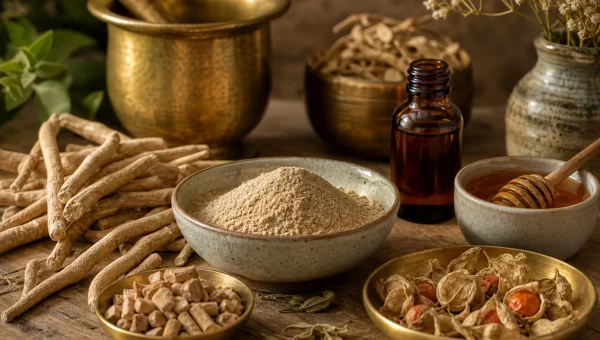
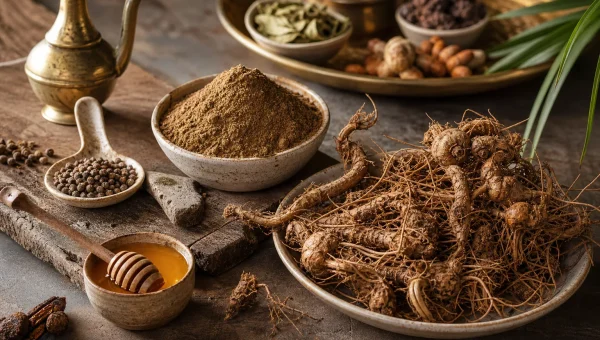
Choose roots that are clean, aromatic, dry, and free from dust, mould, or chemical smell. The natural colour of dried vetiver roots may vary from pale cream-grey to yellow-brown or brown.
- 50 grams dried food-grade vetiver roots (Ushira/Khus)
- 500 grams sugar, or 400 grams jaggery for a darker, earthier syrup
- 750 ml water
- Juice of 1-2 limes, adjusted to taste
- ¼ teaspoon Elaichi (cardamom) powder
Method
The goal is to make a fragrant root infusion first, then turn that infusion into a syrup. Keep the heat gentle so the aroma stays fresh rather than cooked.
- Wash the vetiver roots thoroughly under running water to remove dust and grit.
- Soak the roots in 750 ml water for 4 hours, or overnight for a stronger aroma.
- Bring the soaked roots and water to a gentle boil. Reduce the heat and simmer for 10-15 minutes.
- Strain through a clean muslin cloth, pressing the roots to extract the liquid. Discard the used roots.
- Return the liquid to the pan. Add sugar or jaggery and stir over low heat until fully dissolved.
- Add lime juice and cardamom. Simmer briefly until the syrup is lightly thickened.
- Cool completely and store in a clean glass bottle in the refrigerator.
To serve: Mix 2-3 tablespoons of syrup with 200 ml cool water. Add ice if suitable for your digestion, and garnish with fresh mint if desired.
Storage: Keep refrigerated and use within 2-3 weeks. Always use a clean spoon, and discard the syrup if it turns cloudy, develops gas, changes smell, or shows any sign of fermentation.
Homemade Khus sharbat is not meant to taste like neon-green bottled syrup. It should be soft, woody, grassy, and cooling on the palate. People with diabetes, blood-sugar concerns, or restricted sugar intake should avoid or greatly limit sweetened sharbat and choose a light root infusion instead.
Vetiver Water Spray for Rooms
Before air conditioning became common, many Indian households used Khus ki tatti—screens or curtains made from vetiver roots. When these screens are kept moist and hot dry air passes through them, evaporation helps cool the incoming air while releasing vetiver’s characteristic earthy fragrance.
Simple room infusion:
- Steep 2 tablespoons dried vetiver roots in 500 ml hot water for 2 hours.
- Strain through cloth until no grit remains.
- Pour into a clean spray bottle.
- Use lightly on curtains or khus screens in dry heat, and allow fabrics to dry well.
This works best where the air is hot and relatively dry. In humid weather, the cooling effect is weaker and damp fabrics can develop odour or mould, so use the spray sparingly. Do not add undispersed essential oil directly to water-based room sprays; essential oils float on water, may stain fabric, and may irritate sensitive people when sprayed into the air.
Vetiver Body Mist for Personal Cooling
For face, neck, and wrist cooling, a mild water-based mist is safer than spraying essential oils directly onto the skin. The simplest version uses rose water and vetiver infusion, both traditionally associated with a cooling Pitta-pacifying feel.
- 80 ml pure rose water (Gulab Jal)
- 20 ml strained vetiver root infusion
- ½ teaspoon aloe vera gel, optional
Shake well, refrigerate, and use within 5-7 days. Mist lightly over the neck, arms, or outer wrists. Avoid the eyes, broken skin, and irritated skin. If you have sensitive skin, patch-test first on a small area and wait 24 hours. For children, pregnancy, asthma, allergy-prone skin, or chronic skin disease, keep the mist essential-oil-free unless guided by a qualified practitioner.
Skin Benefits: Cooling, Comforting, and Pitta-Soothing
Ushira is especially useful as a cooling external herb in hot weather. In classical terms, its shita virya and pittaghna action make it suitable for Pitta-type skin discomfort, while its aromatic root makes it pleasant in bathing water, rinses, and gentle pastes.
For heat-prone oily skin: Mix ½ teaspoon finely sieved vetiver root powder with 1 tablespoon sandalwood powder and enough rose water to make a thin paste. Apply for 10-15 minutes, then rinse with cool water. Use once or twice weekly, not as an aggressive daily scrub.
For summer bathing: Add a small handful of washed vetiver roots to a bucket of bathwater or a muslin pouch in the bath. Let it steep for 15-20 minutes, then use the fragrant water as a final rinse. This is a gentle seasonal practice, not a substitute for medical treatment of infection, eczema, severe acne, urticaria, or persistent rash.
For prickly heat discomfort: Use cooled vetiver infusion as a light rinse after bathing and wear loose breathable clothing. If there is pus, swelling, fever, spreading redness, severe itching, or recurrent rash, consult a qualified healthcare provider.
Essential Oil Uses
Vetiver essential oil is thick, aromatic, and persistent; it is valued in perfumery as a long-lasting fixative and base note. For home use, treat it as a concentrated aromatic substance, not as a drinkable herbal extract.
- Scalp oil: Add 1-2 drops vetiver essential oil to 1 tablespoon coconut oil. Massage lightly into the scalp and wash out after a short period or the next morning if tolerated.
- Foot massage: Add 1 drop vetiver essential oil to 1 teaspoon coconut or sesame oil and massage into the soles before bed.
- Diffuser: Use a small number of drops according to your diffuser’s instructions, preferably intermittently rather than continuously.
Caution: Never apply vetiver essential oil undiluted to the skin. A conservative adult body dilution is about 1-2%; facial use should be lower or avoided unless guided by a professional. Do not ingest vetiver essential oil unless advised by a practitioner who is qualified and licensed to prescribe essential oils in that way. Keep all essential oils away from children and pets.
Growing Vetiver at Home
Vetiver is a perennial aromatic grass that grows best in warm, sunny conditions. It forms dense clumps with strong, deep roots, which is why it is widely used for soil binding, runoff reduction, and erosion control as well as for aromatic roots.
Plant rooted slips in moist soil at the beginning of the rainy season. For a dense hedge, close spacing is used; for garden clumps, wider spacing is easier to maintain. Water regularly during establishment. Once established, vetiver is notably hardy, but full sun is important for strong growth.
For aromatic root harvest, cultivation guides commonly harvest around 15-18 months or about 18 months after planting, depending on region and purpose. Wash the roots thoroughly and dry them in shade before household use. If you grow vetiver in a pot, use a deep container and expect a smaller root harvest than from open ground.
Dosha Suitability
Ushira is primarily a hot-season herb. Its cooling potency and Pitta-pacifying profile make it especially appropriate when heat, thirst, burning, and summer irritability are dominant, but the form of use matters: a light infusion is different from a heavy sugar syrup.
| Dosha | Suitability | Notes |
|---|---|---|
| Pitta | Excellent | Best suited to summer heat, thirst, burning sensation, and Pitta-type skin discomfort. |
| Vata | Suitable with moderation | Classical action includes vataghna, but very cold drinks, ice, and overuse may disturb sensitive Vata digestion. |
| Kapha | Use thoughtfully | The herb may be used in hot weather, but sweet syrups can be heavy for Kapha. Prefer a light infusion over sugary sharbat. |
Vetiver Khus is not a trendy supplement or a newly discovered superfood. It is a humble aromatic root that has cooled Indian summers through curtains, drinking infusions, bath water, and seasonal self-care for generations. Hang a khus screen where dry summer air passes through. Brew a batch of real Khus sharbat. Mist your neck with rose-vetiver water when the afternoon heat peaks. These are simple, practical acts of seasonal living that Ayurveda explains through the cooling, Pitta-soothing nature of Ushira.
Vetiver root is generally used as a traditional culinary and topical herb, but individual tolerance varies. If you are pregnant, breastfeeding, using medication, managing a medical condition, or considering internal medicinal use, consult a qualified Ayurvedic practitioner or healthcare provider. Essential oil use requires extra caution and should not be treated the same as using the whole root.
References
- Powo (powo.science.kew.org)
- Ayurvedic Pharmacopoeia of India
- Reasonstobecheerful (reasonstobecheerful.world)
- Timesofindia (timesofindia.indiatimes.com)
- Vetiver (vetiver.org)
- Roberttisserand (roberttisserand.com)
- Nowfoods (nowfoods.com)
- Tisserandinstitute (tisserandinstitute.org)
- Poison (poison.org)
- Plants (plants.sc.egov.usda.gov)
- Vetiver (vetiver.org)
- Vetiver (vetiver.org)
- Agritech (agritech.tnau.ac.in)

The Khus curtains over doorways smell is the smell of my childhood. We had them every summer in Agra. Reading the Ushira classification as Pitta-Rakta Shamaka finally explains why those khus curtains made the heat tolerable it wasn’t just physical cooling.
Is vetiver root available to buy in Western countries? I’m in Germany and can find the essential oil but not the dried root for preparing water decoctions. The root preparation sounds like the more traditional and complete version.
The internal use in cooling sharbat Ushira water was something my grandmother made every May and June. She would soak the root overnight and serve it in the morning. This article explains why it helped with the summer heat exhaustion she was treating.
The soil stabilization use of vetiver root mentioned in passing this is an extraordinary plant ecologically too. The fact that the same root that stabilizes riverbanks across tropical Asia also happens to be a therapeutic cooling herb seems almost too convenient.
Used vetiver essential oil in my diffuser through last summer. Helped with the irritability that peaks in June-July for me every year. The Pitta-calming aromatic effect is real and the oil is now a summer staple in our house.
The topical application for summer rashes and prickly heat is this the root powder paste or the diluted essential oil? I’ve had heat rash every summer and have tried various approaches with limited success.
The anxiety-reducing properties described seem well-supported by the aromatic compounds. The khus-khus sherbet before an exam was something every family in UP gave their children. They understood the calming function even without the pharmacology.
The vetiver sharbat recipe gave a refreshing earthy taste when I tried it last weekend.
Does the room spray work well in humid climates or is it better for dry heat?
How long should the vetiver roots steep to get the strongest aroma?
The body mist with rose water and vetiver oil feels light on the skin during hot afternoons.
Using vetiver in a foot massage before bed seems like a soothing way to cool down.
Required for bathing
Is it safe to use vetiver essential oil directly on the scalp without dilution?
The article mentions vetiver’s anti itch properties; has anyone tried the sandalwood paste for summer acne?
Steeping the roots overnight produced a deeper green brown color in the liquid.
Does the vetiver water spray need to be reapplied often to maintain the cooling effect?
It’s interesting that vetiver is classified as pitta rakta shamaka in Ayurveda.
I appreciate the tip about storing the sharbat syrup in a glass bottle to keep it fresh.