Udvartana Variations: Dry Powder, Paste, and Oil-Mixed Massage for Different Body Types
Udvartana is best understood as a family of powder-and-paste body therapies, not a single generic “dry powder massage for weight loss.” The strongly reducing form is useful in kapha and meda-dominant presentations, but the same dry, frictional quality can be unsuitable for a person who is already dry, depleted, very lean, or easily irritated. The correct medium—dry powder, oil-mixed powder, or paste—matters as much as the herb selected.
Aṣṭāṅga Hṛdaya Sūtra Sthāna 2/15 describes udvartana as kapha-reducing, acting on meda, bringing firmness to the limbs, and promoting clarity of the skin. Charaka’s discussion of obesity includes dry udvartana among measures for excessive corpulence, while the same chapter names dry udvartana as one factor that can contribute to excessive leanness in an already dry person. This is the classical reason udvartana should be selected by constitution, current imbalance, strength, skin condition, and treatment goal.
The Three Practical Forms of Udvartana
For clinical selection, udvartana can be organized into three practical forms: dry powder rubbing, oil-mixed powder rubbing, and paste-based application. These are not interchangeable spa choices; they represent different degrees of rukshana, lekhana, friction, lubrication, and skin comfort.
| Variation | Medium | Direction of Stroke | Primary Ayurvedic Effect | Best Suited For | Pressure |
|---|---|---|---|---|---|
| Ruksha Udvartana | Warm dry herbal powder | Upward, opposite to the direction of body hair | Strong rukshana and lekhana; reduces kapha-meda heaviness | Kapha-dominant, sthula, heavy, oily or thick-skinned presentations with adequate strength | Mild to moderate, never abrasive |
| Snigdha Udvartana | Herbal powder mixed with a prescribed warm taila or sneha | Primarily upward, adjusted around sensitive areas | Moderate kapha-meda reduction with protection against excess dryness | Vata-kapha presentations, mild kapha heaviness with dryness, or patients who cannot tolerate fully dry friction | Gentle to medium |
| Utsadana | Warm herbal kalka or paste made with oil, decoction, or other prescribed liquids | Upward, opposite to hair follicles, with gentle spreading and rubbing | Gentler paste-based friction; supports skin comfort while giving mild stimulation | Dry or rough skin, sensitive skin, depleted patients, or cosmetic and skin-supportive protocols under guidance | Mild |
Ruksha Udvartana: The Classical Dry Powder Massage
Ruksha udvartana is the driest and most reducing form. Warm medicated churna is rubbed over the body in an upward direction, opposite to the hair follicles, for a defined duration. It is most appropriate when the treatment goal is to reduce kapha-meda heaviness, improve limb firmness, and bring clarity to the skin without adding oil.
Ayurvedic Rationale
The logic of ruksha udvartana is based on opposing qualities. Dry, frictional powder is selected when kapha’s heaviness, oiliness, sluggishness, and meda accumulation are the dominant concerns. The aim is controlled rukshana and lekhana, not harsh scraping or forced irritation.
- Kapha-meda reduction: Charaka includes dry udvartana among the measures used for excessive corpulence, along with kapha-meda-reducing diet and physician-selected internal measures.
- Firmness and skin clarity: Aṣṭāṅga Hṛdaya describes udvartana as giving firmness to the limbs and improving the clarity of the skin.
- Surface cleansing: Classical daily-regimen passages describe body cleansing and wiping as removing odor, heaviness, fatigue, itching, dirt, and sweat-related unpleasantness.
- Careful patient selection: Dry udvartana is unsuitable when dryness, emaciation, debility, open skin injury, oozing eczema, or pregnancy is present.
Powder Selection for Ruksha Udvartana
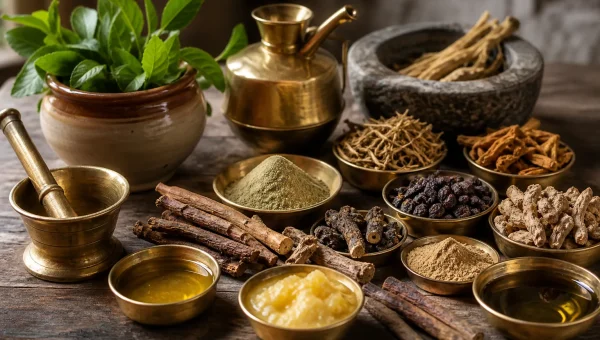
The powder is selected by the physician according to the patient’s strength, skin, dosha state, and disease context. A reducing powder that is appropriate for a strong kapha-dominant patient may be too drying for a thin or vata-sensitive patient.
| Powder Type | Verified Basis | Appropriate Use |
|---|---|---|
| Kolakulathadi Churna | Named in professional udvartana and utsadana procedure materials | Reducing powder procedures performed under professional supervision |
| Triphala Churna | Triphala is the three-fruit combination of Haritaki, Bibhitaki, and Amalaki | Used only when selected by a practitioner; avoid on irritated, wounded, very dry, or sensitive skin |
| Patient-specific Churna | Professional procedures specify prescribed churna rather than a universal powder | Best for patients with medical conditions, skin disease, neurological disease, stiffness, or mixed dosha presentations |
Clinical Procedure
A clinical udvartana session is performed after assessment of the patient, digestion, natural urges, strength, and skin condition. The powder is warmed and maintained at a suitable temperature during the procedure.
- The patient is prepared on a droni or treatment table after basic assessment and physician direction.
- Warm medicated churna is applied and rubbed in upward strokes, opposite to the hair follicles.
- The body is treated systematically through the required postures, with special care around tender areas.
- The face, nose, and eyes are protected from powder dust.
- The standard clinical duration is about 30-45 minutes.
- After completion, remaining powder is removed, the patient rests briefly, and a warm or hot shower is taken as advised.
Snigdha Udvartana: The Oil-Mixed Adaptation
Snigdha udvartana is a moderated form in which herbal powder is mixed with a prescribed warm oil or other unctuous medium. It retains the texture and friction of powder therapy but reduces the harsh drying effect of a fully dry treatment.
When to Choose Snigdha Over Ruksha
This form is useful when kapha heaviness is present but the patient also shows vata sensitivity, dryness, rough skin, stiffness, low tolerance to friction, or seasonal dryness. It is not meant to replace a stronger dry reducing therapy when the person is robust, oily, and clearly kapha-meda dominant.
- Vata-kapha constitution with heaviness but dry or rough skin
- Moderate kapha accumulation where full dry rubbing would irritate the skin
- Patients who need gradual introduction before dry udvartana
- Cold or dry periods when pure dry friction is likely to aggravate vata
- Maintenance care after a stronger reducing course, when the practitioner wants less drying intensity
Preparation and Technique
The powder is mixed with enough warm prescribed taila or sneha to make a granular, moist rubbing medium rather than a smooth cosmetic paste. The strokes remain mainly upward, but the pressure is softer and the therapist adjusts the work around the lower back, knees, bony areas, and any vata-sensitive region.
Snigdha udvartana should feel stimulating but not scraping. If the patient develops burning, redness, abrasions, itching, faintness, or discomfort, the procedure should be stopped and reassessed.
Utsadana: The Herbal Paste Application
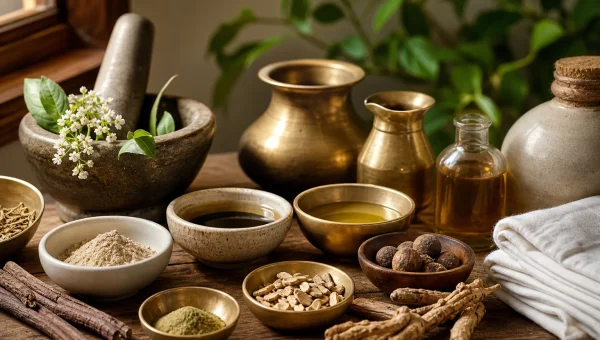
Utsadana uses medicated powder made into a warm kalka or paste with oil, decoction, or other prescribed liquid. It is applied and massaged upward with mild pressure, making it gentler than dry churna rubbing and more suitable when skin comfort is a major concern.
When to Choose Utsadana
Utsadana is selected when a paste-based procedure is more suitable than dry powder. Professional procedure references include dry and rough skin, debility, and excessive leanness among its indications, which places it on the gentler side of the udvartana spectrum.
- Dry or rough skin that would not tolerate dry powder rubbing
- Delicate or sensitive skin needing mild friction only
- Depleted or very lean patients when a physician selects paste-based support
- Skin-supportive and cosmetic protocols where the goal is softness, cleanliness, and comfort rather than strong reduction
- Mixed goals where mild stimulation is desired without strong rukshana
Procedure
The prescribed churna is mixed with a suitable liquid such as taila, sneha, kashaya, or another physician-selected medium and warmed gently. The paste is applied over the body and rubbed upward, opposite to hair follicles, with mild pressure. After the session, the remaining paste is removed, the patient rests briefly, and a warm or hot shower is taken as advised.
Selecting the Right Variation: A Decision Framework
The best udvartana variation is chosen from the patient’s current condition, not from the name of the therapy alone. Prakriti is important, but vikriti, bala, season, skin, digestion, and treatment goal must guide the final choice.
- Assess kapha-meda dominance: Heaviness, oiliness, sluggishness, and corpulence point toward ruksha udvartana when strength and skin tolerance are adequate.
- Assess dryness and vata sensitivity: Dry skin, roughness, pain sensitivity, low weight, or depletion point away from strong dry powder and toward snigdha udvartana or utsadana.
- Assess skin integrity: Open wounds, cuts, burns, oozing eczema, active irritation, or fragile skin are contraindications for powder friction.
- Assess strength: Debility and atikarshya require caution; clinical udvartana should not be forced in patients with low tolerance.
- Assess season and capacity: Spring is classically favorable for exercise and dry massage, while summer heat, exhaustion, dehydration, or acute weakness call for a milder plan or no procedure.
- Assess the goal: Strong kapha-meda reduction favors ruksha; mixed kapha-vata needs favor snigdha; skin comfort and gentler body care favor utsadana.
For a home-level constitution check, the Doshic Assessment at Home can help organize observations, but therapeutic selection should still be confirmed by a qualified practitioner.
Combining Udvartana with Other Therapies
Udvartana is most coherent when it belongs to a complete Ayurvedic plan. In kapha-meda management, Charaka pairs dry udvartana with kapha-meda-reducing food and drink, physician-selected internal measures, and gradual increases in activity.
- Diet: The diet should be selected to reduce kapha-meda without weakening the patient; heavy non-nourishing therapy is classically described for the obese, while nourishing therapy is used for the excessively lean.
- Activity: Exercise should be matched to strength; Aṣṭāṅga Hṛdaya advises exercise within capacity and warns against excess exertion.
- Internal medicines: Herbs and formulations such as Triphala, Guduchi, Musta, honey-based preparations, or other classical measures should be used only when prescribed for the individual.
- Bathing and cleansing: After powder or paste procedures, remaining material is removed and the patient bathes as advised, rather than leaving irritating residue on the skin.
Contraindications and Precautions
Udvartana should not be treated as a harmless body scrub. The stronger the friction and dryness, the more important it is to screen for contraindications before beginning.
- Pregnancy
- Atikarshya or extreme leanness, especially for dry udvartana
- Durbala or marked debility, especially for dry udvartana
- Dry skin, sensitive skin, or easily abraded skin, especially for dry udvartana
- Wounds, cuts, burns, open lesions, or recent skin injury
- Oozing eczema or active inflammatory skin disease
- Faintness, intolerance to heat, or discomfort during the procedure
- Powder sensitivity, dust irritation, or inability to protect the face, nose, and eyes
Ruksha udvartana requires the greatest caution because it is intentionally drying. If a patient is thin, dry, weak, pregnant, wounded, inflamed, or skin-sensitive, a qualified practitioner should either choose a gentler form, postpone treatment, or avoid udvartana altogether.
Home Practice Adaptation
Home practice should be mild maintenance only, not a substitute for clinical udvartana. The safest approach is to avoid strong friction, avoid medicated powders without guidance, patch-test any substance first, and stop immediately if irritation appears.
- For kapha-type heaviness: Use only a mild, practitioner-approved powder with gentle upward strokes for a short duration before bathing.
- For dry or vata-sensitive skin: Avoid dry rubbing; use a mild oil-mixed approach only if it suits the skin and has been approved by a practitioner.
- For sensitive skin: Prefer very gentle paste-style application or avoid the practice entirely until assessed.
- For all home use: Keep powder away from the eyes, nostrils, and mouth; never rub over rashes, wounds, burns, eczema, or painful areas.
Medical Disclaimer: This article is for educational purposes only and does not constitute medical advice. Clinical udvartana should be performed by trained Ayurvedic therapists under the guidance of a qualified Ayurvedic practitioner. If you are pregnant, have a skin condition, circulation problem, diabetes, chronic illness, unexplained weight loss, debility, or are taking medication, consult a qualified Ayurvedic practitioner or healthcare provider before beginning udvartana, herbs, supplements, detoxes, or therapeutic protocols.

the oil-mixed Udvartana for Vata body type is something I’d never considered. the traditional all-Kapha-equals-dry-powder assumption is wrong for Vata-Kapha types.
udvartana for fat reduction is overstated. it’s a massage technique with skin and circulation benefits. fat loss requires systemic metabolic change.
dry powder Udvartana (Udgharsana) for Kapha-type obesity been doing 3 sessions weekly for 6 weeks and the skin texture improvement and lymphatic drainage sensation is real.
udvartana with dry powder made my skin too scratchy once. paste version sounds gentler for people who overdo exfoliation
the paste Udvartana with Kollu (horsegram) for post-delivery weight management worked alongside my diet modification. practical and accessible.
@Rachel the oil-mixed Udvartana for Vata body type is something I’d never considered. the traditional all-Kapha-equals-dry-powder assumption is wrong for Vata-Kapha types.
for lymphedema management, is the dry powder or paste form more appropriate? the lymphatic drainage goal seems to favor more friction. ❤️ नमस्ते
does Udvartana need to be followed by steam (Swedana) to be effective or can it be done standalone?
udvartana for fat reduction is overstated. it’s a massage technique with skin and circulation benrfits. fat loss requires systemic metabolic change. tbh
does Udvartana need to be followed by steam (Swedana) to be effective or can it be done atandalone?
The breakdown of ruksha, snigdha, and utsadana helped me see why a one size fits all approach can backfire.
@Stephanie the paste Udvartana with Kollu (horsegram) for post-delivery weight management worked alongside my diet modification. practical and accessible.
I wonder if the warm oil ratio really changes the exfoliation feel for someone with vata kapha skin.
Seeing the Charaka Samhita reference made me look up the verse, and the fat melting description matches what the article says about meda lekhana.
does Udvartana need to be followed by steam (Swedana) to be effective or can it be done standalome?
udvartana for fat reduction is overstated. it’s a massage technique with skin and circulation benegits. fat loss requires systemic metabolic change. tbh
Had no idea there were three distinct forms of udvartana. I’ve only ever seen the dry powder version advertised at spas, always described as just a weight loss treatment. The paste variation for Pitta types sounds like it would feel very different — is it commonly available at Ayurvedic clinics or more of a specialized service?
for lymphedema managenent, is the dry powder or paste form more appropriate? the lymphatic drainage goal seems to favor more friction. tbh
A practical tip: try the chickpea flour paste at home before committing to a full clinic course.
@Pallavi for lymphedema management, is the dry powder or paste form more appropriate? the lymphatic drainage goal seems to favor more friction.
pls add which body types should avoid strong rubbing. kapha advice online gets repeated like everyone has same skin
The seasonal advice about winter needing the oil mixed version makes sense when the air is dry.
does Udvartana need to be followed by steam (Swedana) to be effective or can it be done stamdalone? 💯
I’m still unsure how the upward stroke direction truly stimulates lymphatic flow without causing irritation.
@Rajesh udvartana for fat reduction is overstated. it’s a massage technique with skin and circulation benefits. fat loss requires systemic metabolic change.
@Aarti for lymphedema management, is the dry powder or paste form more appropriate? the lymphatic drainage goal seems to favor more friction.
oil mixed powder is what i didnt know. feels more realistic for dry skin than a fully dry scrub