
Vajikarana Recipes for Male Vitality: Starting in the Kitchen
Vajikarana recipes for male vitality begin with a simple Ayurvedic principle: reproductive strength is built through steady nourishment, clear digestion, adequate rest, and disciplined use of strengthening foods. Vajikarana is one of the eight classical specialties of Ayurveda and is traditionally concerned with virility, reproductive health, the quality of shukra dhatu, strength, complexion, confidence, and healthy progeny. The word comes from vaji, meaning horse, and points to the vitality, stamina, and generative power symbolized by that animal.
In classical Ayurveda, shukra dhatu is not treated as semen alone. It is the reproductive tissue and reproductive essence that arises after the nourishment of the preceding dhatus: rasa, rakta, mamsa, meda, asthi, and majja. This is why vajikarana cooking is not merely about adding a single “male vitality” herb to milk. It is a complete nourishing approach that supports digestion, tissue-building, mental steadiness, and reproductive capacity together.
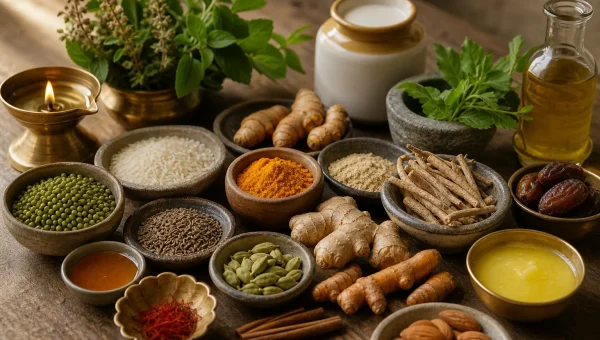
The following recipes are practical kitchen adaptations inspired by the classical vajikarana pattern found in Ayurvedic texts. They are not a substitute for individualized vajikarana therapy, purification procedures, or prescribed formulations from a qualified Ayurvedic practitioner. Their purpose is to show how the classical food logic of milk, ghee, dates, black gram, sesame, nourishing grains, and selected herbs can be used responsibly in a modern home kitchen.
The Classical Kitchen Pattern Behind Vajikarana Foods
Across classical vajikarana formulas, the same qualities appear again and again: madhura (sweet), snigdha (unctuous), brimhana (building), guru (substantial), life-supporting, strength-supporting, and pleasing to the mind. The recipes are rich, but they are not meant to be heavy in a careless way. Their success depends on clear agni, correct portion size, seasonal timing, and avoiding them when the body is already burdened by ama, fever, diarrhea, or poor appetite.
1. Sweet and unctuous bases: Milk, ghee, sugarcane-derived sweeteners, dates, and honey appear repeatedly in vajikarana food preparations. In home cooking, this becomes warm milk, carefully used ghee, date paste, jaggery or rock sugar in moderation, and honey added only after the preparation has cooled to a warm drinking temperature.
2. Dhatu-building staples: Classical formulas use foods such as shashtika rice, wheat, black gram, milk, and ghee as building materials. These are not quick stimulants; they are nourishing foods that rely on good digestion and consistency.
3. Pulses and seeds: Masha, or black gram, is an important recurring ingredient in vajikarana preparations. Sesame also appears in strengthening recipes, especially when combined with ghee, milk, grains, or sweetening agents. These foods should be soaked, cooked, roasted, or otherwise prepared so that their heaviness becomes digestible.
4. Digestive support in moderation: Small amounts of ginger, pippali, cardamom, saffron, or similar aromatics help balance the richness of milk, ghee, and pulses. The purpose is to support agni, not to make the recipe hot, sharp, or pitta-provoking.
5. Herbs as adjuncts, not casual toppings: Ashwagandha, shatavari, vidari, and kapikacchu are used in vajikarana contexts, but they are not interchangeable pantry spices. Herb choice depends on constitution, strength of digestion, age, sleep, fertility goals, medicines, and medical history. Kapikacchu in particular contains levodopa and should not be self-added in large amounts.
Recipe 1: Kharjura Ghrita — Dates Softened in Ghee
Kharjura, or dates, appear in classical vajikarana formulas along with milk, ghee, black gram, shatavari, and other nourishing ingredients. This simplified preparation keeps the same sweet-unctuous logic while making it practical for daily use. It is best suited to men who feel dry, depleted, undernourished, or physically drained, provided digestion is clear and sweet foods are appropriate for them.
Ingredients: 8-10 soft dates, pitted; 2-3 tablespoons cow’s ghee; 5-6 cardamom pods, seeds crushed; a small pinch of saffron, optional; a very small pinch of dry ginger powder, optional.
Method: Warm the ghee in a small heavy-bottomed pan on the lowest flame. Add the crushed cardamom and stir for a few seconds. Add the pitted dates and coat them gently in the ghee. Cook on very low heat for 6-8 minutes, stirring occasionally, until the dates soften and absorb part of the ghee. Turn off the heat, add saffron if using, and allow the preparation to cool. Store in a clean glass jar.
Timing and use: Take 1-2 softened dates in the morning or mid-morning, followed by warm milk if milk suits your digestion. Begin with the smaller amount and watch for signs of heaviness, coating on the tongue, bloating, or loss of appetite. If these appear, reduce the portion or pause the preparation.
Recipe 2: Masha Ksheera-Payasa — White Urad Dal Milk Kheer
Masha, or black gram, is one of the most important food ingredients in classical vajikarana preparations. In a home kitchen, dehusked white urad dal cooked slowly with milk and ghee becomes a deeply nourishing payasa. Because this recipe is heavy and building, it is best used when appetite is strong, the weather is cool, and the previous meal has been fully digested.
Ingredients: 1/2 cup white urad dal, soaked 4-6 hours; 2 cups full-fat milk; 1-2 cups water; 1-2 tablespoons ghee; 1-3 tablespoons jaggery or rock sugar, adjusted to need; 5-6 cardamom pods, crushed; a small pinch of saffron, optional; 1 teaspoon toasted white sesame seeds, optional.
Method: Drain the soaked urad dal. Cook it with water until it becomes completely soft and begins to break down. Add the milk and continue cooking on low heat, stirring often, until the mixture becomes creamy. Add jaggery or rock sugar and stir until dissolved. Turn off the heat and add ghee, crushed cardamom, saffron, and toasted sesame if using. The final texture should be soft, warm, and digestible rather than dry or pasty.
Timing and use: Take 1/2 to 1 cup in the late afternoon or evening when appetite is steady. Avoid taking it immediately after a heavy dinner or very late at night. This preparation is better as a repeated nourishing food in suitable portions than as an occasional oversized serving.
Recipe 3: Ashwagandha Kshira Paka — Herb-Cooked Milk
Kshira paka is the Ayurvedic method of cooking an herb with milk and water until the liquid reduces. It is especially suited to herbs and foods used for nourishment, steadiness, and rebuilding. Classical vajikarana formulations include ashwagandha, shatavari, vidari, milk, ghee, and other strengthening ingredients. The version below is a gentle household preparation, while stronger herb combinations should be individualized by a practitioner.
Ingredients: 250 ml whole milk; 250 ml water; 2-3 g ashwagandha root powder, or the amount prescribed by your practitioner; 1/2 teaspoon shatavari or vidari powder, optional; 2-3 crushed cardamom pods; a tiny pinch of nutmeg, optional; 1 teaspoon honey, optional, added only after cooling to warm temperature.
Method: Combine milk, water, and the herb powder in a small saucepan. Bring to a gentle simmer, then cook on low heat, stirring frequently, until the liquid reduces to roughly half its original volume. Strain if desired. Add cardamom and nutmeg after turning off the heat. If using honey, add it only when the drink is warm, not hot.
Timing and use: Take 100-200 ml in the evening when digestion is clear and the body is ready for rest. Do not combine this preparation casually with alcohol, sedatives, multiple supplements, or other herb formulas. People with current or past liver problems, unexplained digestive symptoms, or those taking regular medicines should use ashwagandha only after professional guidance.
Kapikacchu note: Kapikacchu, also called atmagupta or Mucuna pruriens, has a respected place in vajikarana, but it is a stronger therapeutic herb rather than a casual kitchen addition. Because it naturally contains levodopa, it should be used only under qualified guidance, especially if you take medicines or have liver, kidney, neurological, psychiatric, or hormonal concerns.
Recipe 4: Tila-Masha Pinda — Sesame and Urad Nourishing Balls
Tila, or sesame, and masha, or black gram, occur together in classical strengthening preparations. This portable recipe uses roasted sesame and a small amount of roasted urad flour to create a compact nourishing food. It is richer than an ordinary sweet snack and should be eaten in small portions after a meal, not as a replacement for proper food.
Ingredients: 100 g white sesame seeds; 2 tablespoons roasted urad dal flour, optional; 1 tablespoon ghee; 2-3 tablespoons date paste or soft jaggery; 1/4 teaspoon cardamom powder; a few strands of saffron, optional; honey only if needed, added after the mixture is completely cool.
Method: Toast the sesame seeds on low to medium heat, stirring continuously, until they become aromatic and lightly golden. Cool completely and grind coarsely. Mix with roasted urad flour if using. Warm the ghee separately and mix it into the sesame. Add date paste or soft jaggery, cardamom, and saffron. Roll into small balls of about 2-3 cm diameter. If honey is used to bind the mixture, add it only after the mixture has cooled.
Timing and use: Take 1-2 small balls after lunch with warm water. This is the most practical recipe for men who need a portable vajikarana-style food but cannot prepare milk-based recipes every day. If it causes heaviness, thirst, acidity, or sluggish appetite, reduce the amount or use it less often.
| Recipe | Classical Anchor | Best Timing | Use Pattern | Ayurvedic Emphasis |
|---|---|---|---|---|
| Kharjura Ghrita | Dates with ghee, milk, and sweet nourishing bases | Morning or mid-morning | Small daily portion as digestion allows | Madhura-snigdha nourishment |
| Masha Ksheera-Payasa | Black gram with milk, ghee, and sweeteners | Late afternoon or evening | Repeated food course in suitable portions | Brimhana and dhatu support |
| Ashwagandha Kshira Paka | Ashwagandha, milk, and strengthening herbs | Evening, before rest | Practitioner-guided herb use | Rebuilding, steadiness, and rest-supported nourishment |
| Tila-Masha Pinda | Sesame and black gram in strengthening preparations | After lunch | Small portable portions | Snigdha, compact nourishment |
Seasonal Timing, Agni, and When to Pause
Vajikarana cooking is a form of nourishing practice, so season and digestion matter. Rich preparations with milk, ghee, urad dal, sesame, and sweeteners are best suited to periods when agni is strong, especially cooler months such as hemanta and shishira. In hot weather, during travel, after overeating, or when appetite is weak, use smaller portions or choose lighter meals until digestion becomes steady again.
Pause these preparations during fever, acute infection, diarrhea, nausea, loss of appetite, thick tongue coating, persistent heaviness, foul-smelling stools, or clear signs of ama. A building recipe taken over weak digestion does not become shukra-supporting nourishment; it becomes another burden on agni. The first step in vajikarana is not excess richness, but readiness to digest and assimilate what is taken.
Classical vajikarana also gives importance to conduct, rest, confidence, stable routine, and freedom from disease. These recipes work best alongside adequate sleep, moderate exercise, reduced alcohol, a calm mind, and a regular meal rhythm. For a broader herb-by-herb discussion, see shukra dhatu enhancement.
Safety and Practitioner Guidance
These recipes are nourishing Ayurvedic food preparations, but they still require judgment. Men with diabetes, high triglycerides, liver disease, kidney disease, gallbladder or pancreatic disease, lactose intolerance, food allergies, infertility, erectile dysfunction, hormonal disorders, or ongoing medication use should consult a qualified healthcare provider and a qualified Ayurvedic practitioner before beginning a vajikarana course.
Ashwagandha and kapikacchu should be treated as therapeutic herbs, not casual additions. Avoid self-prescribing them in high doses or combining them with multiple supplements. Stop the preparation and seek professional advice if you develop unusual digestive distress, jaundice, dark urine, severe fatigue, mood changes, tremors, palpitations, or any unexpected reaction.
Medical Disclaimer: This content is for educational purposes only and does not constitute medical advice. Male reproductive health concerns, including fertility problems, erectile dysfunction, pain, infection, or suspected hormonal imbalance, require evaluation by a qualified healthcare professional. Ayurvedic vajikarana therapy should be practiced under guidance from a qualified Ayurvedic practitioner and is not a substitute for diagnosis or treatment.
References
- Charaka Samhita — Vajikarana
- Charaka Samhita — Vajikarana Adhyaya
- Charaka Samhita — Shukra dhatu
- Charaka Samhita — Vividhashitapitiya Adhyaya
- LWW Journals
- Studies on the physicochemical characteristics of heated honey, honey mixed with ghee and their food consumption pattern by rats (2010), PubMed Central
- Charaka Samhita — Tasyashiteeya Adhyaya
- RIVM (Netherlands)
- Tga (tga.gov.au)
my grandmother used to make something similar for us. never knew it had a proper Ayurvedic name. 🙏
does the morning timing matter or can Vajikarana be taken in the evening as well?