
My grandmother fermented many foods and drinks. She did not speak about probiotics or the gut microbiome; she worked from household knowledge passed through Kerala kitchens. Rice batters soured, curd set, and mixtures changed slowly in clay or glass vessels. Formal study later taught me an important distinction: a household ferment is not automatically a classical Ayurvedic medicine. A named asava, arishta, or takrarishta has a defined formula, process, quality profile, and therapeutic context.
Classical Ayurvedic literature discusses fermented liquids, but several popular claims are inaccurate. Charaka Samhita, Kalpasthana 12 is Dantidravanti Kalpa, centred on purgative formulations made with Danti and Dravanti; it is not a chapter listing 84 medicated wines. I also could not verify that the Ashtanga Hridaya presents “Sandhi Kalpana” as a separate pharmaceutical discipline. The standard later pharmaceutic term is Sandhana Kalpana. The clearest standardized definitions and manufacturing directions are in the Government of India’s Ayurvedic Formulary of India (AFI).
Why Fermented Preparations? The Verified Rationale
The AFI defines asava and arishta as medicinal preparations in which prescribed drugs remain in a sugar-, jaggery-, or honey-containing liquid for a specified period and undergo fermentation that generates alcohol. The formulary says this alcohol assists extraction of constituents and acts as a preservative. It does not state that every ferment has proven superior clinical bioavailability or reaches “fine channels” inaccessible to decoctions.
- Arishta and asava differ: an arishta is normally based on a strained herbal decoction, whereas an asava generally adds the prescribed powders to a sweetened liquid without first preparing that decoction.
- The process is formula-specific: the liquid, sweetener, herbs, vessel, fermentation period, temperature, and finishing tests must follow the recognized formula.
- Alcohol cannot be guessed: marketed products have shown variable ethanol content, so licensed manufacture and quality control matter.
- Fermented does not automatically mean probiotic: a probiotic must contain identified living microorganisms, at an adequate dose, with a demonstrated health benefit.
No universal dosha effect applies to every fermented medicine. Action depends on the full formula, dose, patient, disease stage, digestive strength, and diet—not on sour taste alone.
Formula 1: Draksharishta
Draksharishta is an official fermented formulation in the AFI, sourced there to Sharngadhara Samhita, Madhyama Khanda 10.69–72½. Draksha, dried Vitis vinifera fruit, is its principal drug. The AFI formula differs materially from casual internet recipes, so raisins, jaggery, kitchen spices, and commercial yeast should not be combined and labelled “classical Draksharishta.”
The official monograph uses a Draksha decoction reduced to a prescribed volume, then adds guda and the listed prakshepa dravyas: Tvak, Ela, Patra or Tejapatra, Nagakesara, Priyangu, Maricha, Krishna or Pippali, Vidanga, and Dhataki. Dried ginger is not in that AFI list. Vessel preparation, sealing, temperature control, assessment of fermentation, settling, filtration, and bottling are controlled pharmacy steps, not a simplified home method.
The AFI gives 12–24 ml as general adult professional guidance and records traditional uses including agnimandya (digestive impairment), kasa (cough), svasa (breathing difficulty), daurbalya (weakness), and gala roga (throat disorders). These are traditional indications, not modern proof that the product treats asthma, tuberculosis, anaemia, or another diagnosed disease. A laboratory standardization study reported physicochemical and chromatographic markers, but a quality-control study is not a clinical efficacy trial.
Dhataki is not interchangeable with wheat bran, date paste, or baker’s yeast. The Ayurvedic Pharmacopoeia of India identifies it as the flowers of Woodfordia fruticosa (L.) Kurz and records katu-kashaya rasa, laghu guna, shita virya, and katu vipaka. One published study found that the flowers influenced fermentation but were not themselves the source of alcohol-producing microorganisms in that experiment; calling Dhataki simply a packet of “wild yeast” is inaccurate.
The scanned AFI edition consulted displays different Dhataki quantities in its ingredient table and special note. Pharmacies should therefore use the current authorized standard and validated records rather than casually scaling the scan.
Classical Term 2: Medaka and Sura
The proposed “Medaka recipe” of cooked rice, jaggery, cumin, dry yeast, and five-to-seven-day fermentation could not be verified with that composition, alcohol range, dose, or indication. It has therefore been removed. Pharmaceutical literature generally describes Medaka as a denser lower fraction associated with sura, rather than a standardized bottled medicinal rice beer.
Charaka Samhita, Grahani Chikitsa 15.212–213, mentions properly employed arishta, sura, and asava among physician-selected measures for supporting agni. It does not authorize a universal home dose for appetite or constipation. A homemade batch also cannot be promised to remain at 2–4% alcohol without testing.
Formula 3: Takrarishta
Takrarishta is described in Charaka Samhita, Grahani Chikitsa 15.120–121. The formula combines Yavani, Amalaki, Pathya or Haritaki, Maricha, and five salts as powders in Takra and allows the mixture to undergo fermentation. The text calls it dipana and lists traditional indications including shotha, gulma, arsha, krimi, meha, and udara.
This is not the same as leaving buttermilk, jaggery, cumin, ginger, pepper, curry leaves, and salt on a counter for 24–48 hours. Claims that such a drink necessarily contains under 0.5% alcohol, keeps safely for a week, or is a classical treatment for modern “IBS and haemorrhoids” were not verified. Classical terms such as grahani and arsha should not be treated as exact synonyms for modern diagnoses.
Takra varies with churning, dilution, and butter removal. Avoid it in milk allergy; lactose intolerance requires individual assessment because fermentation may reduce but does not necessarily remove lactose.
Safety and Contraindications
Fermented Ayurvedic medicines may contain alcohol, residual sugars, and herbs that interact with medicines. Safety cannot be inferred from “natural,” “traditional,” or “self-generated.” These screening cautions do not replace individualized medical assessment.
| Situation | Concern | Guidance |
|---|---|---|
| Pregnancy or trying to conceive | No safe amount of alcohol in pregnancy has been established. | Avoid alcohol-containing preparations unless the obstetric healthcare professional reviewing the exact product advises otherwise. |
| Liver disease or alcohol-use disorder | Alcohol exposure may be inappropriate. | Do not self-prescribe asava, arishta, or sura; discuss the product and alcohol content with the treating clinician. |
| Medicines | Alcohol can interact with many prescription, over-the-counter, and herbal products. | Ask a physician or pharmacist to check the full medicine list. |
| Diabetes | Jaggery, sugar, honey, and residual carbohydrate may be present. | Use only with professional advice and reliable product information. |
| Children or homemade products | Adult doses are unsuitable, while alcohol level and contamination cannot be judged by taste or bubbles. | Use only a child-specific prescription; never substitute an improvised ferment for a tested formulation. |
The blanket claim that all asavas and arishtas are classically contraindicated in every fever, bleeding disorder, pregnancy, and every child under 12 could not be verified as one general rule. Contraindications are formula- and patient-specific. Consult a qualified Ayurvedic practitioner and an appropriate healthcare provider before therapeutic use. Never delay medical evaluation of breathing difficulty, bleeding, persistent fever, weight loss, severe abdominal symptoms, or another potentially serious condition.
Sourcing and Quality-Control Notes
Choose a licensed manufacturer that identifies the formula, ingredients, batch number, manufacturing and expiry dates, dose, cautions, and applicable alcohol declaration. A study of marketed fermented Ayurvedic products found significant variation in ethanol content and raised manufacturing-compliance concerns. Brand reputation alone cannot prove that a particular batch uses the correct formula or meets quality standards.
The AFI requires cleanliness and describes the finished liquid as clear, without surface froth, not improperly sour, and with an aromatic alcoholic odour. These observations do not replace tests for identity, microbial quality, ethanol, and stability. Follow labelled storage and expiry information.
What Modern Research Does and Does Not Establish
Modern publications include reviews, laboratory fermentation studies, chromatographic standardization, microbial studies, and alcohol measurements. They can improve manufacturing and quality assessment, but they do not by themselves prove that a formulation is probiotic, heals the gut microbiome, improves absorption in patients, or treats a modern disease. Those claims require well-designed studies of the exact standardized product.
Official formularies document fermented Ayurvedic medicines, but textual authority does not validate invented recipes and laboratory chemistry does not equal clinical proof. Use an authenticated product and qualified clinical guidance rather than home experimentation.
References
- Charaka Samhita — Dantidravanti Kalpa Adhyaya
- Archive (archive.org)
- A progressive review of Sandhana kalpana (Biomedical fermentation): An advanced innovative dosage form of Ayurveda (2011), PubMed Central
- Dravyaguna notes
- Charaka Samhita — Grahani Chikitsa
- Isappscience (isappscience.org)
- Determination of Quality Standards for Draksharishta, a Polyherbal Ayurvedic Formulation (2016), PubMed Central
- Ayurvedic Pharmacopoeia of India
- Fermentation in traditional medicine: the impact of Woodfordia fruticosa flowers on the immunomodulatory activity, and the alcohol and sugar contents of Nimba arishta (1993), PubMed
- Nopr (nopr.niscpr.res.in)
- Ethanol content in traditionally fermented ayurvedic formulations: Compromised Good Manufacturing Practice regulations – compromised health (2019), PubMed
- CDC
- Niaaa (niaaa.nih.gov)
- NHS
- NIDDK
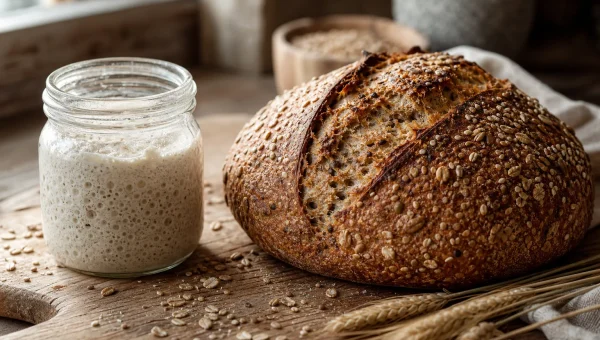
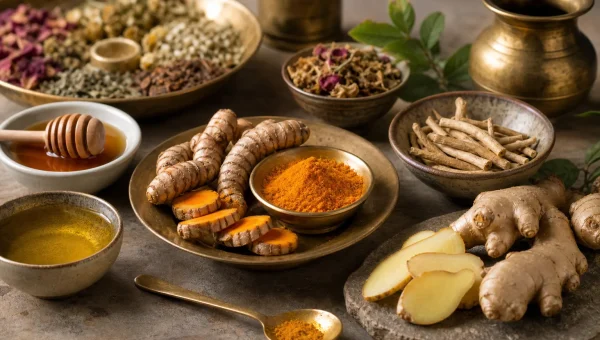

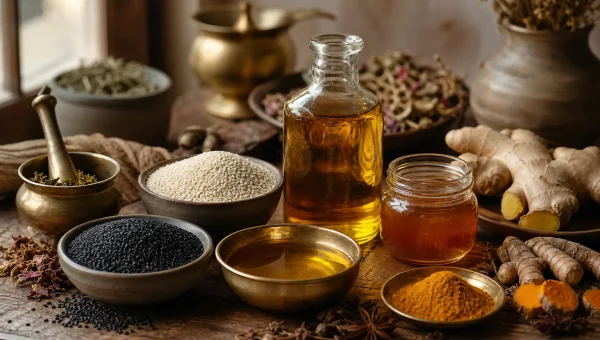
My grandmother had a clay pot of what she called ‘kanji’ fermenting in the corner of her kitchen always. She never measured anything and it tasted different every batch. I’ve been trying to recreate it for three years. The section on Medaka preparation is the closest thing to her recipe I’ve found anywhere.
The claim that traditional fermented Ayurvedic beverages are meaningfully different from modern probiotic supplements in terms of the microbial complexity is interesting. Are there any studies comparing the microbial profiles of traditionally prepared Arishta versus modern encapsulated probiotics?
The alcohol content question in Arishta is one I get asked constantly when I teach Ayurvedic cooking. You’ve handled it well here. The traditional explanation is that the self-generated alcohol acts as both a preservative and an absorption enhancer, which is different from saying these are intoxicating beverages.
Are these preparations safe during pregnancy? I ask because Draksharishta is often recommended for pregnancy-related fatigue but the alcohol content concern makes me hesitant to use it without more clarity.
The Kerala kitchen description matches my childhood so precisely it’s almost eerie. My mother’s kitchen had that same constant bubbling in the corner. She made Kanji water, rice beer during Onam, and something she called ‘medicine water’ that she gave us when we were sick. This is that tradition written down properly.
I remember my grandmother keeping rice batter in a clay pot and watching it sour over a few days, just like the article describes.
The Sura recipe requires rice in a particular form I’m not familiar with. Can you clarify what ‘pressed rice’ means in this context and whether it’s the same as what’s available in South Asian grocery stores?
Useful post on Fermented Ayurvedic Beverages. The safety notes could be expanded a little.
Is Arishta appropriate for someone who is completely alcohol-abstinent for religious reasons? The self-generated fermentation alcohol content is presumably low but I’d want to know the actual percentage to make an informed decision.
The part about asava and arishta needing a defined formula makes me wonder if my store bought version really follows the AFI.
The Charaka citations on fermented preparations are well-established and it’s good to see home fermentation framed as a classical practice rather than a trend. The microbiome angle adds a modern explanation for mechanisms the ancients described in terms of Agni enhancement.
Made the rice water recipe and it started fermenting within 24 hours which surprised me given the cool temperatures in my kitchen. The result was sour but pleasant. My digestion the next morning was noticeably smoother. I’ll do this weekly now as a simple gut maintenance routine.
I tried mixing raisins and jaggery with water but realized after reading that true Draksharishta requires a specific decoction process.
The ‘bubbling quietly in a corner’ image is one I know from my own family kitchen in Palakkad. My mother would be alarmed if she knew how scientifically significant that practice now appears. She thought she was just being frugal with rice water.
Is it safe to assume any fermented drink automatically counts as a probiotic, or does the article say otherwise?
I tried a batch of herb-steeped jaggery water and got mold on day three. Is there a common failure point in these home ferments and how do you troubleshoot contamination versus normal fermentation surface activity?
The distinction between household ferments and classical Ayurvedic medicines was new to me; I’ll check labels for alcohol content now.
Reading about Takrarishta made me think twice about leaving buttermilk and spices on the counter for a day without testing.
For Fermented Ayurvedic Beverages, consistency seems like the hard part. A few more examples would still help.
The article mentions that Medaka is not a standardized bottled rice beer; I had seen recipes online claiming otherwise.
I appreciate the safety note about pregnancy and alcohol; it reminds me to avoid any asava or arishta while expecting.
The section on liver disease made me reconsider using any fermented preparation without consulting my clinician.
I liked how the piece explained that alcohol helps extract herbs but does not guarantee better bioavailability.
The reference to the Government of India’s Ayurvedic Formulary gave me a concrete source to look up for proper ratios.
The description of your grandmother’s kitchen is beautiful. My concern as someone without that background is whether I can recreate these ferments safely without the intuitive knowledge that comes from watching someone do it for years. The risk of contamination feels higher without that lived experience.
bookmarked this to share with my mother who has been struggling with the same issue for years
the science section feels thin, i’d want to see more than cell studies before calling something proven ✨ नमस्ते
appreciate that this goes into contraindications, most blogposts skip that part
Seeing the list of traditional indications for Draksharishta made me curious about how they match modern symptoms.
Late to this but wanted to ask, do these recommendations still hold or has newer research changed anything.
tried the morning routine for 2 months, gave up. the timing is impossible with a 9 to 5 job and kids
two months in and my symptoms are actually slightly worse, stopping and going back to basics
Your grandmother’s kitchen sounds exactly like my mother’s in coastal Karnataka. The clay pot detail especially. I’ve been trying to revive making Medaka at home and the hardest part is calibrating fermentation time in a modern apartment without a cool stone floor to regulate temperature. Did you find the process changes significantly with temperature variation or is it fairly forgiving?
@Arun Just found this post, the section 3 protocol seems intensive for a beginner, any lighter version.
Starting this next week, will come back to report results in about a month.
can pregnant women follow this or are there modifications? the article doesn’t address that specifically धन्यवाद
Is there a Hindi or regional language resource you’d recommend alongside this for my parents.
noted
I attempted a basic Arishta at home last year using a recipe from a classical text and the results were inconsistent between batches. The jaggery source seemed to matter enormously. Does the article address sourcing of ingredients, particularly whether the type of jaggery or the vessel material has a documented effect on fermentation quality?
tried the morning routine from this article and noticed a difference by day 5, not placebo i think
The part about adjusting based on prakriti was exactly what I needed to understand, thanks.
the pitta protocol in here did not work well for me, caused a lot of heat and skin irritation
feels like a lot of the advice is very general, my case is quite specific and this didn’t really address it
The warning about residual sugars and interactions with diabetes meds is something I’ll keep in mind before trying anything.
is this suitable for pitta dominant people or mainly vata? i get confused about the cross-dosha applications
Packaging this as science when most of it is tradition makes me skeptical, need more rigorous sourcing. 🌿
I have low Agni according to my vaidya, does that change which phase to start with.
For Fermented Ayurvedic Beverages, consistency seems like the hard part. I would like to know how long to try it before judging results.
@Divya would this protocol work if i travel frequently and cant maintain a fixed routine 🙌
been using ayurvedic protocols for 2 years and this is one of the more accurate breakdowns ive seen
took notes on teh part about seasonal adjustments, adding that to my practice now
Off topic but has anyone here tried this approach for hair loss? curious if similar principles apply.
followed teh dosage table exactly for 10 days and my sleep improved, will continue
Reading this later and the Fermented Ayurvedic Beverages advice still feels relevant. Would be useful to see a short checklist next.
This works in theory but practically very hard to source authentic herbs in most parts of India.
the table in the middle of the article was very clear but i couldn’t figure out the seasonal column
I found it helpful that the article stresses using licensed manufacturers with batch numbers and expiry dates.
What would the western equivalent supplement be for someone who can’t get the herb locally.
started the triphala protocol you described in the third section, two weeks in and digestion is noticeably smoother
quick question: does the dosage change if someone is also on metformin? asked my doc but he wasn’t sure
Reading this later and the Fermented Ayurvedic Beverages advice still feels relevant. The timing advice is the part I would start with.
Will try
@Manish anyone know if this is okay for kids or only adults? my 14 year old has similar symptoms 🌿
Where can you source the herbs in India outside of major cities? I’m in a tier-2 town.
where are the actual clinical trials for this? referencing classical texts is fine but i need rct data before trying
This is the kind of content that makes people delay real medical care, that concern is valid.
@Indira my constitution is vata-pitta, the article seems to focus on one or the other, any advice
the herb combination you suggested 600mg ksm-66 morning worked well alongside my usual churna
the section on quality sourcing was a surprise, didnt know the extract grade mattered this much ✨
@Amrita Been following this for 3 weeks now and my energy levels are much better, the protocol you described really clicked for me.
what brand of the extract do you personally use or recommend? the market is full of fake products
Been eating the kitchari variation from this post 4 days a week, feels lighter in the mornings.
The Fermented Ayurvedic Beverages explanation is clearer than most short posts. I would still ask a practitioner before changing medicines.
My functional medicine doctor had mentioned something similar, good to have the Ayurvedic framing too.
finally someone explains the theory behind it and not just the recipe, this made sense to me
How long before seeing results typically? the article mentions 4 to 6 weeks but is that for everyone. 🙌
Tried this for 6 weeks and saw no difference, maybe I’m applying it wrong but nothing changed for me.
shared this with my sister who is a yoga teacher and she said the dosing info was spot on
Read this twice and took notes, the distinction between shamana and shodhana applications is really helpful.
I liked the practical side of Fermented Ayurvedic Beverages. Small daily changes are easier to follow than a perfect plan.
this helped me understand why my previous attempt at this didnt work, i was doing the timing wrong 🙏
the specific morning timing recommendation is practical, most articles skip that detail entirely
the dosage here seems higher than what my ayurvedic doctor recommended, a bit concerned
this works in theory but practically very hard to source authentic herbs in most parts of india
The recipe proportions seem higher than what I see in other sources, is the difference intentional.
Packaging this as science when most of it is tradition makes me skeptical, need more rigorous sourcing.
how does this compare to the classic ashtanga hridayam recommendation on the same topic
how do i know if im seeing genuine results vs just placebo? any markers to watch
just started exploring ayurveda after years of allopathy, this is helpful as an intro but still a lot to absorb
my vaidya recommended something similar last month, good to see the science backing it up here
Appreciate that this goes into contraindications, most blogposts skip that part.
reading this after finding it on google, has the recommended dose changed since 2026?
Two months in and my symptoms are actually slightly worse, stopping and going back to basics.
tried this for 6 weeks and saw no difference, maybe im applying it wrong but nothing changed for me
The safest part of the Fermented Ayurvedic Beverages advice is keeping it simple. This is the kind of detail readers can test slowly.