Menstrual Migraine Ayurvedic Herbs: The Rajasvala Framework
Menstrual migraine Ayurvedic herbs work best as a cycle strategy, not as a single pain-killing herb taken only after the headache has become severe. Modern classification places pure menstrual migraine in the window from two days before bleeding through the third day of flow. Ayurveda reads this same timing through artava physiology, apana vata, rajasvala paricharya, and the broader headache categories of shirahshula and ardhavabhedaka.
In Ayurvedic terms, the menstrual phase is a downward-moving, vata-influenced phase. The premenstrual and luteal phase carries a stronger pitta and agneya tone, while the first days of flow require unobstructed apana vata. For menstrual migraine, the practical aim is to smooth apana vata, keep pitta from becoming sharp and upward-moving, protect digestion, and reduce sensory strain during the sensitive menstrual window.
Reading the Timing Before Choosing Herbs
The timing of the headache guides the herb emphasis. A headache that begins one or two days before bleeding often suggests a pitta-leading pattern: heat sensation, irritability, acidity, sharp pain, visual sensitivity, or nausea. A headache that begins with the first day of flow often suggests a vata-leading pattern: throbbing, neck and occipital tightness, dizziness, variable appetite, coldness, or worsening with movement. A dull, heavy headache that continues into days three and four often suggests sluggish digestion, fluid depletion, constipation, or ama involvement.
This pattern reading does not replace a medical diagnosis. It simply helps choose whether the month’s emphasis should be pitta-pacifying, vata-stabilizing, digestive, or rebuilding. The most useful tool is a headache-menstrual diary that records cycle day, pain quality, nausea, light sensitivity, bowel pattern, sleep, foods, bleeding amount, medication use, and response.
Pre-Menstrual Phase Preparation: The Seven Days Before
The most useful Ayurvedic approach begins seven to ten days before the expected period, especially when attacks are predictable. This window is used to steady sleep, simplify digestion, cool pitta, and prepare apana vata for a smooth downward flow. The protocol should be gentle; strong cleansing, fasting, purgation, and intense exercise are not appropriate preparation for a migraine-prone cycle.
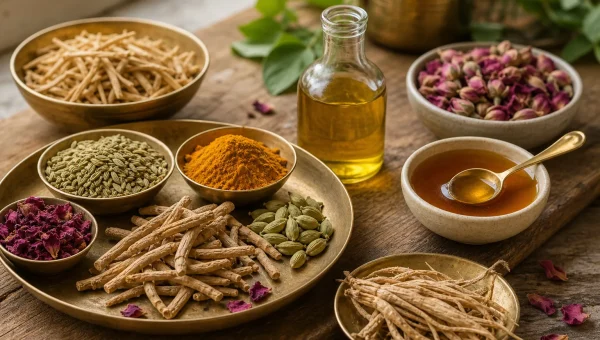
Shatavari (Asparagus racemosus) is best considered when the premenstrual pattern shows dryness, heat, irritability, disturbed sleep, or a depleted feeling. In Ayurvedic use it is a nourishing reproductive rasayana and female tonic. It is commonly taken with milk, ghee, or warm water when digestion permits, but people with hormone-sensitive conditions, unexplained abnormal bleeding, or hormone therapy should use it only after professional guidance.
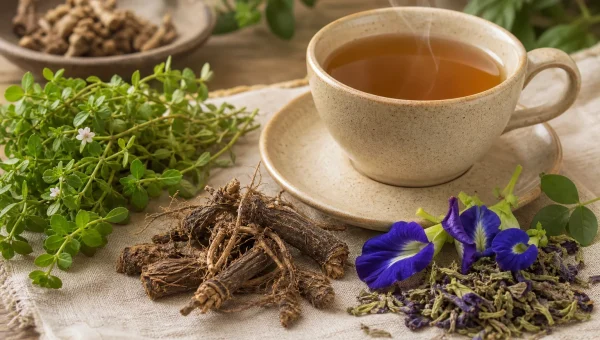
Brahmi (Bacopa monnieri) is suited when the migraine pattern is amplified by stress, mental overactivity, poor sleep, sound sensitivity, or anticipatory anxiety before the period. In Ayurveda it belongs to the medhya rasayana group and is used for steadiness of mind, memory, sleep, and calm cognition. It should be taken with food if it causes digestive discomfort.
Topical care during the premenstrual week can include gentle temple and crown oiling at night with a light cooling oil or a practitioner-selected brahmi preparation. Once active flow begins, avoid heavy head massage or full-body massage; the menstrual regimen favors quiet, lightness, warmth, and conservation of energy.
Herb Protocols by Headache Timing
Three timing patterns call for three different emphases. These are educational frameworks, not fixed prescriptions. Dose, duration, product quality, and suitability should be decided with a qualified Ayurvedic practitioner, especially if you are pregnant, trying to conceive, breastfeeding, using hormonal contraception, taking migraine medication, taking blood thinners, managing diabetes, or experiencing heavy bleeding.
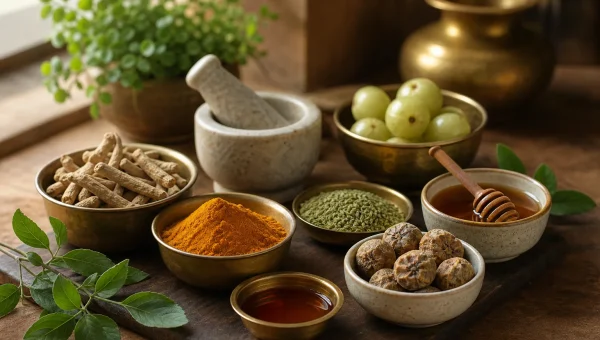
Pre-menstrual pitta-type headache, beginning one to two days before flow: The main focus is to cool and regulate the digestive-pitta axis without weakening digestion. Avipattikara curna is the classical digestive-pitta formula to consider when the headache is accompanied by acidity, sour belching, burning, constipation, irritability, or heat. Its traditional composition includes shunthi, marica, pippali, haritaki, bibhitaka, amalaki, musta, vida lavana, vidanga, ela, patra or tejapatra, lavanga, trivrit, and sharkara. Because it contains a purgative component and sugar, it should be used carefully in diarrhea, dehydration, pregnancy, heavy flow, and diabetes.
Food support for this pitta pattern is simple: regular meals, warm cooked food, adequate fluids, and avoidance of alcohol, red chili, excessive sour foods, deep-fried food, and late-night eating. Coriander seed water or a mild coriander-fennel infusion may be used when thirst, heat sensation, acidity, or urinary irritation accompanies the premenstrual phase.
First-day vata-type headache, beginning with flow: The main focus is to protect apana vata and reduce movement, cold, dryness, and strain. Rest in a dark, quiet room, eat light warm food, sip warm water, and avoid fasting. A practitioner may select dashamoola-based decoctions when the migraine appears with neck stiffness, backache, lower abdominal pulling, body ache, and clear vata signs. Gentle warmth to the back of the neck and shoulders can be helpful, but strong massage and purgative measures are not suitable during active menstruation unless specifically supervised.
Day-three or day-four heavy headache: The main focus is to clear sluggishness without overheating the system or dehydrating it. When the headache is dull, heavy, coated-tongue, constipated, or linked with poor appetite, a small bedtime dose of Triphala may be considered. When the pattern is cold, heavy, and kapha-ama dominant, a very small amount of Trikatu may be used after food under guidance. Avoid Trikatu when there is burning, acidity, heavy bleeding, mouth ulcers, pregnancy, or a distinctly pitta-type migraine.
Dietary Rules During the Rajasvala Phase
Rajasvala paricharya emphasizes a lighter diet, moderation, and avoidance of practices that disturb vata during active menstruation. For menstrual migraine, this means avoiding both extremes: do not overload the digestive fire with heavy food, and do not provoke vata through fasting, cold food, sleep loss, travel, overwork, or intense exercise.
| Phase | Recommended Foods | Foods and Habits to Avoid | Specific for Migraine |
|---|---|---|---|
| 7-10 days before flow | Warm cooked grains, mung dal, cooked vegetables, ghee in small amounts, shatavari milk if suitable | Alcohol, red chili, excessive sour foods, skipped meals, late nights | Begin diary tracking; stabilize sleep and meal timing |
| Days 1-2 of flow | Thin rice or barley gruel, light mung soup, warm water, soft cooked vegetables | Cold foods, raw salads, fasting, heavy legumes, vigorous exercise, strong massage, self-administered nasya | Dark quiet rest, gentle neck warmth for stiffness, cooling compress if heat dominates |
| Days 3-4 | Mung soup, soft rice, cooked vegetables, warm water, mild coriander-fennel infusion if tolerated | Sour ferments, heavy dairy, excess sweets, repeated snacking without appetite | Rehydrate steadily; use Triphala only if constipation or ama signs are present |
| Days 5-7 | Gradual return to normal diet, sesame, dates, leafy greens, ghee, iron-rich foods if flow was heavy | Immediate return to very spicy, sour, fried, or irregular meals | Rebuild rasa and rakta; review the diary before the next cycle |
External Care During a Migraine Attack
When the migraine has already begun during active flow, the safest Ayurvedic direction is quiet, darkness, digestive simplicity, warmth where there is stiffness, and cooling where there is burning. Classical menstrual regimen lists nasya among practices to avoid during bleeding, so do not self-administer Anu taila nasya during active menstruation. Outside the bleeding days, a practitioner may consider nasya for recurrent vata-kapha head patterns, but it should not be used as a do-it-yourself emergency measure for menstrual migraine.
For a vata-dominant attack with neck and occipital tightness, use a warm cloth over the back of the neck and shoulders and keep the feet warm. For a pitta-dominant attack with burning, heat, red eyes, or irritability, use a cool cloth over the forehead and keep the room dim. Avoid strong smells, loud sound, bright screens, skipping food, and dehydration during the attack.
Shirodhara belongs in the between-cycle plan rather than the heavy-flow window. It is most appropriate after bleeding has stopped and digestion is steady, especially when the pattern includes poor sleep, scalp tension, stress reactivity, and recurrent vata-dominant headaches. The liquid, temperature, session number, and timing should be individualized by a qualified practitioner.
Three-Month Protocol for Lasting Change
Single-cycle interventions may help, but repeated menstrual migraine usually needs several cycles of consistent observation and correction. The goal is not only less pain, but fewer severe attacks, less nausea and light sensitivity, less medication need, smoother digestion, and a more stable premenstrual week.
Month 1: Establish the pattern. Keep a headache-menstrual diary and note whether the headache starts before flow, with flow, or after the first two days. Record stool pattern, acidity, appetite, sleep, stress, bleeding amount, clots, cramps, nausea, aura, medication use, and what improves or worsens the attack.
Month 2: Begin the premenstrual plan seven to ten days before the expected period. Use the pitta, vata, or ama protocol that matches the diary pattern. Keep meals warm and simple during the menstrual days, avoid fasting, and stop any herb that causes loose stools, burning, unusual bleeding, rash, palpitations, or worsening headache.
Month 3: Refine the plan with a practitioner. If vata signs dominate, the emphasis may move toward apana support, dashamoola-type formulations, sleep restoration, and between-cycle external therapies. If pitta signs dominate, the emphasis may move toward Avipattikara-style digestive pitta management, cooling diet, and regular meals. If ama signs dominate, the emphasis may move toward agni correction, bowel regularity, and reducing heavy foods before and during flow.
When Ayurvedic Treatment Works Alongside Conventional Care
Conventional migraine care remains valid for acute attacks. NSAIDs, triptans, magnesium strategies, hormonal strategies, and mini-prevention plans are commonly used in menstrual migraine care under medical guidance. Ayurvedic pre-emptive care can sit alongside these approaches when all clinicians know what is being taken and when herbs are chosen safely.
Heavy menstrual flow, fatigue, dizziness, post-menstrual weakness, or rebound headaches after bleeding should prompt evaluation for anemia and iron deficiency. Do not self-prescribe iron, Loha bhasma, mineral preparations, or strong herbs without testing and qualified guidance. Product quality also matters, because some Ayurvedic preparations have been found to contain unsafe levels of heavy metals when poorly manufactured.
Seek medical evaluation promptly for a sudden severe headache, the worst headache of your life, a new or changing headache pattern, headache with fever or stiff neck, fainting, confusion, weakness, numbness, trouble speaking, double vision, headache after injury, new headache after age 50, migraine with new aura, or any neurological symptom that is unusual for you. Ayurvedic care works best after serious causes have been ruled out and a clear migraine diagnosis is established.
Medical Disclaimer: This content is for educational purposes only and does not constitute medical advice. Menstrual migraine can require medical diagnosis and treatment. Do not self-treat severe, sudden, changing, or neurological headache patterns. Consult a qualified neurologist or gynecologist for diagnosis and a licensed Ayurvedic practitioner for individualized herbal protocols, especially if you are pregnant, breastfeeding, trying to conceive, using hormonal medicines, have heavy bleeding, or have a hormone-sensitive condition.
References
- Ichd-3 (ichd-3.org)
- Charaka Samhita — Artava
- Charaka Samhita — Talk%3ACongenital disorders
- Natural Ingredient Resource Center
- Plant profile, phytochemistry and pharmacology of Asparagus racemosus (Shatavari): A review (2013), PubMed Central
- NCBI
- Therapeutic Uses of Triphala in Ayurvedic Medicine (2017), PubMed Central
- Ijrap (ijrap.net)
- Researchgate (researchgate.net)
- Americanmigrainefoundation (americanmigrainefoundation.org)
- ACOG
- NCCIH
- Americanmigrainefoundation (americanmigrainefoundation.org)
- Mayoclinic (mayoclinic.org)