Why Udvartana Powder Massage Deserves More Attention
Of all the Panchakarma-adjacent bodywork procedures, Udvartana is one of the most direct in its intention. A brisk herbal powder massage rubbed against the skin is not designed to feel like a slow oil massage. Its purpose is to bring dryness, friction, warmth, and movement to areas where Kapha qualities such as heaviness, oiliness, coldness, lethargy, and stagnation are prominent.
The classical description most often quoted for Udvartana comes from the Ashtanga Hridaya of Vagbhata. It describes Udvartana as kaphahara (Kapha-reducing), medasaḥ pravilāyana (helping liquefy or mobilize Meda), sthirīkaraṇam aṅgānām (firming or stabilizing the limbs), and tvak-prasādakara (promoting clarity and pleasantness of the skin). Charaka’s daily-regimen discussion also gives importance to body cleansing and rubbing, traditionally explained by commentators in relation to Udvartana, especially for heaviness, itching, sweat-related impurity, and body odour.
The Powders: What Goes Into an Udvartana
Not all powders used for Udvartana are interchangeable. The choice depends on constitution, skin tolerance, season, the strength of the patient, and whether the main aim is Kapha-Meda management, skin texture, or a gentler daily cleansing routine.
Primary Powders and Blends
A good Udvartana blend should be fine enough not to scratch the skin, dry enough to create friction, and selected according to the person rather than chosen only by name.
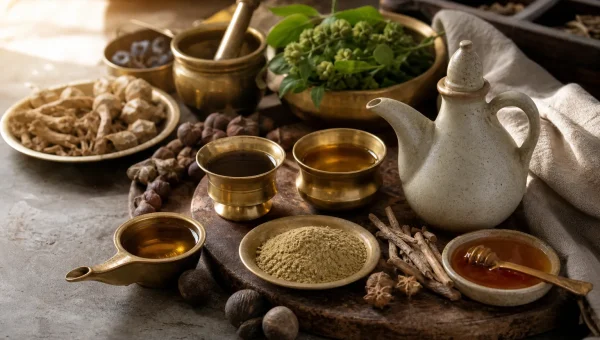
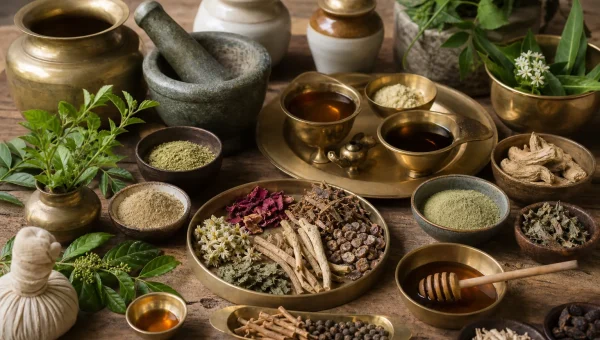
- Kolakulathadi or Kolakuluthadi Churnam: A classical external powder used for Udvartana in Kapha-Meda conditions such as Sthoulya and Medoroga. Standard ingredient listings include Kola, Kulattha, Devadaru, Rasna, Masha, Atasi, Kushta, Vacha, Shatahva, Yava, and Eranda. Because some traditional formulas contain potent herbs such as Vacha, they should be used externally and selected under qualified guidance.
- Triphala Churna: A simpler and often gentler option made from Haritaki, Bibhitaki, and Amalaki. It is useful when the aim is mild Kapha support, cleansing, and improving the feel of dull or rough skin without using a very heating formula.
- Haridra (turmeric): Turmeric may be added sparingly to a base powder when roughness, dullness, or Kapha-Pitta-type skin concerns are present. It can stain the skin and clothing and may irritate sensitive skin, so it should be used in small amounts and patch-tested first.
- Fine gram flour or bath-powder bases: Finely milled besan or similar cleansing powders can be used for a mild home version. This is closer to daily cleansing and exfoliation than to a full therapeutic Udvartana course.
Stroke Direction: Why Upward Matters
Udvartana is traditionally performed in pratiloma direction, meaning against the direction of hair growth. In practical terms, this creates more contact between powder and skin, increases friction, and produces a warming, stimulating effect. In Ayurvedic terms, the dry and brisk quality of the procedure counters the heavy, oily, cold, and stable qualities associated with aggravated Kapha.
The upward pattern is also one reason Udvartana feels very different from conventional oil massage. The therapist is not simply gliding over the skin; the powder is worked into the surface with controlled pressure so that the treatment remains stimulating without becoming abrasive.
The Technique in Clinical Practice
A clinical Udvartana session is systematic. The therapist adjusts the powder, pressure, duration, and direction according to the person’s strength, skin quality, constitution, and treatment goal.
- Patient preparation: For Ruksha Udvartana, the skin is kept dry and no oil is applied first. For dry, delicate, or Vata-prone individuals, a softer Snigdha or Utsadana approach may be used, where powder is mixed with oil or another unctuous medium.
- Powder application: Enough powder is used to maintain dryness and friction without dragging or scratching the skin. The powder should be fine, clean, and appropriate for the person’s skin tolerance.
- Stroke execution: Strokes are usually directed upward and against hair growth, beginning from the lower limbs and moving toward the thighs, hips, abdomen, arms, back, and shoulders. Pressure is moderate to firm for Kapha-Meda conditions and gentler for sensitive constitutions.
- Duration: A full-body clinical session commonly lasts around 30 to 45 minutes, but shorter sessions are preferable for sensitive skin, Pitta tendency, fatigue, or first-time treatment.
- Post-treatment care: The person rests briefly and then bathes with warm water. Harsh soap, aggressive scrubbing, and immediate exposure to cold wind or strong sun are avoided after treatment.
A mild pinkness after treatment can occur from friction and increased surface warmth. Burning, scratches, broken skin, or persistent redness indicate that the powder was too coarse, the pressure was too strong, or the treatment was not suitable for that person.
Expected Outcomes: What Udvartana Is Best At
Udvartana should not be presented as a stand-alone weight-loss shortcut. Its classical value is as an external Kapha-Meda procedure that supports lightness, firmness, skin clarity, and better surface stimulation when combined with suitable diet, movement, sleep routine, and physician-guided internal treatment where required.
| Therapeutic aim | Classical Ayurvedic framing | Practical expectation |
|---|---|---|
| Kapha heaviness | Kaphahara | A lighter, less sluggish feeling when used consistently and appropriately |
| Meda accumulation | Medasaḥ pravilāyana | Supportive external therapy for Kapha-Meda management, not a substitute for diet and activity |
| Skin quality | Tvak-prasādakara | Smoother, cleaner-feeling, more refined skin texture |
| Limb tone | Sthirīkaraṇam aṅgānām | A firmer, more toned feeling in the body when combined with movement and strengthening habits |
| Body odour, sweat-related impurity, itching, and heaviness | Śarīra parimārjana in the daily-regimen context | Useful as part of cleansing and body-care routines when the skin is healthy enough for friction |
For weight management, Udvartana works best as one part of a broader Kapha-reducing plan. A person with Kapha-Meda features may benefit more when the treatment is paired with warm, light food, reduced heavy and oily meals, daily brisk walking, appropriate sweating therapies, and internal medicines only when prescribed by a qualified practitioner.
Who Benefits Most
Kapha-predominant and Kapha-Pitta individuals generally tolerate Udvartana best when the powder and pressure are chosen correctly. The treatment is most suitable when the body shows heaviness, oiliness, coolness, sluggishness, dull skin texture, or generalized subcutaneous accumulation rather than weakness or dryness.
The ideal Udvartana candidate often has:
- Kapha or Kapha-Pitta constitution
- Generalized heaviness or Kapha-Meda accumulation
- Cool, oily, or clammy skin
- Sluggishness and a desire for a more stimulating body-care routine
- Rough, dull, congested-feeling, or uneven skin texture on the thighs, arms, hips, or abdomen
Aggressive dry Udvartana is not ideal for Vata-predominant people with very dry, thin, fragile, or easily irritated skin. In such cases, a gentler Utsadana or Snigdha Udvartana, where the powder is softened with oil or another unctuous substance, is more appropriate if treatment is indicated at all.
Pitta-predominant individuals may tolerate Udvartana when it is brief, gentle, and made with milder powders. It should be avoided or stopped if there is burning, active inflammation, strong redness, heat aggravation, or skin sensitivity.
Home Modification vs. Clinical Treatment
A home version can be useful as a mild cleansing and self-care practice, but it is not the same as a clinical Udvartana course. Clinical treatment adds proper patient selection, formulation choice, systematic direction, and trained judgment about how much friction the skin can tolerate.
Home Protocol
For a simple home practice, mix 1 to 2 tablespoons of finely milled gram flour with a small amount of Triphala powder and, if suitable, a tiny pinch of turmeric. Patch-test first. Before a warm shower, apply the powder to dry skin and rub gently upward over the arms, legs, hips, abdomen, and back of the body where reachable. Keep the total practice brief, around 5 to 10 minutes, and avoid the face, genitals, broken skin, inflamed areas, and freshly shaved skin.
Afterward, rinse with warm water and avoid harsh soap on the treated areas. Stop the practice if there is burning, scratching, persistent redness, or unusual discomfort. People with dry or Vata-prone skin may need a softer version using a few drops of oil mixed into the powder, or they may need to avoid dry powder massage altogether.
What Clinical Udvartana Adds
A professional session is more than stronger rubbing. Its value lies in correct assessment, controlled execution, and integration with the rest of the treatment plan.
- Selection between Ruksha Udvartana and Snigdha or Utsadana methods
- Choice of powder according to Kapha, Pitta, Vata, skin tolerance, season, and treatment goal
- Consistent upward and pratiloma strokes over the appropriate body regions
- Pressure and duration adjusted to avoid abrasion, burning, or Vata aggravation
- Integration with Abhyanga, Swedana, diet, exercise, and internal medicines when clinically indicated
- Monitoring of skin response so therapeutic redness does not become irritation or injury
Safety and Contraindications
Udvartana is generally safe when matched to the right person, but it is not suitable for every body or every skin condition. Strong dry friction should be avoided when the skin or the whole body is already irritated, depleted, overheated, or vulnerable.
- Active skin infections, open wounds, cuts, burns, sunburn, or painful rashes
- Severe eczema, psoriasis flare-ups, oozing skin conditions, or inflammation aggravated by friction
- Pregnancy, unless a qualified practitioner specifically advises a safe alternative
- Fever, acute illness, acute inflammation, or heat exhaustion
- Severe debility, emaciation, very dry or fragile skin, or aggravated Vata states
- Recent surgery, acute injury, or unexplained pain requiring medical evaluation
- Immediately after a heavy meal
If you are considering Udvartana for weight management, commit to it as a disciplined supportive practice rather than a quick fix. Combine it with Kapha-reducing food choices, daily movement, adequate sleep, and professional guidance when there are chronic health concerns or significant weight-management goals.
The value of Udvartana is that it gives a clear external method for addressing Kapha-Meda heaviness while also improving the feel and appearance of the skin. When performed correctly, it can leave the body feeling lighter, cleaner, firmer, and more awake without relying on exaggerated promises.
Consult a qualified Ayurvedic practitioner or healthcare provider before starting Udvartana, especially if you have sensitive skin, chronic skin disease, pregnancy, significant medical conditions, or are using prescribed medicines. This information is for educational purposes and does not replace professional medical advice.
References
- Wisdomlib — classical text
- Charaka Samhita — Matrashiteeya Adhyaya
- Easyayurveda (easyayurveda.com)
- Sahasrayogam (sahasrayogam.com)
- Therapeutic Uses of Triphala in Ayurvedic Medicine (2017), PubMed Central
- Ayurvedic Pharmacopoeia of India
- Sanskritgurukul (sanskritgurukul.in)
- Blog (blog.theayurvedaexperience.com)
- Ayurvaid (ayurvaid.com)
- Ecfr (ecfr.gov)
The friction direction (upward against lymphatic flow) being the critical technique detail is what separates therapeutic Udvartana from a generic exfoliation scrub. Using the right powder in the wrong direction produces a cosmetic result without the lymphatic and metabolic effects.
I’ve had Udvartana at three different Ayurvedic clinics and the results varied significantly. The article’s description of the classic procedure matches only one of those experiences. The other two were pleasant exfoliation treatments that didn’t engage the depth or duration the classical protocol requires.
The specific powder combinations (Triphala-based for Kapha weight versus turmeric-neem for skin conditions) is the clinical information that explains why the same procedure has different applications. It’s not just the massage technique but the active compounds in the powder doing different therapeutic work.
What’s the appropriate frequency for home Udvartana? I can access the dry herb powder and the technique is described clearly enough to attempt. But I don’t know if daily is appropriate, weekly, or only monthly for a Kapha-type interested in circulation improvement.
The skin texture improvement from Udvartana that oil massage doesn’t produce is something I’ve verified personally. Abhyanga makes skin soft and nourished. Udvartana makes it refined in a different way. My Ayurvedic physician describes it as removing the dullness that oil leaves behind.
The upward stroke technique really makes sense for moving stagnant Kapha, I wonder how it feels on sensitive skin.
Is Udvartana appropriate for sensitive skin? I have combination skin with Pitta-reactive patches and I’m concerned the vigorous friction would worsen inflammation in the sensitive areas while benefiting the Kapha areas.
Udvartana as a Dinacharya recommendation rather than just a Panchakarma treatment is the framing that makes it accessible. I’d thought of it as a clinical procedure requiring a clinic visit. Learning that daily self-application with appropriate powder is part of the classical daily regimen changes how I think about it.
I tried a home version with chickpea flour and Triphala, and my arms felt smoother after a week.
The Kapha-reducing metabolism effect claimed for regular Udvartana practice is the claim that requires the most scientific support. Lymphatic movement and circulation are plausible mechanisms. Actual metabolic rate change from an external massage treatment needs more than anecdotal evidence.
The Kolkulattadi choornam for Kapha-weight Udvartana and Nalpamaradi choornam for skin brightening are the product names I needed to look for. Generic online instructions for Udvartana don’t specify formulations. Knowing the classical names helps me identify quality products.
Does the addition of turmeric in Kolkulathadi Churna actually help with hyperpigmentation, or is it just for aroma?
The safest part of the Udvartana advice is keeping it simple. This feels more usable than a long list of herbs.
Seeing the data on waist reduction of 2 to 4 cm over 21 days makes me curious about combining it with brisk walks.
The Udvartana for diabetic neuropathy application is the most surprising clinical use in this article. The mechanism of improving peripheral circulation and nerve conduction through vigorous skin friction targeting the extremities is specific enough to warrant a dedicated clinical study.
The article mentions avoiding soap after the session; I’ve always wondered why that step is emphasized.
It’s interesting that Udvartana is classified under Dinacharya, suggesting it could be part of a daily routine rather than an occasional spa treat.
I’m skeptical about the claim that a single session feels nice but needs cumulative effect; has anyone noticed changes after just three days?
For Pitta types, using a sandalwood based powder seems like a smart tweak to avoid irritation.
The distinction between Udvartana and Utsadana is helpful for those with Vata predisposition who still want skin benefits.
I appreciate the safety notes about avoiding the treatment right after meals; timing matters more than I thought.
Having read about the 2016 study with Triphala powder, I wonder if similar results would appear with a different herbal blend.
The idea that Udvartana can stabilize limbs and tone musculature adds a layer beyond just skin texture improvement.
If you’re considering a home practice, starting with five minutes on the abdomen and thighs seems like a reasonable approach.
I came for Udvartana and this answered the main question. Small daily changes are easier to follow than a perfect plan.
Just what I needed to confirm I was on the right track with my current herbal regimen. The dosage details were especially helpful.
I’ve been taking it for over a year now. No issues with continuous use so far but I do take a 1 week break every 3 months.
Same experience here. The first month felt like nothing but then gradually noticed differences.
I came for Udvartana and this answered the main question. The safety notes could be expanded a little.
How long before you’d expect to see results with bibhitaki for memory? The article doesn’t specify a timeline.
I tried this for my skin health and had mild side effects the first week. They went away but the article should mention this is possible.
Tried tulsi after reading multiple articles like this. My digestion didn’t improve and I wasted 3 months. Maybe it works for others but not me.
The 1 teaspoon dosage mentioned in this post matches exactly what my Ayurvedic doctor prescribed. Good to see it confirmed here.
The claim about guduchi improving liver within 4 weeks seems optimistic based on my experience and what I’ve read.
Started with just the simplest protocol and plan to add more as I get comfortable. No need to do everything at once.
same situation as OP. sleep got better after week 3 but took patience
I would like more detail on Udvartana. I would like to know how long to try it before judging results.
I like that the article specifically mentions the KSM-66 vs full-spectrum distinction. Most blogs skip that detail entirely.
Tried amla for sleep for 3 months. Noticed zero difference. Maybe the issue is my specific condition doesn’t respond to this herb.
Useful post on Udvartana. Good starting point for a cautious reader.
I’ve been combining yoga with these herbs as suggested by my practitioner. The combination seems more effective than either alone. Just found this via search, still useful info.
These articles always skip the part about sourcing quality raw material. I’ve bought triphala that clearly had nothing active in it based on zero effect.
Is the half teaspoon dose mentioned here for adults? What about elderly people or those with kidney issues? Just found this via search, still useful info.
Bought the brand recommended in another article based on similar claims. It did nothing. I’m skeptical of anecdotal evidence now. Late to this post but wanted to add my experience. ❤️
Tried this approach for my sleep issue. By week 4 I noticed the inflammation was lower. Still monitoring.