
Ayurvedic Immunomodulators: Six Herbs Studied in Modern Immunology
Ayurveda describes resistance to illness through concepts such as vyadhikshamatva, bala and ojas, but these terms are not exact substitutes for the modern immune system. The often-quoted explanation that vyadhikshamatva includes resistance to the strength of an existing disease and obstruction of disease production is attributed to Chakrapani’s commentary on Charaka Samhita, Sutrasthana 28. Modern immunology, by contrast, measures defined cells, cytokines, antibodies, receptors and clinical outcomes.
Guduchi, Ashwagandha, Tulsi, Amalaki, Pippali and Katuki have all been examined in immunological experiments. The strength of the evidence is uneven: Ashwagandha and Tulsi have small trials in healthy adults, Guduchi has limited human clinical data, and much of the evidence for Amalaki, Pippali and Katuki remains laboratory or animal research. These findings support continued investigation rather than claims that any herb independently prevents or treats infection, autoimmune disease, cancer or another immune disorder.
Understanding Immunomodulation and Immunostimulation
Immunostimulation means increasing one or more immune responses. Immunosuppression means reducing them. Immunomodulation is a broader term for measurable alteration of immune activity, which may differ by dose, preparation, tissue, disease state and experimental model. A rise in a cytokine or immune-cell count does not by itself demonstrate balanced immunity or improved health.
Ayurvedic rasayana is a classical therapeutic category concerned with nourishment, strength, healthy longevity and restoration. Some rasayana drugs have measurable immune effects, yet rasayana should not be reduced to the biomedical phrase “immune booster.” Classical selection also considers the drug identity and part used, rasa, guna, virya, vipaka, dosha, digestion, season, age, strength and the purpose of treatment.
1. Guduchi (Tinospora cordifolia)
Guduchi is a prominent rasayana drug and is also called Amrita in the Ayurvedic Pharmacopoeia of India. The pharmacopoeial drug consists of the dried mature stem of Tinospora cordifolia; fresh stem may also be used. Its documented Ayurvedic profile is bitter and astringent in taste, light in quality, hot in potency and sweet after digestion. The API lists actions including tridosha-shamaka, balya, dipana and rasayana.
Laboratory Findings
Two isolated polysaccharides have received particular attention. G1-4A altered cytokine and nitric-oxide responses in macrophage models. RR1, tested in vitro at 100 micrograms per millilitre, increased measured activation of natural-killer cells by 331%, T cells by 102% and B cells by 39%. These figures describe cells exposed to an isolated fraction in a laboratory; they are not expected percentage increases in people taking Guduchi.
A phytochemical investigation isolated seven compounds with immunomodulatory activity from Tinospora cordifolia. This establishes that the plant contains several biologically active constituents, although Guduchi products made from different plant parts, extracts or manufacturing processes need not have the same composition.
Human Evidence and Interpretation
In a double-blind randomized study involving patients with diabetic foot ulcers, Guduchi was used as an adjunct to standard care. Forty-five participants completed the study. Neutrophil phagocytic function improved and the number of surgical debridements was lower, but the difference in overall wound improvement was not statistically significant. The findings concern selected immune and care-related measures rather than a demonstrated acceleration of overall wound healing.
Guduchi also requires a prominent safety qualification. Published case series and pharmacovigilance assessments have associated Tinospora cordifolia products with acute liver injury, including autoimmune-like hepatitis. People with liver disease, autoimmune disease or a history of unexplained jaundice should not self-prescribe it.
2. Ashwagandha (Withania somnifera)
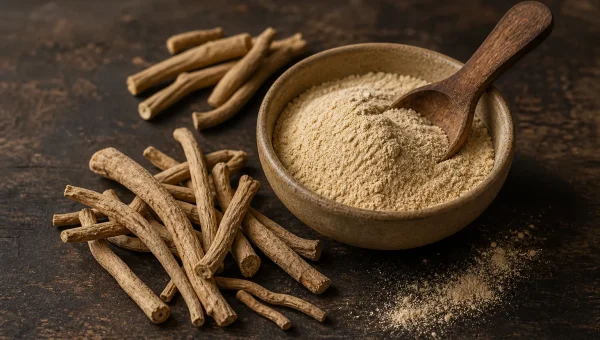
The API identifies Ashwagandha as the dried root of Withania somnifera. Its Ayurvedic profile is bitter and astringent in taste, light in quality, hot in potency and sweet after digestion; listed actions include vatakapha-shamaka, balya, rasayana and vajikarana. These classical properties apply to the authenticated root drug and should not automatically be assigned to every concentrated extract.
Human Trial
A randomized, double-blind, placebo-controlled pilot trial assigned 24 healthy adults to a standardized Ashwagandha extract or placebo. Participants received 60 milligrams of extract daily for 30 days, followed by an open-label extension. The extract group had significant changes in immunoglobulins, cytokines and lymphocyte subsets, including CD3, CD4, CD8, CD19 and natural-killer-cell markers. The placebo-to-extract crossover group showed similar directional changes during the extension.
The trial directly measured immune markers in humans, but it was small, short and conducted in healthy adults. Its outcomes did not include infection frequency, vaccine protection, treatment of immune deficiency or control of autoimmune disease. The 60-milligram standardized extract used in the trial is also not equivalent to 60 milligrams of ordinary root powder.
Safety Context
Ashwagandha may cause drowsiness, stomach upset, diarrhoea or vomiting, and rare cases of liver injury have been reported. The U.S. National Center for Complementary and Integrative Health advises avoiding it during pregnancy and breastfeeding and does not recommend it for people with autoimmune or thyroid disorders or those preparing for surgery. It may interact with immunosuppressants, sedatives, anticonvulsants, thyroid hormone, diabetes medicines and blood-pressure medicines.
3. Tulsi (Ocimum sanctum)
The API includes whole-plant and leaf monographs for Tulsi, identified as Ocimum sanctum. The whole-plant monograph records pungent, bitter and astringent tastes; sharp, dry and light qualities; hot potency; and pungent post-digestive effect. It lists Tulsi as vatahara and kaphahara while also describing a pitta-increasing action. This profile is more precise than presenting Tulsi as universally suitable for every constitution.
Human Trial
In a double-blind randomized crossover trial, 24 healthy volunteers received 300 milligrams of an ethanolic Tulsi leaf extract daily for four weeks, and 22 completed the protocol. Compared with placebo, the extract period was associated with increases in interferon-gamma, interleukin-4, T-helper cells and natural-killer cells.
Interferon-gamma and interleukin-4 are associated with different immune pathways, but their concurrent increase does not establish bidirectional “Th1/Th2 balancing.” The study measured circulating markers in a small healthy cohort rather than resistance to infection, allergy control or outcomes in an immune disorder. It recorded an increase in natural-killer-cell numbers, not enhanced natural-killer-cell cytotoxicity.
Practical Meaning
Tulsi is widely consumed as a culinary or infused herb, while the trial used a defined ethanolic extract. Tea, fresh leaves, powdered leaf and concentrated extracts cannot be treated as interchangeable preparations. Anyone taking anticoagulants, glucose-lowering medicines or multiple prescription drugs should discuss concentrated Tulsi products with a healthcare professional because human interaction information remains limited.
4. Amalaki (Phyllanthus emblica)
Amalaki is identified in the API as Emblica officinalis, with Phyllanthus emblica listed as a synonym for the dried fruit. The fresh fruit pulp contains ascorbic acid and tannins. Its five recorded tastes are sour, astringent, sweet, bitter and pungent; it is light and dry, cooling in potency and sweet after digestion. The API classifies it as tridoshajit and rasayana and lists it as the principal fruit in Chyavanaprasha.
Preclinical Immune Findings
In a laboratory model of chromium(VI)-induced immunotoxicity, Amalaki extract restored lymphocyte proliferation and the production of interleukin-2 and interferon-gamma while improving antioxidant measures. A related experiment in murine macrophages found protection against chromium-induced oxidative and cellular injury.
These experiments concern preclinical lymphocyte, cytokine and macrophage responses. Human increases in CD4, CD8, CD16, CD19, IgM and IgG were not outcomes of the cited experiments. The whole fruit also cannot be reduced to isolated vitamin C: its pharmacopoeial description includes tannins and multiple tastes and actions that are not properties of ascorbic acid alone.
Use in Food and Formulations
Fresh Amalaki fruit, dried fruit powder, juice, preserves and standardized extracts differ markedly in sugar content, acidity, concentration and phytochemical composition. Chyavanaprasha uses Amalaki as its dominant fruit base alongside many other ingredients, so findings concerning isolated Amalaki should not automatically be transferred to every Chyavanaprasha product, and findings from a finished formulation should not be assigned to Amalaki alone.
5. Pippali (Piper longum)
The pharmacopoeial Pippali drug is the dried immature catkin-like fruit of Piper longum. The API records pungent, bitter and sweet tastes; light and unctuous qualities; anushna virya, meaning it is not classed as strongly heating in that monograph; and sweet post-digestive effect. Listed actions include vatahara, kaphahara, dipana, rasayana and rechana.
Preclinical Immune Findings
An animal study evaluated an alcoholic fruit extract of Piper longum and isolated piperine. Both altered white-blood-cell counts, bone-marrow cellularity and other immune measures in mice and were also tested in tumour-bearing models. These are preclinical findings and do not establish Pippali as a cancer treatment or provide a human immune-stimulating dose.
Bioavailability and Interaction Potential
Piperine can alter drug handling. In vitro experiments found inhibition of P-glycoprotein and CYP3A4, and a small human pharmacokinetic study found that piperine increased exposure to curcumin. The term “bioenhancer” therefore describes a real interaction potential rather than an automatic therapeutic advantage. Raising exposure to a medicine may also increase its adverse effects.
Pippali is not chemically identical to piperine, and Piper longum preparations vary in piperine content. People taking medicines with a narrow therapeutic range, anticoagulants, anticonvulsants, immunosuppressants or several long-term drugs should avoid concentrated Pippali or piperine products unless a qualified clinician has reviewed the combination.
6. Katuki (Picrorhiza kurroa)
The API defines Katuki as the dried rhizome with root of Picrorhiza kurroa. It is bitter and pungent in taste, light in quality, hot in potency and pungent after digestion. Listed actions include pittahara, dipani, bhedini, hridya and jvarahara. Its classical identity is therefore broader than the modern label “liver herb,” although hepatic indications are prominent in traditional use.
Picroliv and Immune Measures
Picroliv is an iridoid-glycoside fraction of Picrorhiza kurroa, described in a pharmacological review as containing picroside I and kutkoside in a 1:1.5 ratio. In animal experiments it increased haemagglutinating-antibody titres, plaque-forming cells, delayed-type hypersensitivity and macrophage migration and phagocytosis. These findings concern a defined experimental fraction rather than every Katuki powder or extract.
Hepatoprotective Evidence
Picroliv has also been compared with silymarin in rodent models of liver injury caused by galactosamine, paracetamol, thioacetamide and carbon tetrachloride. Such models support mechanistic investigation but do not establish equivalent benefit in human liver disease. Clinical dosing and a predictable four-to-six-week onset cannot be derived from these animal experiments.
Comparison of the Six Herbs
The six herbs are most accurately compared by evidence type and tested preparation rather than by unsupported onset times or universal supplement doses. Results from a purified fraction cannot automatically be assigned to a whole herb, and changes in immune markers cannot be equated with prevention or treatment of disease.
| Herb | Authenticated API Drug | Best Verified Immune Evidence Cited Here | Evidence Level | Responsible Interpretation |
|---|---|---|---|---|
| Guduchi | Mature stem of T. cordifolia | Polysaccharide experiments and a small adjunctive diabetic-foot-ulcer trial | Laboratory plus limited human data | Selected macrophage, lymphocyte and neutrophil effects; liver-risk caution |
| Ashwagandha | Root of W. somnifera | 60 mg/day standardized extract for 30 days in 24 healthy adults | Small human pilot trial | Changes in immune markers, not demonstrated prevention or disease treatment |
| Tulsi | Whole plant or leaf of O. sanctum | 300 mg/day ethanolic leaf extract for four weeks in a crossover trial | Small human trial | Changes in cytokines and cell counts without proof of Th1/Th2 balancing |
| Amalaki | Fresh fruit pulp or dried fruit | Chromium-immunotoxicity lymphocyte and macrophage experiments | Laboratory and animal-derived evidence | Mechanistic findings without demonstrated human CD-marker increases |
| Pippali | Immature dried fruit of P. longum | Mouse immune experiment and piperine pharmacokinetic studies | Preclinical immune evidence plus interaction data | Not an established human immune therapy; clinically relevant interaction potential |
| Katuki | Rhizome with root of P. kurroa | Picroliv immune and liver-injury experiments | Predominantly animal evidence | Experimental fraction rather than an established clinical immune treatment |
Vyadhikshamatva and Bala in Classical Context
Ayurvedic immunity language is best understood within its own framework. Chakrapani’s commentary explains vyadhikshamatva through resistance to the force of disease and obstruction of disease production. This is a broad account of susceptibility and resilience rather than a description of antibodies, lymphocyte subsets or immune memory.
Sahaja, Kalaja and Yuktikrita Bala
Charaka Samhita classifies bala, or strength, as sahaja, kalaja and yuktikrita. Sahaja is inborn or constitutional strength. Kalaja varies with age and season. Yuktikrita is cultivated through suitable food, regimen and therapeutic measures. These categories can be compared cautiously with constitutional, time-dependent and acquired influences on health, but they should not be presented as exact ancient names for innate and adaptive immunity.
The six herbs in this article may be considered within yuktikrita measures when prescribed appropriately, yet classical care is not herb-only. Diet, sleep, digestion, activity, season, recovery from illness and the person’s strength are part of the assessment. A rasayana selected without regard to these factors is not automatically classical practice.
Safety, Contraindications and Product Quality
“Natural” and “immunomodulatory” do not mean universally safe. Immune-active herbs may be unsuitable with autoimmune disease, organ transplantation, immunosuppressive therapy, cancer treatment, pregnancy, breastfeeding, surgery or significant liver disease. They should not replace vaccination, antimicrobial treatment, wound care, insulin management or other indicated medical treatment.
High-Priority Cautions
Guduchi has documented liver-injury reports, including autoimmune-like presentations. Ashwagandha has rare liver-injury reports and is not recommended by NCCIH for pregnancy, breastfeeding, autoimmune disease, thyroid disorders or the perioperative period. Piperine can modify drug transport and metabolism. Katuki is strongly bitter and classically bhedini, and concentrated preparations should not be self-dosed. For Tulsi and Amalaki extracts, the safety of food-level use should not be assumed to apply to high-concentration products.
- Seek urgent medical assessment for jaundice, dark urine, persistent vomiting, severe abdominal pain, facial swelling, breathing difficulty or a widespread rash after starting a product.
- Stop self-treatment and obtain professional advice if symptoms worsen, fever persists, wounds deteriorate or an infection is suspected.
- Use products that state the botanical name, plant part, extract ratio, batch number and contaminant testing; substitution of species or plant parts changes both efficacy and risk.
- Do not combine several immune-directed products merely because each is herbal; overlapping effects and interactions are possible.
Classical Formulations and Synergy
Ayurveda uses both single drugs and compound formulations. Chyavanaprasha is a classical rasayana avaleha in which Amalaki forms the principal fruit base, together with numerous herbs and processing ingredients. Trikatu is the combination of Shunthi, Maricha and Pippali. These combinations have traditional rationales, but “synergy” should not be used as a substitute for formulation-specific clinical evidence.
Pippali or Trikatu may alter absorption and metabolism, while ghee, honey, decoctions and other pharmaceutical steps change the final preparation. Consequently, evidence for an isolated constituent, a hydroalcoholic extract or a laboratory polysaccharide cannot be transferred without qualification to a traditional formulation sold under the same herb name.
What the Current Evidence Can Support
The six herbs can reasonably be described as Ayurvedic drugs with experimentally documented effects on selected immune pathways. The clearest human marker data in this group come from small healthy-volunteer trials of Ashwagandha and Tulsi. Guduchi has limited clinical findings alongside an important liver-safety signal. Amalaki, Pippali and Katuki remain supported mainly by mechanistic and animal work for the immune claims discussed here.
Future trials need authenticated species and plant parts, chemically characterized preparations, adequate sample sizes, clinically meaningful outcomes and active monitoring for liver injury and drug interactions. Investigations should distinguish ordinary food use, classical powder or decoction doses, proprietary extracts and purified fractions rather than treating them as interchangeable.
This article is for education and does not diagnose, prevent or treat disease. Consult a qualified Ayurvedic practitioner and a licensed healthcare provider before using concentrated herbal products, especially if you are pregnant, breastfeeding, preparing for surgery, living with liver, thyroid, autoimmune or chronic disease, or taking prescription medicines.
References
- Clinical Evaluation of Shilajatu Rasayana in patients with HIV Infection (2010), PubMed Central
- A review on balya action mentioned in Ayurveda (2014), PubMed Central
- Ia800501 (ia800501.us.archive.org)
- G1-4A, an immunomodulatory polysaccharide from Tinospora cordifolia, modulates macrophage responses and protects mice against lipopolysaccharide induced endotoxic shock (2007), PubMed
- Immune stimulating properties of a novel polysaccharide from the medicinal plant Tinospora cordifolia (2004), PubMed
- Immunomodulatory active compounds from Tinospora cordifolia (2012), PubMed
- Immunomodulatory role of Tinospora cordifolia as an adjuvant in surgical treatment of diabetic foot ulcers: a prospective randomized controlled study (2007), PubMed
- Herbal Immune Booster-Induced Liver Injury in the COVID-19 Pandemic – A Case Series (2021), PubMed
- NCBI
- Immunomodulatory Effect of Withania somnifera (Ashwagandha) Extract-A Randomized, Double-Blind, Placebo Controlled Trial with an Open Label Extension on Healthy Participants (2021), PubMed
- NCCIH
- Double-blinded randomized controlled trial for immunomodulatory effects of Tulsi (Ocimum sanctum Linn.) leaf extract on healthy volunteers (2011), PubMed
- Cyto-protective and immunomodulating properties of Amla (Emblica officinalis) on lymphocytes: an in-vitro study (2002), PubMed
- Cytoprotective activity of Amla (Emblica officinalis) against chromium (VI) induced oxidative injury in murine macrophages (2003), PubMed
- Immunomodulatory and antitumor activity of Piper longum Linn. and piperine (2004), PubMed
- Piperine, a major constituent of black pepper, inhibits human P-glycoprotein and CYP3A4 (2002), PubMed
- Influence of piperine on the pharmacokinetics of curcumin in animals and human volunteers (1998), PubMed
- Immunostimulant Activity of Picroliv, the Iridoid Glycoside Fraction of Picrorhiza kurroa, and its Protective Action against Leishmania donovani Infection in Hamsters1 (1992), PubMed
- Pharmacology and chemistry of a potent hepatoprotective compound Picroliv isolated from the roots and rhizomes of Picrorhiza kurroa royle ex benth. (kutki) (2009), PubMed
- Chyawanprash: A Traditional Indian Bioactive Health Supplement (2019), PubMed Central
- An appraisal of the bioavailability enhancers in Ayurveda in the light of recent pharmacological advances (2016), PubMed Central
I shared this with three colleagues from my university’s integrative medicine program. The evidence synthesis here is genuinely graduate-level quality
it’s wonderful to see both believers and skeptics engaging respectfully in the comments. That’s how we all learn.
I’m a medical student with interest in integrative approaches. Content like this bridges my two worlds of study and I’m grateful it exists
I’ve been using it for a year and can confirm, the results you’re describing are consistent with my longer-term experience.
The traditional knowledge systems described here had thousands of years of empirical observation. Modern science is essentially validating what healers learned through patient outcomes.
Three months sounds right from my experience too. Commit to that and then evaluate.
Could you address the challenge of publishing Ayurvedic research in high-impact Western journals? The gatekeeping issues are significant for the field
Your experience with the diet changes mirrors mine almost exactly. Week two is when it clicks.
I appreciate the discussion of what we dont yet know as much as what we do. Scientific humility is undervalued in health communication.
As a biomedical researcher I appreciate the careful distinction between correlation and causation in the studies cited here. More honest than most health content I read.
I would like more detail on Immunomodulators. Would be useful to see a short checklist next.
The discussion of standardization challenges in herbal medicine is something most popular articles skip entirely. Really important context for interpreting the research
The cytokine data cited here is consistent with what we know from preclinical models. Eager to see the larger clinical trials that are apparently in progress
This makes sense for Immunomodulators. The safety notes could be expanded a little.
I appreciate you sharing the skeptical perspective too. It keeps the conversation grounded.
I work in clinical trials and I’ve seen some of these studies firsthand. The interpretations here are fair and measured. Well done.
Thank you so much for sharing your experience! It’s really encouraging to hear from others on this journey.
the comparison of bioavailability across different formulations is exactly the kind of practical information clinicians need when recommending these herbs to patients.
the grandmothers always knew! I keep finding that traditional knowledge holds up to modern scrutiny
The safety profiles described here are consistent with what’s in the peer-reviewed literature. I appreciate that adverse effects are discussed alongside benefits.
The connection you made between those two things is really insightful. I hadn’t thought of it that way before
the phytochemistry section is accessible without being dumbed down. Hard to strike that balance for non-specialist readers and you’ve managed it well.
I would like more detail on Immunomodulators. I would still ask a practitioner before changing medicines.
This makes sense for Immunomodulators. This feels more usable than a long list of herbs.
The combination approach you described is exactly what my practitioner recommended too. Validation always feels good
This makes sense for Immunomodulators. Good starting point for a cautious reader.
The Vyadhikshamatva distinction resistance to onset versus resistance to progression is more sophisticated than any immune system discussion I’ve had with a GP. Ayurveda was already running two separate concepts that conventional immunology only recently differentiated.
good stuff overall but the dosha assessment part is too simplified imo. you cant sum that up in one paragraph
As an immunologist, the mechanisms described for the immune-modulating herbs align well with what we understand about these pathways. Good translation of complex science.
I would like more detail on Immunomodulators. I appreciate that it does not oversell the result.
I would like more detail on Immunomodulators. This is the kind of detail readers can test slowly.
This makes sense for Immunomodulators. The examples make the advice less abstract.
Interesting perspective, but I’ve read contradicting information from other Ayurvedic sources. How does a beginner know who to trust?
The NK cell activation data for Guduchi is the most impressive section. Natural killer cell enhancement is a specific immunological endpoint and the cytokine data from the extract studies is reasonably solid.
My experience was mixed at best. The dietary changes helped a little but the herbal recommendations did nothing noticeable.
The Immunomodulators section feels grounded enough to try carefully. The examples make the advice less abstract.
The autoimmune caution for immunostimulating herbs is important. Taking immune-activating herbs when you have an autoimmune condition where the immune system is already overactive is potentially harmful. The article notes this but it deserves more prominence.
Thank you for the honest feedback. You’re absolutely right that individual responses vary, and we should emphasize that more. We’ll update the article to include stronger caveats about individual variation.
I like this site generally but this particular article feels rushed compared to your usual standard. Some sections need more depth.
I started Tulsi and Guduchi during COVID as a preventive measure. My family of 6 got COVID; I was the mildest case. Anecdote, but consistent with what these studies suggest.
Are these herbs appropriate for people on chemotherapy? Some of the immunomodulatory herbs could interfere with treatment if they stimulate immune function in the wrong way during active cancer treatment.
The Tinospora cordifolia (Guduchi) data is one of the better-studied Ayurvedic herbs for immunity. The fact that clinical trials have confirmed what the Charaka Samhita described as immune vitality 2000 years ago is one of those things that makes you reassess your priors.
The breakdown of Guduchi’s polysaccharide effects on macrophage models helped me see why lab results don’t always translate to human outcomes.
Does anyone know if the Ashwagandha trial’s 60 mg extract is comparable to typical over the counter capsules?
I’m curious whether the Tulsi interferon gamma rise actually means anything for seasonal colds.
The article’s caution about Katuki’s liver protective fraction Picroliv feels warranted given the animal only data.
It’s interesting how the authors separate immunostimulation from immunosuppression when talking about rasayana.
Amalaki’s vitamin C content is just one piece; the tannins seem to play a bigger role in the preclinical models.
I wonder if the diabetic foot ulcer study’s lack of significant wound improvement means Guduchi’s role is more supportive than curative.
The discussion on vyadhikshamatva reminded me that ancient terms map loosely onto modern immunity concepts.
Pippali’s piperine interaction with drug metabolism makes me think twice about combining it with my blood pressure meds.
The safety profile section is the most important part and it’s well done. Finding a good source was the challenge.
The mechanism explanation is clearer than the PubMed abstract I read. More research needed but encouraging.
The HIV research context for some of these herbs (Guduchi, Tulsi) preliminary but interesting.
Seeing the evidence levels laid out in the table makes it clear why more human trials are needed before any herb can be called a treatment.
The recovery experience described in the comments here matches mine closely. My sleep improved first, then energy.
The Rasayana classification for most of these herbs means they are long-term tonics, not acute interventions.
The classical Sanskrit terms with explanations are helpful for beginners. Consistency seems to be the key.
Shatavari for immune support I always associated it with hormonal health. NK cell data is new to me.
The safest part of the Immunomodulators advice is keeping it simple. Small daily changes are easier to follow than a perfect plan.
My integrative doctor agrees with this approach, which surprised me. Results are slow but steady.
Any recommended books for deeper reading on this topic? Started with half the dose initially.
The mechanism explanation is clearer than the PubMed abstract I read. Started with half the dose initially.
I appreciate that the article mentions when to see a doctor rather than only promoting herbs. Combined with yoga practice for better results.
The standardization challenge what extract ratio or active compound % makes a supplement credible?
Anyone else tried combining this with Trikatu? The quality of the herb matters a lot.
Tried this for 3 months and noticed reduced pain. Digestive improvement came before other benefits.
My integrative doctor agrees with this approach, which surprised me. Took 3 weeks before I noticed anything.
Finding a quality herb source is harder than following the protocol itself. Still a work in progress.
The mechanism explanation is clearer than the PubMed abstract I read. Will update in a few months.
Combining all 6 in one tablet would be convenient. Does any reputable brand offer this?
Does cycling the herbs (3 months on, 1 month off) prevent adaptation?
The contraindication list should be read first before starting anything here. Consistency seems to be the key.
Would appreciate a follow-up article specifically on the dosage for elderly patients. My sleep improved first, then energy.
Tried the recipe/formula mentioned and the results after 6 weeks were encouraging. Combining with dietary changes.
For autoimmune conditions specifically, which of the 6 are safest? Amalaki and Shatavari seem most neutral.
Tried the recipe/formula mentioned and the results after 6 weeks were encouraging. More research needed but encouraging.
The contraindication list should be read first before starting anything here. Took 3 weeks before I noticed anything.
The herb quality issue is real, I’ve noticed significant variation across brands. Consistency seems to be the key.
Tried this for 6 months and noticed better sleep. More research needed but encouraging.
Started this last October and will report back after 3 months. Digestive improvement came before other benefits.
The safety profile section is the most important part and it’s well done. My sleep improved first, then energy.
Just found this via Google on 2026-09-04 is this dosage still recommended?
The seasonal variation advice is the part most Ayurveda articles skip. The timing of doses matters more than I expected.
The immunostimulant vs immunomodulator distinction is important, especially for autoimmune patients.