
Outdoor yoga, sport, fieldwork, delivery work, pilgrimage, and summer travel can all become risky when heat load rises faster than the body can release it. Heat illness often begins with ordinary-looking signs: unusual thirst, heaviness, headache, dizziness, nausea, irritability, cramps, or a sudden drop in clarity. Ayurveda approaches this not as a test of toughness, but as a seasonal physiology problem: when hot weather, sun exposure, exertion, dehydration, alcohol, salty-sour-pungent food, and poor rest accumulate together, the body’s cooling capacity can be overwhelmed.
The Ayurvedic framework for summer prevention is practical and specific. It emphasizes śīta (cooling), madhura (sweet/nourishing), drava (liquid), snigdha (unctuous), rest, shade, light clothing, reduced exertion, and protection from direct sun. This fits especially well for people who quickly develop burning sensations, excessive thirst, redness, heat rashes, acidity, loose stools, irritability, or fatigue in hot weather. It is also relevant for anyone working or exercising outdoors when temperatures rise into heat-wave ranges.
The Ayurvedic Understanding of Heat Illness Prevention
Classical Ayurveda discusses seasonal prevention under ṛtucaryā, the seasonal regimen for preserving strength and preventing dosha disturbance. In Grīṣma ṛtu (summer), Charaka describes the sun and dry winds as depleting moisture and strength from the environment and the body. For this reason, summer care is built around cooling, liquid, sweet, easy-to-digest food and a reduction in unnecessary exertion.
This point is important: the strongest classical instruction for summer is not heroic endurance. It is intelligent conservation. Charaka recommends sweet, cold, liquid, and unctuous foods and drinks in summer, while advising avoidance of excessive exercise, sun exposure, alcohol, and salty, sour, pungent, or hot foods. In a modern heat-safety context, that means hydration, shade, rest breaks, acclimatization, light meals, and early recognition of danger signs.
“Food and drinks having sweet, cold, liquid and unctuous qualities are considered wholesome.” — Charaka Samhita, Sutra Sthana 6.27
Ayurvedic warning language includes states such as tṛṣṇā (excessive thirst), dāha (burning), klama (exhaustion), bhrama (giddiness), and mūrchā (fainting or collapse). These should not be treated casually in hot weather. When thirst, dizziness, confusion, fainting, very high body temperature, or altered consciousness appears, modern emergency cooling and medical care take priority.
The Daily Summer Prevention Protocol
The daily protocol is designed to reduce heat load before it becomes an emergency. It is most useful when followed consistently through the hottest weeks rather than used only after symptoms have already appeared.
Morning Cooling Rituals Before the Heat Builds
Morning is the best time to prepare the body for the day’s heat because digestion is calmer, activity has not yet peaked, and the first fluids of the day can support hydration before sun exposure begins.
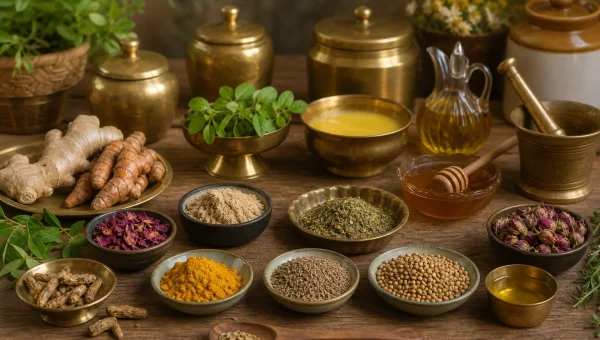
Vetiver (Uśīra) water:
Use clean, food-grade vetiver root. Rinse it well, tie a small handful in a cloth, and steep it overnight in a covered clay, glass, or steel vessel with 1 liter of drinking water. Strain and sip in the morning. The Ayurvedic Pharmacopoeia of India lists Uśīra as cooling in potency, with classical use in thirst, feverish states, urinary difficulty, and heat-related burning. A practical household dose is a mild infusion, not a concentrated decoction. Use fresh preparation daily and avoid contaminated or perfumed decorative vetiver.
Rose preserve (Gulkand) as a gentle food support:
A small spoon of traditional rose-petal preserve may be used in hot weather by people who tolerate sugar. It is best taken as a food, not as a substitute for water, electrolytes, shade, or emergency care. People with diabetes, insulin resistance, dental disease, or strict sugar restriction should avoid routine use or take professional advice.
Amalaki morning drink:
Amalaki is listed in the Ayurvedic Pharmacopoeia of India as cooling in potency, rejuvenative, and useful in burning and heat-associated conditions. A simple preparation is 5–10 ml fresh amla juice diluted in a glass of room-temperature water. It may be taken in the morning by those who tolerate its sourness. Avoid strong sour preparations if they aggravate acidity, gastritis, loose stools, or dental sensitivity.
Coriander seed infusion:
Coriander seed (Dhānyaka) is listed in the Ayurvedic Pharmacopoeia of India for thirst, burning, feverish states, indigestion, and urinary support. Crush 1 teaspoon coriander seeds lightly, steep overnight in a cup or two of water, strain, and sip in the morning or early afternoon. This is often better tolerated than heavy, sweet drinks in humid heat.
Dietary Protocol: Cooling Foods That Support Summer Physiology
The summer diet should be light but not depleting. Ayurveda does not recommend fasting aggressively in peak heat, nor does it recommend heavy, oily, spicy meals that trap heat and burden digestion. The middle path is cooling, moist, easy-to-digest nourishment.
| Food or Drink | Ayurvedic Rationale | Practical Use | Important Note |
|---|---|---|---|
| Cool sweet mantha or sattu drink | Fits the Grīṣma recommendation for sweet, cooling, liquid nourishment | Roasted barley or gram flour mixed thinly with cool water and a little natural sweetener | Avoid excess sugar in diabetes or insulin resistance |
| Shali rice with milk or ghee | Classically recommended as a gentle summer food pattern | Use as a simple meal when appetite is low but strength must be maintained | Avoid milk if lactose-intolerant or medically restricted |
| Vetiver-infused water | Uśīra is cooling and traditionally used for thirst and burning | Sip a mild overnight infusion through the morning | Use only clean, food-grade root |
| Coriander water | Dhānyaka is used for thirst, burning, feverish states, and urinary support | Use a mild infusion of crushed coriander seeds | Do not overuse in people with very low blood pressure or frequent urination without advice |
| Diluted amla juice | Amalaki is cooling, rejuvenative, and classically used in burning conditions | 5–10 ml fresh juice diluted in water | Reduce or avoid if it worsens acidity or tooth sensitivity |
| Coconut water | A light, potassium-rich drink that can support casual hydration | Use fresh coconut water in moderate quantity, especially before heavy heat exposure | It is not a complete replacement for oral rehydration solution in medical dehydration |
The Ayurvedic Electrolyte Approach for Summer
In heavy sweating, plain water may not be enough, but very sugary drinks can be unpleasant and excessive. A balanced summer drink should be light, mildly salty, not overly sour, and easy to sip. For routine heat exposure, use 250 ml fresh coconut water mixed with 250 ml clean water, a small pinch of rock salt, and optionally a little coriander infusion. A few drops of lime may be added for taste if sourness does not aggravate acidity or heat symptoms.
For clear dehydration from diarrhea, vomiting, severe sweating, faintness, or medical illness, use standard oral rehydration solution or medical care rather than relying on homemade drinks. Coconut water is potassium-rich but relatively low in sodium, so people doing heavy outdoor work may still need salt-containing fluids, salty food, or clinician-directed electrolyte replacement.
High-Risk Activity Protocol: Outdoor Exercise in Peak Summer
Outdoor exercise in peak summer should be planned as a heat-management event, not merely a fitness session. The hotter and more humid the day, the more important it becomes to reduce intensity, shorten duration, use shade, and stop early at the first warning signs.
Before high-heat activity:
- Choose early morning or evening rather than late morning or afternoon.
- Avoid alcohol the previous night and avoid heavy, spicy, salty, sour, or fried meals before exposure.
- Use light, breathable clothing and a head covering when in direct sun.
- Hydrate in advance with water, vetiver water, coriander water, or a mild salt-containing drink if heavy sweating is expected.
- Do not begin intense exercise when already thirsty, sleep-deprived, feverish, hungover, or recovering from illness.
During activity:
- Take scheduled shade breaks rather than waiting until exhaustion appears.
- Sip fluids regularly; do not depend on thirst alone during long sessions.
- Reduce pace when heat, humidity, or direct sun rises.
- Stop immediately for confusion, faintness, chills, lack of coordination, severe headache, nausea, cramps, or unusual irritability.
- Do not push through symptoms to “build tolerance.” Heat tolerance is built gradually through acclimatization, not by ignoring danger signs.
After activity:
- Move into shade or a cool room and allow the body to downshift.
- Sip cool or room-temperature fluids gradually for ordinary recovery.
- Eat a light cooling meal rather than a very hot, spicy, oily meal.
- Use a cool shower for comfort after ordinary heat exposure.
- If heat illness symptoms appear, use rapid external cooling and seek medical help rather than relying on food or herbs.
Sandalwood paste is a traditional external cooling measure when genuine, safe, and suitable for the skin. It should be used only externally, in a small amount, and avoided if there is allergy, irritation, broken skin, or questionable product quality. Internal use of sandalwood should not be self-prescribed.
Occupational Heat Exposure: Construction Workers, Field Workers, Delivery Workers, and Athletes
People who work outdoors need simple, repeatable, low-cost prevention. Ayurveda can support this, but it must sit alongside basic public-health measures: water, rest, shade, acclimatization, lighter work during heat peaks, and early removal from heat when symptoms appear.
- Start the day hydrated: drink water before leaving for work; use vetiver or coriander infusion if available and tolerated.
- Carry salt-containing fluids or food: during heavy sweating, include salt through food, a mild homemade drink, or standard oral rehydration solution when appropriate.
- Use planned shade breaks: breaks should become more frequent as heat, humidity, workload, or sun exposure increases.
- Acclimatize gradually: new or returning workers should build heat exposure over several days rather than starting with full-day heavy work.
- Use a buddy system: co-workers should watch for confusion, staggering, faintness, unusual behavior, or cessation of normal sweating patterns.
- Avoid alcohol before heat exposure: alcohol worsens dehydration risk and reduces judgment during dangerous heat.
The minimum viable Ayurvedic support for outdoor workers is simple: morning water, a mild cooling infusion such as vetiver or coriander when available, a salt-containing drink or meal during sweating, protection from direct sun, and a strict rule that confusion or fainting is an emergency.
Emergency Response: When Prevention Has Failed
Heat stroke is a medical emergency. If a person is confused, fainting, unable to stand, seizing, vomiting repeatedly, unusually agitated, extremely hot, or has a body temperature around 40°C or higher, act immediately. Do not wait for an Ayurvedic remedy to work.
- Call emergency services immediately.
- Move the person to shade, air conditioning, or the coolest available place.
- Remove unnecessary outer clothing.
- Cool rapidly with cold water, wet cloths, ice packs, immersion if safely available, and vigorous fanning.
- Focus cooling on the whole body, especially neck, armpits, groin, and skin surface.
- Do not give anything by mouth if the person is confused, unconscious, vomiting, or unable to swallow safely.
- Stay with the person until medical help arrives.
Classical cooling measures such as fanning, cool water application, fragrant cooling substances, and rest in a cool place may support comfort, but they do not replace emergency cooling or medical care in heat stroke.
A Practical Summer Template
A safe summer day begins with hydration, a light cooling breakfast, reduced sun exposure, and a plan for shade. Midday should be the least intense part of the day, especially for exercise and outdoor labor. Meals should be moist, simple, and cooling. Evening should restore the body with rest, gentle food, and sleep rather than alcohol, late-night heat exposure, or spicy heavy meals.
The broader food pattern can be aligned with an Ayurvedic anti-inflammatory diet by emphasizing cooling, simple, seasonal meals during the hottest weeks. For people whose heat shows up as irritability, anger, flushing, or impatience, the approach in Pitta rage: Ayurvedic ways to cool down fast can complement the physical heat-prevention routine.
The prevention protocols described here are for general education and for otherwise healthy adults undertaking ordinary summer activities. People with cardiovascular disease, kidney disease, hypertension, diabetes, pregnancy, heat intolerance, fainting history, or medications that affect fluid balance, sweating, blood pressure, alertness, or thermoregulation should consult a qualified healthcare provider for individualized heat precautions.
Nothing in this article diagnoses or treats a medical condition. Consult a qualified Ayurvedic practitioner or physician before starting herbs, supplements, therapeutic doses, or summer protocols, especially if pregnant, elderly, caring for children, managing a medical condition, or taking medication. Heat stroke requires immediate emergency medical response.
References
- Charaka Samhita — Tasyashiteeya Adhyaya
- Charaka Samhita — Trishna Chikitsa
- Ayurvedic Pharmacopoeia of India
- Ayurvedic Pharmacopoeia of India
- Updatepublishing (updatepublishing.com)
- Mayoclinic (mayoclinic.org)
- Comparison of coconut water and a carbohydrate-electrolyte sport drink on measures of hydration and physical performance in exercise-trained men (2012), PubMed Central
- Internal (internal.imd.gov.in)
- CDC
- Weather (weather.gov)
- Osha (osha.gov)
- CDC
- Archive (archive.cdc.gov)
- World Health Organization
- CDC

chandanasava for Pitta reduction is this taken in summer only or year-round for Pitta constitution?
for athletes training outdoors in summer, is the protocol above adequate or do electrolyte considerations change the Ayurvedic recommendations? tbh
The outdoor yoga emergency story at the start hit close to home — I teach morning classes and had a student go dangerously pale last summer during a heat wave. What I took from this article is that the preparation window matters enormously. Starting Pitta pacification in April before temperatures peak is now on my annual schedule.
the article recommends Coconut water as Pitta pacifier. is packaged coconut water acceptable or only fresh? the processing changes the electrolyte profile.
actual heatstroke is a medical emergency requiring immediate hydration and cooling. Ayurvedic prevention is valuable but the article shouldn’t imply herbal protocols can manage an active heatstroke event.
the article downplays the role of hydration drinking adequate plain water is the single most effective heatstroke prevention and deserves more prominence than rose water and gulkand.
gulkand 1 tsp daily from April onwards as described is now a family summer ritual. kids love it and we’ve had zero heat-related illness this season.
red flags like confusion is exactly where modern advice and Ayurveda can meet without sounding forced
the article downplays the role of hydrstion drinking adequate plain water is the single most effective heatstroke prevention and deserves more prominence than rose water and gulkand. tbh
Fair point about hydration — though I read the article as assuming water intake is a baseline, not a replacement for the protocol. What got my attention was the idea of building internal heat tolerance ahead of summer rather than reacting once you’re already overheated. Rose water and gulkand are easy to add daily; plain water is something people forget even when they know they should drink it. tbh
the Usheera (Vetiver) root cooling water is something I remembered from childhood. article confirming its efficacy is satisfying.
Living in Rajasthan I’ve developed a sort of personal early warning system for heat stress — dry eyes, short temper, sleep that feels light and unrefreshing. This article puts language to exactly those signals as early Pitta aggravation. The suggestion to begin cooling foods in April before the worst heat arrives matches what my grandmother always did intuitively with summer meals.
for athletes training outdoors in summrr, is the protocol above adequate or do electrolyte considerations change the Ayurvedic recommendations?
does the Pitta pacification protocol change if someone has both heatstroke risk AND slow Agni? cooling foods could worsen Agni.
the safety side around ORS before herbs should be bold in peoples mind, even if not bold in text
The vetiver water recipe sounds simple enough to try before my morning walk.
@Aman the article downplays the role of hydration drinking adequate plain water is the single most effective heatstroke prevention and deserves more prominence than rose water and gulkand.
@Karthik does the Pitta pacification protocol change if someone has both heatstroke risk AND slow Agni? cooling foods could worsen Agni.
That’s something I’ve wondered about too. My digestion is sluggish in summer, which already feels counterintuitive — more heat should mean stronger Agni in theory? But the article suggests Pitta in excess can actually disrupt Agni rather than support it. If someone has both slow digestion and heat sensitivity, would the recommendation be to prioritize lighter warm foods rather than cold ones even while cooling Pitta?
Does the amalaki drink need to be taken on an empty stomach for best effect?
Interesting.
I noticed the article mentions avoiding alcohol 48 hours before intense outdoor work, which matches my own experience.
@Aarti for athletes training outdoors in summer, is the protocol above adequate or do electrolyte considerations change the Ayurvedic recommendations?
@Steve actual heatstroke is a medical emergency requiring immediate hydration and cooling. Ayurvedic prevention is valuable but the article shouldn’t imply herbal protocols can manage an active heatstroke event.
The heat rash point in this article resonated with me. I used to get prickly heat every May without fail and just accepted it as something that happened in summer. Last year I started avoiding fermented and spicy food from April and it was noticeably better. Didn’t connect it to Pitta management at the time but reading this makes it make sense.
The sharbat mix with lime, rock salt, and saffron seems like a tasty way to replace electrolytes.
@Anita the Usheera (Vetiver) root cooling water is something I remembered from childhood. article confirming its efficacy is satisfying. 🙏
@Steve the article downplays the role of hydration drinking adequate plain water is the single most effective heatstroke prevention and deserves more prominence than rose water and gulkand.
chandanasava for Pitta reduction is this taken in summer omly or year-round for Pitta constitution?
Is there a recommended brand of gulkand that retains the cooling properties described?
Same here.
The explanation of pitta accumulation over weeks helped me understand why I felt off after a few hot days.
followed the pre-summer Pitta pacificatipn protocol this May and didn’t have the usual heat rash and exhaustion I get every year in Chennai.
Applying sandalwood paste to pulse points before yoga class could be a practical tip for summer sessions.
I wonder if cucumber with rock salt and cumin would work well as a midday snack during a heat wave.
Useful info. 🌿
The reference to Charaka Samhita’s Ushna-Atapasevana Janya Vyadhi gave me a new perspective on heat illness.
For construction workers, the salt-lime-cumin water every hour seems like an easy habit to adopt.
I appreciate the caution about not drinking ice-cold water right after exertion; it makes sense physiologically.