
Shankhpushpi Syrup for Children: Getting the Dosage Right
Parents often ask about shankhpushpi syrup for children during exam season because Ayurveda places shankhpushpi among the classical medhya rasayana herbs, the group used to support medha—grasping, retention, clarity, and steadiness of the mind. The important point for children is dose discipline: shankhpushpi is not a “more is better” herb, and the dose should be adjusted for age, body strength, digestion, constitution, food habits, and any medicines the child already takes.
What Shankhpushpi Actually Does
In the Ayurvedic Pharmacopoeia of India, shankhpushpi is identified as the whole plant of Convolvulus pluricaulis Choisy of the Convolvulaceae family. Charaka Samhita, Chikitsa Sthana 1.3, lists shankhpushpi paste along with mandukaparni juice, yashtimadhu powder with milk, and guduchi juice as medhya rasayana; the same passage gives special emphasis to shankhpushpi as medhya. The pharmacopoeial profile lists its rasa as katu, tikta, and kashaya; guna as sara; virya as shita; vipaka as katu; and karma including medhya, rasayana, balya, kaphahara, and pittahara.
Preparing a Simple Shankhpushpi Syrup at Home
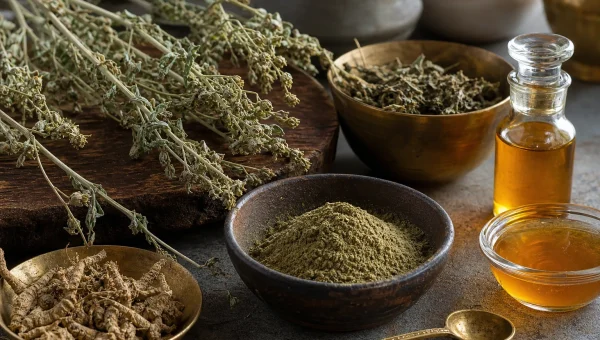
A home syrup should be treated as a mild, short-batch preparation made from correctly identified dried whole plant, not as a substitute for a practitioner-prescribed medicine or a standardized pharmacy product. Use only clean, well-dried material from a trusted source, and avoid unlabeled powders or mixed “brain tonic” blends when the ingredients and batch details are unclear.
Simple Shankhpushpi Syrup
- 30 g dried shankhpushpi whole plant, coarsely crushed
- 400 ml water
- 60–80 g jaggery or raw sugar, adjusted for taste
- 1 small pinch cardamom powder, optional
Boil the herb with water on low to medium heat until the liquid reduces to about 150–200 ml. Strain through clean cloth and press the herb residue well. Return the strained liquid to low heat, add jaggery or sugar, stir until dissolved, and simmer briefly until the syrup is uniform. Cool completely, pour into a clean glass bottle, refrigerate, and make small batches rather than storing it for long periods. For children with heat signs such as acidity, mouth ulcers, burning sensation, or loose stools, keep the preparation simple and avoid adding warming spices unless advised by a practitioner.
Age-Based Dosing Guidelines
Classical and pharmacopoeial references give adult-oriented dose ranges and general pediatric dose principles rather than one universal shankhpushpi syrup dose for every child. The following table is a conservative household guide for the simple syrup above; it should be adjusted only by a qualified Ayurvedic physician or pediatric healthcare provider.
| Age Group | Conservative Syrup Dose | Timing | Course Guidance |
|---|---|---|---|
| Under 5 years | No home dosing | Use only if directly prescribed | Pediatric supervision required |
| 5–7 years | 1–2.5 ml once daily, only after professional approval | After breakfast or with a small amount of warm milk or warm water | Review after 2–3 weeks |
| 8–11 years | 2.5 ml once daily; up to 5 ml only if advised | Morning after food, or after school if it suits digestion better | Review after 3–4 weeks |
| 12–14 years | 5 ml once daily; twice daily only if advised | Morning or early evening; avoid late-night dosing if it disturbs sleep or digestion | Review after 4–6 weeks |
| 15+ years | 5–10 ml once daily, or the practitioner’s dose for the chosen product | After food with warm water or milk | Review after 6–8 weeks |
For a commercial syrup, do not copy another brand’s dose onto your bottle; follow the product label and the practitioner’s advice because the herb concentration, sweetener, added medhya herbs, preservatives, and intended age group can differ. If the syrup already contains brahmi, guduchi, yashtimadhu, jatamansi, or other nervous-system herbs, do not add separate medhya products on top without professional guidance.
Best Food Combinations
Shankhpushpi syrup is usually easier for children to take with a small amount of warm water or warm milk, depending on tolerance. Children with sensitive digestion often do better after food rather than on a completely empty stomach. Honey should not be used for infants under 12 months, and for older children it should be used only in small amounts and only when suitable for the child’s constitution and health status.
When to Avoid Shankhpushpi in Children
Do not give shankhpushpi syrup to a child taking prescription medicines, especially anti-seizure medicines, sedatives, psychiatric medicines, or long-term medicines for chronic illness, unless the child’s healthcare provider has approved it. Also hold it during fever, acute infection, vomiting, diarrhea, dehydration, unexplained drowsiness, or a new allergic reaction. If the child has diabetes, significant dental decay, fructose intolerance, or a sugar-restricted diet, avoid jaggery-based syrups unless the clinician has chosen an appropriate preparation.
Realistic Expectations and Timeline
Shankhpushpi is best understood as a supportive medhya herb, not a shortcut for marks, memory, or behavior. In Ayurveda, the foundation for a child’s learning still includes regular sleep, steady meals, suitable daily routine, calm study rhythm, emotional support, and digestion that can handle the medicine. A sensible course watches for practical signs such as calmer study sitting, better sleep rhythm, improved appetite, and comfortable digestion rather than expecting overnight academic change.
Medical Disclaimer: This post is for educational purposes only. Herbal supplements for children should be discussed with a qualified pediatrician or Ayurvedic physician before use. Do not give shankhpushpi to children taking prescription medications or managing a medical condition without professional guidance. This content does not diagnose, treat, or prescribe for any specific child.
I tried the home recipe with dried herb and jaggery, the cardamom made it taste warm and my son liked it before breakfast.
Shankhpushpi syrup was the first Ayurvedic preparation I tried for my son’s focus issues at age 9. His teacher reported noticeably improved attention by week 8. We’ve used it seasonally for 2 years now.
I liked the practical side of Shankhpushpi Syrup for School Children. The examples make the advice less abstract.
I liked the practical side of Shankhpushpi Syrup for School Children. I would like to know how long to try it before judging results.
I liked the practical side of Shankhpushpi Syrup for School Children. Good starting point for a cautious reader.
The sleep-improving effect is what we noticed first before any cognitive changes. My son (age 7) has always been a difficult sleeper and the Shankhpushpi syrup at night has been more effective for sleep than any other approach we tried.
Are there specific brands that have been tested for heavy metal content and adulteration? Pediatric supplements require higher purity standards than adult products and I haven’t found good quality guidance for Shankhpushpi syrups specifically.
The exam stress application for older children 10-14 years is specifically where I’ve seen the benefit. Academic pressure at that age has real cortisol effects and the Shankhpushpi-Brahmi-Ashwagandha combination addresses the anxiety component as much as the cognitive one.
Is there any concern about Shankhpushpi syrup interacting with Ritalin or similar ADHD medications? My son has a formal ADHD diagnosis and is on medication. I want to add Ayurvedic support but not without knowing the interaction profile.
The syrup form over capsules for children is clearly right palatability compliance is essential with kids. Does the honey base in traditional Madhu Anupana preparations affect the herb differently than a water-based syrup?
The age guideline is vague ‘for children’. What’s the minimum appropriate age for Shankhpushpi syrup? My daughter is 3 and has significant anxiety and sleep difficulty.
I tried Shankhpushpi syrup on myself as an adult for sleep. Works fine and tastes better than expected. Wondering if the pediatric dosing is relevant to adults or if adult doses are proportionally higher.
Does the syrup need to be strained through cheesecloth or can a fine mesh work?
My eight year old takes the teaspoon dose in milk and seems calmer during homework.
Is it safe to combine shankhpushpi with brahmi powder in the same syrup without exceeding the total dose?
I noticed the break weeks help prevent any jittery feeling, especially after the two month course.
can Shankhpushpi syrup be taken alongside prescription anxiety medication? My psychiatrist doesnt know Ayurveda.
the sourcing of quality herbs in my city is impossible. Makes these protocls academic for many readers.
my experience perfectly matches what is described in the long-term use section.
The Hindi terms alongside English make this usable in both languages.
my constitution is Vata-Pitta so some of this applies and some doesnt. A chart for dual types would help.
late to this discussion but the question in the first comment is still unanswered anyone have more info?
the sourcing of quality herbs in my city is impossible. Makes these protocols academic for many readers.
can this be taken in summer or only winter months?
u said it better than my 45-min consult with the vaidya tbh
the burnout protocol assumes someone can reduce workload. What about people who cant change their situation?
my doctor actively discouraged this after I mentioned it. Getting conflicting guidance is difficult to navigate. 💯
How long until Medhya Rasayana effects are noticeable? I’m on week 3 with no change yet.
started following this a month ago. small but real difference. thank u
The part about Shankhpushpi Syrup for School Children feels realistic. This would be easier to follow with a one-week sample plan.
Ayurvedic approaches to mental health need to be very clear they are complementary, not replacement for psychiatric care.
This makes sense for Shankhpushpi Syrup for School Children. Would be useful to see a short checklist next.
For children under 5, is the Shankhpushpi dose proportional by weight or is there a floor? 🙏
For children under 5, is the Shankhpushpi dose proportional by weight or is there a floor?
found this article after searching for 3 days. Exactly what I needed.
I would like more detail on Shankhpushpi Syrup for School Children. The practical details matter more than people think.
the writing assumes India-based readers. Temperature/herb availability differs greatly outside India.
i wish there were more clinical studies cited here. Traditional use is valuable but not sufficient evidence alone.
skeptical but curious. trying the minimal version first.
what brand of triphala do you recommend? So many options and quality varies greatly.
the dose specificity here is what makes this actionable. Vague ‘take regularly’ instructions are useless.
i dont comment usually but this was actually helpful
Tried this for 6 weeks without the results described. Maybe the protocol needs personalizing.
any recommendation for online vaidya consultations for those of us not near an Ayurvedic clinic?
Starting today. Fingers crossed.
tried. Liked. Continuing.
Finally!
Forwarded to my whole family WhatsApp group. Three replies already asking for more details.
practical + scientific = rare combo in Ayurveda content. Good work.
i asked my dr about this. she said she doesnt have enough info on it but didnt say no
the reference to Ashtanga Hridayam which Sutrasthana chapter? Would like to read the original. ❤️
The IST timings in the practical section are a nice touch. Feels like it’s written for us.
my grandma was right about all of this. just didnt have the explanation.
first comment here. been lurking for months. this is the one that made me want to say thank u
shankhpushpi for my son before exams was recommended by his pediatric Ayurvedic doctro. This article confirmed the reasoning. 🙏
does ghee quality affect results significantly? I use store-bought A2 ghee.
tried this for 6 weeks without the results described. Maybe the protocol needs personalizing. 💯
Finally something that explains the why, not just the what.
Been meaning to try this for two years. This article finally pushed me to start. 🌿
Shared with my family group and three people are already trying it.
three herbs three outcomes surprisingly simple when laid out like this
This helped me understand Shankhpushpi Syrup for School Children without too much jargon. The practical details matter more than people think.
reading this in 2027 are the herb sourcing recommendations still valid?
my Ayurvedic practitioner of 12 years said this is one of the better online resources she’s seen on the topic.
This helped me understand Shankhpushpi Syrup for School Children without too much jargon. This feels more usable than a long list of herbs.
Can someone here who has tried this protocol confirm the timeline? Two weeks vs six weeks?
Do the ratios change if you are doing this as preventive care versus active treatment?
shankhpushpi for my son before exams was recommended by his pediatric Ayurvedic doctor. This article confirmed the reasoning.
Reading this in 2027, is there a children’s version of this protocol? My daughter has a similar issue. 💯
brilliant breakdown. Forwarding this.
I was looking for a plain explanation of Shankhpushpi Syrup for School Children. The practical details matter more than people think.
finally an article that doesn’t treat Ayurveda as magic and also doesn’t dismiss it entirely
I was looking for a plain explanation of Shankhpushpi Syrup for School Children. The main idea is clear even if someone is new to Ayurveda.
do the ratios change if you are doing this as preventive care versus active treatment? 🙌
would love a video version of the preparation method
Some of the preparation methods are too time-intensive for working adults. Needs a quick-version alternative.
Sheetali pranayama during a Pitta flare works within minutes. Wish I’d known this 10 years ago.
Tried the protocol. Week 2 no change yet but following through to the full period.
this site is different from other ayurveda blogs. feels researched not just copied. ❤️
the combination of classical reasoning and practical steps is exactly what I was looking for.
Too theoretical without enough concrete steps. The ‘what’ is clear but the ‘how exactly’ is missing.
i appreciate the acknowledgment that this isnt a substitute for professional consultation.
how does weather and season affect the protocol? Im in a hot humid climate.
my doctor actively discouraged this after I mentioned it. Getting conflicting guidance is difficult to navigate.
could you address the quality certification issue in a future article? Third-party tested herbs are hard to find.
Needed this
Some of these herbs interact with SSRIs. This is a safety issue that deserves more than a footnote.
will come back to this when I hit the cooling phase very detailed.
my western trained MD friend looked at this and said the pharmacology section was reasonable.
Thanks for the clear writing. This isn’t easy material to explain simply.
is there a children’s version of this protocol? My daughter has a similar issue.
will try for a month and report back here.
Same here
the seasonal protocol is smart. Most people try to use the same routine all year.
Useful
The practical implementation section is what separates this from other Ayurveda sites.
i’m in the US and getting authentic herbs here is hard. Any trusted online sources?
the reference to Ashtanga Hridayam which Sutrasthana chapter? Would like to read the original.
does this protocol need modification for someone who is fasting during Navratri?
is the guidance here applicable for elderly patients or is it designed for younger adults?
just found this via Google, i wish there were more clinical studies cited here. Traditional use is valuable but not sufficient evidence alone.
old post but still helpful. the combination of classical reasoning and practical steps is exactly what I was looking for.
Can this be done alongside an allopathic treatment or should there be a gap?
the comments section here is almost as useful as the article itself
skeptical about Ayurveda in general but this is presented honestly enough that I’ll try it.
is the guidance here applicable for elderly patients or is it designed for younger adults? 🙏
My western trained MD friend looked at this and said the pharmacology section was reasonable. 🌿
reading this in 2027, skeptical but curious. trying the minimal version first.
finally an article that doesnt treat Ayurveda as magic and also doesnt dismiss it entirely
just found this via Google, i took notes from this and created a personal protocol. Three weeks in, positive changes. 🙏
Bookmarked
just found this via Google, my Ayurvedic practitioner of 12 years said this is one of the better online resources she’s seen on the topic. ❤️
I appreciate that the dosages are given in actual mg not just ‘a pinch’ or ‘as needed’.
Makes sense
the classical text quotes are helpful context but I’d like to understand the modern interpretation better.
will try for a month and report back here. 🌿
too theoretical without enough concrete steps. The ‘what’ is clear but the ‘how exactly’ is missing. ✨
the before-and-after in my experience matches what the article predicts. That’s meaningful.
the language is accessible which is rr for classical Ayurveda writing
Useful post on Shankhpushpi Syrup for School Children. This feels more usable than a long list of herbs.
the question about brand quality is important. not all suppliers are equal.
for Pitta-Kapha dual constitution which aspects of the protocol take priority?
the depth here is unusual for a blog. reads more like a textbook chapter.
How long does a typical protocol like this take to show results?
the dosage for children per kg bodyweight would be useful to add. धन्यवाद
This article connected the dots between things my vaidya told me over several years.
Pitta burning its way through this article and finding useful info 🔥 just kidding but yes helpful.
So much misinformation out there. Good to find something grounded.
real information. Not fluff. Rare.
The Brahmi versus Shankhpushpi comparison isn’t in this article. Are they interchangeable?
does anyone know a practitioner in Hyderabad who works with this kind of protocol?
going to share this at my wellness group meeting next week. Very useful.
Never thought I’d become an Ayurveda convert but here I am reading every article.
i was prescribed this by a practitioner 2 years back but never understood why. now i do.
Thanks 🙏
The Q&A format at the end would make this even more useful. Would love a FAQ section.
The Shankhpushpi Syrup for School Children explanation is clearer than most short posts. This is the kind of detail readers can test slowly.
Reading this in 2027, the Brahmi versus Shankhpushpi comparison isn’t in this article. Are they interchangeable?
Reading this in 2027, the dosage for children per kg bodyweight would be useful to add.
My yoga teacher recommended this site and now I see why.
I liked the practical side of Shankhpushpi Syrup for School Children. A few more examples would still help.
Reading this in 2027, is the guidance here applicable for elderly patients or is it designed for younger adults? ❤️
The sourcing of quality herbs in my city is impossible. Makes these protocols academic for many readers. नमस्ते
i’m in the US and getting authentic herbs here is hard. Any trusted online sources? ✨
Can Shankhpushpi syrup be taken alongside prescription anxiety medication? My psychiatrist doesn’t know Ayurveda. ❤️
old post but still helpful. my practitioner mentioned this approach last week. Nice to find a detailed written explanation.
Nani used to say the same things in different words. There’s real wisdom here.
old post but still helpful. have been searching for this explanation for years. Saved. Sharing.
how long does a typical protocl like this take to show results?
the dosage for children per kg bodyweight would be useful to add.
Found this searching for answers, pitta burning its way through this article and finding useful info 🔥 just kidding but yes helpful.
Just found this via Google, the sourcing of quality herbs in my city is impossible. Makes these protocols academic for many readers.
will try 🙏
Found this searching for answers, can Shankhpushpi syrup be taken alongside prescription anxiety medication? My psychiatrist doesn’t know Ayurveda.
the comments section here is almost as useful as the atricle itself
the cognitive enhancement claims for Brahmi need more rigorous evidence than what’s cited here.
Reading this in 2027, is there a children’s version of this protocol? My daughter has a similar issue.
been meaning to try this for two years. This article finally pushed me to start.
just found this through Google. Is this still the current recommendation?
this is the clearest explanation of this topic Ive found. Bookmarked for reference.
this is now my reference article for explaining this topic to friends.
found this searching for answers, forwarded to my whole family WhatsApp group. Three replies already asking for more details.
Just found this via Google, skeptical but curious. trying the minimal version first.
i wish there were more clinical studies cited here. Traditional use is valuable but not sufficient evidence alone. 🙌
found this searching for answers, will try for a month and report back here.
My experience perfectly matches what is described in the long-term use section. ❤️
The burnout protocol assumes someone can reduce workload. What about people who can’t change their situation?
started following this a month ago. small but real difference. thank u ❤️
for an old post this is still very relevant. good information doesn’t expire.
found this searching for answers, my doctor actively discouraged this after I mentioned it. Getting conflicting guidance is difficult to navigate.
Quality content. Keep writing like this.
the comments section here is almost as useful as the article itself ✨
the language is accessible which is rare for classical Ayurveda writing
Found this searching for answers, so much misinformation out there. Good to find something grounded.
u said it better than my 45-min consult with the vaidya tbh 💯
does this work for people over 60? The age range in the examples skews younger.
u said it better than my 45-min consult with the vaidya tbh नमस्ते
Found this searching for answers, the language is accessible which is rare for classical Ayurveda writing
the classical text reference to Charaka Samhita gave this article more credibility in my eyes.
late to this but does anyone know a practitioner in Hyderabad who works with this kind of protocol?
the Brahmi versus Shankhpushpi comparison isnt in this article. Are they interchangeable?
Good reminder on Shankhpushpi Syrup for School Children. This feels more usable than a long list of herbs.
The dose specificity here is what makes this actionable. Vague ‘take regularly’ instructions are useless. 🌿