Why Hair Turns Gray Before Its Time: Akala Palitya in Ayurveda
Premature graying is discussed in Ayurveda under Palitya, and when it appears earlier than expected it is commonly described as Akala Palitya. Classical explanation treats it as more than a cosmetic change: in Palitya, body heat, Agni, and Pitta are important, while Vata can carry disturbed heat and dryness into the head region. Hair, or Kesha, is also described as a waste product of Asthi Dhatu metabolism, so Ayurvedic care begins with digestion, tissue nourishment, sleep, stress regulation, and scalp care rather than with surface coloring alone.
Modern physiology gives another useful layer: natural hair color comes from melanin, melanin is made by melanocytes from tyrosine, and tyrosinase, a key enzyme in melanogenesis, depends on copper. Premature graying is often multifactorial, with heredity, oxidative stress, smoking, thyroid disease, vitiligo, vitamin B12, folate, iron, and copper status all worth considering when graying begins unusually early or progresses quickly.
Root Causes: A Dosha-Specific Breakdown
Not all premature graying has the same Ayurvedic pattern. The same gray strand may look similar in the mirror, but the treatment differs when the root is heat, dryness, nutritional depletion, or strong family tendency.
| Pattern | Common Clues | Primary Support | Dietary Emphasis |
|---|---|---|---|
| Pitta–Agni heat | Early graying with heat, scalp sensitivity, acidity, irritability, or burning sensations | Amalaki, Guduchi, Shatavari, cooling scalp oils | Bitter greens, coriander, coconut, soaked raisins, moderate ghee if tolerated |
| Vata–Pitta dryness and stress | Dry brittle strands, irregular sleep, anxiety, constipation, variable appetite | Bhringraj taila, sesame oil massage, Shatavari or Ashwagandha when suitable | Warm cooked meals, sesame, mung dal, rice, dates, ghee, regular meal timing |
| Rasa–Rakta nourishment gap | Fatigue, pallor, brittle nails, low protein intake, heavy bleeding, restrictive diets | Amalaki, Triphala when digestion is sluggish, lab-guided nutrient correction | Adequate protein, legumes, leafy greens, sesame, pumpkin seeds, amla, B12 planning |
| Genetic / Asthi Dhatu tendency | Strong family history, onset in teens or early twenties, otherwise good health | Long-term Rasayana care, Bhringraj oiling, Amalaki, realistic monitoring | Mineral-rich vegetarian foods, sesame, balanced protein, steady sleep, low inflammatory habits |
Bhringraj: Kesharaja for Scalp Rasayana
Bhringraj is Eclipta alba Hassk., and its classical synonyms include Kesharaja and Kesharanjana, names that point to its traditional hair use. Charaka-linked references include Bhringraj as an ingredient in Mahaneela Taila, and Bhringaraja oil is listed among classical measures for Palitya. Its Ayurvedic profile is pungent and bitter in taste, hot in potency, pungent after digestion, light and dry in quality, and Kapha–Vata pacifying; because it is not a simple cooling herb, internal use should be individualized rather than treated as a universal anti-gray-hair supplement.
Topical Bhringraj is the safer starting point for most people. Use a well-prepared Bhringraj taila in which Eclipta alba is a primary ingredient, not a minor fragrance addition. Warm a small amount of oil, apply it section by section to the scalp, and massage slowly for 8–10 minutes. Leave it for one to two hours, or overnight if it suits your scalp, then wash with a mild cleanser. A practical routine is two to three applications weekly for dry Vata–Pitta patterns, and once weekly for oily Kapha-dominant scalps.
Animal models have evaluated Eclipta alba extracts for hair-growth initiation, anagen support, and follicle activity. That makes Bhringraj a useful hair-care herb, but it should still be presented honestly: it supports the scalp and new growth environment; it is not a guaranteed repigmentation drug for every gray strand.
Amla: Cooling Rasayana, Antioxidants, and Nutrient Support
Amalaki, or Amla, is Phyllanthus emblica L. / Emblica officinalis Gaertn. In the Charaka tradition it is described as sour, bitter, sweet, pungent, and astringent in taste; cold in potency; sweet after digestion; heavy, rough, and cold in quality; and balancing for Vata, Pitta, and Kapha. It is specifically listed in a Palitya context, which makes it one of the most appropriate internal Rasayana choices when premature graying has a Pitta or depletion component.
The classical dose range listed for Amalaki is 5–10 ml of fresh juice, 3–6 g of powder, or 10–20 g of the drug, adjusted to constitution, digestion, season, and clinical need. Fresh Amla juice in the morning suits many Pitta-pattern cases, while powder mixed with warm water is easier to use year-round. People with acidity, loose stools, pregnancy, medication use, or chronic illness should use it with practitioner guidance.
Amla also fits the modern nutritional picture because it contains antioxidant constituents such as ascorbic acid, gallic acid, ellagic acid, and other phenolics. These compounds support the broader goal of protecting follicular tissue from oxidative stress, while the diet as a whole must still supply protein, B vitamins, iron, copper, zinc, and other nutrients required for normal hair biology.
The Scalp Oil Protocol: Step by Step
Oil application for Akala Palitya is not just moisturizing. In Ayurvedic practice, scalp oiling is a Shiro Abhyanga-style routine that calms dryness, supports the scalp barrier, softens the hair shaft, and provides a vehicle for hair-supportive herbs. Charaka-linked management of Palitya includes oil applications such as Mahaneela oil and Bhringaraja oil, so a disciplined topical routine belongs at the center of the plan.
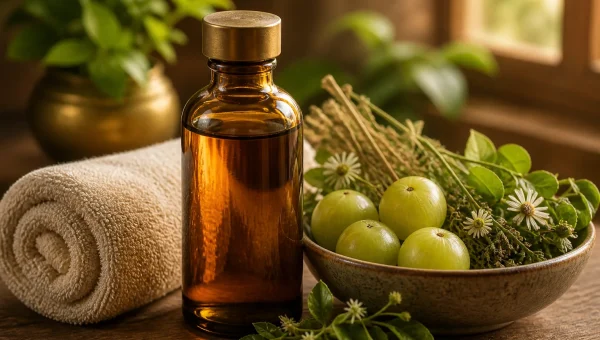
Base oil: Use sesame oil for Vata dryness and brittleness; use a lighter coconut-based or Amla-based oil when scalp heat, burning, or Pitta sensitivity is dominant. If the scalp is oily, itchy, or dandruff-prone, use smaller amounts and wash sooner.
Herbs to look for: Bhringraj, Amalaki, Nili, Hibiscus, and other classical hair herbs may be used in properly prepared medicated oils. Homemade oil can be made gently by warming dried herbs in the chosen base oil on very low heat, but a GMP-made oil from a reputable manufacturer is safer and more consistent for long-term use.
Application routine: Warm one to two teaspoons of oil, part the hair, apply directly to the scalp, and massage with the pads of the fingers rather than scratching with nails. Keep the pressure slow and steady around the crown, temples, and occipital region. Leave for at least one hour; overnight application is useful only if it does not cause heaviness, acne, itching, or sinus congestion. Wash with a gentle cleanser and avoid harsh daily shampooing.
For a broader breakdown of oils by constitution, see the dosha-specific hair oiling guide.
Internal Rasayana Stack for Hair Color Support
The internal plan should be simple, consistent, and matched to the person. Combining many herbs without diagnosis can aggravate heat, disturb digestion, or create interactions with medication. A qualified Ayurvedic practitioner can decide whether the priority is Pitta cooling, Vata grounding, bowel regulation, nutrient correction, or deeper Rasayana therapy.
- Amalaki: Best suited when graying is linked with Pitta heat, acidity, burning, or general depletion. Fresh juice or powder is used within classical dose ranges and adjusted to digestion.
- Triphala: A traditional three-fruit formula of Amalaki, Haritaki, and Bibhitaki. It is useful when sluggish bowel function, heaviness, or irregular elimination is part of the picture, but it should not be overused in very dry, underweight, or depleted Vata states.
- Guduchi: A classical Rasayana herb, botanically Tinospora cordifolia, with a tridosha-balancing profile. It suits many Pitta-Rakta and inflammatory patterns when correctly identified and properly prepared.
- Shatavari: A cooling, unctuous, Vata–Pitta pacifying herb. It is appropriate when premature graying appears with dryness, heat, low resilience, or reproductive/hormonal depletion patterns.
- Ashwagandha: A warming Rasayana and strength-promoting herb for Vata depletion, poor sleep, and stress-pattern graying. Because it is hot in potency and can aggravate Pitta in excess, it is not the first choice for people with strong heat, burning, acidity, or inflammatory flares.
- Kala Tila: Black sesame is best used as food support rather than as a miracle cure. Lightly toasted sesame seeds, sesame chutney, or sesame added to meals can support mineral intake, unctuousness, and Vata grounding.
Dietary Modifications for Akala Palitya
Diet should reduce the pattern that is feeding the graying. For Pitta-dominant cases, reduce excess red chili, alcohol, smoking, repeated late nights, overheated fried foods, and very sour or vinegar-heavy foods when they trigger heat. Favor bitter, sweet, and astringent foods: cooked greens, gourds, soaked raisins, coriander, fennel, coconut, mung dal, rice, and moderate ghee when digestion accepts it.
For Vata-dominant dryness, avoid skipping meals, dry snacking, excessive fasting, and too much raw food. Favor warm cooked meals, soups, sesame, dates, well-cooked legumes, rice, and stable routines. For nourishment gaps, check the basics: total protein, iron, ferritin, vitamin B12, folate, thyroid profile, and copper status when graying is early, sudden, or accompanied by fatigue, pallor, hair shedding, numbness, menstrual irregularity, or digestive disease.
Vegetarian and vegan diets can be fully compatible with Ayurvedic care, but vitamin B12 needs deliberate planning because it is not reliably supplied by plant foods. When B12, iron, folate, thyroid, or copper deficiency is present, correcting the deficiency is part of the hair plan; herbs and oils should not be used as a substitute for needed medical treatment.
Managing Expectations: What Reversal Actually Looks Like
Ayurvedic treatment for premature graying is best judged by new growth, scalp health, hair texture, shedding, sleep, digestion, and the speed at which new gray strands appear. Existing fully gray strands usually do not darken uniformly. Some individual human hairs can show segmental changes in pigmentation in relation to life stress, but full reversal of established or strongly genetic graying is uncommon.
A realistic six-month goal is slower progression, healthier new growth, better scalp comfort, improved hair texture, and correction of aggravating diet, sleep, stress, or nutrient factors. For many people, the most practical protocol is steady: Amalaki or another suitable Rasayana internally, Bhringraj-based scalp oil externally, Pitta- and Vata-aware diet, regular sleep, stress reduction, and medical screening when graying is unusually early or sudden.
Medical Disclaimer: This article is for educational purposes only and does not constitute medical advice. Consult a qualified Ayurvedic practitioner or licensed healthcare provider before beginning herbal supplementation, especially if you are pregnant, breastfeeding, trying to conceive, have liver disease, thyroid disease, autoimmune disease, anemia, digestive disease, or take prescription medications. Bhasma preparations such as Tamra Bhasma or Loha Bhasma must not be self-prescribed and should only be used under direct supervision of a trained practitioner with quality-tested products.
References
- Charaka Samhita — Trimarmiya Chikitsa
- Jaims (jaims.in)
- Charaka Samhita — Agni
- Charaka Samhita — Asthi dhatu
- NCBI
- Premature Graying of Hair: Review with Updates (2018), PubMed Central
- Cosmoderma (cosmoderma.org)
- Charaka Samhita — Bhringaraja
- Hair growth promoting activity of Eclipta alba in male albino rats (2008), PubMed
- Eclipta alba extract with potential for hair growth promoting activity (2009), PubMed
- Charaka Samhita — Amalaki
- Emblica officinalis (Amla): A review for its phytochemistry, ethnomedicinal uses and medicinal potentials with respect to molecular mechanisms (2016), PubMed
- Charaka Samhita — Shatavari
- Charaka Samhita — Guduchi
- Charaka Samhita — Ashwagandha
- An investigation into the stress-relieving and pharmacological actions of an ashwagandha (Withania somnifera) extract: A randomized, double-blind, placebo-controlled study (2019), PubMed
- Therapeutic Uses of Triphala in Ayurvedic Medicine (2017), PubMed Central
- Sesame (Sesamum indicum L.): A Comprehensive Review of Nutritional Value, Phytochemical Composition, Health Benefits, Development of Food, and Industrial Applications (2022), PubMed Central
- Elifesciences (elifesciences.org)
- NCCIH