
The Kapha Child Who Is Sturdy but Slow to Mobilize
Kapha-dominant children often come with a recognizable pattern: a strong build, steady temperament, heavy sleep, slow mornings, dislike of sudden exertion, easy congestion, and a tendency to gain weight when the diet is heavy, cold, sweet, or irregular. This does not make the child unhealthy by nature. In Ayurveda, Kapha supports growth, stability, lubrication, immunity, and emotional steadiness, and childhood itself is considered a Kapha-dominant stage of life. The practical goal is not to suppress nourishment, but to keep nourishment moving through clear digestion, regular meals, warm food, active play, and lighter Kapha-balancing choices.
The kapha child diet Ayurveda framework is useful because it translates classical principles into ordinary household cooking. A Kapha child does not need harsh dieting, meal skipping, or adult-style fasting. The child needs food that is warm, cooked, moderately spiced, easy to digest, and served at regular times, with fewer cold, oily, excessively sweet, and very heavy foods as daily habits. When this is done early, the child’s natural steadiness becomes strength instead of stagnation.
How to Identify a Kapha-Dominant Child
Kapha constitution in children usually appears as a cluster of traits rather than one sign. The child may have a sturdy or broad frame, smooth skin, thick hair, deep sleep, slower warming-up in the morning, calm emotions, loyalty to friends, and strong attachment to routine. Learning may be gradual, but memory is often durable once the material is absorbed. When Kapha is increased, the same steadiness may show as possessiveness, stubbornness, lethargy, heaviness after meals, excess mucus, or reluctance to move.
Digestively, the common Kapha pattern is Manda Agni, meaning slow or low digestive fire. A Kapha child may not feel strong hunger, may eat out of habit rather than appetite, may become drowsy after food, and may prefer sweet, salty, creamy, or starchy meals. The diet should therefore begin with Agni support: warm food, correct portions, gentle spices, and enough time between meals for the previous food to digest.
The Three Priorities in Kapha Child Nutrition
Priority 1: Kindle Agni gently before increasing food rules. Kapha children respond best to warm, freshly cooked meals and mild culinary spices. Ginger, cumin, coriander, turmeric, and a small amount of black pepper can be used in everyday cooking when suitable for the child. Warm water or a small warm soup before a meal is often more appropriate than cold drinks. Strong medicinal combinations such as Trikatu, long pepper powders, herbal laxatives, or concentrated extracts should not be started for a child without guidance from a qualified Ayurvedic practitioner or healthcare provider.
Priority 2: Keep meal timing regular and avoid grazing. A Kapha child often does poorly with a skipped meal followed by a large late dinner. Ayurveda gives importance to proper time, proper quantity, and the child’s digestive capacity. A warm, substantial meal during the active middle part of the day is usually better than a heavy night meal. Dinner should be earlier, lighter, cooked, and easy to digest, such as vegetable soup, thin khichdi, dal with vegetables, or a small plate of warm vegetables and grain.
Priority 3: Reduce daily Kapha-building habits without removing nourishment. Cold milk with meals, ice cream, daily cheese, daily curd, sweet packaged snacks, refined flour foods, fried snacks, cold sandwiches, sweet drinks, and large late meals all encourage the heavy, cold, sticky qualities that Kapha already has in abundance. These foods need not be forbidden forever, but they should not be the child’s daily base. The everyday base should be warm, light-to-moderate, cooked, and spiced according to tolerance.
Specific Foods: What to Emphasize and What to Limit
Kapha-balancing food for children should still be nourishing. The emphasis is on lighter grains, digestible legumes, cooked vegetables, moderate fat, and warm preparation. Pungent, bitter, and astringent tastes are especially useful for Kapha, while sweet, sour, and salty tastes should be moderated when heaviness, congestion, sluggish digestion, or excess weight gain is present.
Grains: Barley is the classical grain most strongly associated with Kapha reduction. Old rice, especially when cooked warm and soft, can be used in moderate quantity. Millets such as bajra, jowar, kodo millet, little millet, and foxtail millet can be rotated with rice and wheat. Wheat is not automatically wrong, but refined wheat foods, white bread, pastries, noodles, and large wheat-heavy dinners are not ideal daily choices for a Kapha child.
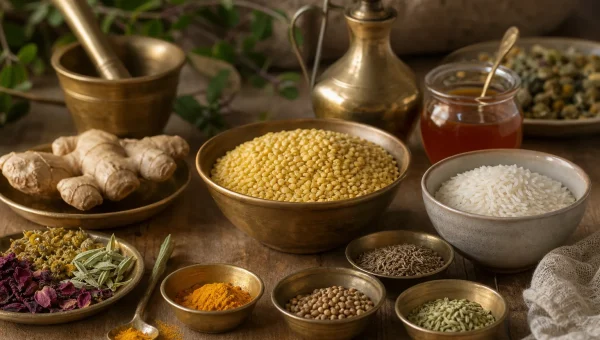
Legumes: Green gram or moong dal is one of the best legumes for children with slow digestion because it is light and traditionally described as Kapha-pacifying. Masoor dal, peas, chickpeas, and toor dal can also be used when soaked, cooked well, and spiced. Black gram or urad dal is heavier and is better kept occasional, especially when the child has sluggish digestion, mucus, or heaviness after meals.
Vegetables: Cooked vegetables should be a central part of the plate. Bitter gourd, leafy greens, radish, cabbage, cauliflower, green beans, gourds, carrots in moderate quantity, and spiced vegetable soups are useful choices. Cold raw salads should not become the main meal for a Kapha child, especially in cool weather or when digestion is slow. Potato and sweet potato can be used occasionally, but large portions as a daily base increase heaviness.
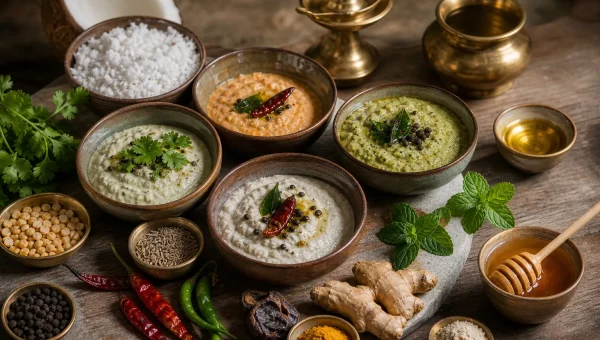
Spices: Ginger, turmeric, cumin, coriander, black pepper, ajwain, mustard seed, fenugreek, and small amounts of hing can make Kapha meals lighter and more digestible. The safest approach is to use them as kitchen spices in food, not as aggressive medicinal dosing. The taste should remain child-friendly, warming, and appetizing.
Dairy: Dairy should be assessed by digestion and mucus tendency. Small amounts of warm spiced milk may suit some children, while cold milk, ice cream, daily curd, cheese-heavy snacks, and chilled milkshakes often worsen Kapha heaviness. Thin buttermilk at room temperature or slightly warm, prepared with roasted cumin and a little rock salt, may suit some children when digestion is stable.
| Food Category | Emphasize | Limit | Avoid as a Daily Habit |
|---|---|---|---|
| Grains | Barley, millets, old rice, warm soft rice in moderation | Large wheat-heavy meals, large rice portions at night | White bread, refined pasta, pastries, sweet bakery foods |
| Legumes | Moong dal, masoor dal, peas, well-cooked chickpeas, toor dal | Large portions when digestion is weak | Daily urad dal, heavy fried dal preparations |
| Vegetables | Cooked leafy greens, bitter gourd, radish, cabbage, cauliflower, green beans | Potato, sweet potato, very oily vegetable dishes | Cold raw salads as the main meal, fried potato snacks |
| Dairy | Small warm spiced milk if tolerated, thin spiced buttermilk | Cheese, curd, paneer-heavy meals | Cold milk with meals, ice cream, milkshakes |
| Snacks | Roasted makhana, roasted chana, spiced puffed rice, warm soups | Sweet fruits in large portions, nut-heavy snacks | Chips, sweet drinks, packaged sweets, cold desserts |
The School Lunch and Snack Problem
School food for a Kapha child should be practical, warm when possible, and not sugar-led. A thermos with warm khichdi, vegetable dal, millet upma, barley vegetable soup, or soft rice with moong dal is usually more suitable than a cold sandwich with butter and a packet of chips. For snacks, roasted makhana, roasted chana, spiced puffed rice, a small vegetable cheela, or a small portion of whole fruit can work well when matched to appetite and digestion.
Fruit juice should not become a daily substitute for whole fruit. Whole fruit gives more chewing, fiber, and satiety, while juice is easy to overconsume. For Kapha children with congestion, heaviness, or excess weight gain, sweet drinks, flavored milk, packaged juices, and soft drinks should be kept occasional rather than routine. Plain water, warm water in cold weather, or a light homemade soup is usually a better default.
Exercise: The Non-Negotiable Component
No Kapha-balancing nutrition plan is complete without movement. Ayurveda describes exercise as producing lightness, steadiness, work capacity, Kapha mitigation, and stimulation of Agni when done appropriately. Children and adolescents also need at least 60 minutes of moderate-to-vigorous physical activity daily. Running games, cycling, swimming, dance, martial arts, football, basketball, skipping, and active outdoor play are better for Kapha stagnation than only slow walking. A gentle walk is healthy, but it should not be the child’s only movement if heaviness, sluggishness, or excess weight gain is the concern.
The child should stop before exhaustion. Excess exercise can disturb strength, appetite, sleep, and recovery. The right target is joyful daily movement that makes the body warm, the breath active, and the child mentally brighter afterward.
Herbs and When to Seek Care
For a Kapha child, herbs should be treated with caution. Haritaki, Triphala, Trikatu, long pepper, herbal laxatives, and medicated powders may be useful in individual cases, but they should not be given as routine long-term self-medication. Children are more vulnerable to dosing errors, contamination, and unsuitable formulas. Persistent constipation, recurrent wheezing, repeated tonsillitis, snoring or suspected sleep apnea, sudden weight change, poor growth, persistent fatigue, or chronic congestion should be assessed by a pediatrician, and Ayurvedic care should be coordinated with qualified professional guidance.
For the broader dietary framework covering all three doshas in children, our guide to agni as the foundation of health provides the conceptual basis for pediatric nutrition recommendations. The meal timing principles that apply to Kapha children are related to the wider Ayurvedic discussion of digestion, appetite, and food quantity. For children with significant respiratory Kapha, the same principles of warm food, lighter dinners, reduced cold dairy, and daily movement are often used alongside practitioner-guided care.
Disclaimer: This article is for educational purposes only and does not replace professional medical advice. Consult a qualified Ayurvedic practitioner or healthcare provider before starting any new diet, herb, supplement, or health regimen for a child.
References
- Charaka Samhita — Rogabhishagjitiya Vimana
- Charaka Samhita — Deha prakriti
- Charaka Samhita — Agni
- Charaka Samhita — Annapanavidhi Adhyaya
- Charaka Samhita — Ahara vidhi
- Charaka Samhita — Deepana
- Easyayurveda (easyayurveda.com)
- Charaka Samhita — Naveganadharaniya Adhyaya
- World Health Organization
- CDC
- Healthychildren (healthychildren.org)
- NCCIH
- NCCIH

Been using kapha for about 3 months now and the difference in how I feel is real. My practitioner said the same things this article covers so good to have it spelled out.
How long before seeing results with this protocol? My practitioner said 4 weeks but I’m seeing other timelines mentioned online.
My son has the classic Kapha presentation: sweet-natured, steady, physically strong but reluctant to exercise, slow digestion, and prone to respiratory congestion every winter. The Trikatu addition to food and the warm dry diet made a visible difference in his winter congestion frequency by year two.
The Kapha child’s morning resistance to waking and activity is often labeled laziness or ADHD inattentive type in school settings. Understanding it as a constitutional trait requiring specific lifestyle modification rather than a behavioral problem changes the parent-child relationship around it.
My doctor in Bangalore suggested something similar but used different herbs. Is there regional variation in how Ayurvedic practitioners approach this condition?
This makes sense for Kapha Children”’s Nutrition. The examples make the advice less abstract.
This makes sense for Kapha Children”’s Nutrition. I would like to know how long to try it before judging results.
Is this protocol appropriate for the full age range of children or are there differences in approach for toddlers versus school-age versus adolescent Kapha children? The physiology and appetite patterns change significantly across that age range.
Can the ginger pinch be safe for a five year old?
My pediatrician told me my Kapha-type son’s cholesterol at age 9 was borderline high and recommended dietary changes. The Ayurvedic Kapha-reducing diet aligned perfectly with what his dietitian recommended. The traditional wisdom and modern nutritional guidance produced the same list.
The research cited is old and small. n=96 for a genomic study in 2015 would not pass peer review today. I’d want to see updated work before drawing strong conclusions.
Packing warm khichdi in a thermos really helped my son stay focused after school
I wonder if cutting out cold milk completely might be too harsh for a growing child
Trying barley soup as a dinner alternative made my daughter less sluggish in the evening
Haritaki at bedtime seems worth a try for the occasional constipation mentioned
Been meaning to try this for two years. This article finally pushed me to start.
skeptical but curious. trying the minimal version first. 🙌
Skeptical about Ayurveda in general but this is presented honestly enough that I’ll try it. धन्यवाद
My constitution is Vata-Pitta so some of this applies and some doesn’t. A chart for dual types would help.
Tried this for 6 weeks without the results described. Maybe the protocol needs personalizing.
is there a children’s version of this protocol? My daughter has a similar issue.
Can this be done alongside an allopathic treatment or should there be a gap?
Nani used to say the same things in different words. There’s real wisdom here.
the Vishama Agni description is exactly my pattern. Variable digestion, gas, bloating. The recommendations helped. ठीक है
i asked my dr about this. she said she doesnt have enough info on it but didnt say no
going to share this at my wellness group meeting next week. Very useful.
the dosage for children per kg bodyweight would be useful to add.
The Q&A format at the end would make this even more useful. Would love a FAQ section.
how long does a typical protocol like this take to show results?
this is the clearest explanation of this topic Ive found. Bookmarked for reference.
forwarded to my whole family WhatsApp group. Three replies already asking for more details.
as someone who does both allopathy and Ayurveda I appreciate that this article doesnt demonize either.
Some of the preparation methods are too time-intensive for working adults. Needs a quick-version alternative.
how does Guduchi affect gut motility? Im using it for immunity but want to check there’s no conflict.
my practitioner mentioned this approach last week. Nice to find a detailed written explanation.
Good reminder on Kapha Children”’s Nutrition. This feels more usable than a long list of herbs.
is the guidance here applicable for elderly patients or is it designed for unger adults?
can someone with IBS follow the Tikshna Agni protocol? Some of the cooling herbs cause issues for me.
Finally!
the language is accessible which is rare for classical Ayurveda writing
Can someone here who has tried this protocol confirm the timeline? Two weeks vs six weeks? 🙌
The sourcing of quality herbs in my city is impossible. Makes these protocols academic for many readers. ❤️
three months later: the results held. Happy to report.
the reference to Ashtanga Hridayam which Sutrasthana chapter? Would like to read the original.
Thanks 🙏
This makes sense for Kapha Children”’s Nutrition. Good starting point for a cautious reader.
Going to share this at my wellness group meeting next week. Very useful. 🙌
quality content. Keep writing like this.
i wish there were more clinical studies cited here. Traditional use is valuable but not sufficient evidence alone.
My western trained MD friend looked at this and said the pharmacology section was reasonable. ✨
The integration of modern evidence with traditional practice is the right approach.
can this be taken in summer or only winter months?
What brand of triphala do you recommend? So many options and quality varies greatly. धन्यवाद
the Vishama Agni description is exactly my pattern. Variable digestion, gas, bloating. The recommendations helped.
The Tikshna Agni section was humbling. I thought my fast metabolism was a feature, not a sign of imbalance.
will try 🙏
Reading this later and the Kapha Children”’s Nutrition advice still feels relevant. The examples make the advice less abstract.
is the guidance here applicable for elderly patients or is it designed for younger adults?
skeptical but curious. trying the minimal version first.
The combination of classical reasoning and practical steps is exactly what I was looking for.
The Kapha Children”’s Nutrition explanation is clearer than most short posts. Small daily changes are easier to follow than a perfect plan.
reading this in 2027 r the herb sourcing recommendations still valid?
i appreciate that the dosages are given in actual mg not just ‘a pinch’ or ‘as needed’.
will try for a month and report back here.
late to this discussion but the question in the first comment is still unanswered anyone have more info?
tried the protocol. Week 2 no change yet but following through to the full period.
Does this work for people over 60? The age range in the examples skews younger.
for Kapha-dominant types is the warm water recommendation essential or can it be room temp?
practical + scientific = rare combo in Ayurveda content. Good work.
how does weather and season affect the protocol? Im in a hot humid climate. 🌿
For Kapha-dominant types is the warm water recommendation essential or can it be room temp? 💯
Shared with my family group and three people are already trying it.
for Pitta-Kapha dual constitution which aspects of the protocol take priority?
this site is different from other ayurveda blogs. feels researched not just copied.
brilliant breakdown. Forwarding this.
This is now my reference article for explaining this topic to friends.
started following this a month ago. small but real difference. thank u
how does weather and season affect the protocol? Im in a hot humid climate. 🙌
the sourcing of quality herbs in my city is impossible. Makes these protocols academic for many readers.
never thought I’d become an Ayurveda convert but here I am reading every article.
so much misinformation out there. Good to find something grounded. 💯
the dose specificity here is what makes this actionable. Vague ‘take regularly’ instructions are useless.
been following this blog for six months and the quality is consistently high. 🙏
Tried. Liked. Continuing.
Good reminder on Kapha Children”’s Nutrition. The safety notes could be expanded a little.
this is now my reference article for explaining this topic to friends. ✨
Nani used to say the same things in different words. There’s real wisdom here. ठीक है
the seasonal protocol is smart. Most people try to use the same routine all year.
I came for Kapha Children”’s Nutrition and this answered the main question. I would like to know how long to try it before judging results.
Pitta burning its way through this article and finding useful info 🔥 just kidding but yes helpful.
Been following this blog for six months and the quality is consistently high.
Perfect timing
Does ghee quality affect results significantly? I use store-bought A2 ghee.
does this protocol need modification for someone who is fasting during Navratri?
the Triphala dosage recommendations vary wildly across Ayurvedic sources. This article should acknowledge that.
Reading this in 2027 are the herb sourcing recommendations still valid?
Would like to see the contraindications section expanded. Too brief for something being suggested for health issues.
following the Agni-building protocol for 6 weeks. First time in years I can eat dinner without discomfort.
what brand of triphala do you recommend? So many options and quality varies greatly.
My experience perfectly matches what is described in the long-term use section.
have been searching for this explanation for years. Saved. Sharing.
finally something that explains the why, not just the what.
Needed this
the comments section here is almost as useful as the article itself धन्यवाद
would love a video version of the preparation method
Too theoretical without enough concrete steps. The ‘what’ is clear but the ‘how exactly’ is missing.
The dose specificity here is what makes this actionable. Vague ‘take regularly’ instructions are useless. 🙌
just found this through Google. Is this still the current recommendation?
first comment here. been lurking for months. this is the one that made me want to say thank u
Old post but still helpful. too theoretical without enough concrete steps. The ‘what’ is clear but the ‘how exactly’ is missing.
Useful
The classical text reference to Charaka Samhita gave this article more credibility in my eyes. नमस्ते
The safest part of the Kapha Children”’s Nutrition advice is keeping it simple. The timing advice is the part I would start with.
The safest part of the Kapha Children”’s Nutrition advice is keeping it simple. This feels more usable than a long list of herbs.
Does ghee quality affect results significantly? I use store-bought A2 ghee. धन्यवाद
starting today. Fingers crossed. ✨
three herbs three outcomes surprisingly simple when laid out like this
for Kapha-dominant types is the warm water recommendation essential or can it be room temp? 🙌
quality content. Keep writing like this. 🌿
u said it better than my 45-min consult with the vaidya tbh
The Kapha Children”’s Nutrition section feels grounded enough to try carefully. I appreciate that it does not oversell the result.
forwarded to my whole family WhatsApp group. Three replies already asking for more details. ठीक है
i was prescribed this by a practitioner 2 years back but never understood why. now i do.
will come back to this when I hit the cooling phase very detailed.
old post but still helpful. late to this discussion but the question in the first comment is still unanswered anyone have more info?
the before-and-after in my experience matches what the article predicts. That’s meaningful.
found this searching for answers, the decoction recipe sounds good but the preparation time is 45 minutes. Any shortcut version for weekdays?
i appreciate that the dosages r given in actual mg not just ‘a pinch’ or ‘as needed’.
real information. Not fluff. Rare.
the comments section here is almost as useful as the article itself
the combination of theory and practical steps is what I appreciate most about this blog.
reading this in 2027, nani used to say the same things in different words. There’s real wisdom here.
Trying this
I’ve been doing kavala for a month. Teeth feel the same. Maybe I’m doing it wrong but the instructions weren’t detailed enough.
found this searching for answers, real information. Not fluff. Rare.
Good reminder on Kapha Children”’s Nutrition. Small daily changes are easier to follow than a perfect plan.
i appreciate the acknowledgment that this isnt a substitute for professional consultation.
my yoga teacher recommended this site and now I see why.
Good reminder on Kapha Children”’s Nutrition. This would be easier to follow with a one-week sample plan.
i’ve been doing kavala for a month. Teeth feel the same. Maybe im doing it wrong but the instructions weren’t detailed enough. 💯
I came for Kapha Children”’s Nutrition and this answered the main question. Would be useful to see a short checklist next.
would like to see the contraindications section expanded. Too brief for something being suggested for health issues. 🙌
found this searching for answers, the classical text quotes r helpful context but I’d like to understand the modern interpretation better.
i dont comment usually but this was actually helpful
The part about Kapha Children”’s Nutrition feels realistic. Would be useful to see a short checklist next.
Does anyone know a practitioner in Hyderabad who works with this kind of protocol?
so much misinformation out there. Good to find something grounded.
the Triphala dosage recommendations vary wildly across Ayurvedic sources. This atricle should acknowledge that. ✨
The practical implementation section is what separates this from other Ayurveda sites.
could you address the quality certification issue in a future article? Third-party tested herbs are hard to find.
The morning versus evening split for herbs is something I always get confused about. Clear here.
the depth here is unusual for a blog. reads more like a textbook chapter.
reading this in 2027, the writing assumes India-based readers. Temperature/herb availability differs greatly outside India.
the Vishama Agni description is exactly my pattern. Variable digestion, gas, bloating. The reccomendations helped.
I would like more detail on Kapha Children”’s Nutrition. The main idea is clear even if someone is new to Ayurveda.
Useful post on Kapha Children”’s Nutrition. Good starting point for a cautious reader.
For Kapha Children”’s Nutrition, consistency seems like the hard part. I would still ask a practitioner before changing medicines.
my Ayurvedic practitioner of 12 years said this is one of the better online resources she’s seen on the topic.
Could you address the quality certification issue in a future article? Third-party tested herbs are hard to find. 🙏
Gut health has a lot of individual variation. The one-protocol approach here feels too generalized.
The classical text quotes are helpful context but I’d like to understand the modern interpretation better.
the dose specificity here is what makes this actionable. Vague ‘take regularly’ instructions are useless. ठीक है
The Kapha Children”’s Nutrition explanation is clearer than most short posts. The article avoids making it sound like a quick fix.
i’ve been doing kavala for a month. Teeth feel the same. Maybe Im doing it wrong but the instructions weren’t detailed enough.
The IST timings in the practical section are a nice touch. Feels like it’s written for us.
late to this but reading this in 2027 are the herb sourcing recommendations still valid?
Late to this but would like to see the contraindications section expanded. Too brief for something being suggested for health issues.
shared this with my 68-year-old father. He said its exactly what his vaidya prescribed 30 years ago. 🙏
The safest part of the Kapha Children”’s Nutrition advice is keeping it simple. Would be useful to see a short checklist next.
i took notes from this and created a personal protocol. Three weeks in, positive changes.
any recommendation for online vaidya consultations for those of us not near an Ayurvedic clinic?
This helped me understand Kapha Children”’s Nutrition without too much jargon. Would be useful to see a short checklist next.
Helpful
brilliant breakdown. Forwarding this. धन्यवाद
the sourcing of quality herbs in my city is impossible. Makes these protocls academic for many readers.
my doctor actively discouraged this after I mentioned it. Getting conflicting guidance is difficult to navigate.
late to this but gut health has a lot of individual variation. The one-protocol approach here feels too generalized.