
A cardiologist colleague once described a puzzling clinical observation: two patients with nearly identical cholesterol panels, similar diets, and comparable risk factors responded to the same statin dose in very different ways. One reached target LDL levels within six weeks. The other, despite careful compliance, barely moved the needle and developed significant muscle pain. The obvious explanation was adherence, but both patients were monitored closely and both were compliant. What differed was something modern genetics has only recently begun to map, and something Ayurveda described as Prakriti thousands of years ago.
Pharmacogenomics studies how an individual’s genetic makeup influences their response to drugs. A major part of this story is the cytochrome P450 family (CYP450), a group of liver enzymes that determine how quickly a drug is metabolized, how active its metabolites are, and which side effects appear. Statin response and statin-associated muscle symptoms are genuinely known to vary with inherited genetic differences, so the cardiologist’s two patients illustrate a real biological phenomenon. The developing field of Ayurgenomics asks whether some of this variation also tracks with the constitutional types that classical Ayurveda has described for millennia.
What Prakriti Means in Genomic Terms
Prakriti (from Sanskrit: pra = original, kriti = creation) refers to an individual’s psychophysiological constitution, regarded in Ayurveda as fixed from conception. Classical texts (Charaka Samhita, Sharira Sthana; Sushruta Samhita, Sharira Sthana) hold that Prakriti is set by the relative dominance of the doshas in the shukra (paternal seed) and shonita (maternal ovum), the condition of the uterus, the season, and the diet and conduct of the mother during gestation. Ayurveda classifies seven constitutional patterns based on the dominant combination of the three doshas: the three single-dosha types (Vata, Pitta, Kapha), three dual types (Vata-Pitta, Pitta-Kapha, Vata-Kapha), and the balanced tridoshic (Sama) type. Classical descriptions of each type concern physical build, the strength of Agni (digestive and metabolic fire), bowel tendencies, gait, sleep, appetite, and mental temperament — not modern endocrine “hormonal” categories.
In 2008, a landmark paper published in the Journal of Translational Medicine by Prasher B and colleagues (J Transl Med 2008;6:48) demonstrated that the three predominant Prakriti types show differing genome-wide gene-expression profiles even among healthy individuals. The constitution-specific signatures spanned immune, metabolic, and cell-regulatory pathways: Pitta Prakriti subjects showed differences in genes related to immune response and cell signaling; Vata Prakriti subjects showed differences in genes associated with cell-cycle regulation, DNA repair, and intracellular (nucleocytoplasmic) transport; and Kapha Prakriti subjects showed differences consistent with lipid metabolism. Notably, the study did not report a Vata-specific “neurological pathway” signature — that earlier popular framing misstated the findings.
The CYP450 Connection: Where Pharmacogenomics and Prakriti Converge
CYP450 enzymes are chiefly expressed in liver cells and metabolize roughly 70 to 80 percent of clinically used drugs, including statins, antidepressants, opioids, anticoagulants, and immunosuppressants. The most clinically relevant isoforms are CYP2D6, CYP2C9, CYP2C19, CYP3A4, and CYP1A2. One genuine line of Prakriti research has examined CYP2C19. Ghodke, Joshi, and Patwardhan (Evid Based Complement Alternat Med 2011;2011:249528) genotyped CYP2C19 in 132 healthy individuals and found that the extensive (“fast”) metabolizer genotype was predominant among Pitta Prakriti subjects. This is consistent with the classical view that Pitta constitutions have tikshna agni — strong, sharp metabolic fire — while Kapha constitutions are described as slower metabolizers.
It is important to frame the scale of this evidence accurately. A separate genome-wide study (Govindaraj et al., Sci Rep 2015;5:15786) screened 3,416 healthy individuals and selected 262 well-classified men for SNP analysis, identifying 52 single-nucleotide polymorphisms that distinguished the Prakriti groups — a study of genome-wide variation, not a CYP2C19 allele-frequency survey. These findings are hypothesis-generating associations in modest cohorts. They are not a basis for changing drug doses, and claims of a specific large CYP2C19*17 ultrarapid-metabolizer cohort or a constitution-determined proton-pump-inhibitor dosing rule are not supported by the published literature.
Vata Prakriti and Neurological Drug Response
In Ayurveda, Vata governs all movement in the body, the sensory and motor functions, and the activity classical texts attribute to the nervous system. Ayurvedic practitioners have long observed that Vata-dominant individuals tend to be sensitive — quicker to react to potent, stimulating, or sedating substances — and traditionally receive lower doses of strong herbs, with the dose titrated to satmya (tolerance) and bala (strength). This is a clinical observation rooted in classical practice rather than a proven molecular mechanism. While the 2008 expression study found Vata-specific signatures in cell-cycle and intracellular-transport genes, there is no established, well-cited dataset showing a distinctive Vata SNP profile in neurotransmitter-receptor or transporter genes, and no validated link between Prakriti and CYP2D6 medication sensitivity. Those specific claims should be regarded as unverified.
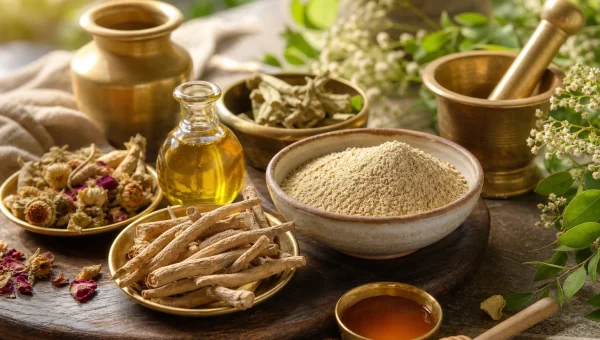
Where the tradition is on firm ground is in its herbal repertoire for the mind and nervous system. Classical Rasayana practice uses Medhya (intellect-promoting) herbs such as Brahmi (Bacopa monnieri) and Mandukaparni, and adaptogens such as Ashwagandha (Withania somnifera), and it has always individualized their dosing to the patient’s constitution and strength. The reasonable, honest statement is that Ayurveda anticipated inter-individual variability in drug and herb sensitivity, and that modern pharmacogenomics is one tool now being used to investigate it — not that a Vata-specific neuro-genomic profile has been confirmed.
Kapha Prakriti, Lipid Metabolism, and Cardiovascular Drug Response
Kapha Prakriti is classically characterized by slower metabolism, greater anabolic and stable tendencies, and a constitutional predisposition to weight gain and disorders of fat metabolism. Charaka counts the obese among the ashtau nindita (eight disapproved physical states) and describes Kapha types as prone to Medoroga (disorders of meda, the fat tissue). This classical picture aligns broadly with the 2008 finding that Kapha Prakriti subjects showed gene-expression differences consistent with lipid metabolism.
It is tempting to extend this to a precise pharmacogenomic rule — for instance, that Kapha individuals carry specific PPARG variants, have slower CYP3A4 activity, and are therefore prone to statin-induced myopathy at standard doses. Those specific claims are not substantiated by the published Prakriti literature and should not be presented as established. What can be said responsibly is this: Kapha constitutions are classically lipid-accumulating and a natural focus for cardiovascular care, and statin response does vary genetically between individuals. The convergence is conceptual and worth studying — it is not yet a validated, mechanism-level mapping, and the cardiologist’s puzzling case is better described as a real example of pharmacogenomic variability than as proof of a Kapha-CYP3A4 statin mechanism.
| Prakriti Type | Classical Metabolic Description | Reported or Hypothesized Genomic Correlate | Traditional Dosing Consideration |
|---|---|---|---|
| Vata | Fast, irregular, sensitive; governs movement and the nervous system | Cell-cycle and intracellular-transport expression signatures (Prasher 2008); no confirmed CYP-specific profile | Lower doses of potent herbs traditionally used; higher reported sensitivity |
| Pitta | Strong Agni, fast metabolism, transformative | Extensive (“fast”) CYP2C19 metabolizer genotype more frequent (Ghodke 2011, n=132) | Generally tolerates standard or higher dosing of certain drugs; faster clearance reported |
| Kapha | Slow, stable, anabolic; prone to Medoroga (fat-metabolism disorders) | Lipid-metabolism expression signatures (Prasher 2008); slower-metabolizer trend in CYP2C19 data | Watch for cumulative effects; individualize per Agni and Bala |
| Pitta-Vata | Intermediate; sharp mind, moderate metabolism | Mixed/intermediate pattern; not separately characterized in published data | Individualized assessment; monitor response |
| Kapha-Vata | Erratic metabolism; prone to Ama (metabolic toxins) | Mixed/variable pattern; not separately characterized in published data | Individualized assessment; careful monitoring |
Ayurvedic Herbs and Their Own Pharmacogenomic Interactions
The pharmacogenomics conversation cuts both ways: enzyme variation affects how Ayurvedic herbs are metabolized, and several herbs themselves modulate CYP450 enzymes, which matters for anyone combining them with pharmaceuticals.
Ashwagandha (Withania somnifera): A classical Rasayana and Balya (strength-promoting) herb, traditionally dosed according to the individual’s constitution and strength. Clinical pharmacogenomic data on how withanolides interact with specific CYP enzymes remain limited and preliminary, so constitution-specific dosing here rests on classical practice rather than confirmed enzyme kinetics. Our Ashwagandha dosage guide reflects this individual variation.
Guggulu (Commiphora mukul): Contrary to a common misconception, guggulsterone is reported to act as an agonist of the pregnane X receptor (PXR) and to induce CYP3A expression, not inhibit it (Brobst et al., J Pharmacol Exp Ther 2004;310:528). Enzyme induction would tend to lower, not raise, exposure to co-administered CYP3A substrates, so any interaction with statins or similar drugs should be discussed with a physician rather than assumed. See our Guggulu benefits guide for clinical context.
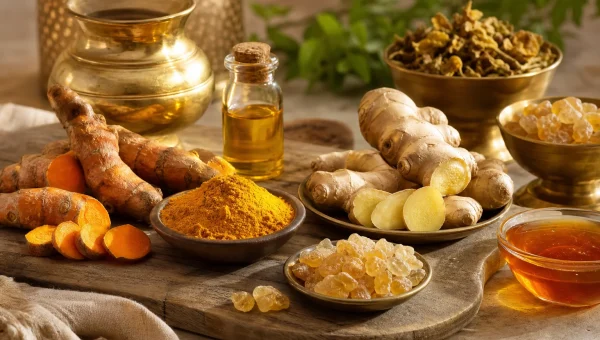
Pippali (Piper longum): Piperine, the active compound in long pepper, is a well-documented inhibitor of CYP3A4 and CYP1A2. In a classic human study, co-administering 20 mg of piperine increased the bioavailability of curcumin roughly twentyfold (Shoba et al., Planta Med 1998;64:353), illustrating how piperine slows the breakdown of co-administered compounds. Kapha Prakriti individuals on multiple medications should discuss Pippali use with their physician.
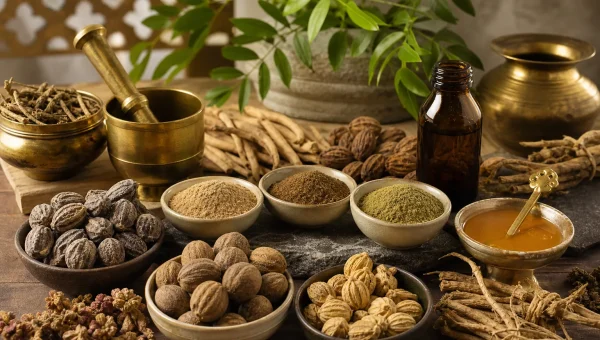
Triphala: A classical Rasayana compounded from three fruits — Amalaki (Emblica officinalis), Bibhitaki (Terminalia bellirica), and Haritaki (Terminalia chebula) — traditionally used to support digestion and elimination. Its polyphenols (ellagitannins) are chiefly transformed by gut microbiota into urolithins rather than processed primarily by a single liver CYP enzyme, and because gut-microbiome composition differs widely between individuals, the products of this metabolism vary from person to person.
Guduchi (Tinospora cordifolia): One of Charaka’s four Medhya Rasayana herbs and a classical immunomodulator (Rasayana). Modern interest in its immunomodulatory activity is genuine but still preliminary, and responses are expected to vary with an individual’s baseline state.
Where the Field Is Heading
The honest frontier of Prakriti pharmacogenomics is the integration of multiple data layers — genome-wide variation, gut-microbiome profiling, metabolomics, and proteomics — with structured Prakriti phenotyping, building on the foundational, peer-reviewed Ayurgenomics work (Prasher 2008; Ghodke 2011; Govindaraj 2015). This is a young field. As of now there is no validated, published predictor that combines Prakriti with a small CYP450 SNP panel to forecast statin response at high accuracy, and reports of such validation cohorts with precise headline percentages cannot be traced to any indexed study. The credible claim is modest and worth stating plainly: constitutional typing may eventually help stratify patients and prioritize testing, but that promise has not yet been demonstrated in rigorous, reproducible trials.
Clinical Implications for Ayurvedic Practitioners
Classical posology has never reduced to a blanket “low dose for Vata, high dose for Kapha” rule. Charaka’s Dashavidha Pariksha (tenfold examination of the patient) and the traditional rules for aushadha matra (drug dose) weigh many factors together: Agni (digestive strength), Koshtha (bowel nature), Bala (strength), Vaya (age), Satmya (suitability), Desha (region and body), Kala (season and time), the strength of the disease (vyadhi bala), and the nature and potency of the drug (aushadha). Prakriti is one input among these, not the sole determinant. The practical, defensible action is to document Prakriti assessment systematically alongside these other factors when working with patients on pharmaceutical medications — especially those with narrow therapeutic windows, such as warfarin, cyclosporine, tacrolimus, and lithium — so that emerging research can be evaluated against real clinical records.
Safety and Disclaimer
The research described here is promising but preliminary, and should never be used to self-adjust pharmaceutical drug doses. Prakriti assessment is a complement to, not a replacement for, validated pharmacogenomic testing in clinical settings. Herb-drug interactions involving CYP450 modulation — such as those of Pippali and Guggulu — can have serious consequences for patients on critical medications. Always inform your physician and a qualified Ayurvedic practitioner about every supplement you take, and make any changes only under their joint supervision. This field is evolving quickly, and recommendations should be reviewed as new, properly verified data emerge.
Actionable Tip
Have your Prakriti assessed by a qualified Ayurvedic physician using a structured questionnaire (at least 40 questions covering physical, mental, and behavioral traits) and record the result alongside your standard medical records. At your next appointment with any prescribing physician, share your Prakriti type and ask them to note it together with any pharmacogenomic information they hold. This simple step begins to bridge two medical systems, and as the science matures it may help personalize both your pharmaceutical and herbal care to your individual constitution.
References
- Link (link.springer.com)
- Onlinelibrary (onlinelibrary.wiley.com)
- Nature (nature.com)
- Guggulsterone activates multiple nuclear receptors and induces CYP3A gene expression through the pregnane X receptor (2004), PubMed
- Influence of Piperine on the Pharmacokinetics of Curcumin in Animals and Human Volunteers (1998)
The statin non-responder case at the opening is the kind of clinical observation that should be generating more pharmacogenomics funding. Two patients with identical presentation responding completely differently to the same drug dose is not an anomaly, it’s a reproducible pattern that precision medicine needs to address.
Which CYP450 variants are most strongly correlated with the Pitta, Vata, Kapha genomic clusters in the studies cited? I work in pharmacogenomics and this is the specific question that would determine whether this warrants serious clinical application.
The 2015 IGIB study was a significant moment in Prakriti research and it’s good to see the 2026 genomic follow-ups being discussed. The platelet size correlation with Prakriti type was one of the most counterintuitive findings and it replicated across independent cohorts.
How is Prakriti assessment being standardized for genomic studies? My concern is that if two clinicians classify the same patient differently, the genetic correlations become meaningless. Is there validated assessment protocol being used across these studies?
I’m interested in the drug metabolism angle specifically. If Kapha types are consistently slow metabolizers of certain drug classes, that has direct prescribing implications regardless of whether you accept the Ayurvedic framework philosophically. The data is what matters.
I found the link between Prakriti and CYP2C19 metabolizer status interesting, especially how Pitta types tend to be fast metabolizers.
The idea that my constitution is partially genomically encoded and not just a learned observation pattern is genuinely exciting. It shifts Prakriti from a practitioner’s assessment to something that could eventually have biomarker-level confirmation.
Correlation between genomic markers and a traditional classification system doesn’t necessarily validate the therapeutic implications of that system. You could find genomic correlates for astrological signs too if you looked hard enough. The statistical bar for these kinds of associations needs to be explicit.
Could someone explain how the gut microbiome might affect Prakriti based dosing? I’m curious about the practical steps.
What’s the sample size across the 2026 studies? The 2015 IGIB work used 262 participants which is small for genomic research. If the newer studies are substantially larger with validated replication, the claims here become much more compelling.
The cardiologist’s story really shows why two people on the same statin can have such different outcomes.
I’m a third year medical student and this intersection of traditional constitutional medicine and genomics is exactly the kind of integrative framework that modern medicine needs to develop. The patients who don’t respond to standard protocols are often where the most interesting science lives.
I appreciate the caution about not jumping to conclusions on Kapha CYP3A4 links until more data appear.
The epigenetic layer is what I find most compelling here. The idea that constitutional patterns might reflect heritable epigenetic marks rather than fixed genomic variants would explain both the measurable consistency and the documented modifiability of Prakriti through lifestyle.
Has anyone tried sharing their Prakriti type with their doctor before starting a new medication? What was the reaction?
The article mentions that Vata types may be more sensitive to stimulating herbs, which matches what I’ve noticed with ashwagandha.
I wonder if future studies will combine SNP panels with Dosha questionnaires to predict drug response better.
I had a Prakriti assessment done by three different Ayurvedic physicians and got three different primary dosha classifications. If the assessment itself is that subjective, how can any genomic correlation be meaningful?
It’s helpful to see the table summarizing metabolic descriptions and traditional dosing considerations, even if the evidence is still preliminary.
The section on Guggulu inducing CYP3A expression was new to me; I’ll discuss it with my prescriber before using it alongside statins.
I’ve tried everything for my condition and prakriti combined with the dietary changes described here is the first thing that’s moved the needle. Four months now.
my functional medicine doctor mentioned something similar, helpful to have the ayurvedic framing too ठीक है
my vaidya recommended something similar last month, good to see the reasoning explained
my constitution is vata-pitta, the article seems focused on one or the other
@Vikram just found this post, the section 3 protocol seems intensive for a beginner, any lighter version?
@Daniel starting this next week, will report back in about a month
bookmarked this to shr with my mother who has been struggling with the same issue नमस्ते
where are the actual clinical trials? i need rct data before trying anything
appreciate that this goes into contraindications, most blog posts skip that part
bookmarked this to shr wth my mother who has been struggling with the same issue
tried the morning routine from this article and noticed a difference by day 5
The statin example at the start really landed for me. My father and his brother both started the same medication at the same dose and had completely opposite results — one thrived, one stopped after two months due to side effects. Would love to know more about which Prakriti types the 2026 studies found most prone to statin intolerance.
How long before seeing results? the article mentions 4 to 6 weeks but is that for everyone.
@Nikhil Appreciate that this goes into contraindications, most blog posts skip that part.
How would a clinician use this information practically, can drug doses be adjusted based on Prakriti type?
Just started exploring Ayurveda after years of allopathy, still a lot to absorb.
Thanks!
quick question: does the dosage change if someone is also on other medication?
The specific morning timing recommendation is practical, most articles skip that detail.
The idea that constitution influences CYP enzyme activity is something I hadn’t considered before. If Pitta types really do metabolize drugs faster on average, that would have massive implications for dosing protocols beyond just statins — antibiotics, painkillers, even chemotherapy.
I liked the reminder that Prakriti is just one factor among many like Agni, Bala, and Satmya when deciding herb doses.
the gwas data linking prakriti to cyp450 enzyme variants was exactly the kind of evidence i needed to take this seriously
Would this protocol work if I travel frequently and can’t maintain a fixed routine.
Curious how reliable the Prakriti assessments were in these genomic studies. Self-reported constitution can vary a lot depending on who’s doing the assessment and their training level. Did the studies use standardized questionnaires or clinical evaluation by trained vaidyas?
is this suitable for pitta dominant people or mainly vata?
some of these claims are very strong for what is essentially anecdote-level evidence
Reading this after finding it on Google, is this dosage still recommended?
tried the morning routine for 2 months, gave up the timing is impossible with kids and a job
My functional medicine doctor mentioned something similar, helpful to have the Ayurvedic framing too.
The 2026 genomic studies you cited are the most up-to-date I’ve seen in any Ayurvedic science article.
Are there any clinical labs currently offering Prakriti assessment alongside standard pharmacogenomic tests?
late to this but wanted to ask, do these recommendations still hold in 2027?
The part about adjusting based on prakriti was exactly what I needed.
would this protocol work if i travel frequently and cant maintain a fixed routine
been following this for 3 weeks and my energy levels are much better, the protocol described here really clicked for me
Doing this ✨
the sample sizes in the studies cited are too small to draw clinical conclusions from
Is there a commercial test to determine Prakriti that correlates with the genomic markers described?
the part about adjusting based on prakriti was exactly what i needed
The principle of individualized dosing in Ayurveda feels aligned with the move toward precision medicine in western practice.
I’m skeptical about claims that a single Prakriti type can guarantee a specific drug outcome; the article rightly calls those unverified.
the sourcing section was a surprise, didnt know the extract grade mattered this much ✨
the specific morning timing recommendation is practical, most articles skip that detail ✨
followed the dosage table for 10 days and my sleep improved, will continue 🙏
Reading about the 2008 gene expression study made me want to look at the original paper for the exact pathways they highlighted.
The article mentions Kapha types as slow metabolizers does this apply to all drug classes or specific ones?
packaging this as science when most of it is tradition makes me skeptical
The part about Pharmacogenomics and Prakriti feels realistic. This would be easier to follow with a one-week sample plan.
Tried this for 6 weeks and saw no difference, maybe I’m applying it wrong.
conflating prakriti assessment with pharmacogenomics is an overreach until there are larger replication studies
the pitta protocol here caused a lot of heat and skin irritation for me
The dosage here seems higher than what my Ayurvedic doctor recommended.
Some of these claims are very strong for what is essentially anecdote-level evidence. नमस्ते
teh article mentions kapha types as slow metabolizers does this apply to all drug classes or specific ones?
as a pharmacist this was relevant to how i counsel patients, teh vata-type fast metabolizer connection was interesting
starting this next week, will report back in about a month ✨
Tried the morning routine for 2 months, gave up the timing is impossible with kids and a job.
This makes sense for Pharmacogenomics and Prakriti. The main idea is clear even if someone is new to Ayurveda.
Quick question: does the dosage change if someone is also on other medication? नमस्ते
tried this for 6 weeks and saw no difference, maybe im applying it wrong
reading this after finding it on google, is this dosage still recommended? 🌿
This makes sense for Pharmacogenomics and Prakriti. Good starting point for a cautious reader.
The sample sizes in the studies cited are too small to draw clinical conclusions from.
I would like more detail on Pharmacogenomics and Prakriti. The practical details matter more than people think.
how long before seeing results? the article mentions 4 to 6 weeks but is that for everyone
the specific morning timing recommendation is practical, most articles skip that detail
This works in theory but practically very hard to source authentic herbs.
Starting this next week, will report back in about a month. ❤️
the dosage here seems higher than what my ayurvedic doctor recommended
Packaging this as science when most of it is tradition makes me skeptical.
my constitution is vata-pitta, teh article seems focused on one or the other 💯
the pitta protocol here caused a lot of heat and skin irritation for me धन्यवाद
tried the morning routine for 2 months, gave up the timing is impossible with kids and a job 🌿
Same here
My vaidya recommended something similar last month, good to see the reasoning explained.