
Your body just did something extraordinary. Whether birth was uncomplicated or involved tearing, episiotomy, hemorrhoids, or cesarean recovery, the perineal area needs gentle, consistent care in the weeks that follow. A warm sitz bath is one of the simplest ways to soothe the area while you recover.
The postpartum period can be physically demanding. Your body may be sore, your sleep may be fractured, and even 15 minutes of self-care can feel difficult. These sitz bath recipes are designed to be practical, warm, mild, and easy to prepare, with Ayurvedic herbs used in a careful external-wash format.
What Is a Sitz Bath?
A sitz bath is a shallow warm-water soak for the perineal area, the region between the vaginal opening and the anus. You sit in a clean basin or a few inches of warm water so that only the hips, buttocks, and perineum are covered. The water does not need to cover the thighs, abdomen, or cesarean incision area.
You can use a sitz bath basin that fits over the toilet seat, a clean shallow tub, or a bathtub filled with only a few inches of water. A toilet-seat basin is often easier in the early postpartum weeks because it avoids lowering yourself into and climbing out of a bathtub.
Why Warm Herbal Sitz Baths Are Used in Ayurveda
Warm water itself can ease soreness and swelling. In Ayurvedic postpartum care, called sutika paricharya, warmth, oiling, bathing, and gentle external cleansing are valued because the period after birth is considered a time when Vata needs careful support. Warm, moist, soothing measures are preferred over cold, drying, or harsh measures.
For external washes, Ayurveda commonly uses kwatha or kashaya, a decoction made by simmering coarse herbs in water and then straining the liquid. For postpartum sitz baths, the decoction should be mild, well-strained, diluted with clean warm water, and used only when your healthcare provider has said sitz baths are appropriate for your delivery and wound status.
General Instructions for All Three Recipes
Use these instructions for each recipe below. The most important principles are cleanliness, comfortable warmth, complete straining, and avoiding irritating additives.
- Use a clean basin every time. Wash and rinse the sitz bath basin before and after use. Do not share a sitz bath basin.
- Prepare the herbal decoction fresh. Simmer or steep the herbs, strain thoroughly through a fine sieve or clean cloth, and let the liquid cool before use.
- Keep the water comfortably warm, not hot. Around 37 to 40 degrees Celsius, or 98 to 104 degrees Fahrenheit, is usually comfortable. Test with the inner wrist before sitting.
- Use only enough water to cover the perineal area. A few inches of water is enough. The abdomen and cesarean incision should not be submerged.
- Soak for 15 to 20 minutes. If the water cools, add a small amount of warm water carefully and recheck the temperature.
- Pat dry gently afterward. Use a clean, soft towel. Do not rub the perineal area.
- Do not add soap, body wash, essential oils, antiseptics, salt, or oils unless your healthcare provider specifically advises it. Postpartum tissues can sting or become irritated easily.
Recipe 1: Panchavalkala-Haridra Healing Bath for Tears or Episiotomy
This recipe is for external cleansing and comfort when there has been a perineal tear or episiotomy and your obstetrician or midwife has said sitz baths are appropriate. It uses astringent Ayurvedic herbs traditionally associated with vrana care, meaning wound-care support.
Ingredients
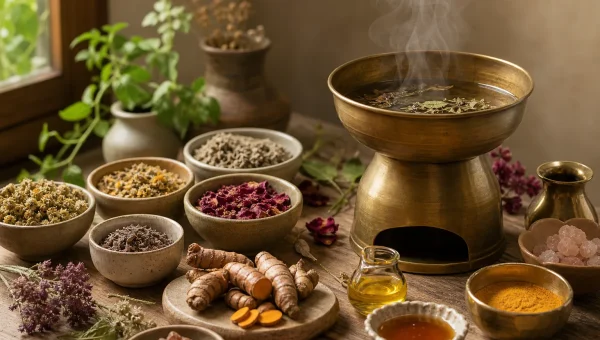
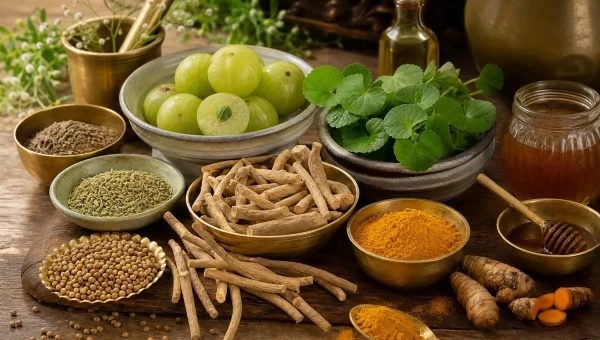
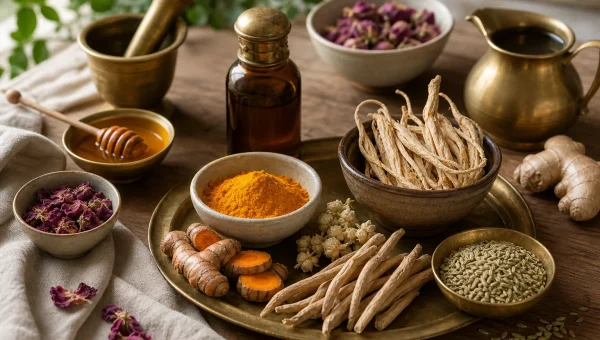
Use coarse herbs when possible, because powders can be harder to strain. If using powders, tie them in a clean muslin bag before simmering.
| Herb | Amount | Purpose |
|---|---|---|
| Panchavalkala coarse bark blend | 2 tablespoons, about 10 g | Astringent external wash traditionally used for cleansing and healing support |
| Triphala coarse powder | 1 tablespoon, about 5 g | Gentle astringent three-fruit formula used in Ayurvedic cleansing preparations |
| Haridra turmeric powder | 1/4 teaspoon, about 1 g | Classical Ayurvedic herb used in skin and wound-care contexts |
Preparation
This preparation should be mild, well-strained, and diluted before it touches postpartum tissue.
Bring 1.5 liters of water to a boil. Add the panchavalkala, triphala, and turmeric. Reduce heat and simmer for 10 to 15 minutes. Remove from heat and strain very thoroughly through a clean cloth or fine mesh strainer. Let the decoction cool, then pour it into the sitz bath basin and add enough clean warm water to reach the correct level.
Check the temperature before sitting. The water should feel warm and soothing, never hot or sharp.
Frequency: Once daily, or as directed by your healthcare provider, during the early healing period. For deeper tears, extensive stitches, wound breakdown, increasing pain, or discharge, follow your obstetrician’s wound-care plan rather than starting herbs on your own.
Turmeric can stain towels and plastic basins. Use a designated towel, strain carefully, and omit turmeric if it causes any stinging or irritation.
Recipe 2: Shatavari-Triphala Soothing Bath for General Postpartum Tenderness
This recipe is for general soreness, heaviness, and tenderness after vaginal birth when there is no active infection and no wound requiring special medical care. Shatavari is a classical postpartum-support herb in Ayurveda, while the small amount of triphala adds mild astringency to the external wash.
Ingredients
For this recipe, a muslin herb bag is especially helpful because shatavari powder can make the water cloudy if it is not contained and strained well.
| Herb | Amount | Purpose |
|---|---|---|
| Shatavari powder or coarse root | 1 tablespoon, about 5 g | Cooling, nourishing, Vata-soothing postpartum support |
| Triphala coarse powder | 1 teaspoon, about 2 g | Mild astringent support for external cleansing |
Preparation
This bath is intentionally simple and gentle, with only two herbs and no fragrance oils or irritants.
Place the shatavari and triphala in a clean muslin bag or tie them securely in cheesecloth. Bring 1.25 liters of water to a boil, reduce the heat, add the herb bag, and simmer gently for 10 minutes. Remove from heat, cover, and let it steep for another 5 minutes. Remove the herb bag, strain again if needed, and dilute with clean warm water in the sitz bath basin.
Frequency: Once daily as needed for comfort, for up to 2 to 3 weeks postpartum, provided your healthcare provider has cleared sitz baths and the bath feels soothing rather than irritating.
Recipe 3: Nimba-Triphala Bath for Hemorrhoid-Related Itching or Swelling
Postpartum hemorrhoids are common after pregnancy and pushing. A warm sitz bath can ease anal and perineal discomfort, especially after a bowel movement. This recipe keeps the formula astringent and simple, without oils, Epsom salt, or essential oils.
Ingredients
Use a mild amount of neem and strain carefully. If your skin is very sensitive, begin with half the quantity of neem.
| Herb | Amount | Purpose |
|---|---|---|
| Nimba neem leaves, dried | 1 tablespoon, about 3 g | Bitter cleansing herb used externally in skin and wound-care contexts |
| Triphala coarse powder | 1 tablespoon, about 5 g | Astringent three-fruit formula for a gentle external wash |
Preparation
This bath should be warm and mild. Do not use it on broken, bleeding, or severely painful tissue without medical guidance.
Bring 1.25 liters of water to a boil. Add the neem leaves and triphala. Reduce heat and simmer for 10 minutes. Remove from heat and strain thoroughly through a clean cloth. Pour the strained liquid into the sitz bath basin and dilute with warm water to the right level and temperature.
Frequency: Once or twice daily during acute discomfort, especially after a bowel movement. Seek medical advice if there is rectal bleeding, severe pain, worsening swelling, or symptoms that do not improve.
When to Start Sitz Baths Postpartum
Start sitz baths only when your birth team says it is appropriate and you can sit comfortably. Many postpartum patients are offered warm sitz baths early after vaginal birth, but timing can vary depending on stitches, bleeding, pain, infection risk, and the degree of tearing.
After a cesarean birth, a toilet-seat sitz bath basin may be used only if your healthcare provider approves and the water stays limited to the perineal area. The abdominal incision should remain dry and should not come into contact with bath water unless your surgeon gives specific instructions.
Preparing Herb Packets in Advance
Before your due date, you or a family member can pre-measure the dry herbs into small muslin bags or tied cheesecloth bundles. Label each bag with the recipe name and store the dry packets in an airtight container in a cool, dry place.
When it is time for a bath, simmer the packet in water like a large herbal tea bag, then dilute the strained liquid to a comfortable temperature. Prepare only the dry packets in advance; the actual decoction should be made fresh for each bath.
Safety Notes
Stop using sitz baths and contact your healthcare provider promptly if you notice increasing pain, fever above 38 degrees Celsius or 100.4 degrees Fahrenheit, foul-smelling discharge, redness, warmth, pus, worsening swelling around a tear or episiotomy site, heavy bleeding, dizziness, or new rectal bleeding. Seek urgent medical care for chest pain, trouble breathing, severe weakness, or bleeding that feels excessive.
These recipes are not a substitute for postpartum medical care. If you had a third- or fourth-degree tear, episiotomy complications, cesarean birth, infection, wound separation, severe hemorrhoids, or known allergies to any listed herb, follow your obstetrician’s instructions and consult a qualified Ayurvedic practitioner or healthcare provider before using herbal baths.
The weeks after birth are a time of profound physical recovery. A warm sitz bath is not indulgent; it is a small, practical way to give your healing body clean, quiet, supportive care.
Nothing in this article diagnoses or treats a medical condition. Use it as educational information and consult a qualified Ayurvedic practitioner or physician before starting herbs, supplements, detoxes, or therapeutic protocols, especially if pregnant, postpartum, breastfeeding, managing a condition, or taking medication.
References
- My (my.clevelandclinic.org)
- ACOG
- Jaims (jaims.in)
- Natural Ingredient Resource Center
- Wound healing potential of Pañcavalkala formulations in a postfistulectomy wound (2015), PubMed Central
- Comparative clinical study of Guggulu-based Ksharasutra in Bhagandara (fistula-in-ano) with or without partial fistulectomy (2018), PubMed Central
- Ia800501 (ia800501.us.archive.org)
- Webprod (webprod.hc-sc.gc.ca)
- Health (health.clevelandclinic.org)
- Marchofdimes (marchofdimes.org)
After my diagnosis last year, I turned to Ayurveda as a complement to my treatment. This article validates my choice.
The before and after difference in how I feel is remarkable. Three weeks in and counting
The safest part of the Sitz Bath advice is keeping it simple. I would like to know how long to try it before judging results.
Thank you for this! You’ve articulated it beautifully, it’s exactly this kind of awareness that sets Ayurveda apart from a one-size-fits-all approach.
I respectfully disagree with the characterization of modern medicine as inferior here. Both systems have their place and ideally should complement each other.
the nuance here is so refreshing. most content just says do X without explaining why
For Sitz Bath, consistency seems like the hard part. I would like to know how long to try it before judging results.
The timing of 48 hours for beginning herbal sitz baths aligns with what my hospital discharge instructions said. The fact that this matches both traditional and conventional guidance increases my confidence in the approach.
Great to hear this is working for you. Your grandmother’s wisdom was ahead of its time!
I’m a nurse and Ive started incorporating some of these principles into my own self-care routine
This helped me understand Sitz Bath without too much jargon. A few more examples would still help.
Is this approach safe after a C-section? The article focuses on vaginal birth recovery but the anti-inflammatory and healing properties of these herbs seem relevant to abdominal wound healing too.
The postpartum cold and Vata excess framing explains why warm herbal baths feel so instinctively right in the weeks after birth. You are addressing a real physiological cooling and Vata surge simultaneously with the temperature and the herbs.
I tried the neem and turmeric blend after my second baby and noticed less redness around the stitches.
How do you source Dashamoola when you’re outside India? Some of the ten root herbs are not available individually in US or UK markets. An alternative recipe for markets where these herbs aren’t accessible would make this more universally usable.
This helped me understand Sitz Bath without too much jargon. I would still ask a practitioner before changing medicines.
The chamomile lavender soak really helped ease the heaviness I felt in the first week.
Do you think the witch hazel extract needs to be alcohol free for the recipe to work?
I found measuring the herbs ahead of time in small muslin bags saved me a lot of time during those sleepless nights.
A shallow plastic tub works just as well as a dedicated basin if you keep the water level just right.
The Epsom salt and aloe vera combo gave me quick relief from hemorrhoid throbbing.
Is it safe to add a few drops of plain coconut oil to the anti inflammatory bath if I have sensitive skin?
After a cesarean, I waited until my incision felt solid before trying any sitz bath, and that felt like the right call.
The instructions about water temperature being wrist tested made me feel confident I wasn’t scarring the tissue.
I love that the recipes explain why each herb is chosen, it makes the practice feel more intentional than just a warm soak.
for Vata types in winter, is the oil pre-bath massage recommended before or after soaking? ❤️
sorry off-topic but has anyone here used Ayurveda for hair loss? nothing seems to work
can the dried herbs be reused for a second bath or is the first extraction all you get?
how long should each soak last? I’ve been doing 15 minutes but wasn’t sure if more is better
the recipe 1 mentions decoction method. does steeping work as a substitute or does it need to be boiled?
how long should each soak last? Ive been doing 15 minutes but wasn’t sure if more is better
Useful
does the season of the recipe align with Indian seasons or global Northern hemisphere seasons? 🌿
that’s a fair concern. I’d suggest starting lower and building up
sorry to go off topic but any tips for Ayurvedic approach to knee pain?
unrelated question but does anyone know a good vaidya in Pune? 💯
The Sitz Bath angle is useful here. I appreciate that it does not oversell the result.
off topic but can these herbs be taken with thyroid medication? my doctor doesnt know