Maximizing Iron Absorption Through Ayurvedic Food Combinations
Iron absorption food combinations are one of the most practical places where Ayurvedic food wisdom and contemporary nutrition overlap. Ayurveda pays close attention to ahara samyoga, the effect created when foods are combined, and warns that unsuitable combinations can disturb digestion and tissue nourishment. In plant-centered diets, the same meal can provide very different absorbed iron depending on whether it is paired with vitamin C and sour organic acids, or blocked by phytate, strong tea, coffee, and excess calcium at the same time.
The focus here is non-heme iron, the form found in grains, pulses, seeds, nuts, greens, and most vegetarian meals. Heme iron from animal foods is generally absorbed more efficiently and is less affected by the rest of the meal, while non-heme iron is much more dependent on meal context. The kitchen strategy is simple: pair iron-containing foods with vitamin-C-rich or naturally sour foods, reduce phytate through soaking, sprouting, fermenting, and thorough cooking, and keep strong inhibitors away from iron-focused meals.
The Absorption Enhancers: Ayurvedic Foods That Help Open the Iron Door
Ayurvedic cooking often places sour fruits, chutneys, fermented batters, soaked pulses, and digestive spices around heavier plant foods. For iron planning, these practices are useful when they keep minerals soluble, reduce binding compounds, and support comfortable digestion without overwhelming the individual’s constitution or digestive capacity.
| Food or Practice | Verified Role | Absorption Logic | Best Pairing |
|---|---|---|---|
| Amalaki / fresh amla | Very high vitamin C fruit | Ascorbic acid helps keep non-heme iron soluble and absorbable | With sesame, dal, leafy greens, kulatha, or iron-focused meals |
| Lime, lemon, and other citrus | Vitamin C and citric acid source | Sour organic acids support mineral solubility in plant meals | Squeezed over dal, chana, greens, chutney, or sesame preparations after cooking |
| Pomegranate / dadima | Not iron-rich, but naturally sour and rich in organic acids | Citric and malic acids can support the meal environment for non-heme iron | Arils, juice, or chutney alongside dal, greens, sesame, or millet meals |
| Black sesame / tila | Mineral-rich seed with notable iron content | Grinding, roasting, or soaking improves practical use; vitamin C improves the meal context | With amla, lime, pomegranate, jaggery in moderation, or coriander chutney |
| Moringa leaf / shigru patra | Nutrient-dense green leaf containing iron and vitamin C | Useful as an iron-containing green when paired with sour finish and proper cooking | Added near the end of dal, soup, or vegetable preparations; finish with lime |
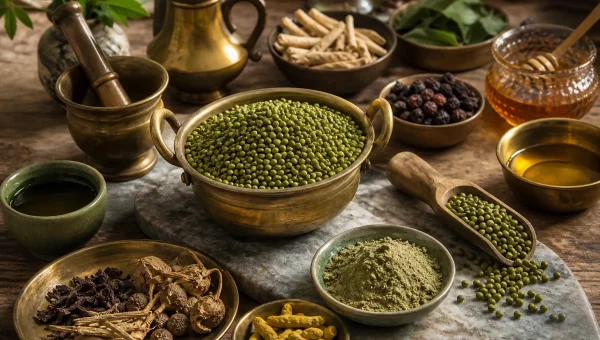
| Kulatha / horse gram | Iron-containing pulse with phytate and other antinutritional factors | Soaking, discarding soak water, and thorough cooking improve mineral availability | Cooked as dal or soup with ginger, cumin, coriander, and lime or amla chutney |
| Sprouting and fermentation | Traditional processing for pulses, grains, and batters | Can reduce phytate and improve mineral bioaccessibility | Sprouted moong, fermented dosa/idli batter, dhokla-style batters, and well-cooked legumes |
A Practical Ayurveda-Informed Iron Meal
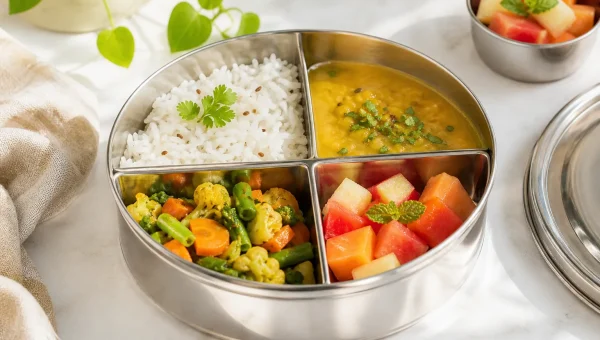
A strong daily iron-supportive meal can be built from soaked and well-cooked kulatha or another pulse, fresh coriander-lime chutney, and a small serving of amla or pomegranate alongside. This is not a fixed classical formula; it is a practical kitchen model that follows verified principles while staying close to Ayurvedic cooking habits.
The soaked pulse supplies plant iron and protein while reducing some mineral-binding phytate. The coriander-lime chutney adds freshness, sourness, and digestive support. The lime, amla, or pomegranate improves the meal environment for non-heme iron through vitamin C and organic acids. Ginger, cumin, coriander, and a moderate amount of turmeric keep the preparation familiar, aromatic, and easier to digest for many people.
The meal also works from a culinary perspective. Kulatha has a nutty, earthy, slightly sharp taste that benefits from sour chutney and warm spices. For people who find kulatha too heating or heavy, the same method can be applied to moong dal, masoor dal, chickpeas, rajma, or leafy green dishes.
The Inhibitors: Avoiding Iron-Stealing Combinations
Improving iron intake is only half the work. The other half is avoiding combinations that block non-heme iron at the same meal. Ayurveda describes unsuitable combinations under the broader idea of viruddha ahara; for iron-focused vegetarian meals, the practical concern is to keep strong inhibitors away from the plate when the goal is mineral absorption.
Tea and coffee with iron-rich meals: Black tea, green tea, coffee, cocoa, and some polyphenol-rich herbal teas can reduce non-heme iron absorption when taken with meals. Chai or coffee is better kept at least one hour away from an iron-focused meal, and two hours is a more cautious spacing for people with low ferritin or diagnosed deficiency. Plain warm water or simple spice infusions made without tea leaves, such as ginger, fennel, or cardamom water, are better choices with the meal.
Calcium-rich dairy and calcium supplements: Calcium can acutely inhibit iron absorption, especially when large calcium-rich foods or supplements are taken with iron-focused meals. Milk, calcium tablets, calcium-rich antacids, and large curd-based servings are best separated from the main iron-supportive meal. This does not mean dairy must be avoided by everyone; it means timing matters when the purpose of the meal is to improve iron status.
Unsoaked pulses, grains, seeds, and nuts: Phytate in legumes, whole grains, seeds, and nuts can bind iron and other minerals. The traditional practices of soaking, sprouting, fermenting, roasting, and thorough cooking are therefore not just digestive refinements; they are also mineral-availability practices. For daily meals, soak beans and hard pulses overnight, discard the soak water, cook until fully soft, and pair them with sour chutney or a vitamin-C-rich side.
The Iron-Boosting Cooking Method and Spice Protocol
Cooking method matters because the same ingredients can become more or less useful depending on the vessel, acidity, processing, and timing of sour ingredients. These are food-first practices, not substitutes for medical care when anemia is already present.
Cast iron cooking: Cooking in iron vessels can increase the iron content of food, especially when the dish is moist, acidic, and cooked with enough contact time. Tomato-based dal, tamarind rasam, sambar, and slow-cooked vegetable preparations may gain more iron from the vessel than dry foods. People with iron overload conditions should not use cast iron as a therapeutic strategy unless advised by a clinician.
Sour finish after cooking: Lime, lemon, amla, pomegranate, or a small amount of tamarind can be used to support iron-focused meals. Adding lime or amla after cooking helps preserve freshness and vitamin C. People with acidity, mouth ulcers, reflux, or strong pitta symptoms should use sour ingredients in a comfortable amount rather than forcing large doses.
Digestive spices: Ginger, cumin, coriander, black pepper, and turmeric can make pulse-heavy meals lighter and more appealing. Black pepper and piperine are best treated as supportive adjuncts, not the main iron strategy. Vitamin C pairing, phytate reduction, proper cooking, and inhibitor timing do the most important work.
Turmeric in context: Turmeric is useful as a normal culinary spice in dal, vegetables, and soups, but it should not be presented as a primary iron enhancer. People managing anemia or low ferritin should avoid high-dose curcumin or curcumin-piperine supplements unless guided by a qualified healthcare provider, especially if they are taking medicines or have digestive sensitivity.
The complete dietary framework for anemia prevention through food-first strategies aligns with an agni-based digestion optimization approach. In Ayurvedic terms, the aim is not only to eat iron-containing foods but to prepare, combine, and time them so the meal is digestible, compatible, and supportive of tissue nourishment.
Three Iron-Optimization Recipes for Daily Practice
These recipes use the same core pattern: an iron-containing plant food, a vitamin-C-rich or sour partner, reduced phytate through preparation, and spices that support digestion. They are suitable as general food practices and should be individualized for constitution, appetite, season, and medical status.
Morning Til-Amalaki Drink: Blend 1 tablespoon roasted or soaked black sesame paste with 1 small fresh amla or 1-2 teaspoons unsweetened amla juice, 1 teaspoon jaggery if needed, and 150-200 ml warm water. Take it with or before breakfast rather than forcing it on an empty stomach if sour foods irritate the stomach. This preparation combines sesame minerals with amla’s vitamin C in a simple morning format.
Moringa Kulatha Dal: Soak 1/2 cup kulatha overnight, discard the soak water, and cook until completely soft. Temper cumin, ginger, and a small amount of turmeric in ghee or sesame oil, then combine with the cooked dal. Add a handful of fresh moringa leaves in the final few minutes and finish with lime after turning off the heat. Serve with rice, millet, or roti according to digestive capacity.
Coriander-Pomegranate-Sesame Chutney: Blend 1 cup fresh coriander, 1 tablespoon pomegranate arils, 1 teaspoon roasted black sesame, juice of half a lime, a small piece of ginger, and a pinch of salt. Serve beside dal, chana, rajma, greens, millet khichadi, or sesame-based preparations. This chutney adds sourness, freshness, and mineral-supportive pairing without making the meal heavy.
Daily Timing Rules for Better Iron Absorption
Keep vitamin C with the iron meal, and keep strong inhibitors away from it. A practical routine is to take dal, greens, pulses, sesame, or millet with lime, amla, pomegranate, tomato, or fermented chutney; take tea or coffee between meals; keep calcium supplements and large dairy servings at a different time; and prepare pulses and grains through soaking, sprouting, fermenting, or thorough cooking whenever possible.
Medical Disclaimer: This article is for educational and nutritional guidance only. Iron deficiency and anemia require proper diagnosis through blood tests and may require supplementation or medical treatment beyond dietary modification. Consult a physician, qualified dietitian, or qualified Ayurvedic practitioner before using therapeutic dietary protocols, iron supplements, herbo-mineral preparations, or concentrated herbal extracts, especially if you have confirmed anemia, pregnancy, heavy menstrual bleeding, digestive disease, kidney disease, iron overload, or are taking regular medication.
References
- Charaka Samhita — Viruddha Ahara
- Charaka Samhita — Ahara vidhi
- Fao (fao.org)
- Iron absorption in man: ascorbic acid and dose-dependent inhibition by phytate (1989), PubMed
- Academic (academic.oup.com)
- Reduction of phytic acid and enhancement of bioavailable micronutrients in food grains (2015), PubMed Central
- Functional and Nutraceutical Significance of Amla (Phyllanthus emblica L.): A Review (2022), PubMed Central
- Sesame (Sesamum indicum L.): A Comprehensive Review of Nutritional Value, Phytochemical Composition, Health Benefits, Development of Food, and Industrial Applications (2022), PubMed Central
- Sciencedirect (sciencedirect.com)
- A Review of Nutrients and Compounds, Which Promote or Inhibit Intestinal Iron Absorption: Making a Platform for Dietary Measures That Can Reduce Iron Uptake in Patients with Genetic Haemochromatosis (2020), PubMed Central
- Sciencedirect (sciencedirect.com)
- Horse gram- an underutilized nutraceutical pulse crop: a review (2015), PubMed Central
- Sciencedirect (sciencedirect.com)
- Inhibition of food iron absorption by coffee (1983), PubMed
- Inhibition of non-haem iron absorption in man by polyphenolic-containing beverages (1999), PubMed
- Effect of cooking food in iron-containing cookware on increase in blood hemoglobin level and iron content of the food: A systematic review (2021), PubMed Central
- Journals (journals.plos.org)
- Iron and Physical Activity: Bioavailability Enhancers, Properties of Black Pepper (Bioperine(®)) and Potential Applications (2020), PubMed
- NCCIH
- The Ayurvedic Pharmacopoeia of India, development and perspectives (2017), PubMed
- NIH Office of Dietary Supplements
- NCCIH