Manasika Chikitsa for Depression: Three Dosha-Stratified Clinical Profiles
Manasika chikitsa for depressive presentations is best understood as a structured clinical framework rather than a single herb-based remedy. Classical Ayurveda describes three broad therapeutic modes: daivavyapashraya, yuktivyapashraya, and sattvavajaya. In mental-health care, sattvavajaya is especially important because it aims to restrain the mind from harmful objects, patterns, and impulses, while yuktivyapashraya supplies the diet, medicine, sleep, routine, and body-based therapies that stabilize the person.
Depressive experience in Ayurvedic practice is commonly discussed through terms such as vishada, avasada, daurbalya of mind, tamas-dominant withdrawal, and, in severe or complex presentations, links with unmada-type frameworks. This does not replace psychiatric diagnosis. It gives the Ayurvedic physician a way to assess the pattern of dosha involvement, agni, sleep, appetite, bowel function, strength, social withdrawal, rajas, tamas, and the patient’s capacity for disciplined sattvavajaya work.
The following three profiles preserve the clinical logic of case-based Ayurvedic practice while avoiding the false precision of invented patient outcomes. In real practice, depression should be measured with validated clinical scales, and Ayurvedic assessment should be documented alongside standard mental-health evaluation.
Case Profile 1: Vata-Dominant Depression with Anxiety and Insomnia
A vata-dominant depressive profile often presents with low mood mixed with worry, fearfulness, excessive thinking, restlessness, fragmented sleep, dry skin, constipation, variable appetite, weight loss, and an inability to maintain steady attention. The mental picture is usually more agitated than dull: the patient may feel exhausted but unable to settle, sleepy but unable to sleep deeply, and emotionally sensitive to small disturbances.
Ayurvedic assessment: The clinical emphasis is vata aggravation with rajas-dominant movement in the mind. Classical vata qualities such as dryness, lightness, coldness, subtlety, mobility, and roughness help explain why this profile responds best to warmth, oiliness, nourishment, steadiness, and sensory quieting. Agni is often irregular, and bowel disturbance commonly aggravates the mental state.
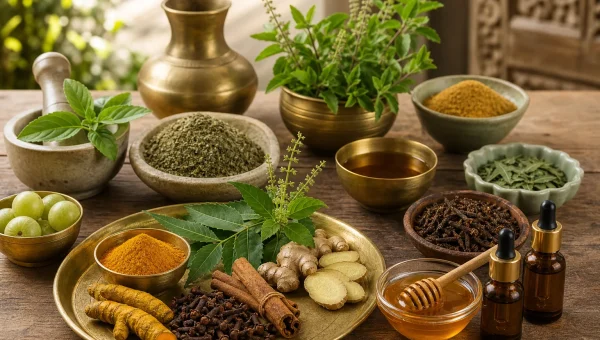
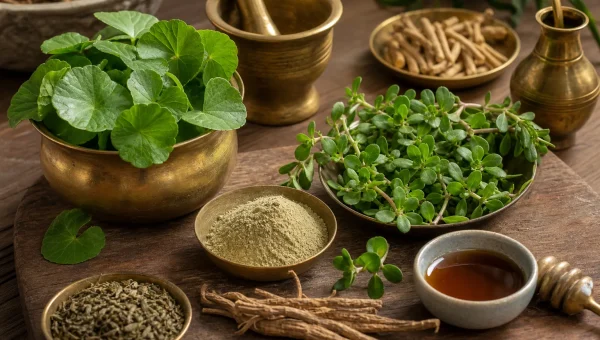
Management emphasis: The foundation is regularity. Meals should be warm, freshly prepared, mildly spiced, and taken at consistent times. Sleep and waking times should be stabilized before adding complex therapies. Abhyanga with suitable warm oil, gentle yoga, restorative breathing, and a low-stimulation evening routine are often useful when prescribed appropriately. Medhya and rasayana herbs such as brahmi, ashwagandha, and jatamansi may be considered by a qualified practitioner according to strength, digestion, medication status, pregnancy status, and constitution.
Sattvavajaya focus: The psychological layer should reduce rumination and sensory overload. The practical work includes limiting disturbing media, establishing a predictable daily rhythm, journaling repetitive worries into actionable categories, practicing guided relaxation, and rebuilding trust in memory, discrimination, and steadiness. The expected clinical markers to monitor are sleep duration and continuity, bowel regularity, appetite rhythm, anxiety scores, depressive symptom scores, and ability to complete daily work.
Case Profile 2: Pitta-Dominant Depression with Irritability and Self-Criticism
A pitta-dominant depressive profile often presents with low mood colored by irritability, anger, shame, frustration, perfectionism, harsh self-judgment, competitive pressure, difficulty relaxing, burning digestion, sour belching, heat intolerance, headaches, and sleep disturbance caused by analysis or rumination. Sadness may be present, but the more visible symptoms are sharpness, impatience, and internal criticism.
Ayurvedic assessment: The clinical emphasis is pitta aggravation with rajas expressed as heat, intensity, and judgment. Classical pitta qualities such as heat, sharpness, slight unctuousness, mobility, and sour-pungent tendency support a cooling and moderating approach. The physician should assess appetite, acidity, anger triggers, sleep timing, work strain, and whether the patient’s discipline has become self-punishing rather than therapeutic.
Management emphasis: The foundation is cooling discipline without suppression. Food should avoid excess sour, salty, very spicy, fried, and fermented items when they aggravate symptoms. Regular meals, adequate hydration, evening cooling routines, moonlight walks where suitable, non-competitive yoga, and physician-selected shirodhara or head therapies may be useful. Herbs such as brahmi, shankhapushpi, shatavari, or suitable ghrita preparations may be considered only after assessing digestion, heat signs, and current medication use.
Sattvavajaya focus: The psychological layer should soften harsh appraisal while preserving clarity and responsibility. The practical work includes replacing self-attack with accurate review, reducing comparison, practicing forgiveness without passivity, and building a schedule that includes recovery rather than only performance. The expected clinical markers to monitor are anger frequency, sleep onset, digestive heat, headaches, depressive symptom scores, and restoration of balanced decision-making.
Case Profile 3: Kapha-Dominant Depression with Lethargy and Withdrawal
A kapha-dominant depressive profile often presents with heaviness, inertia, excessive sleep, persistent tiredness, low motivation, social withdrawal, emotional dullness, weight gain, slow digestion, coating of the tongue, and reduced interest in previously meaningful activities. This pattern is often less visibly anxious than the vata profile and less visibly angry than the pitta profile; the main clinical problem is stagnation.
Ayurvedic assessment: The clinical emphasis is kapha aggravation with tamas-dominant dullness and withdrawal. Classical kapha qualities such as heaviness, coldness, softness, unctuousness, sweetness, stability, and sliminess support a treatment direction of lightening, warming, mobilizing, and drying where appropriate. The physician should assess sleep excess, food heaviness, daytime napping, metabolic sluggishness, and the degree of social disengagement.
Management emphasis: The foundation is activation. Early rising, morning movement, warm light meals, reduction of excess sweet-heavy-cold foods, and structured social re-engagement are central. Udvartana, carefully selected nasya, brisk walking, stimulating yoga, and kapha-reducing dietary discipline may be used when suitable. Herbs such as pippali, vacha, trikatu-containing combinations, or saffron preparations require individualized supervision, especially in patients taking psychiatric medicines, sedatives, blood thinners, or medications for chronic illness.
Sattvavajaya focus: The psychological layer should break the cycle of withdrawal without overwhelming the patient. The practical work includes a written morning activation plan, scheduled contact with supportive people, gradual return to duties, meaningful but small daily goals, and removal of tamas-increasing habits such as prolonged daytime sleeping, isolation, and stale food routines. The expected clinical markers to monitor are sleep duration, daytime energy, activity level, social participation, appetite quality, weight trend, and depressive symptom scores.
| Parameter | Vata-Dominant Profile | Pitta-Dominant Profile | Kapha-Dominant Profile |
|---|---|---|---|
| Primary mental feature | Anxiety, fear, rumination | Irritability, shame, self-criticism | Lethargy, withdrawal, dullness |
| Sleep pattern | Short, broken, light sleep | Difficulty falling asleep from mental heat | Excessive, heavy, unrefreshing sleep |
| Digestive tendency | Variable appetite, gas, constipation | Acidity, burning, sharp hunger | Slow digestion, heaviness, coating |
| Treatment direction | Warm, oily, nourishing, steadying | Cooling, moderating, softening | Lightening, warming, mobilizing |
| Sattvavajaya priority | Reduce fear loops and overstimulation | Reduce harsh judgment and anger loops | Reduce inertia and isolation |
| Outcome markers | Sleep continuity, bowel rhythm, anxiety score | Anger frequency, acidity, sleep onset | Activity level, sleep excess, social engagement |
Sattvavajaya: The Cognitive-Psychological Layer
Sattvavajaya, also written as sattvajaya in modern usage, is the central psychological component of Ayurvedic mental-health care. Its classical sense is not vague optimism; it is the disciplined withdrawal or restraint of the mind from harmful objects and unwholesome patterns. In depressive presentations, this includes reducing inputs that deepen fear, anger, guilt, isolation, lethargy, and self-neglect.
Classical mental-dosha management also emphasizes jnana, vijnana, dhairya, smriti, and samadhi. Clinically, these can be translated into clear understanding, applied insight, courage or steadiness, restoration of healthy memory, and contemplative stability. This makes sattvavajaya practical: the patient learns what triggers the depressive loop, how to interrupt it, and how to replace it with daily actions that increase clarity, steadiness, and meaningful engagement.
For vata profiles, sattvavajaya emphasizes safety, rhythm, and reduction of scattered attention. For pitta profiles, it emphasizes humility, cooling self-reflection, and release of hostile inner speech. For kapha profiles, it emphasizes activation, purposeful movement, and reconnection. In all three patterns, sattvavajaya works best when paired with ahara, sleep correction, suitable herbs, and body therapies chosen by a qualified clinician.
Clinical Outcome Evidence Currently Available
A published Ayurvedic case report of major depressive disorder described a patient with sadness, worthlessness, helplessness, death wishes, and disturbed sleep. The authors diagnosed the case psychiatrically as major depressive disorder and discussed the Ayurvedic diagnosis as kaphaja unmada with kapha-dominant vata and tamas involvement. The management combined yuktivyapashraya, sattvavajaya, daivavyapashraya, and panchakarma-oriented care.
A 2024 randomized controlled trial evaluated a whole-system Ayurveda protocol in 50 people with major depressive disorder for 60 days and compared it with escitalopram. The trial used standard outcome measures including HDRS, HARS, BPRS, PSQI, WHOQOL-BREF, CGI, and UKU side-effect monitoring. The Ayurveda group showed favorable between-group changes in depression, anxiety, sleep quality, quality of life, and side-effect burden, with the authors recommending larger future trials.
Another 2024 randomized controlled trial compared Brahmi vati with Aswagandharista against escitalopram in 50 participants with major depressive disorder for 60 days. Both groups improved on depression, anxiety, global severity, and psychiatric symptom measures. Quality-of-life and side-effect measures favored the Ayurvedic arm, while sleep-quality improvement favored the escitalopram arm. This supports careful, measured clinical integration rather than casual self-medication.
Saffron has a visible clinical-trial literature for mild-to-moderate depressive symptoms and menopausal mood symptoms. In Ayurvedic-style practice, saffron should still be treated as an active botanical rather than a harmless food garnish when used therapeutically, especially in pregnancy, bleeding disorders, bipolar disorder, or when psychiatric medication is being taken.
Integration with Conventional Psychiatric Care
Manasika chikitsa should be integrated with psychiatric care whenever depression is moderate, severe, recurrent, associated with suicidal thoughts, associated with psychosis or bipolar disorder, or causing major functional impairment. Ayurvedic assessment can add individualized diet, sleep, routine, herbs, body therapies, and sattvavajaya work, but it should not be used to delay urgent medical or psychiatric care.
Patients already taking SSRIs, SNRIs, benzodiazepines, antipsychotics, mood stabilizers, sleeping pills, or other long-term medicines should disclose all herbs and supplements to their psychiatrist and Ayurvedic physician. St. John’s wort is not a classical Ayurvedic herb, but it is often mixed into commercial “natural mood” products and can interact dangerously with antidepressants and many other medicines. Medhya herbs and rasayana preparations should also be individualized rather than added blindly.
Ayurvedic manasika chikitsa is strongest when it is documented like any other clinical plan: baseline symptom score, sleep score, appetite and bowel pattern, medication list, dosha assessment, agni status, safety risks, chosen interventions, follow-up interval, and measurable outcome markers. This protects the patient and also gives Ayurveda a credible clinical language for depressive disorders.
Medical Disclaimer: This content is for educational purposes only and does not diagnose, treat, or replace professional care. Depression is a medical condition that requires appropriate assessment and follow-up. Never stop psychiatric medication without medical supervision. Suicidal thoughts, self-harm thoughts, psychosis, mania, severe agitation, or inability to function require immediate help from a qualified healthcare provider or emergency service. Ayurvedic manasika chikitsa should be pursued under a qualified Ayurvedic physician, ideally in coordination with a licensed mental-health professional.
References
- Charaka Samhita — Tistraishaniya Adhyaya
- Charaka Samhita — Deerghanjiviteeya Adhyaya
- Ayurveda management of Major Depressive Disorder: A case study (2021), PubMed
- Efficacy of whole system ayurveda management protocol in major depressive disorder- A randomized controlled clinical trial (2024), PubMed
- Efficacy of Brahmi vati and Aswagandharista in major depressive disorder: A randomized controlled trial (2024), PubMed
- Saffron (Crocus sativus L.) and major depressive disorder: a meta-analysis of randomized clinical trials (2013), PubMed Central
- Comparative efficacy and safety of Crocus sativus L. for treating mild to moderate major depressive disorder in adults: a meta-analysis of randomized controlled trials (2018), PubMed Central
- Efficacy of Crocus sativus (saffron) in treatment of major depressive disorder associated with post-menopausal hot flashes: a double-blind, randomized, placebo-controlled trial (2018), PubMed
- Nimh (nimh.nih.gov)
- Nimh (nimh.nih.gov)
- Mayoclinic (mayoclinic.org)