Swedana Therapy: How Ayurvedic Steam and Fomentation Support Healing
Among the preparatory therapies of Ayurveda, Swedana (sudation or fomentation) holds a central place because it applies controlled warmth to induce therapeutic sweating, soften stiffness, reduce heaviness, and prepare the body for deeper Panchakarma procedures. In classical practice, Swedana is not treated as an ordinary sauna or steam bath. Its method, intensity, duration, herbs, body region, season, and stopping signs are selected according to the person, disease state, dosha pattern, strength, and tolerance.
Understanding Swedana in Classical Context
The term Swedana is connected with sweda, meaning sweat or perspiration. In the classical Ayurvedic framework, Swedana is a group of procedures that induce sweating through heat, steam, warm liquids, poultices, heated boluses, or other forms of therapeutic warmth. Charaka describes it as a treatment that relieves stambha (stiffness), gaurava (heaviness), sheeta (coldness), and shoola (pain), especially in conditions dominated by Vata and Kapha.
Swedana is commonly performed after Snehana (oleation), either external oil application such as Abhyanga or internal oleation when clinically indicated. The classical logic is that oleation softens and loosens aggravated doshas, while the subsequent warmth of Swedana helps mobilize them from the tissues and channels toward the alimentary tract for elimination through the main Panchakarma procedure. This sequence explains why Swedana is often described as a key Purvakarma rather than a casual wellness treatment.
In practical terms, Swedana works through the Ayurvedic qualities of warmth, softness, movement, and liquefaction. It is selected to counter cold, dry, rigid, obstructed, and heavy states. For Vata disorders, unctuous forms of fomentation are often preferred; for Kapha-dominant heaviness and stiffness, drier forms may be chosen; and in Pitta-dominant or heat-sensitive states, Swedana is either avoided or used only in a very mild and carefully monitored manner.
The Four Common Clinical Forms of Swedana
Classical texts describe many forms of Swedana, including methods using fire, steam, warm liquids, heated boluses, poultices, chambers, pits, slabs, and non-fire methods. In contemporary Panchakarma clinics, four broad forms are especially common: full-body steam, directed steam, bolus fomentation, and medicated immersion. Each form has a different therapeutic character.
1. Bashpa Sweda: Steam Chamber Sudation
Bashpa Sweda uses medicated steam to warm the body and induce sweating. In modern clinical settings, the person usually sits or lies in a steam chamber with the head kept outside so that the body receives warmth while the head remains cooler. This head-out arrangement is also used in Sarvanga Swedana research and in clinical Panchakarma practice to reduce excessive heat load to the head.
Bashpa Sweda is suited to generalized Vata-Kapha patterns such as body stiffness, heaviness, sluggishness, coldness, and pre-Panchakarma preparation. Herbs are selected according to the condition. Decoctions may include Vata-Kapha-alleviating plants such as Dashamoola, Eranda, Nirgundi, Vasa, Surasa, Shigru, or Karanja, depending on the physician’s assessment.
2. Nadi Sweda: Directed Tubular Steam
Nadi Sweda delivers steam through a tube or channel to a specific part of the body. Classical descriptions include boiling appropriate roots, leaves, fruits, meat preparations, milk, sour substances, or Vata-alleviating herbs and directing the resulting steam through a tube so the force of steam is moderated before reaching the skin.
This focused method is useful when warmth is needed over a particular joint, muscle group, back region, shoulder, neck, or painful site. It is often chosen for localized stiffness, sciatica-like pain, cervical stiffness, frozen shoulder patterns, low-back pain, or Vata-Kapha obstruction. Because directed steam can still burn or overheat tissue, the temperature must be checked repeatedly and the patient’s comfort must guide the procedure.
3. Pinda Sweda: Heated Bolus Fomentation
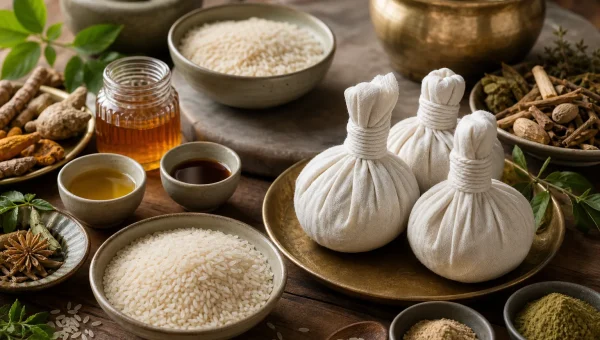
Pinda Sweda, also called Kizhi or Pottali Sweda in many clinical traditions, uses heated cloth bundles filled with medicinal substances. The bolus may contain leaves, powders, grains, rice, lemon, salt, oils, or other ingredients selected for the dosha and disease pattern. The heated bundle is applied with controlled pressure and movement over the body, often after oil massage.
Several important subtypes are used in practice. Patra Pinda Sweda uses medicinal leaves such as Eranda, Arka, Nirgundi or Sindhuvara, Shigru, Karanja, tamarind leaf, and other Vata-Kapha-alleviating leaves. It is traditionally used in joint disorders, low-back pain, sciatica, cervical radiculopathy, inflammatory or degenerative joint patterns, and stiffness. Shashtika Shali Pinda Sweda uses a special rice cooked with milk and Bala decoction; because it combines warmth, oleation, and nourishment, it is used more for Vata-related weakness, wasting, palsy-like conditions, and muscle depletion. Churna Pinda Sweda uses heated herbal powders and is comparatively drying, making it more suitable for Kapha-dominant stiffness, heaviness, and ama-associated joint conditions. Jambeera Pinda Sweda uses lemon with herbs and salt and is described as neither strongly dry nor strongly oily, making it useful in selected Vata-Kapha joint and soft-tissue conditions.
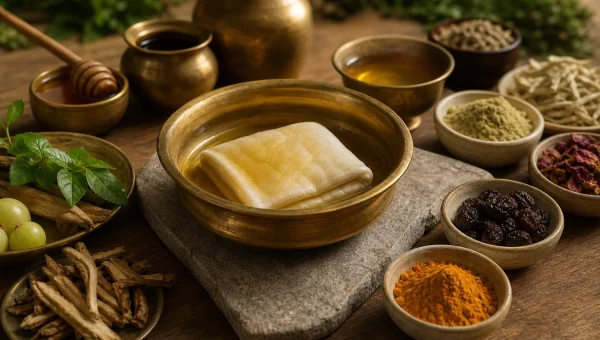
4. Avagahana Sweda: Medicated Immersion or Sitz Bath
Avagahana Sweda is a form of liquid-medium fomentation in which the person sits in a tub or basin containing warm medicated liquid. Classical and contemporary descriptions include water decoctions, medicated liquids, oils, milk, or other media depending on the clinical aim. The temperature is maintained by replacing cooled liquid with warm liquid, and the person rests afterward in a non-windy room.
Avagahana is especially useful for lower-body and pelvic-region Vata conditions. It is traditionally indicated for low-back pain, urinary difficulty, calculi-related discomfort, hemorrhoids, fissure-in-ano, urinary incontinence, rectal prolapse, and disorders involving Apana Vayu. In generalized neurological conditions, full-body immersion may be selected by a trained physician, but it requires careful monitoring.
Comprehensive Swedana Types: Method, Herbs, Duration, and Indications
The following table summarizes commonly used clinical forms of Swedana. Exact timing, temperature, herbs, and repetition should be individualized by a qualified practitioner rather than copied as a fixed home protocol.
| Swedana Type | Method | Common Materials or Herbs | Typical Clinical Duration | Primary Ayurvedic Indications |
|---|---|---|---|---|
| Bashpa Sweda | Steam chamber or full-body steam with head kept outside | Dashamoola, Eranda, Nirgundi, Vasa, Surasa, Shigru, Karanja, or condition-specific decoctions | Usually until proper signs of sudation appear; often 10-20 minutes in modern clinics | Generalized Vata-Kapha stiffness, heaviness, coldness, and pre-Panchakarma preparation |
| Nadi Sweda | Directed steam through a tube to a specific body region | Eranda, Shigru, Vasa, Karanja, Arka, Surasa, or other Vata-Kapha-alleviating decoctions | Short, site-specific application with repeated temperature checks | Localized joint pain, neck stiffness, frozen shoulder patterns, sciatica-like pain, and low-back stiffness |
| Patra Pinda Sweda | Heated herbal leaf bolus applied with controlled pressure | Eranda, Arka, Sindhuvara/Nirgundi, Shigru, Karanja, tamarind leaf, rock salt, oils | Often 30-45 minutes depending on strength and condition | Vata and Vata-Kapha joint disorders, back pain, sciatica, stiffness, and selected inflammatory or degenerative patterns |
| Shashtika Shali Pinda Sweda | Rice bolus cooked in milk and Bala decoction | Shashtika rice, Bala root decoction, milk, medicated oil | Often 30-45 minutes depending on strength and indication | Vata-related weakness, muscle wasting, palsy-like conditions, emaciation, and nourishing post-Panchakarma care |
| Churna Pinda Sweda | Dry or semi-dry herbal powder bolus | Powders such as Kulattha, Devadaru, Haridra, Rasna, Jatamansi, Tila, rock salt, and condition-specific liquids | Often 25-40 minutes depending on tolerance | Kapha-dominant stiffness, heaviness, ama-associated joint problems, and selected lumbago or sciatica patterns |
| Jambeera Pinda Sweda | Lemon-herb-salt bolus fomentation | Lemon, rock salt, sesame, Kulattha, Haridra, Lashuna, Methika, Shatahva, oil | Usually individualized according to site and strength | Vata-Kapha joint disorders, traumatic stiffness, low-back ache, frozen shoulder, and stiff neck patterns |
| Avagahana Sweda | Warm medicated tub bath or sitz bath | Dashamoola or Vatahara leaves such as Eranda, Karanja, Tulasi, Vasa, Arka; oils or medicated liquids when indicated | Often up to 45 minutes in supervised settings | Low-back pain, dysuria, hemorrhoids, fissure-in-ano, urinary incontinence, rectal prolapse, and Apana Vayu disorders |
Clinical Applications in Detail
Swedana is most useful when the clinical picture contains coldness, stiffness, heaviness, pain, sluggish movement, obstruction, or Vata-Kapha dominance. It is not a universal remedy; it becomes beneficial when the chosen form of heat matches the patient’s constitution, the stage of disease, the body region, and the strength of digestion and tissues.
Joint Pain and Musculoskeletal Stiffness
Swedana is widely used in musculoskeletal care because warmth softens stiffness, improves ease of movement, and reduces cold, heavy, obstructed sensations. Classical indications include pain and stiffness in the back, flanks, waist, abdomen, foot, knee, thigh, calf, sciatica-like conditions, contractures, numbness, heaviness, and body ache.
Modern heat-therapy literature describes physiological effects that align with this clinical use: superficial heat can increase blood flow, tissue metabolism, and connective-tissue elasticity while helping pain relief. A published AYU clinical trial evaluated Nirgundi Patra Pinda Sweda with Ashwagandhadi Guggulu in Sandhigata Vata, commonly correlated with osteoarthritis, and reported clinical improvement in the treated groups. In practice, this does not make Swedana a stand-alone cure for arthritis; it is usually combined with diet, internal medicines, movement guidance, oleation, Basti, or other measures according to the case.
Respiratory Congestion and Kapha Heaviness
Classical indications for Swedana include rhinitis, cough, hiccup, breathing difficulty, heaviness of the body, hoarseness, and throat stiffness. In Kapha-dominant respiratory presentations, warm steam and fomentation may help reduce the sensation of cold, heaviness, and obstruction. Herbs such as Vasa, Surasa, Shigru, Eranda, and Karanja appear in classical decoction lists for Nadi Sweda and related steam procedures.
Respiratory use should remain conservative. Swedana is not appropriate for high fever, severe breathlessness, dehydration, unstable cardiac disease, or acute inflammatory heat signs. Anyone with asthma, chronic lung disease, chest pain, or shortness of breath should use steam-based therapy only after medical assessment.
Muscle Tension, Stress, and Recovery
Warmth can relax tight tissues, reduce the perception of stiffness, and support a parasympathetic “rest” state after exertion. In Ayurvedic terms, this makes Swedana helpful when Vata-related tightness, dryness, restlessness, or fatigue is associated with coldness and contraction. It pairs naturally with Abhyanga, gentle stretching, rest, and suitable Pranayama.
Contemporary thermotherapy literature describes pain relief, increased circulation, and improved flexibility as key effects of heat. Passive heat therapy has also been studied for vascular responses, including improved endothelial function in repeated heat-exposure protocols. These findings support the traditional emphasis on controlled, repeated, and monitored warmth rather than excessive heat exposure.
Pre-Panchakarma Preparation
In Panchakarma, Swedana is used to prepare the body for the main cleansing procedure. The usual sequence is Snehana followed by Swedana, then the appropriate main procedure such as Vamana, Virechana, Basti, Nasya, or other physician-selected measures. Classical teaching holds that properly performed oleation and sudation help loosen and mobilize aggravated doshas so they can be eliminated more effectively.
Inadequate preparation may lead to incomplete therapeutic effect, while excessive preparation may weaken the patient. For this reason, Swedana is assessed by clinical signs rather than by a fixed number of minutes alone.
Signs of Proper Sudation: Samyak Swedana Lakshana
Classical texts give clear signs for stopping Swedana. These signs protect the patient from both under-treatment and over-heating, and they are more important than forcing a predetermined duration.
- Relief from coldness: the person no longer feels internal or local coldness.
- Relief from pain: pain or aching reduces during the procedure.
- Reduction of stiffness: movement becomes easier and less rigid.
- Reduction of heaviness: the body or treated region feels lighter.
- Softness of tissues: the treated part feels more pliable and relaxed.
- Appropriate perspiration: sweating appears without distress, burning, faintness, or excessive exhaustion.
Once these signs appear, Swedana should be stopped. Continuing after the desired effect can produce Ati Swedana, or excessive sudation.
Signs of Excessive Swedana
Excessive Swedana aggravates heat and can disturb Pitta, strength, hydration, and comfort. Classical signs include fainting, giddiness, excessive thirst, burning sensation, fatigue, weakness of voice or limbs, eruptions, joint pain, and increased body temperature.
If such signs appear, the person should be cooled, rested, and treated with sweet, unctuous, cooling measures under supervision. Strong Swedana should never be continued through dizziness, chest discomfort, breathlessness, confusion, severe thirst, burning, or weakness.
Contraindications and Safety Precautions
Swedana is powerful because it changes circulation, sweating, heat load, and tissue softness. It should be avoided or used only with expert supervision in the following situations:
- Pregnancy: classical texts list pregnant women among those unsuitable for Swedana.
- Bleeding disorders or active bleeding: heat can worsen Pitta and bleeding tendencies.
- Pitta-predominant conditions: burning sensations, active inflammatory heat, severe acidity, hot rashes, and strong Pitta aggravation require caution or avoidance.
- Fever or hyperthermia: external heat is unsafe when the body is already overheated.
- Diarrhea, dehydration, hunger, or intense thirst: sweating may worsen fluid depletion and weakness.
- Alcohol intoxication or regular heavy alcohol use: heat and sweating can aggravate dehydration, Pitta, and impaired judgment.
- Severe debility, emaciation, immune depletion, or unconsciousness: the person may not tolerate heat stress.
- Diabetes, neuropathy, or reduced sensation: impaired heat perception increases burn risk.
- Unstable cardiovascular disease or uncontrolled blood pressure: passive heat can change pulse, blood pressure, and vascular load.
- Burns, open wounds, acute skin inflammation, or fragile skin: local heat may worsen tissue injury.
Sensitive areas such as the eyes, heart region, and testicles require special caution. Classical instruction advises avoiding or applying only very mild fomentation over these areas, protecting the eyes, and keeping the heart region cool during stronger procedures.
Modern Heat Therapy Perspective
Swedana is an Ayurvedic therapy, but its use of controlled warmth overlaps with modern thermotherapy. Heat therapy is known to increase local circulation, ease pain, improve soft-tissue extensibility, and reduce stiffness when applied appropriately. Repeated passive heat exposure has also been studied for vascular effects, including endothelial function and blood-pressure-related measures.
Sauna literature is not identical to Ayurvedic Swedana because dry sauna, infrared sauna, and medicated steam differ in humidity, method, temperature, herbs, and clinical intent. Still, sauna and passive heat research help explain why warmth can influence circulation, sweating, heart rate, perceived relaxation, and musculoskeletal comfort. A large Finnish cohort associated more frequent sauna bathing with lower fatal cardiovascular and all-cause mortality, while reviews describe potential benefits and risks of regular dry sauna bathing. These findings should be interpreted as supportive background for heat therapy, not as a substitute for individualized Ayurvedic assessment.
Research on Sarvanga Swedana specifically notes that Ayurvedic steam-chamber therapy can produce hemodynamic changes. This reinforces an important classical principle: Swedana should be monitored, individualized, and stopped at proper signs rather than continued aggressively.
Integrating Swedana Into Treatment Protocols
For practitioners, Swedana is a versatile amplifier of other therapies. After Abhyanga, it helps the warmth and oil work together on stiffness and Vata-Kapha obstruction. Before Basti, Virechana, or other Panchakarma measures, it helps prepare doshas for movement toward the gut. As a local therapy, Nadi Sweda, Patra Pinda Sweda, Churna Pinda Sweda, or Avagahana can be chosen for specific regions such as the neck, back, knee, shoulder, or pelvic area.
The central Ayurvedic lesson is precision. Swedana is beneficial when the correct type of warmth is applied to the correct person, at the correct intensity, for the correct duration, with careful attention to signs of proper and excessive sudation. Used this way, it remains one of Ayurveda’s most practical therapies for stiffness, pain, heaviness, coldness, Vata-Kapha obstruction, and Panchakarma preparation.
This article is for educational purposes only and does not diagnose, treat, or replace personalized medical advice. Consult a qualified Ayurvedic practitioner or healthcare provider before starting Swedana, Panchakarma, herbs, oils, detox protocols, or heat therapies, especially if pregnant, elderly, medically fragile, taking medication, or managing cardiovascular, neurological, respiratory, metabolic, or skin conditions.
References
- Charaka Samhita — Swedadhyaya
- Charaka Samhita — Swedana
- Hemodynamic effects of Sarvanga Swedana (Ayurvedic passive heat therapy): A pilot observational study (2013), PubMed Central
- Researchgate (researchgate.net)
- Clinical effect of Nirgundi Patra pinda sweda and Ashwagandhadi Guggulu Yoga in the management of Sandhigata Vata (Osteoarthritis) (2011), PubMed
- Mechanisms and efficacy of heat and cold therapies for musculoskeletal injury (2015), PubMed
- Passive heat therapy improves endothelial function, arterial stiffness and blood pressure in sedentary humans (2016), PubMed
- Clinical Effects of Regular Dry Sauna Bathing: A Systematic Review (2018), PubMed
- Association between sauna bathing and fatal cardiovascular and all-cause mortality events (2015), PubMed
- Ayurvedic Pharmacopoeia of India

I’ve had two Swedana sessions as part of Purvakarma and the relief in my joints afterward was immediate and significant. What I didn’t expect was how emotionally unsettled I felt for a day or two after the second session. Is that a recognized response, something like Ama being released systemically? My therapist mentioned it but didn’t fully explain.
I’m in my third week of treatment and using this as a reference to understand what’s happening. Having this context makes the process feel less mysterious and more participatory.
I liked the practical side of Swedana Therapy. Would be useful to see a short checklist next.
The Swedana Therapy explanation is clearer than most short posts. I would still ask a practitioner before changing medicines.
that’s a really important distinction you’ve made. I think a lot of people skip the preparation phase and then wonder why results are inconsistent
The comparison to modern medicine approach was helpful. My doctor and vaidya recommend different things.
I traveled to Kerala specifically for Panchakarma treatment and everything described here matches my experience. Would absolutely recommend the in-depth preparation they do
Three months sounds right from my experience too. Commit to that and then evaluate.
The section on post-treatment care is critical and often missing from other articles. What you do after matters just as much as the treatment itself.
I’m going to share this comment with my skeptical partner. Exactly what I needed to articulate why this works.
The Swedana Therapy explanation is clearer than most short posts. Small daily changes are easier to follow than a perfect plan.
I was nodding along reading your comment. Exactly my experience too.
the comparison of different preparation methods here matches what my grandmother described from her experience in India decades ago. This knowledge has clearly been consistent
has anyone else noticed the sleep improvement you mentioned? I’ve been experiencing the same thing.
I came here from the Instagram post. The article has way more detail than the summary. Bookmarked.
I went through a full Panchakarma program last year and this article accurately describes what to expect. The preparation phase is often underemphasized elsewhere, glad you highlighted it.
The integration of traditional explanation with modern physiological understanding is exactly what makes this content valuable. Not either/or but both together.
Your comment about the dosage issue is so important. Getting it right makes all the difference
The Swedana Therapy explanation is clearer than most short posts. The examples make the advice less abstract.
I liked the practical side of Swedana Therapy. A few more examples would still help.
Halfway through this article I was nodding along, then the second half lost me with claims that felt more like marketing than medicine
The discussion of how classical and modern approaches to these therapies compare and contrast was particularly interesting from an academic standpoint
My rheumatologist was skeptical when I mentioned Ayurvedic treatment but I’m going to share this article with her. The clinical evidence cited might open a conversation.
Went for a consultation after reading this and the practitioner confirmed what I’d identified as my issues. Feeling confident starting treatment
The contraindications section is important and responsible. I wish more Ayurvedic content was this thoughtful about who these treatments are and aren’t appropriate for.
Thank you for the honest feedback. You’re absolutely right that individual responses vary, and we should emphasize that more. We’ll update the article to include stronger caveats about individual variation.
I liked the practical side of Swedana Therapy. Small daily changes are easier to follow than a perfect plan.
The Swedana Therapy explanation is clearer than most short posts. The practical details matter more than people think.
Same here! The practitioner recommendation made all the difference for me. Don’t try to do this without guidance
Can you recommend how to find a qualified Panchakarma practitioner? There seem to be so many clinics claiming expertise but very different quality levels.
How many sessions are typically needed to see lasting results? I did three and felt wonderful after each but I’m curious about the longer-term program structure
Your experience with the diet changes mirrors mine almost exactly. Week two is when it clicks.
I had my first Swedana treatment at an Ayurvedic wellness center in Mysore 3 years ago for stiffness from fibromyalgia. The 45-minute treatment produced a level of muscle relaxation I had not felt in years. I now receive it monthly and the cumulative effect has been better than any physical therapy I tried.
The home version using steam tent setup described in the article: what temperature should the steam be maintained at for safe home practice? I tried once and either the temperature was too high or I stayed too long and felt nauseated afterward.
The information is presented confidently but where are the sample sizes? A study with 20 participants doesn’t prove much
Swedana after Abhyanga has been part of my Ayurvedic self-care for 2 years. The combination is qualitatively different from either practice alone. The oil applied in Abhyanga seems to be absorbed more deeply after the steam opens the channels. My skin texture has improved significantly.
Appreciate you keeping us honest. We’ve noted your feedback about dosage specificity and will address it in a revised version of this article.
I notice the article does not mention steam saunas as equivalent to Swedana. Is there a meaningful difference between a Finnish-style dry sauna or a steam room at a gym and the traditional Swedana from an Ayurvedic therapeutic perspective? The mechanisms seem similar but the herbal infusion component of Swedana may differentiate it.
My experience was mixed at best. The dietary changes helped a little but the herbal recommendations did nothing noticeable.
Reading this later and the Swedana Therapy advice still feels relevant. This is the kind of detail readers can test slowly.
The Nadi Swedana local application for joint pain: is this something a practitioner needs to perform or can it be safely self-administered? I have chronic knee pain and if the localized steam technique can be done at home it would be more practical than full-body steam for targeted joint benefit.
I have a heart condition and my cardiologist specifically told me to avoid saunas and heat therapy due to the cardiovascular demand. The article mentions cardiac conditions as a contraindication but not prominently enough. For readers with any cardiac history this should be a clear first-section warning.
The cooling down process after Swedana is something the article should address more thoroughly. I understand that resting in a warm room afterward and not exposing to cold air is important for the treatment to be effective, but how long should this cooling period last before it is safe to shower or go outdoors?
The part about Swedana Therapy feels realistic. The practical details matter more than people think.
The explanation of how Swedana opens the srotas and mobilizes ama really clarified why it’s placed before Panchakarma in the Purvakarma phase.
The pre-Panchakarma role of Swedana is something I appreciated learning. I underwent Panchakarma last year and the preparatory Purvakarma including Abhyanga and Swedana seemed to determine how well the main procedures worked. The clinic where I went spent 3 days on preparation alone.
After my c-section I was told I could not have any heat therapy for 6 months postpartum. Is this a general Ayurvedic caution or specific to certain Swedana types? I have read that Nadi Swedana to the legs is used in postpartum care in some traditions but the full-body treatment should be avoided.
I tried a short Nadi Sweda session for my shoulder stiffness and noticed the heat seemed to ease the tightness after just ten minutes.
Such detailed endpoints like Sheeta Vyuparama and Stambha Nigraha make it clear when the therapy has done its job, which is useful for anyone overseeing a session.
One question I have is whether the herbal steam in Bashpa Sweda can aggravate Pitta if the blend includes warming spices like ginger or black pepper.
Seeing the table that lists duration and primary indications for each Swedana type helps match the method to specific conditions like lower back pain or edema.
Late to this post but finding it very helpful. The practical step-by-step format makes it easy to follow.
Does this interfere with standard medications? I take something daily and want to be careful.
Just found this post through a search. Is the recommendation still current or has anything changed?
The historical context from Charaka Samhita grounding the recommendation was reassuring.
I wish you had included more on the Vata-specific approach. The article focuses heavily on Pitta.
tried this and the results surprised me after only 10 days
I wish the article addressed what to do if you notice no effect after the recommended duration.
Will try
The specific dosage mentioned in the article, is that for adults only or does it change for elderly users?
I started following the protocol you described 3 weeks back. Early results are encouraging.
Does the treatment timeline change if you’ve had this issue long-term vs recently?
The section on diet modifications alongside the herb protocol is what makes this more complete than other guides.
I’m a Kapha type and the protocol seems designed more for Vata. Any modifications?
Useful
The part about Swedana Therapy feels realistic. Small daily changes are easier to follow than a perfect plan.
I’ve been dealing with this issue for 2 years and tried multiple things. Starting the approach you outlined here.
Doing this
Same here
The section on contraindications was the most useful part. I have a pre-existing condition and needed that clarity.
The quality of the herb source makes a big difference I’ve found. The article should mention what to look for when buying.
my vaidya recommends something slightly different but the core approach is the same
The morning routine elements you suggest are already part of my dinacharya. Adding the missing piece you mentioned now.
Does this protocol vary by dosha type? I’m Pitta dominant and some of what you describe seems heating.
The research citations are good but mostly from small studies. Would like to see larger trial data.
This confirmed what I was already doing intuitively. Nice to have the Ayurvedic framework to understand why.
Any guidance for people who travel frequently? Hard to maintain a consistent protocol.
Can this be combined with standard medication or is it better to do one at a time?
Does age affect how this works? I’m 52 and wondering if the protocol needs adjustment.
Just tried this for the first time this week. Too early to say but no adverse effects so far.
Skeptical but trying anyway because conventional medicine hasn’t helped. Will report back.
my grandmother used to do something similar. not exactly this but the core principle was the same
the herb quality varies so much between suppliers. any brand recommendations for what’s described here
started last week based on this article. will update in a month
been using these recommendations from the Swedana Therapy article for about 3 weeks now. seeing some improvement.
The historical references add credibility. Knowing this has been used for centuries matters to me.
The approach described here is different from what my vaidya recommends. Is there a regional variation in this protocol?