
My first Kalaripayattu class destroyed me. Not metaphorically — I could not walk down stairs properly for three days. The Gurukkal at the Thiruvananthapuram kalari watched me hobble back and said something that captured the old relationship between the art and its healing system: the body is trained, strained, corrected, oiled, rested, and rebuilt as one curriculum. In Kerala’s traditional setting, Kalaripayattu is not only a martial practice; it sits beside Kalari Chikitsa, the injury-care and body-conditioning tradition associated with kalari training, marma knowledge, medicated oils, and disciplined recovery.
Kalaripayattu is Kerala’s indigenous martial art and is widely described as one of India’s most ancient martial traditions. Its training combines low stances, leg extensions, leaps, turns, weapon practice, partner work, breath, rhythm, and flexibility. For a practitioner, the recovery system around the art is not optional ornamentation. It is the practical medicine that allows repeated training without letting Vata-dominant strain harden into chronic stiffness, fatigue, or injury.
The Physiology of Kalaripayattu Stress
Kalaripayattu stresses the body through repeated squatting, lunging, kicking, landing, twisting, and rapid directional change. In modern exercise language, many of these movements include eccentric loading, where a muscle lengthens while controlling force. Unaccustomed eccentric work is strongly associated with delayed-onset muscle soreness, temporary loss of strength, stiffness, and exercise-induced muscle damage. In Ayurvedic language, repeated strain, impact, irregular breath, and inadequate rest aggravate Vata, especially in the joints, tendons, lower back, thighs, calves, shoulders, and neck.
Low-stance work loads the quadriceps, gluteal muscles, adductors, calves, and hip stabilisers for long periods. This is why beginners often feel soreness not only in large muscles but also around the knees, groin, ankles, and lower back.
Jumping, kicking, and landing challenge the ankles, knees, hips, and spine. When the practitioner is fatigued, landing mechanics and joint control decline, increasing the need for proper warm-up, progressive training, and recovery.
Weapon and partner training demand grip, shoulder mobility, trunk rotation, neck awareness, and quick reflexes. Repeated rotational work without oiling, mobility, and rest can present as stiffness around the shoulders, cervical region, and upper back.
In Ayurvedic terms, excessive or poorly recovered training can disturb Vyana Vata, which governs circulation and movement throughout the body, and Apana Vata, which governs the lower body, grounding, and elimination. The tissues most visibly taxed are Mamsa Dhatu, the muscular tissue, Asthi-Sandhi structures, the bones and joints, and Rakta Dhatu, which supports heat, colour, and vitality. Recovery therefore emphasises warmth, unctuousness, rhythm, nourishment, sleep, and carefully chosen Vata-pacifying herbs and oils.
Traditional Kalari Chikitsa: The Original Recovery System
Kalari Chikitsa is the healing branch associated with Kalaripayattu. It includes massage, medicated oils, attention to marma points, poultices, fomentation, rest, and correction of movement patterns. In many lineages, the Gurukkal is expected to understand both training and injury care, because the same marma knowledge that informs combat also informs safe therapeutic handling.
One of the best-known bodywork practices is Uzhichil or Chavitti Uzhichil, a foot-based massage in which the practitioner may hold a rope for balance while using the feet to apply long, controlled pressure. This is not casual massage. It is traditionally performed by trained hands and feet, with attention to the student’s age, strength, flexibility, training phase, and injury status.
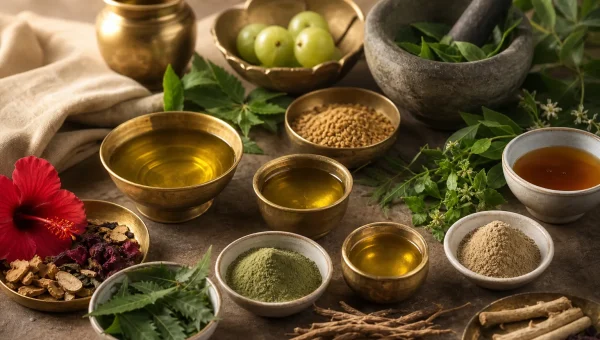
The purpose of recovery oiling in this context is to bring Snigdha, Ushna, and Mridu qualities — unctuousness, warmth, and softness — into tissues that have become dry, tight, overworked, or Vata-aggravated. Sesame oil is commonly used as a base in many classical oils, and compound oils such as Dhanvantara Taila, Balaguduchyadi Taila, Ksheerabala Taila, Mahanarayana Taila, or regionally used kalari oils may be selected by a practitioner according to the condition.
The Five Core Recovery Herbs
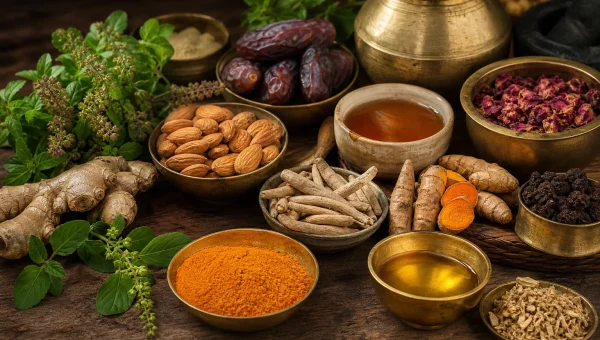
The following herbs and formulations are not a generic “performance stack.” They are best understood as Ayurvedic recovery tools. Some are used primarily in oils, some internally, and some topically. Internal use should be individualised by constitution, digestion, medication history, liver health, blood pressure, sleep, training load, and competition rules.
1. Bala (Sida cordifolia) — The Strength-Supporting Herb
Bala literally means strength, and in Ayurvedic usage it is associated with Balya, Vata-pacifying, nourishing, and restorative actions. It appears in important medicated oils and formulations, including Dhanvantara Taila, which is also listed with the synonym Bala Taila in the Ayurvedic Pharmacopoeia of India’s formulation section. In a kalari recovery setting, Bala is most safely discussed as part of classical medicated oils used externally for Abhyanga, Uzhichil, or local application under professional guidance.
Bala requires caution when used internally because Sida cordifolia is associated with ephedrine-type alkaloids in modern safety literature. For athletes, people with hypertension, anxiety, insomnia, palpitations, heart disease, thyroid disorders, stimulant use, or drug-testing obligations, unsupervised Bala supplementation is inappropriate. External use in a properly prepared classical oil is a different context from taking concentrated capsules or stimulatory extracts.
2. Ashwagandha (Withania somnifera) — The Rasayana for Strength and Recovery
Ashwagandha is described in the Ayurvedic Pharmacopoeia of India as a root drug with Rasayana, Balya, Vajikarana, and Vata-Kapha-pacifying actions. These qualities make it relevant to martial artists who need strength, tissue rebuilding, sleep support, and resilience. Its classical dose as root powder is commonly given in the range of 3–6 g, but the appropriate form and dose depend on the practitioner’s assessment.
For a Kalaripayattu student, Ashwagandha is traditionally taken with a nourishing vehicle such as warm milk or ghee when digestion permits. Modern supplement extracts are more concentrated than traditional root powder, so they should not be treated as interchangeable gram-for-gram. People with pregnancy, breastfeeding, thyroid disorders, autoimmune conditions, liver disease, sedative use, or multiple medications should use Ashwagandha only after professional advice.
3. Rasna (Pluchea lanceolata) — The Vata Joint Herb
Rasna is a classical Vata-oriented herb used in formulations for stiffness, pain, swelling, and Vata disorders. The Ayurvedic Pharmacopoeia of India identifies Rasna leaf as Pluchea lanceolata and lists Rasnadi Kvatha Churna among its important formulations, with therapeutic uses including Shotha, Vata disorders, Amavata, Vatarakta, and Adhyavata.
For martial training recovery, Rasna is most relevant when the body feels cold, stiff, heavy with Ama, or painful around the low back, hips, thighs, knees, and joints. Classical decoctions such as Rasnadi or Rasnairandadi preparations should be selected by a qualified practitioner, because the same heating and Vata-Kapha-clearing quality that helps one athlete may irritate another if Pitta, gastritis, dehydration, or inflammatory heat is dominant.
4. Nirgundi (Vitex negundo) — The Local Pain and Swelling Herb
Nirgundi is widely used in Ayurveda and folk practice for painful, swollen, or stiff areas, especially as leaf paste, poultice, oil, steam, or local application. The Ayurvedic Pharmacopoeia of India includes Nirgundi leaf as Vitex negundo, and modern pharmacological work supports anti-inflammatory and analgesic activity for leaf preparations and leaf oil.
In practical Kalari Chikitsa, fresh Nirgundi leaves may be warmed or prepared as a paste and applied locally after training or after the acute assessment of a strain. It should not be used to mask pain before practice. Pain is a protective signal; numbing or suppressing it before kicks, jumps, or weapon training can make a small injury worse. Open wounds, skin sensitivity, allergy, severe swelling, deformity, fever, suspected fracture, nerve symptoms, or persistent pain require medical evaluation.
5. Guduchi (Tinospora cordifolia) — The Rasayana and Recovery Anchor
Guduchi, also known as Giloy or Amrita, is described in the Ayurvedic Pharmacopoeia of India as a stem drug with Balya, Dipana, Rasayana, Tridosha-shamaka, Rakta-shodhaka, and Jvaraghna actions. Its listed forms include Guduchi Sattva and decoction preparations. In a recovery context, Guduchi is used when training produces heat, fatigue, low appetite, inflammatory tendency, or a need for gentle Rasayana support.
Guduchi should not be treated as automatically safe because it is traditional. Case reports and liver-safety reviews have described liver injury associated with Tinospora products in some people, especially with self-medication, concentrated products, uncertain identification, or susceptible immune backgrounds. Anyone with liver disease, autoimmune disease, unexplained fatigue, jaundice, dark urine, persistent nausea, or multiple medications should avoid unsupervised Guduchi and consult a healthcare provider.
The Kalaripayattu Recovery Stack by Training Phase
A recovery protocol should change with the training phase. A beginner with soreness, an advanced practitioner in weapon training, a performer preparing for demonstration, and a student recovering from a strain do not need the same herbs. The table below gives an Ayurvedic framework, not a prescription.
| Training Phase | Primary Ayurvedic Support | Typical Use Context | Key Therapy |
|---|---|---|---|
| High-volume training week | Ashwagandha, Guduchi, nourishing diet, sesame-based medicated oil | For fatigue, Vata strain, sleep debt, and tissue rebuilding under guidance | Abhyanga or Uzhichil on selected days, followed by warm bath or mild steam if appropriate |
| Acute muscle strain | Rest, assessment, local Nirgundi-based application when appropriate | For mild local pain or swelling after serious injury has been ruled out | Stop practice, protect the area, seek evaluation for sharp pain, instability, bruising, or swelling |
| Joint stiffness maintenance | Rasna-based decoctions or oils, Bala-containing oils, warm sesame oil | For Vata-Kapha stiffness, especially in hips, knees, back, and shoulders | Local oiling, gentle mobility, practitioner-guided marma work |
| Performance preparation | Ashwagandha, Amalaki, Shatavari, ghee, warm milk if suitable | For strength, stamina, tissue lubrication, and Pitta-balanced nourishment | Night Padabhyanga, adequate sleep, lighter morning food before practice |
| Recovery week | Chyawanprash, Guduchi or Amalaki-based Rasayana, simple digestible meals | For rebuilding after a demanding block, when digestion is steady | Full-body Abhyanga, gentle stretching, early sleep, reduced jumping and sparring |
Pre-Training Preparation: The Kalari Morning Ritual
Traditional Kalaripayattu commonly begins early, and the body is not expected to move explosively from a cold, dry, stiff state. A practical Ayurvedic preparation is brief joint oiling rather than a heavy full-body oil application immediately before practice. Warm sesame oil or a suitable medicated oil may be rubbed into the ankles, knees, hips, wrists, shoulders, neck, and lower back, followed by gradual mobility work.
Food before practice should be Laghu, light and easy to digest. Heavy meals, fried food, excess dairy, and large quantities of liquid immediately before jumps, kicks, and floor work can disturb Agni and reduce coordination. A small portion of ripe banana, soaked raisins, rice flakes, or a light warm drink may suit some students, while others train best after only water. The principle is simple: fuel without heaviness, warmth without overheating, and steadiness without dullness.
Post-Training Recovery: Oil, Heat, Food, and Sleep
After practice, the first recovery medicine is slowing down. Sudden cold exposure, skipping meals, late nights, and immediate return to screen work aggravate Vata after intense training. A calm cool-down, warm water, gentle stretching, and a proper meal are as important as herbs.
Post-training meals should rebuild Mamsa without burdening Agni. Traditional options include warm rice with mung dal and ghee, kanji with cooked vegetables, soft-cooked grains with sesame or coconut, milk preparations when suitable, and adequate salt after sweating. Very dry, cold, raw, or irregular eating patterns are a poor match for intensive martial practice.
Sleep is central to the protocol. No herb can compensate for chronic sleep restriction. In Ayurvedic terms, sleep restores Ojas, steadies Vata, and allows the effects of Abhyanga, food, and Rasayana to settle into the tissues.
Marma Points Specific to Kalaripayattu Recovery
Classical Ayurveda describes 107 marma points, and Kalaripayattu lineages preserve practical marma knowledge for both protection and therapy. Marma work should be gentle, informed, and never aggressive over acute injury. The aim in recovery is not to “force release” but to bring awareness, circulation, and softness to overworked regions.
Indrabasti is associated with the calf region in the lower limb and is relevant to running, jumping, stance work, and calf fatigue. Gentle oil application and mild pressure around the calf may be used after practice, avoiding strong pressure over acute cramps, vascular problems, or severe pain.
Urvi is associated with the middle of the thigh. It is traditionally considered a vital point, so therapeutic contact should be moderate and careful. For Kalaripayattu students, this region often becomes tight from low stances, kicks, and repeated flexion-extension work.
Ani is described in the lower limb above the knee region. Because the knee is commonly stressed in deep stances, turns, and landings, work around this area should emphasise oiling, gentle mobility, strengthening, and correct alignment rather than hard pressure.
For related reading on Marma therapy and joint health, see our guide to Marma pressure point therapy. For the broader Ayurvedic approach to joint inflammation, the Sandhivata arthritis protocol provides complementary strategies.
Safety and Herb-Drug Interactions
Bala, Ashwagandha, Rasna, Nirgundi, and Guduchi should be used with the same seriousness given to any active health intervention. Bala-containing internal products may be unsuitable for people with hypertension, arrhythmia, anxiety, insomnia, stimulant use, MAO-inhibitor use, thyroid disorders, pregnancy, breastfeeding, or competitive drug-testing requirements. Ashwagandha may affect thyroid activity, can cause digestive or sedative effects in some people, and has rare liver-injury reports. Guduchi has also been associated with liver-injury case reports and should be avoided without supervision in people with liver or autoimmune concerns.
Topical preparations can also irritate the skin. Patch testing, correct identification of herbs, clean preparation, and practitioner supervision matter. Never apply herbal pastes over deep wounds, suspected fractures, infected skin, unexplained swelling, or severe pain. Kalaripayattu should be learned under qualified instruction, and persistent pain, weakness, numbness, instability, or swelling should be assessed by a healthcare professional.
Safety disclaimer: The herbs and protocols described here are for educational purposes. Kalaripayattu is a demanding physical practice that should be learned under qualified instruction. Herbal supplementation, medicated oils, marma therapy, and Kalari Chikitsa should be used with guidance from a qualified Ayurvedic practitioner and, when injury or medical conditions are present, a licensed healthcare provider or sports medicine physician.
Nothing in this article diagnoses, treats, or cures a medical condition. Consult a qualified Ayurvedic practitioner or physician before starting herbs, supplements, detoxes, medicated oils, or therapeutic protocols, especially if pregnant, breastfeeding, managing a medical condition, subject to drug testing, or taking medication.
References
- Keralatourism (keralatourism.org)
- Kalariayurveda (kalariayurveda.com.au)
- Aanjaneyam (aanjaneyam.com)
- Delayed onset muscle soreness : treatment strategies and performance factors (2003), PubMed
- Pathophysiology of exercise-induced muscle damage and its structural, functional, metabolic, and clinical consequences (2020), PubMed Central
- Ayurvedic Pharmacopoeia of India
- Examining the effect of Withania somnifera supplementation on muscle strength and recovery: a randomized controlled trial (2015), PubMed
- Natural Ingredient Resource Center
- Webmd (webmd.com)
- Ayurvedic Pharmacopoeia of India
- Natural Ingredient Resource Center
- Anti-inflammatory and analgesic activities of mature fresh leaves of Vitex negundo (2003), PubMed
- Vitex negundo inhibits cyclooxygenase-2 inflammatory cytokine-mediated inflammation on carrageenan-induced rat hind paw edema (2012), PubMed
- Tinospora Cordifolia: A review of its immunomodulatory properties (2022), PubMed
- Immunomodulatory active compounds from Tinospora cordifolia (2012), PubMed
- Tinospora cordifolia (Guduchi/Giloy)-Induced Liver Injury: A Case Review (2023), PubMed Central
- NCBI
- NCCIH
- Ashwagandha as a Unique Cause of Thyrotoxicosis Presenting With Supraventricular Tachycardia (2022), PubMed Central
- Efficacy and Safety of Ashwagandha Root Extract in Subclinical Hypothyroid Patients: A Double-Blind, Randomized Placebo-Controlled Trial (2018), PubMed
- NCCIH
- FDA
- A comparative study on marma and acupoints (2023), PubMed Central
- Saudijournals (saudijournals.com)
- Ijam (ijam.co.in)
- Researchgate (researchgate.net)
the fracture healing herbs (Cissus, Asthisamhara) mentioned at what stage of training do Kalari masters incorporate these prophylactically vs only after injury?
the article romanticizes Kalaripayattu injury management without acknowledging that serious injuries (fractures, dislocations) need modern imaging and orthopedic assessment first.
Kalaripayattu recovery herbs without overclaiming is good. martial art injuries need rest also, not just oils
murivenna oil sourcing outside Kerala is difficult. the article gives a detailed protocol without addressing the practical sourcing challenge for non-Kerala practitioners.
as a Kalaripayattu practitioner for 8 years, the Murivenna and Dhanwantaram oils described here are exactly what my Kalari gurukkal applies after intense training. the article’s rationale finally explains what I’ve just experienced.
the Murivenna oil formula is this standardized across Kerala practitioners or does each Kalari center have their own variant?
for Kalaripayattu students who do 2-hour daily training sessions, is daily Abhyanga with medicated oil sustainable or does the body adapt and require less frequent application?
murivenna oil sourcing outside Kerala is difficult. thr article gives a detailed protocol without addressing the practical sourcing challenge for non-Kerala practitioners. tbh
Interesting.
murivenna oil sourcing outside Kerala is difficilt. the article gives a detailed protocol without addressing the practical sourcing challenge for non-Kerala practitioners.
Helpful. 🙌
does the herbal support protocol change between Kalari style (Thekkan, Vadakkan, etc.)? the physical demands differ and recovery needs might vary.
Thanks!
The Gurukkal’s quote about Ayurveda building you back up every night really captures something. I trained in a contact sport for years and had no recovery system beyond ice and rest. Learning that Kalaripayattu has a parallel herbal tradition built right into the practice makes the art feel even more complete. Which of the herbs mentioned are most accessible outside Kerala?
The explanation of how Bala supports adrenal function caught my attention, especially the study on CK and LDH reduction.
Makes sense.
for kalari training, a short list of pain vs injury signs would help. people keep practicing through wrong pain
the Murivenna oil formula is this standardized across Kerala practitioners oe does each Kalari center have their own variant?
@David for Kalaripayattu studemts who do 2-hour daily training sessions, is daily Abhyanga with medicated oil sustainable or does the body adapt and require less frequent application?
I wonder if the foot based Uzhichil technique could be adapted for other martial arts that need deep tissue work.
one week sample recovery plan would be great after hard training. oil, food, sleep, light mobility
The way the post describes muscle soreness after that first class is exactly what I experienced when I tried a beginners’ session in Kozhikode. Three days of not being able to sit down properly. If the traditional practitioners were using these herbal oils as a standard part of training, I imagine it made a real difference to how quickly students could return to practice.
The connection between the martial art and the herbal recovery system is something I didn’t know existed at all. I assumed Kalaripayattu was purely a physical discipline. The idea that the Gurukkal would also have knowledge of these formulations makes the tradition feel much deeper than just combat techniques.
@Anand does the herbal support protocol change between Kalari style (Thekkan, Vadakkan, etc.)? the physical demands differ and recovery needs might vary.
this is specific enough, but please add what players do on competition week vs normal practice week
After reading about the marma points Indrabasti, Urvi, and Ani, I tried pressing on my calf after a workout and felt less tightness.
Is there any research on how Guduchi sattva compares to standard vitamin C for immune maintenance in athletes?
checklist idea: sprain, muscle soreness, bruising, fatigue. each needs different support
The article makes a strong case that Kalari Chikitsa is essentially an ancient sports medicine system, integrating massage, herbs, and marma therapy.
I’m skeptical about the claim that Bala’s ephedrine content is safe for everyone, given its stimulant nature.
Practicing the pre training ritual of oiling just the joints before intense movement seems like a simple way to reduce friction and prepare connective tissue.